Artwork
Amerika Washinton fu|City of Washington in America
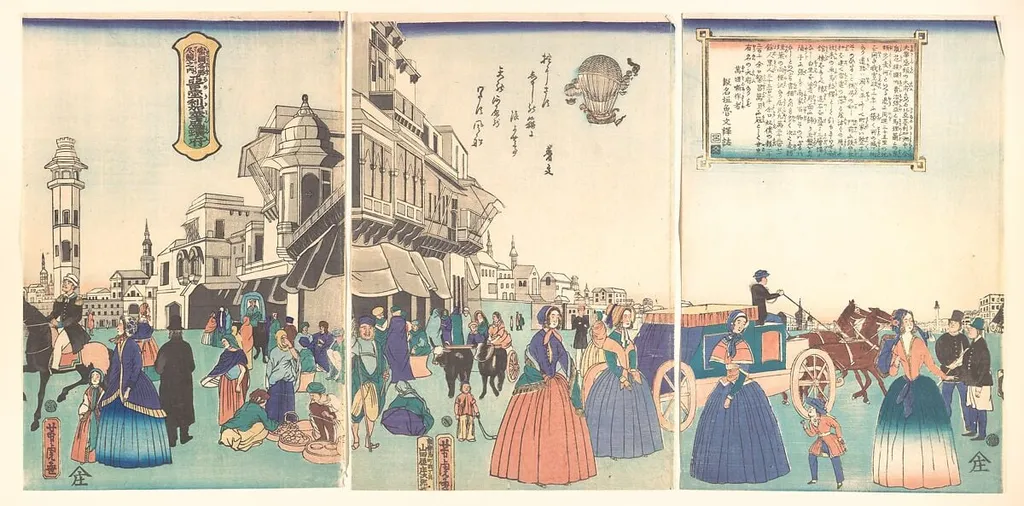
Amerika Washinton fu|City of Washington in America is an ink print by the Impressionist artist Utagawa Yoshitora. It dates from 1 and is held in the collection of the Metropolitan Museum of Art.
About this work
Overview
Composed of three panels, it combines ink and color on paper to present a bustling urban scene that blends real architectural elements with speculative details.
This triptych woodblock print, created by Utagawa Yoshitora, depicts an imagined view of Washington, D.C., as seen through a Japanese lens in the late Edo period. Composed of three panels, it combines ink and color on paper to present a bustling urban scene that blends real architectural elements with speculative details. The work is part of the collection at The Metropolitan Museum of Art, where it serves as an example of Japanese engagement with Western subjects during a time of limited direct contact.
Subject & Meaning
The print portrays a fictionalized version of Washington, D.C., populated by figures in Western attire, a clock tower, a bridge, and a hot-air balloon—elements unfamiliar to most Japanese viewers at the time. The balloon, hovering above the crowd, may symbolize technological wonder or foreign influence. The scene reflects Japan’s curiosity about the outside world, filtered through imagination rather than firsthand observation, revealing how distant places were interpreted through cultural lenses.
Technique & Style
Yoshitora employs traditional ukiyo-e methods: bold outlines, flat areas of color, and simplified forms to convey movement and density. Figures are rendered with expressive detail despite their small scale, while architectural elements are stylized rather than anatomically precise. The composition spans three panels to create a panoramic effect, enhancing the sense of urban activity. The use of color is restrained yet deliberate, drawing attention to key focal points like the balloon and clock tower.
History & Provenance
Produced around the 1860s, the print emerged during a period when Japan was beginning to encounter Western imagery through imported prints and texts. Yoshitora, known for his depictions of current events and foreign subjects, likely based this work on limited visual sources. It entered The Metropolitan Museum of Art’s collection as part of its broader effort to document cross-cultural artistic exchange in the 19th century.
Context
At the time of its creation, Japan was transitioning from isolation to limited international engagement. Artists like Yoshitora responded to growing interest in foreign lands by producing images of Europe and America, often mixing fact with fantasy. This print belongs to a genre of Japanese woodblocks that reimagined Western cities, serving both as entertainment and as a form of visual education in a society still largely cut off from direct observation.
Legacy
The work stands as a testament to early Japanese attempts to visualize the global West through available fragments of information. It influenced later ukiyo-e artists exploring foreign themes and remains a valuable artifact for understanding how non-Western cultures interpreted and represented unfamiliar urban environments. Today, it contributes to scholarly discussions on visual cross-pollination during the 19th century.
Artist & collection

 Untitled
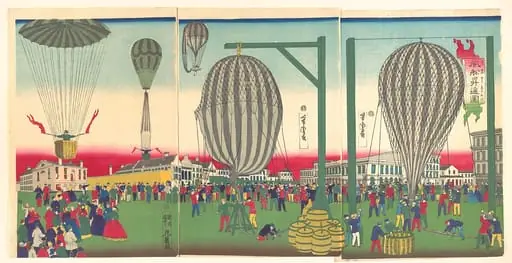 風船昇遥図|Illustration of a Balloon Ascending (Fūsen shōyō no zu)
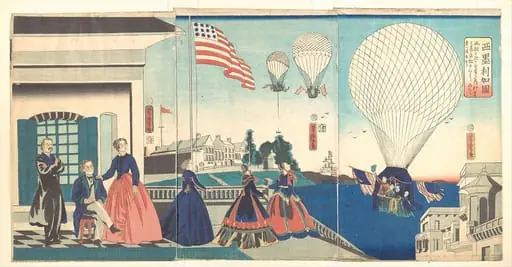 「亜墨利加國」|“America”: Enjoying Hot Air Balloons
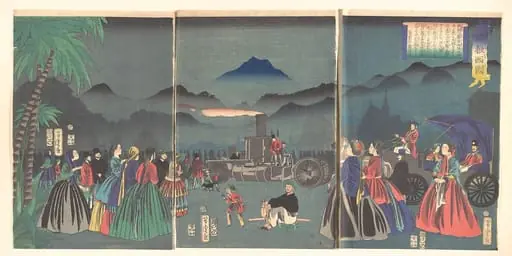 仏蘭西国|France (furansukoku)
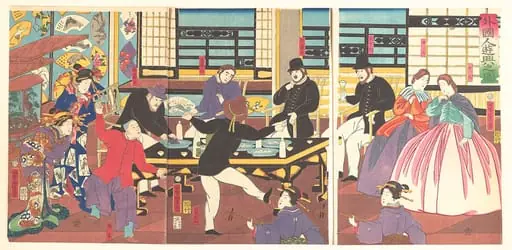 歌川義虎画 『外国人遊興之図』|Foreigners Enjoying a Party (Gaikokujin yūkyō no zu)
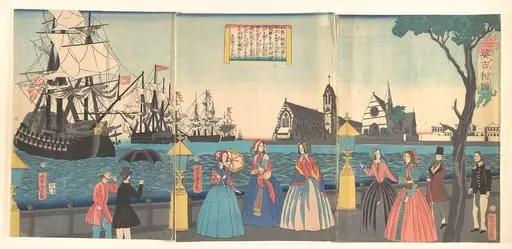 英吉利国|England (Igirisukoku)
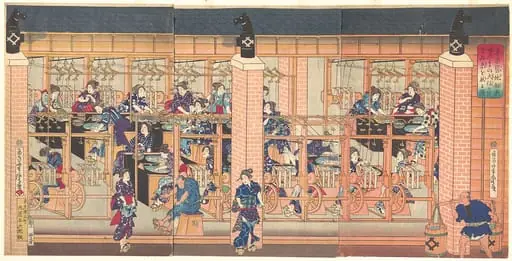 『東京築地舶来ぜんま い大仕かけきぬ糸をとる図』|Imported Silk Reeling Machine at Tsukiji in Tokyo
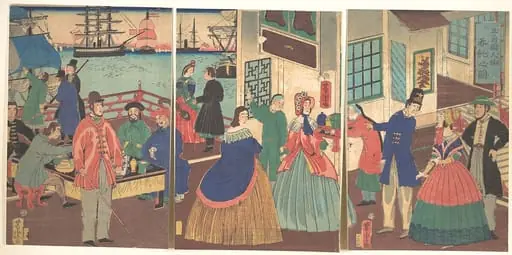 歌川芳虎画 『五箇国人物 呑飥之図』|People of the Five Nations Drinking and Eating (Gokakoku jinbutsu dontaku no zu)
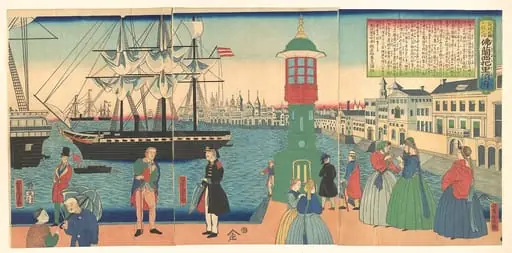 Furansu Paris no fu|Paris, France
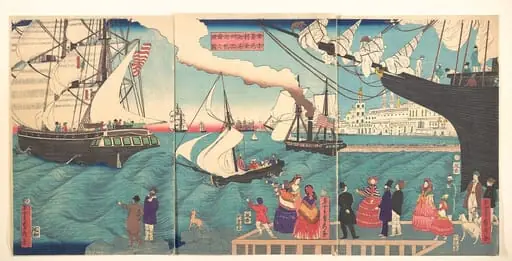 Untitled
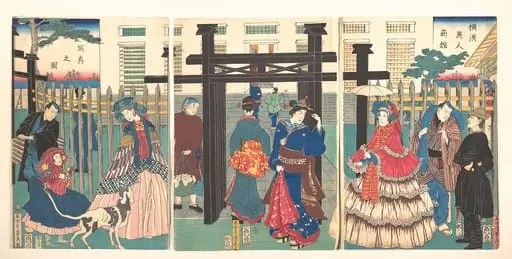 歌川五雲亭貞秀画 『横浜異人商館 写真之図』|Foreign Business Establishment in Yokohama (Yokohama ijin shōkan shashin no zu)
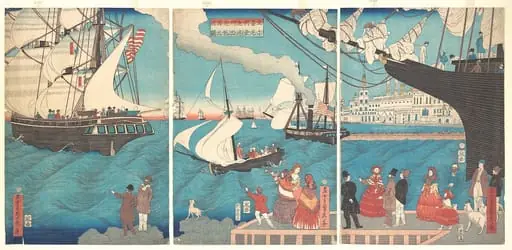 Amerika Karuhorunia Ko shuppan no zu|Sailing from a California Port
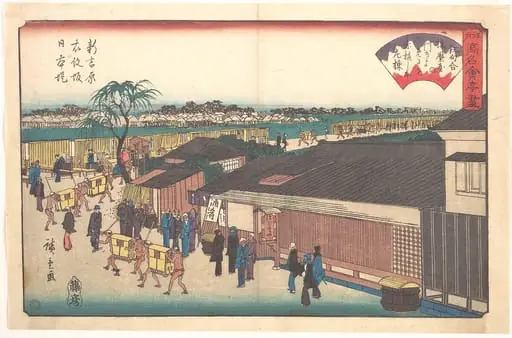 Shinyoshiwara Emonzaka Nihonzutsumi (Harimaya)|江戸高名会亭尽 新吉原衣紋坂日本堤 播磨屋|The Harimaya at Shinyoshiwara Emonzaka Nihonzutsumi
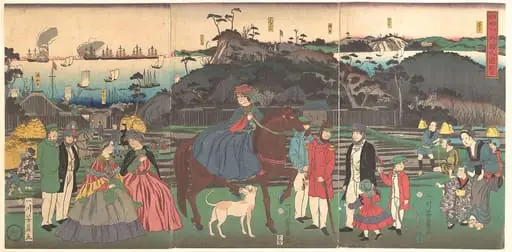 Kanagawa Gongenyama Gaikokujin yūran|Foreigners Visiting the Famous Site of Mt. Gongen in Kanagawa
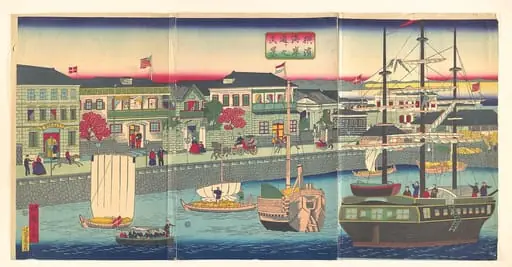 横浜海岸通り之風景|View of the Seafront in Yokohama (Yokohama Kagandori no fūkei)
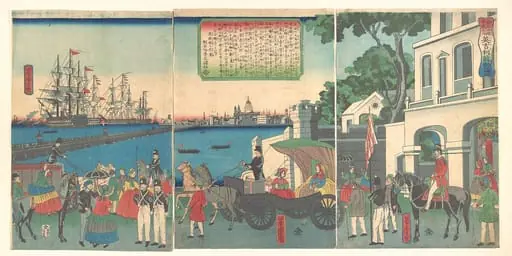 Igirisu Rondon no kaiko|The Port of London England
 Untitled