Artwork
Shinyoshiwara Emonzaka Nihonzutsumi (Harimaya)|江戸高名会亭尽 新吉原衣紋坂日本堤 播磨屋|The Harimaya at Shinyoshiwara Emonzaka Nihonzutsumi
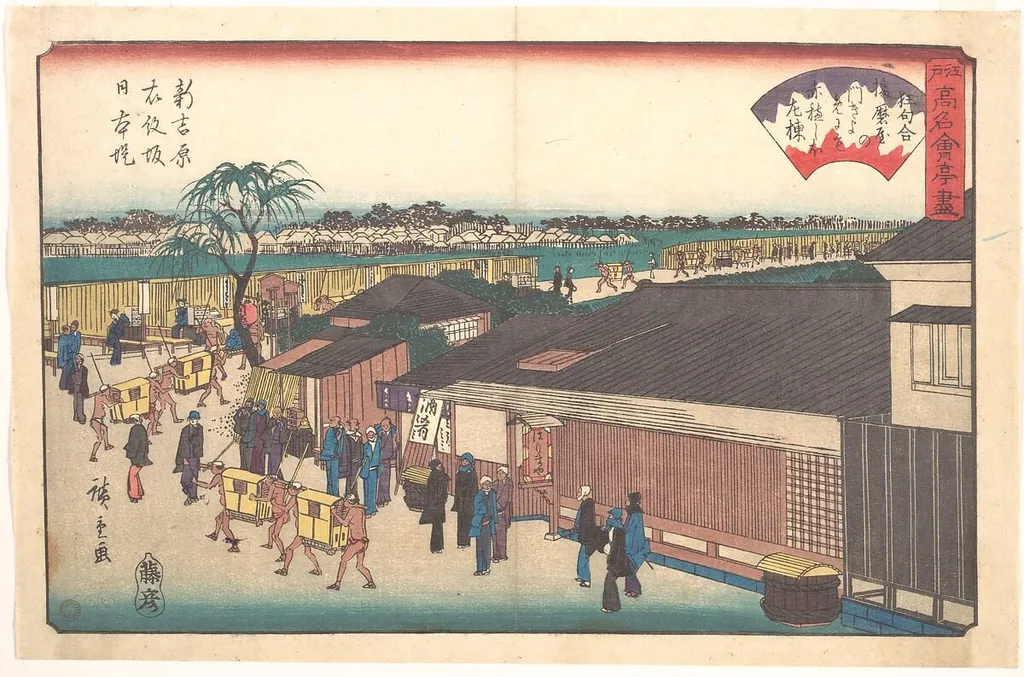
Shinyoshiwara Emonzaka Nihonzutsumi (Harimaya)|江戸高名会亭尽 新吉原衣紋坂日本堤 播磨屋|The Harimaya at Shinyoshiwara Emonzaka Nihonzutsumi is an ink print by the Romanticist artist Utagawa Hiroshige. It dates from 1838 and is held in the collection of the Metropolitan Museum of Art.
About this work
Overview
This woodblock print, created by Utagawa Hiroshige around 1838, is part of the *Edo Meisho Zue* series. It captures a scene from the Shinyoshiwara district in Edo-period Japan, focusing on the Harimaya establishment within the licensed pleasure quarters.
Subject & Meaning
The print depicts a bustling street scene near Harimaya, showcasing daily life in Edo's pleasure quarters. While the setting is a hub of entertainment, the composition emphasizes architecture and urban activity over figures or explicit leisure themes.
Technique & Style
Hiroshige employs his characteristic use of flat colors and clear outlines to convey depth in a stylized manner. The result is a lively yet orderly snapshot of urban life, typifying his approach to capturing everyday scenes.
History & Provenance
Created circa 1838 for the *Edo Meisho Zue* series, this work is a representative example of Hiroshige's contribution to ukiyo-e beyond his famed landscape series.
Context
Unlike typical ukiyo-e prints that highlight figures or entertainment, this work reflects Hiroshige's interest in urban and architectural subjects, offering a unique glimpse into Edo's daily life.
Artist & collection
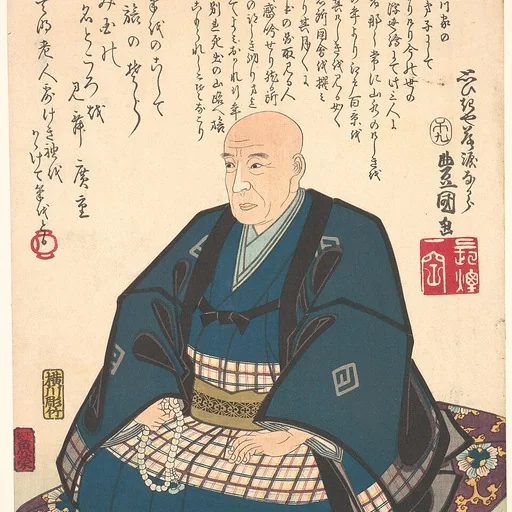
Artist
Utagawa Hiroshige (歌川 広重) or Andō Hiroshige (安藤 広重), born Andō Tokutarō (安藤 徳太郎; 1797 – 12 October 1858), was a Japanese ukiyo-e artist, considered the last great master of that tradition.

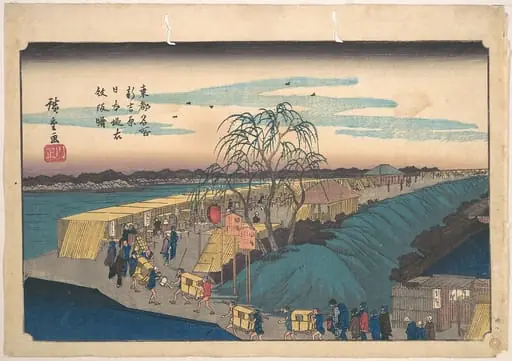 東都名所 新吉原日本堤衣紋坂曙|Shin Yoshiwara Nihon Tsutsumi Emonzaka Akatsuki
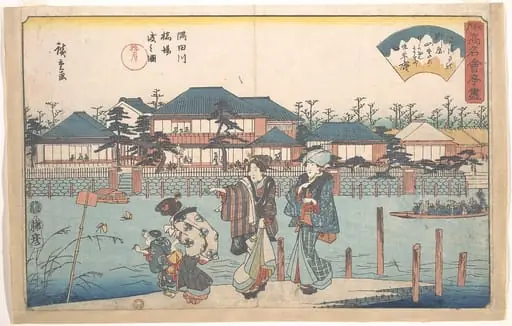 江戸高名会亭尽 隅田川橋場渡之図 柳屋|Sumidagawa Hashiba Watashi Zu (Yanagiya)
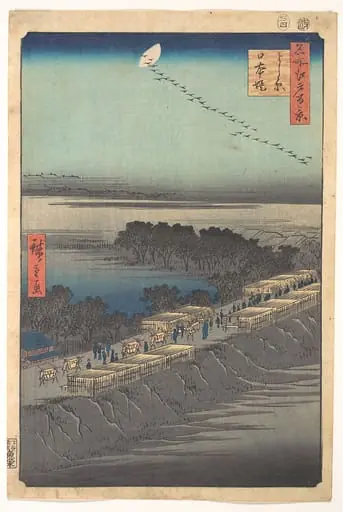 「名所江戸百景 よし原 日本堤」|“Nihon Embankment at Yoshiwara,” from the series One Hundred Famous Views of Edo (Meisho Edo hyakkei, Yoshiwara, Nihonzutsumi)
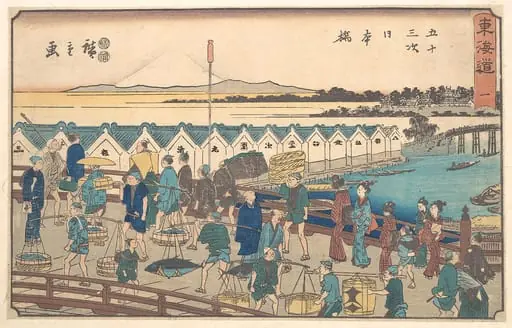 東海道五十三次 日本橋|Nihon bashi
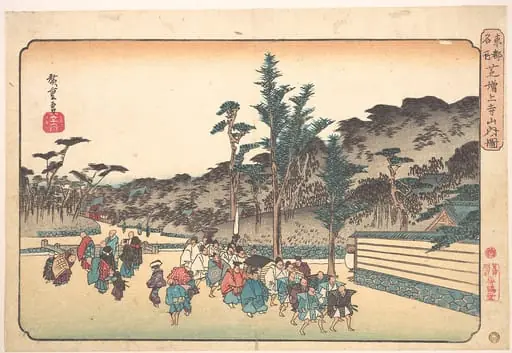 東都名所 芝増上寺山内の図|Shiba Zōjōji Sannai no Zu
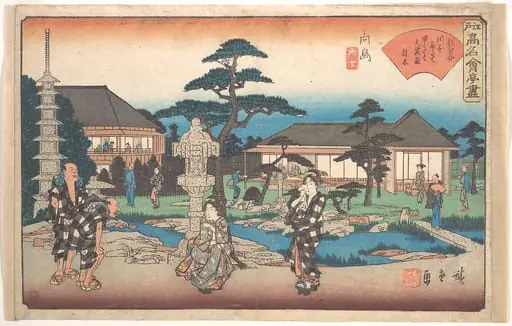 Mukōjima (Daikokuya)|江戸高名会亭尽 向島 大七|The Daikokuya at Mukojima
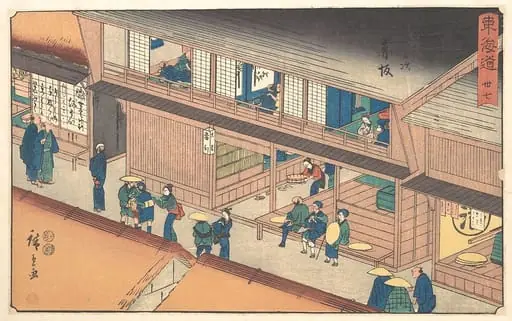 東海道五十三次 赤阪|Akasaka
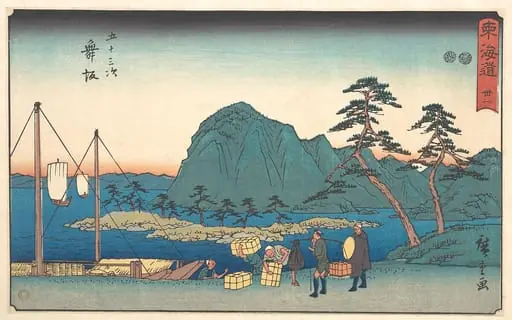 東海道五十三次 舞坂|Maizaka
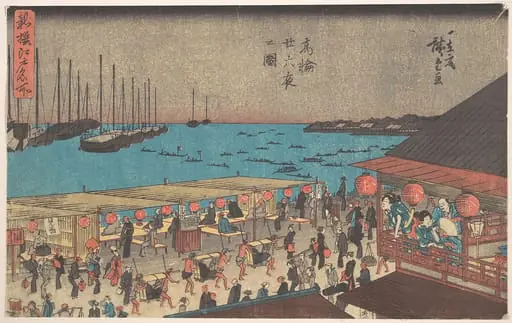 新撰江戸名所 高輪廿六夜之図|Takanawa Ni-ju-roku Ya
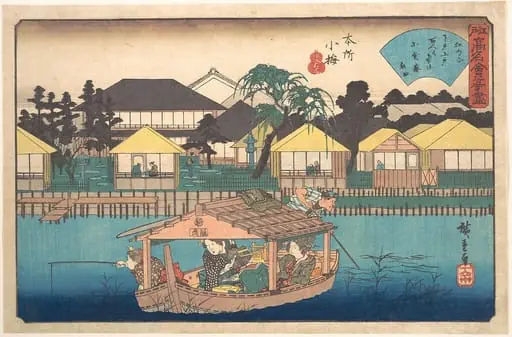 江戸高名会亭尽 本所小梅 小倉庵|Honjo Komme (Ogura-an)