Artwork
Climbing Man with Arms Outstretched
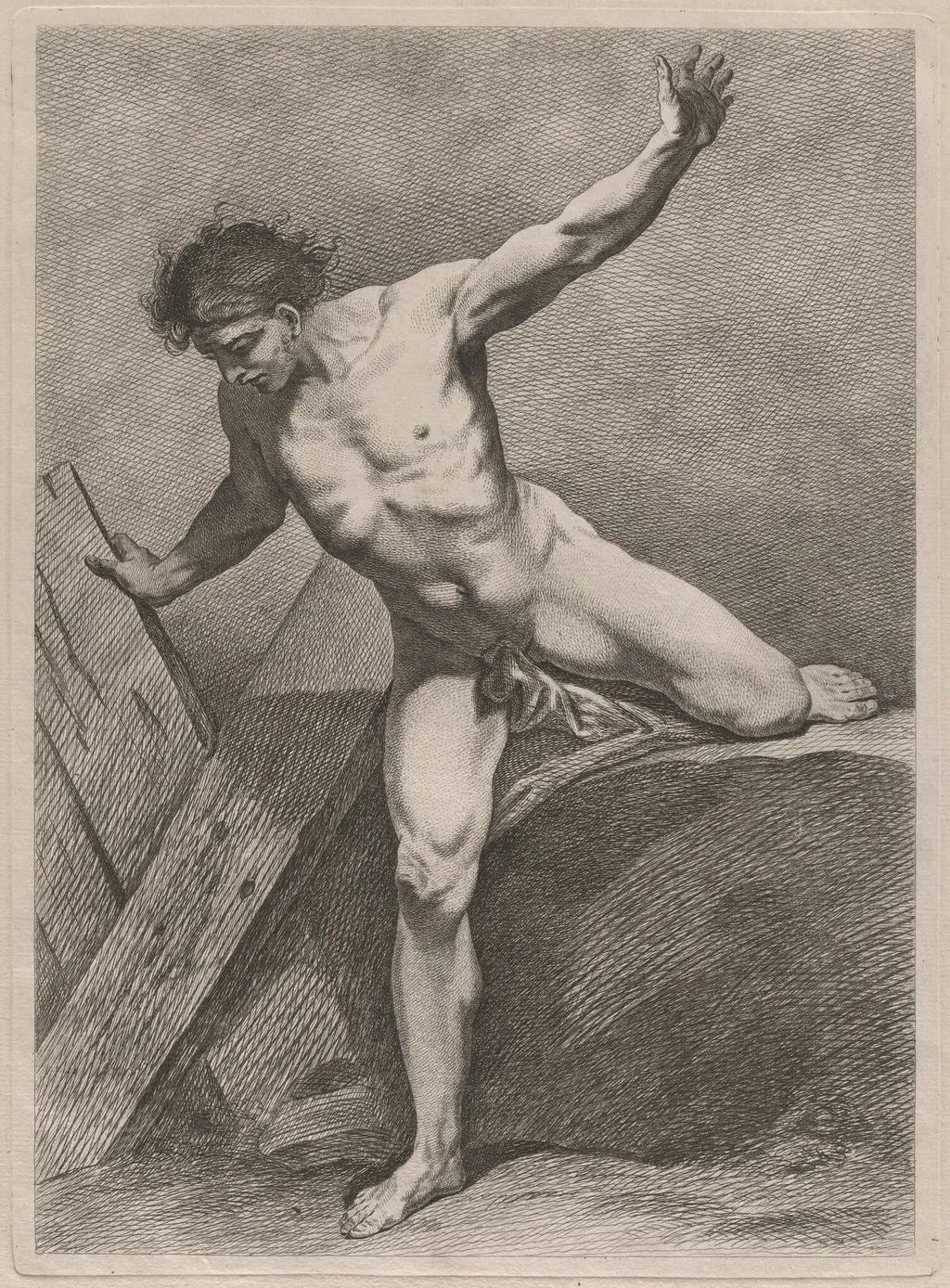
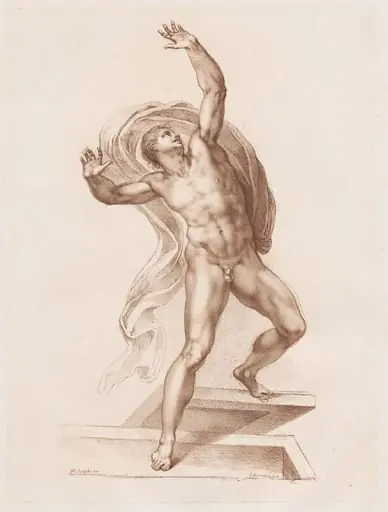
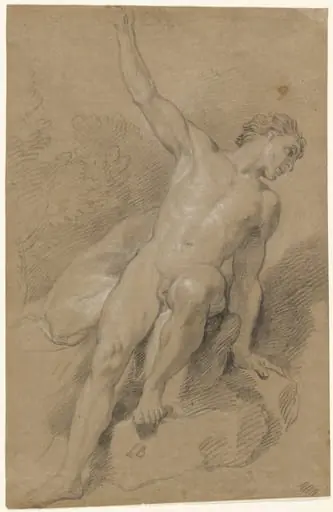
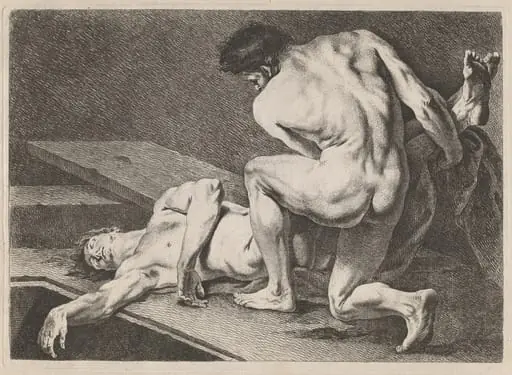
Climbing Man with Arms Outstretched is an ink print by the Baroque artist Carle Van Loo. It dates from 1743 and is held in the collection of the National Gallery of Art.
About this work
Overview
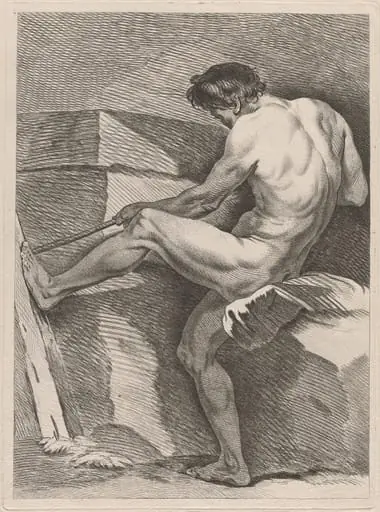
Carle Van Loo’s etching Climbing Man with Arms Outstretched, dated circa 1743, presents a solitary, muscular figure rendered in monochrome on laid paper. The composition isolates the body against a densely patterned backdrop, emphasizing the tension of the pose and the contrast between light and shadow.
Subject & Meaning
The work depicts a nude man lying on his side, one arm extended upward and backward as if reaching for an unseen point, while his bent knee and turned head suggest a moment of strained effort. The gesture conveys a sense of physical exertion and the human body’s capacity for movement.
Technique & Style
Van Loo achieved a lifelike surface through meticulous line work, employing fine cross‑hatching to model musculature and skin texture. The swirling, densely packed lines of the background function as a tonal field, allowing the figure to emerge sharply from a darker, textured space—a demanding approach for eighteenth‑century etching.
History & Provenance
Created around 1743, the print belongs to the period when Van Loo explored anatomical studies in print form. While specific ownership records are scarce, the piece is catalogued among his early etchings and has appeared in several collections of 18th‑century French graphic art.
Artist & collection


![The Borghese Gladiator, back view [plate 29], by François Perrier](https://artifactworldgallery.com/img/francois-perrier--the-borghese-gladiator-back-view-plate-29--e76fdd1927ce2d52-w320.webp)