Artwork
Sir George Croke
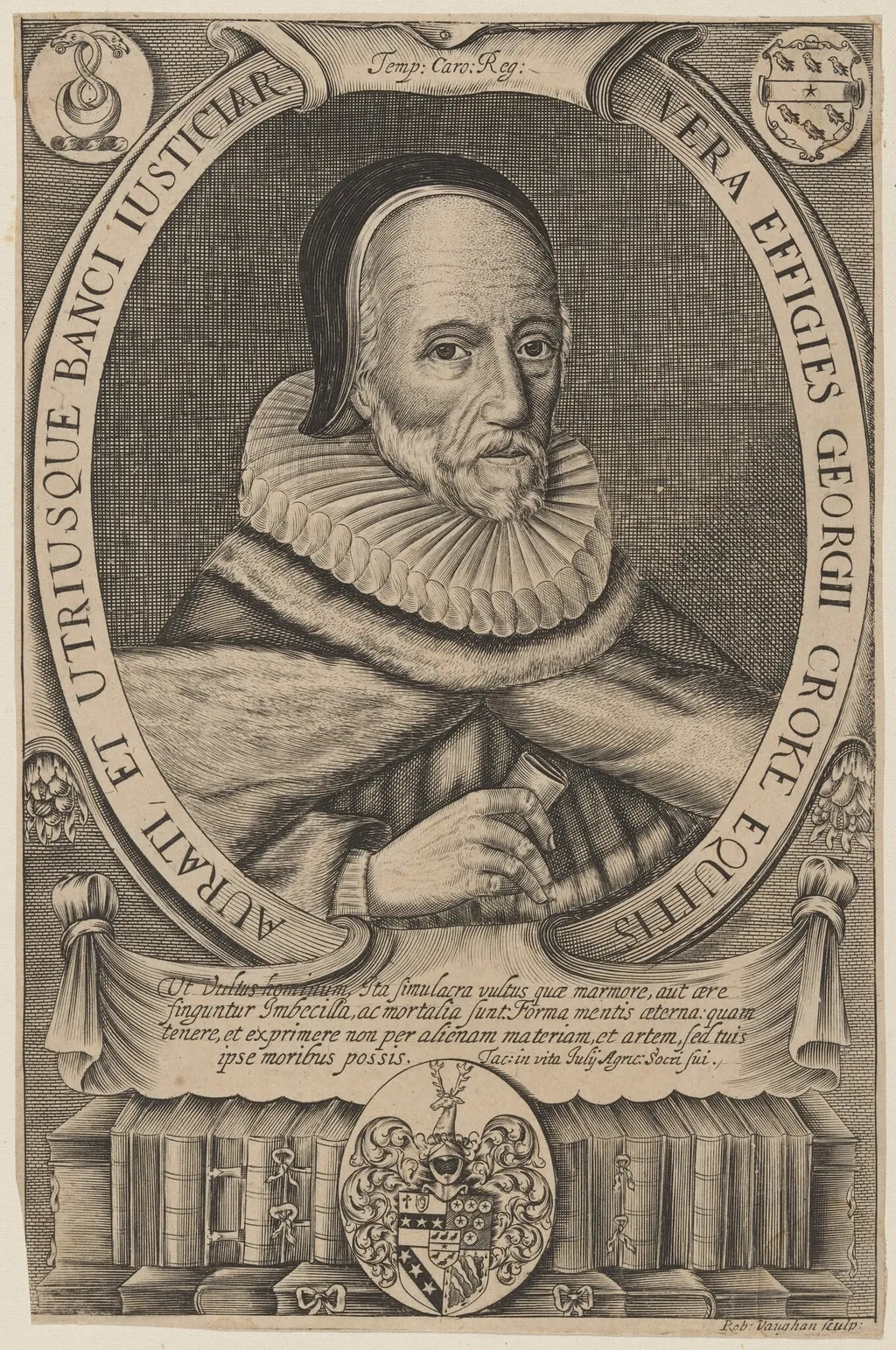
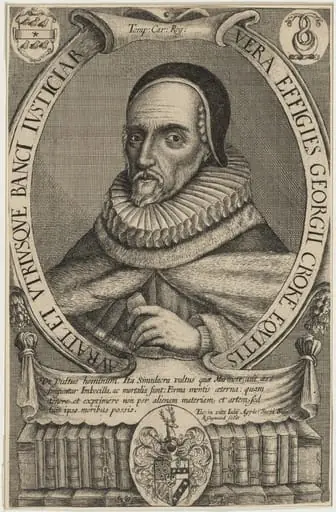
Sir George Croke is an ink print by the Renaissance artist Robert Vaughan. It dates from 1640 and is held in the collection of the National Gallery of Art.
About this work
Overview
The image is rendered entirely through fine incised lines on a metal plate, producing sharp contrasts and intricate detail without the use of pigment.
This black-and-white print, created in 1640 by Robert Vaughan, depicts Sir George Croke as a formal portrait in engraving. The image is rendered entirely through fine incised lines on a metal plate, producing sharp contrasts and intricate detail without the use of pigment. The composition centers on the subject’s contemplative pose, framed by an ornate border filled with heraldic and textual elements.
Subject & Meaning
Sir George Croke, a prominent English judge and politician, is portrayed in middle to late age with a full white beard and a high ruff collar, signs of his status and adherence to early 17th-century elite dress. His hand resting beneath his chin suggests reflection or authority. The surrounding Latin inscriptions and coats of arms reinforce his legal standing and familial lineage, transforming the portrait into a visual testament of his public identity.
Technique & Style
The image is executed in the intaglio technique of engraving, where lines are meticulously carved into a copper plate with a burin. Fine, controlled strokes model the texture of fabric, the softness of facial features, and the complexity of the border’s decorative motifs. The absence of tone or color emphasizes linear precision, characteristic of English portrait engravings of the period, where clarity and symbolism outweigh naturalistic color.
History & Provenance
Created in 1640, the engraving likely served as a commemorative piece for Croke’s judicial career or public service. It was produced during a time when printed portraits of notable figures circulated among legal and political circles. The work is attributed to Robert Vaughan, a known engraver of the era, though few of his works survive in significant numbers, making this a rare example of his output.
Context
In the decades before the English Civil War, engraved portraits functioned as tools of social and professional identity. Croke’s image, surrounded by heraldry and Latin text, reflects the era’s emphasis on lineage, learning, and institutional authority. Such prints were often collected by lawyers, scholars, and civic officials, serving both as personal mementos and symbols of status within the educated elite.
Legacy
Though not widely reproduced, this engraving remains a documented example of early Stuart portraiture in print. It contributes to the historical record of how legal figures were visually represented in pre-revolutionary England. Its survival offers insight into the intersection of print culture, heraldic tradition, and the self-presentation of public men during a period of political upheaval.
Artist & collection