Artwork
Germania
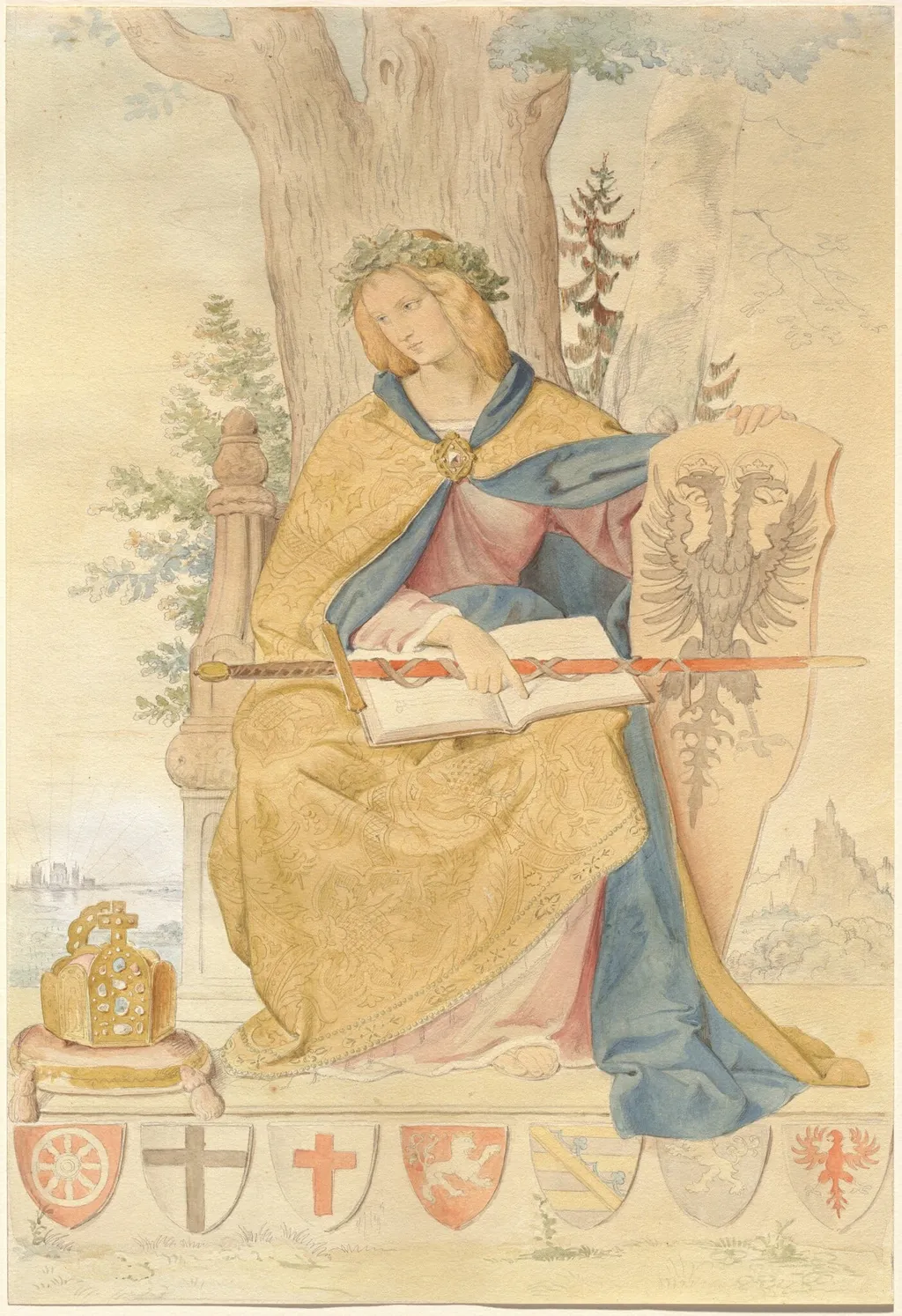
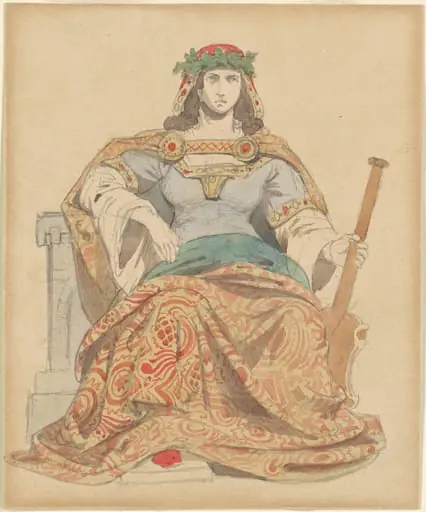
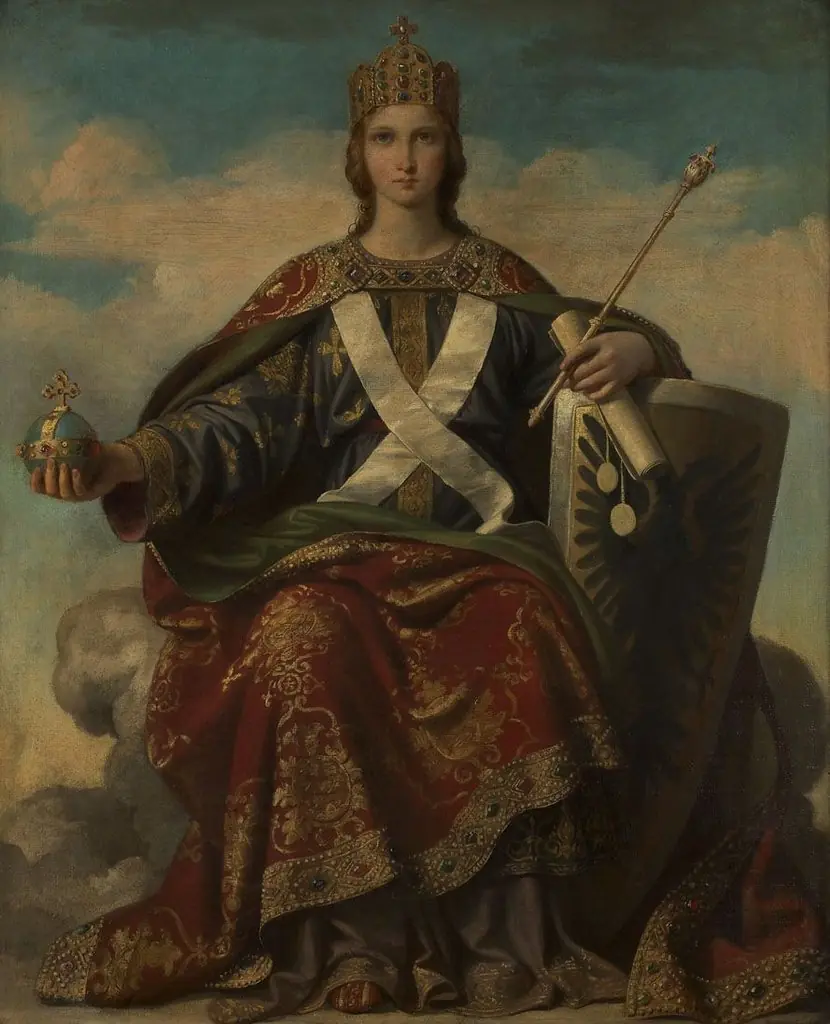
Germania is an ink drawing by the Romanticist artist Philipp Veit. It dates from 1834 and is held in the collection of the National Gallery of Art.
About this work
Overview
Created in 1834 by Philipp Veit, *Germania* is a detailed drawing executed in pen and ink with watercolor and gold accents over graphite on wove paper.
Created in 1834 by Philipp Veit, *Germania* is a detailed drawing executed in pen and ink with watercolor and gold accents over graphite on wove paper. Veit, a central figure in the Nazarene movement, employed meticulous draftsmanship to convey national symbolism through a single allegorical figure. The work belongs to a broader 19th-century effort to define German cultural identity through historical and spiritual imagery, moving away from classical models toward indigenous motifs.
Subject & Meaning
The figure of Germania, seated on a throne, embodies the personification of the German nation. Her leaf crown suggests natural order and ancient tradition, while the book in her lap signifies law or sacred knowledge. The sword across her lap implies readiness to defend, not to conquer. Surrounding symbols—the cross, sun, and bird—point to divine protection, cyclical renewal, and spiritual guidance. The tranquil landscape behind her reinforces an idealized vision of homeland as harmonious and enduring.
Technique & Style
Veit layered pen and brown, black, and golden ink over a graphite underdrawing, then applied translucent watercolor washes to build subtle tonal depth. Gold ink highlights accentuate symbolic elements without overt ornamentation. The use of glazing creates a luminous quality, particularly in the robe and cape, while the delicate rendering of the tree and distant hills reflects the Nazarene preference for clarity, precision, and restrained emotional expression over dramatic flair.
History & Provenance
Commissioned during a period of rising nationalist sentiment in the German states, *Germania* was produced shortly after Veit’s return from Rome, where he had worked on frescoes with fellow Nazarenes. The drawing remained in private collections until the 20th century, when it entered a public museum. Its survival as a paper work is notable, given the fragility of such materials and the political upheavals of the era.
Context
In the 1830s, German-speaking territories lacked political unity, and artists turned to cultural symbols to foster collective identity. The Nazarenes rejected Enlightenment rationalism and French neoclassicism, favoring medieval and early Renaissance models. *Germania* aligns with this ethos, drawing on pre-modern iconography to propose a spiritual, rather than territorial, basis for nationhood—echoing contemporary literary and philosophical movements seeking a shared German heritage.
Legacy
Though never widely exhibited in its time, *Germania* became a reference point for later nationalist imagery in the 19th century. Its quiet dignity and symbolic economy contrasted with more militant depictions of nationhood that emerged after 1848. Today, it is studied as a nuanced expression of cultural longing, illustrating how art could articulate collective identity without resorting to overt political rhetoric.
Artist & collection
Artist
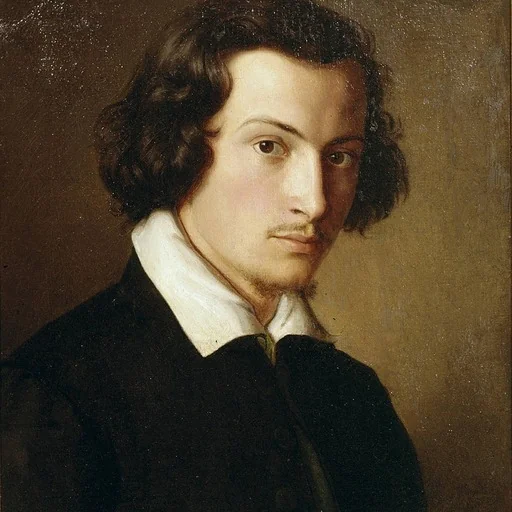
Philipp Veit (13 February 1793 – 18 December 1877) was a German Romantic painter and one of the main exponents of the Nazarene movement.