Artwork
Two Figures in Costume
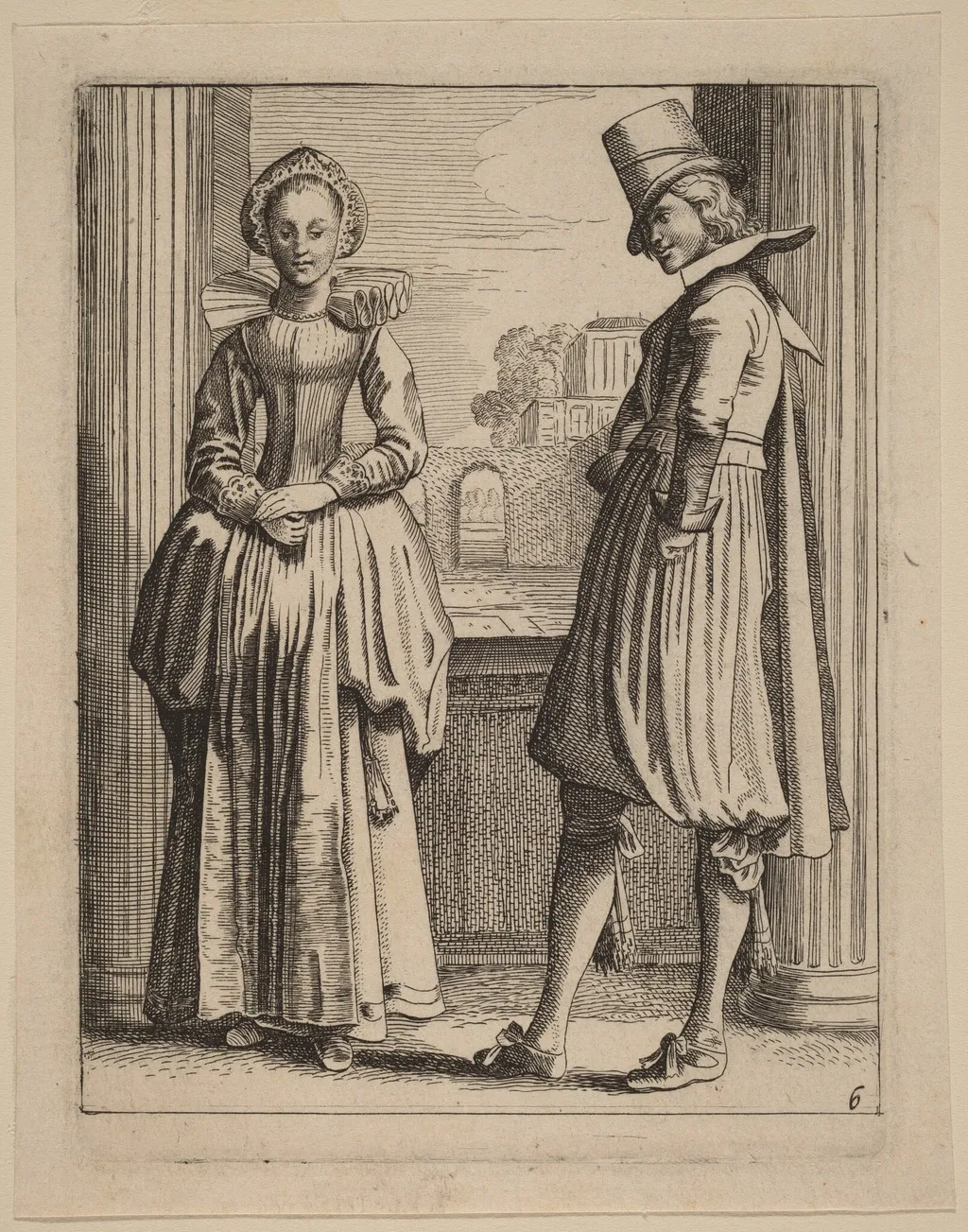
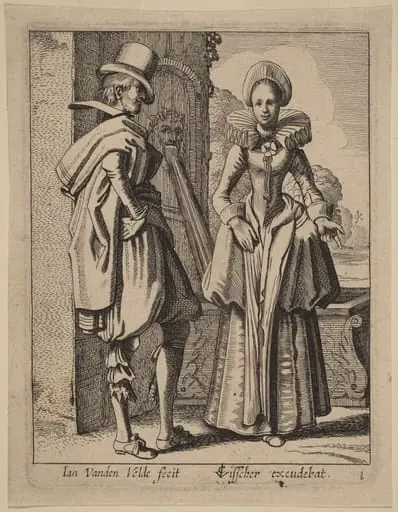
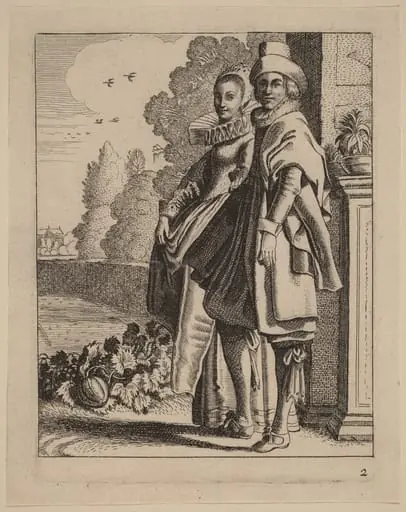
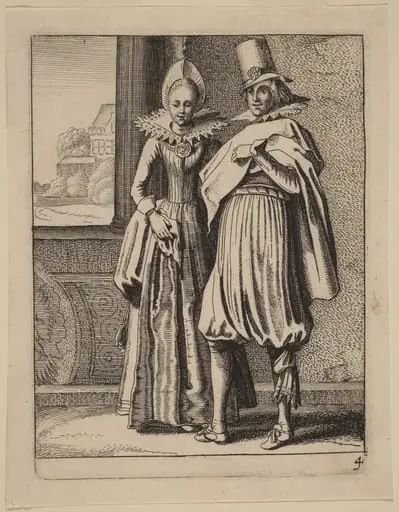
Two Figures in Costume is an ink print by the Renaissance artist Jan van de Velde. It dates from 1617 and is held in the collection of the National Gallery of Art.
About this work
Overview
Van de Velde, known for his detailed renderings of animals and domestic scenes, applied his precision to this intimate interior study.
Created in 1617 by Jan van de Velde II, this etching belongs to the Dutch Golden Age tradition of printmaking. Van de Velde, known for his detailed renderings of animals and domestic scenes, applied his precision to this intimate interior study. The work captures two figures in formal attire, framed by a modest room and a distant landscape visible through a window, reflecting the era’s interest in quiet, observed moments.
Subject & Meaning
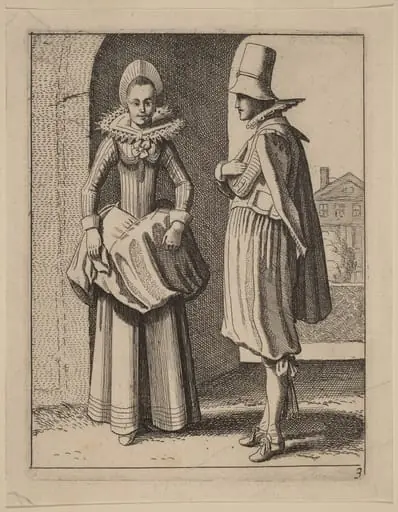
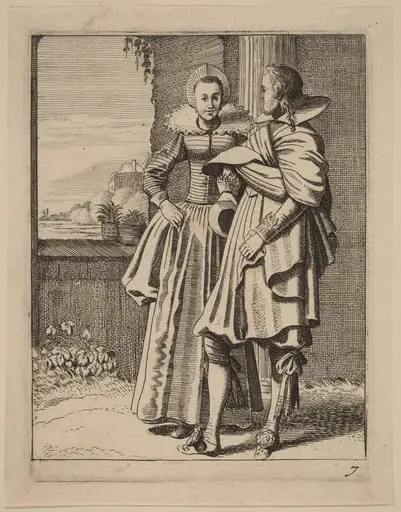
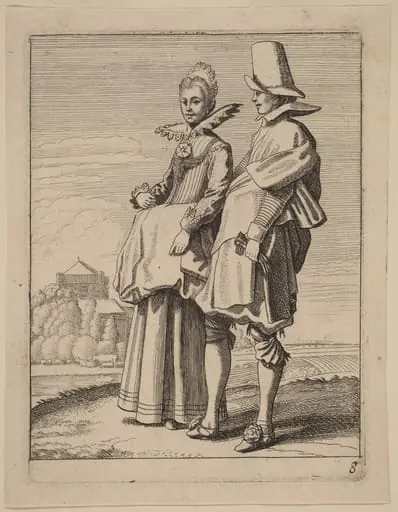
The two figures, a woman in a draped gown and head covering and a man in a tall hat and flowing cloak, appear engaged in a moment of stillness rather than action. Their costumes suggest social standing and regional fashion, not theatrical performance. The setting, neither grand nor impoverished, implies a private domestic space where personal identity is expressed through dress. The composition invites contemplation of social roles and quiet dignity.
Technique & Style
Van de Velde employed fine, controlled lines to render fabric textures, facial features, and architectural details with subtle tonal variation. The etching’s delicate cross-hatching and careful line weight convey the weight of cloth and the softness of light entering through the window. The background landscape is rendered with minimal strokes, balancing detail with restraint—a hallmark of Dutch printmaking at the time.
History & Provenance
Jan van de Velde II was part of a prominent Dutch artistic family active in the early 17th century. His prints were circulated among collectors and fellow artists, valued for their technical skill rather than grand narrative. While the specific early ownership of this etching is unrecorded, similar works by van de Velde appear in major European print collections, indicating its acceptance within contemporary artistic circles.
Context
Though often associated with the Renaissance, this work aligns more closely with early 17th-century Dutch realism than Italian Renaissance ideals. It reflects the Northern European focus on everyday life, material culture, and individual portraiture. The inclusion of a window framing an external landscape echoes contemporary interest in the relationship between interior and exterior worlds, a theme common in Dutch domestic scenes.
Legacy
Van de Velde’s etchings, including this one, contributed to the development of printmaking as an independent art form in the Netherlands. His attention to texture and quiet observation influenced later generations of printmakers. Though not widely known today, his work remains a reference point for scholars studying the evolution of graphic arts in the Dutch Golden Age.
Artist & collection
Artist
Jan van de Velde the younger (1593 – c. 1 November 1641) was a Dutch Golden Age painter and printmaker, mostly of animal, landscape and still-life subjects. He was the son of Jan van de Velde the Elder and the father of…