Artwork
Two Figures in Costume
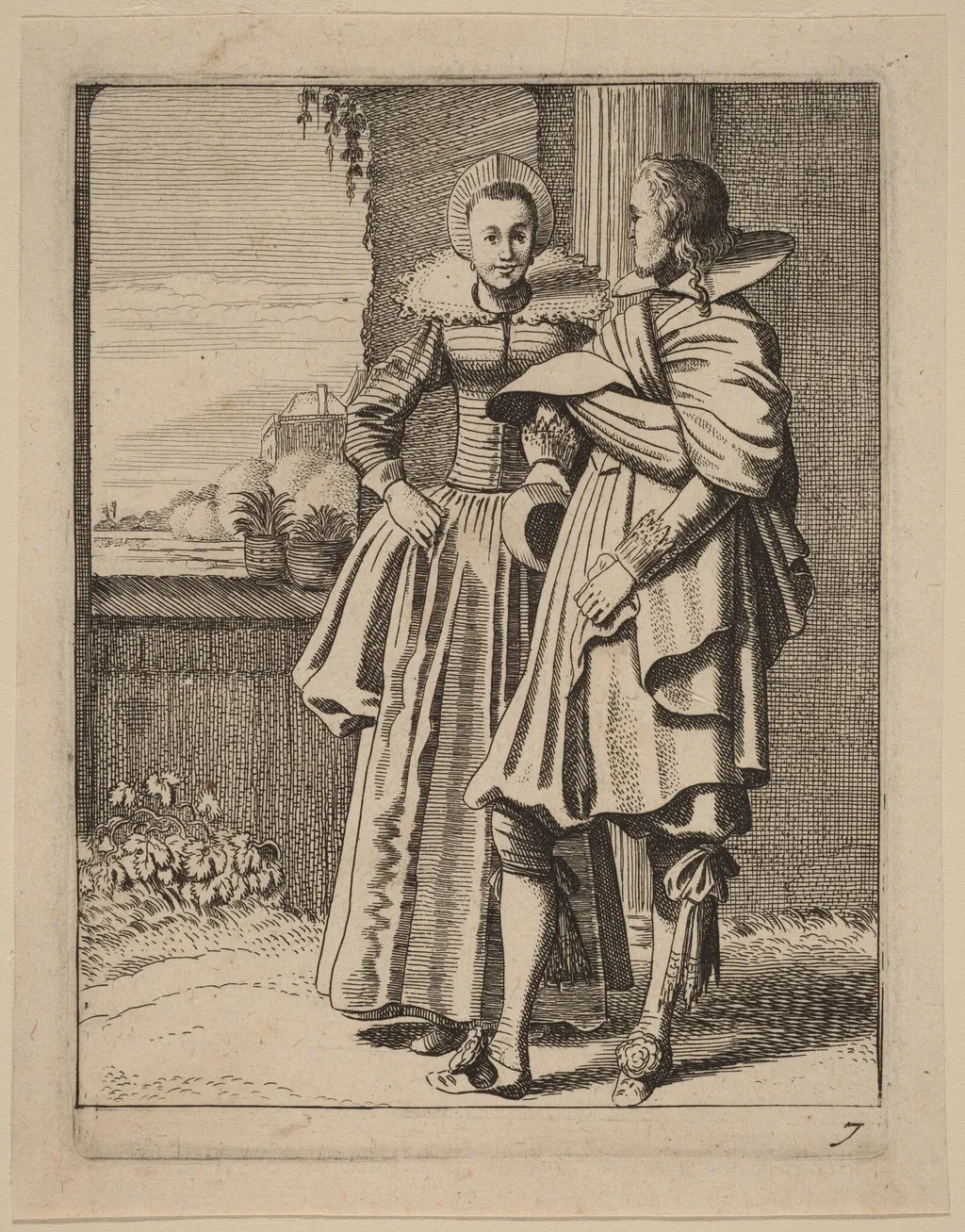
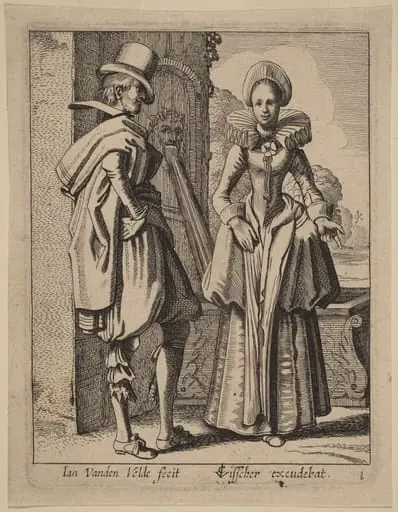
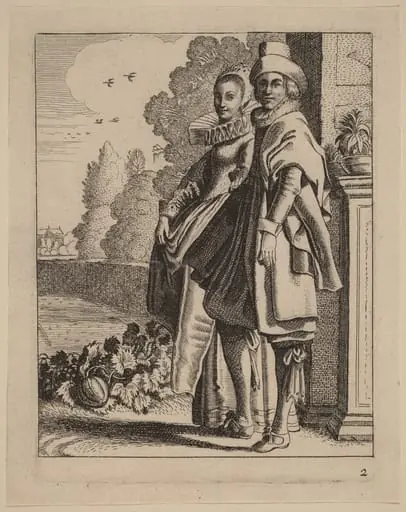
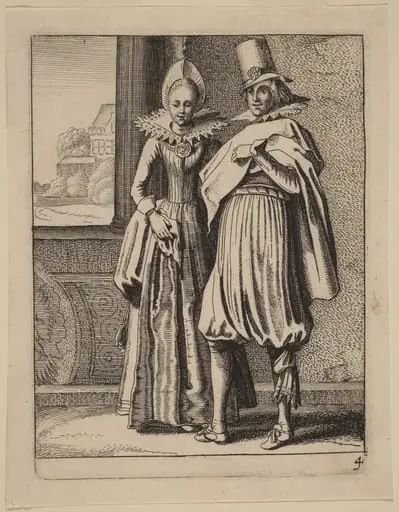
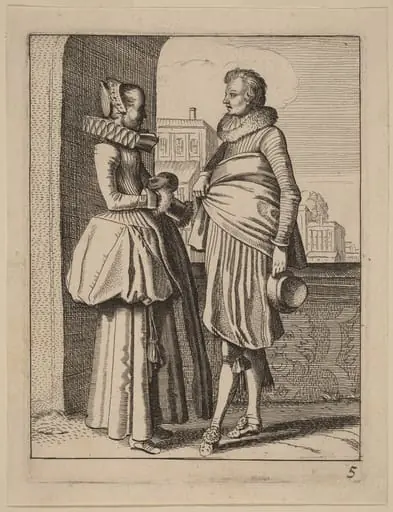
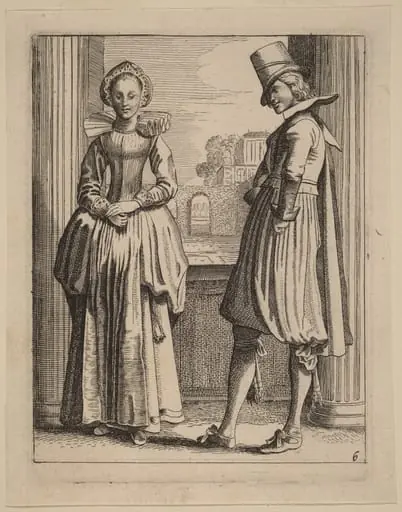
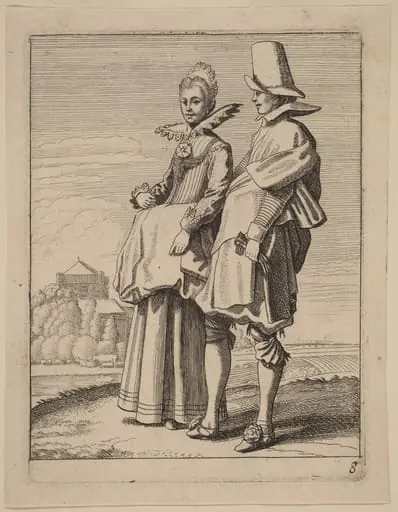
Two Figures in Costume is an ink print by the Renaissance artist Jan van de Velde. It dates from 1617 and is held in the collection of the National Gallery of Art.
About this work
Overview
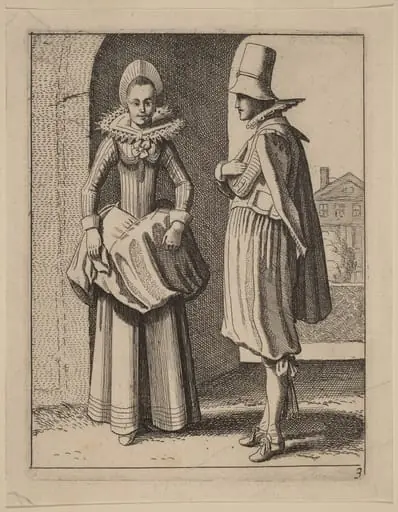
Jan van de Velde II produced the print *Two Figures in Costume* in 1617. Executed as an etching, the work presents a monochrome scene of two individuals in contemporary dress, set against a modest landscape that includes a house and trees.
Subject & Meaning
The left figure is shown in a long, high‑collared dress and holds a fan, while the right figure wears layered robes with a cape and clutches a scroll or sheet of paper. Their attire and accessories suggest a staged or allegorical portrayal, typical of early‑17th‑century Dutch genre scenes.
Technique & Style
Van de Velde employed the etching process, incising fine lines into a metal plate to achieve crisp, detailed contours. The resulting print displays the sharpness and precision characteristic of the medium during the Dutch Golden Age, allowing subtle modeling of fabrics and background elements.
History & Provenance
The artist belonged to a family of painters and printmakers active in the Dutch Golden Age, continuing a lineage that included his father and later his own son. The print reflects the period’s interest in costume studies and the dissemination of printed images across Europe.
Context
Printed works like this were often used to illustrate fashion, customs, or moral narratives for a broad audience. In the early 1600s, Dutch printmakers frequently combined portraiture with genre details, catering to collectors interested in both technical skill and contemporary life.
Artist & collection
Artist
Jan van de Velde the younger (1593 – c. 1 November 1641) was a Dutch Golden Age painter and printmaker, mostly of animal, landscape and still-life subjects. He was the son of Jan van de Velde the Elder and the father of…