Artwork
Two Figures in Costume
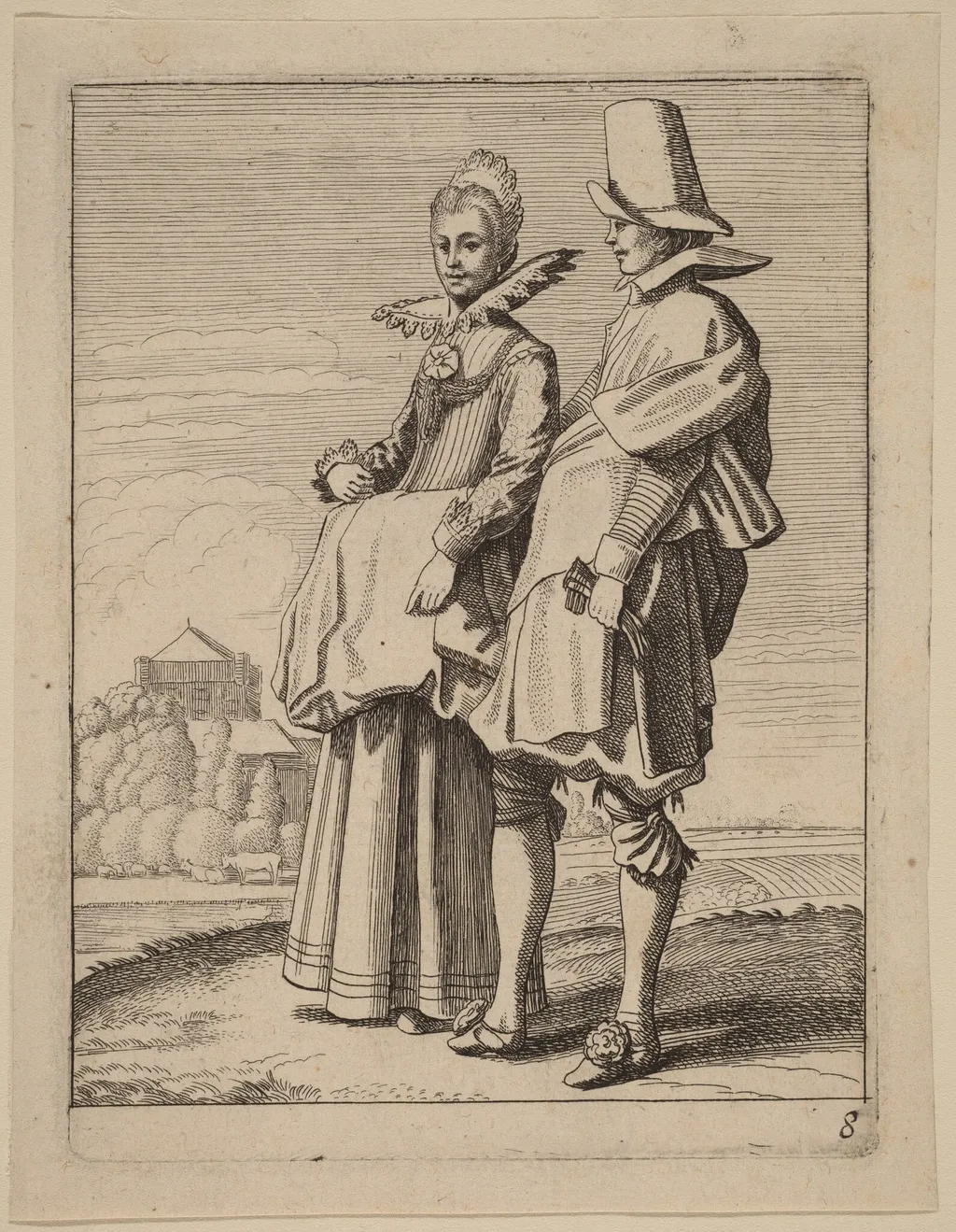
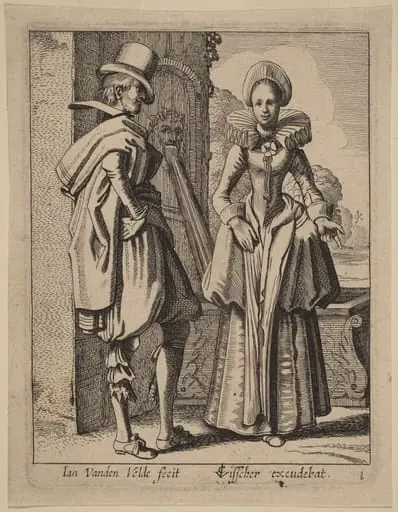
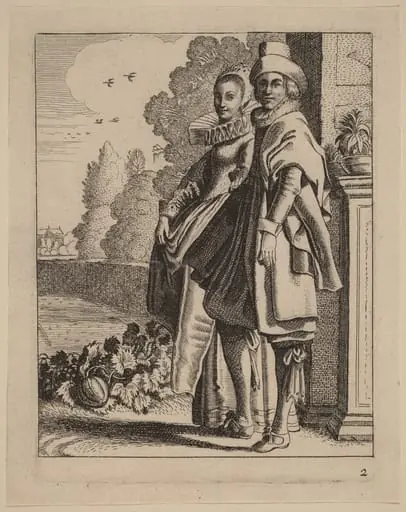
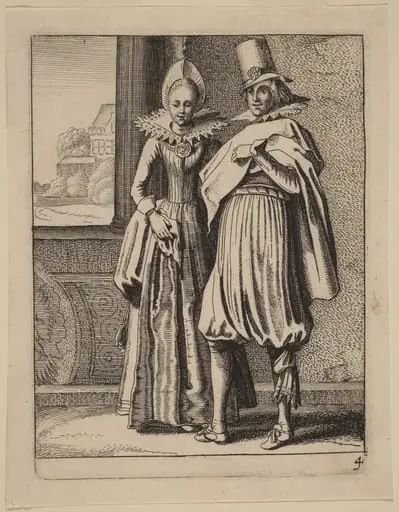
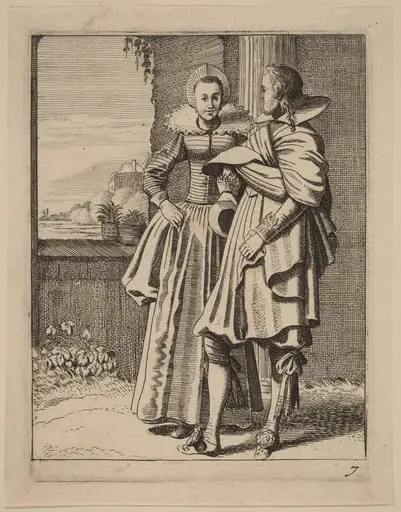
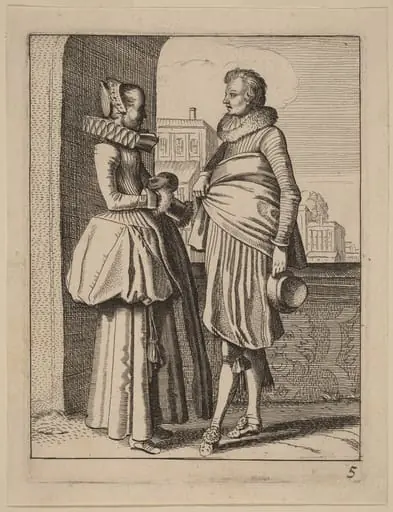
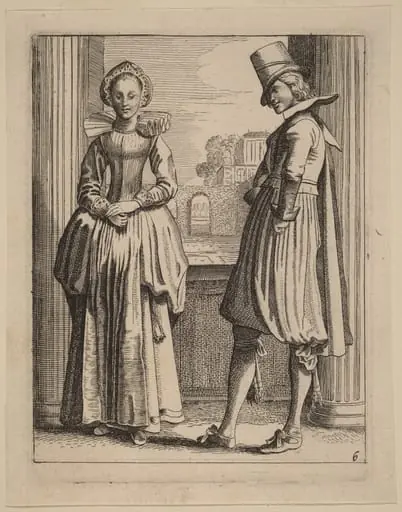
Two Figures in Costume is an ink print by the Renaissance artist Jan van de Velde. It dates from 1617 and is held in the collection of the National Gallery of Art.
About this work
Overview
Created in 1617, *Two Figures in Costume* is an etching by Jan van de Velde the younger, a Dutch artist active during the early Golden Age. Known for his work across printmaking, painting, and drawing, van de Velde used etching to capture intimate scenes of daily life. This piece exemplifies his interest in human figures and their attire, rendered with precision and quiet observation.
Subject & Meaning
Their clasped hands and close stance suggest intimacy, while their elaborate clothing evokes a sense of theatricality or nostalgia.
The print portrays two individuals in stylized historical dress, likely representing a couple in a moment of quiet connection. Their clasped hands and close stance suggest intimacy, while their elaborate clothing evokes a sense of theatricality or nostalgia. The figures are not identified as specific persons, but rather as archetypes, reflecting a broader interest in costume and social presentation common in 17th-century Dutch graphic art.
Technique & Style
Van de Velde employed fine, controlled etching lines to render textures—delicate folds in fabric, the weave of a hat, the grain of bark. The composition is tightly framed, with minimal background elements: a modest structure and sparse trees anchor the figures without distraction. The technique emphasizes clarity and detail, aligning with Northern Renaissance traditions that valued observational accuracy over dramatic effect.
History & Provenance
The etching was produced during van de Velde’s early career in Haarlem, a center for printmaking in the Netherlands. While no specific early ownership records are widely documented, the work aligns with the circulation of small-scale prints among collectors and artisans of the period. Its survival reflects the durability and appeal of etchings as accessible, reproducible art forms in early 17th-century Europe.
Context
In early 1600s Holland, interest in costume and character studies flourished alongside growing urban literacy and print culture. Artists like van de Velde responded to demand for images that captured social types and historical dress, often for private collections. This etching fits within a genre that blurred documentary observation with imaginative reconstruction, serving both aesthetic and intellectual curiosity.
Legacy
Van de Velde’s etchings, including this one, contributed to the development of Dutch graphic art as a distinct field. His attention to texture and human gesture influenced later printmakers who explored everyday subjects. Though not widely exhibited today, his works remain studied for their technical finesse and insight into the visual culture of the Dutch Golden Age.
Artist & collection
Artist
Jan van de Velde the younger (1593 – c. 1 November 1641) was a Dutch Golden Age painter and printmaker, mostly of animal, landscape and still-life subjects. He was the son of Jan van de Velde the Elder and the father of…