Artwork
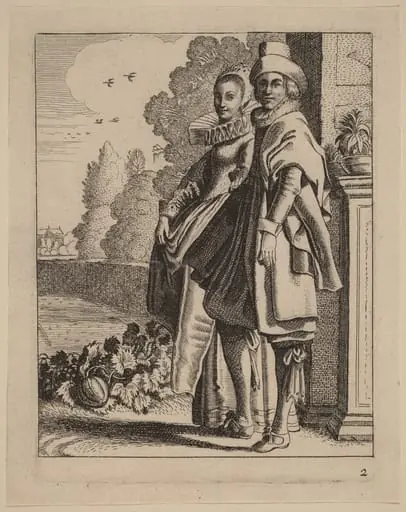
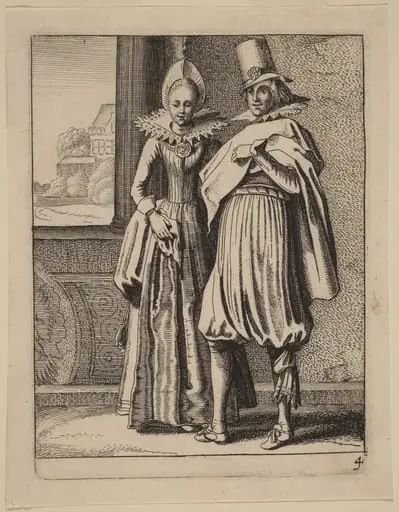
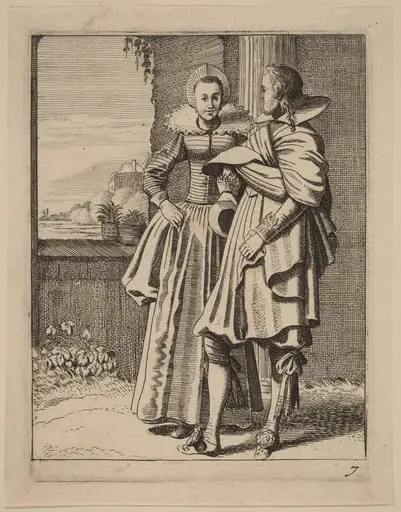
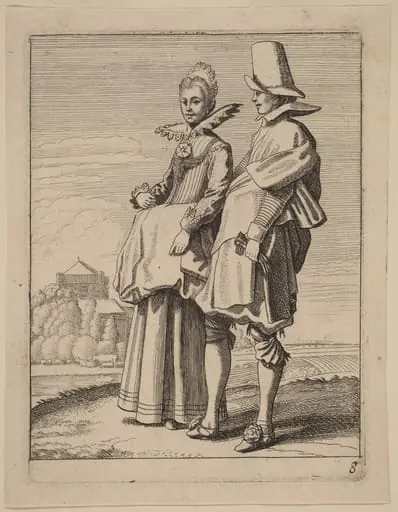
Two Figures in Costume
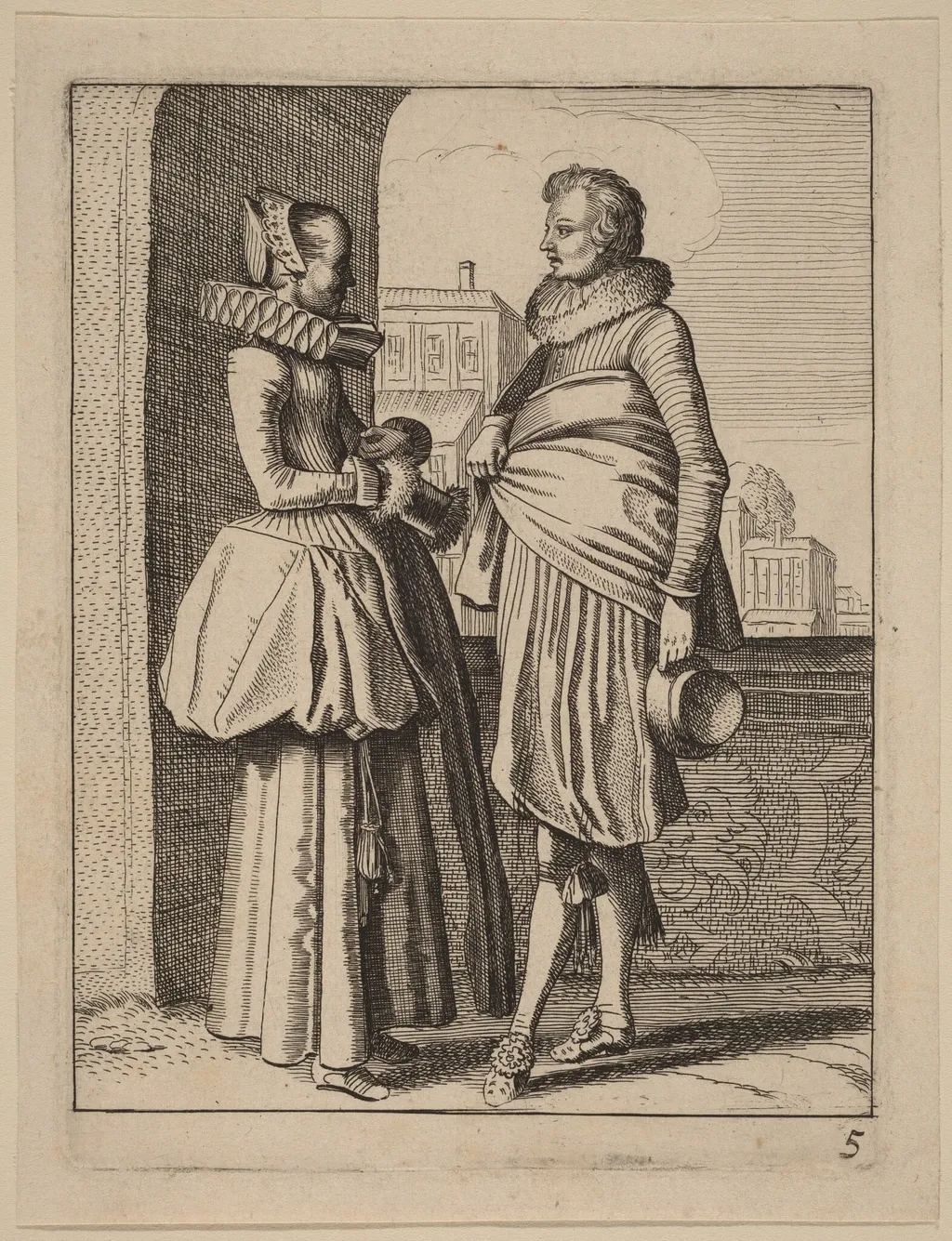
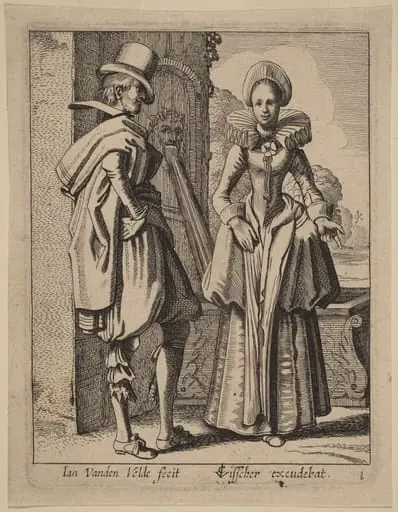
Two Figures in Costume is an ink print by the Renaissance artist Jan van de Velde. It dates from 1617 and is held in the collection of the National Gallery of Art.
About this work
Overview
Created in 1617 by Jan van de Velde the Younger, this etching is a rare example of figure-focused work within his broader oeuvre.
Created in 1617 by Jan van de Velde the Younger, this etching is a rare example of figure-focused work within his broader oeuvre. Known primarily for landscapes, animals, and still lifes, Van de Velde here turns to portraiture in costume, using the precision of etching to capture two individuals in period dress. The composition is modest in scale but carefully composed, reflecting his technical mastery of line and tone.
Subject & Meaning
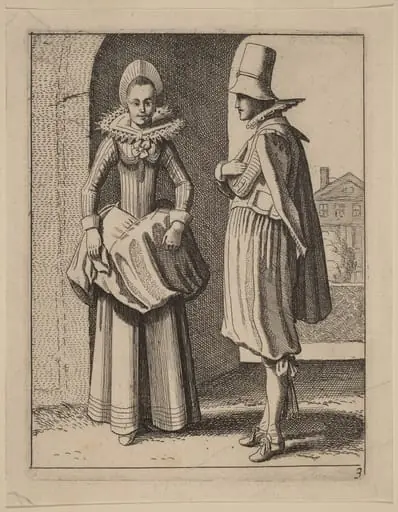
The two figures, dressed in archaic garments, stand before a simple stone wall with distant buildings. Their attire suggests historical or theatrical costume rather than contemporary fashion, hinting at a fascination with the past or a staged scene. The absence of narrative context leaves their identity ambiguous, inviting interpretation as studies of dress, social type, or fleeting moments of daily life observed with quiet curiosity.
Technique & Style
Executed in fine black-and-white etching, the work demonstrates Van de Velde’s skill in controlling line weight and cross-hatching to suggest texture and depth. The figures are rendered with delicate detail in their clothing, while the background remains sparse, emphasizing form and posture. The medium allows for subtle gradations of shadow, enhancing the three-dimensionality of the figures against the flat wall.
History & Provenance
Jan van de Velde the Younger, son of Jan van de Velde the Elder and father of Jan Jansz van de Velde, belonged to a multi-generational Dutch artistic family. While his paintings and prints often featured nature subjects, this etching stands out as an atypical focus on human figures. Its survival suggests it was circulated among collectors interested in the human form, though its early provenance remains undocumented.
Context
In early 17th-century Holland, interest in costume and character studies grew alongside the rise of genre painting and print culture. Artists frequently depicted figures in historical or exotic dress as exercises in observation or as appeals to antiquarian tastes. Van de Velde’s etching aligns with this trend, offering a quiet, non-narrative glimpse into a moment of dressed identity within a rapidly changing society.
Legacy
Though not among Van de Velde’s most frequently reproduced works, this etching illustrates his versatility beyond his primary subjects. It contributes to the broader understanding of Dutch printmakers’ engagement with the human figure during the Golden Age. As a rare example of figure study in his output, it remains a valuable reference for scholars examining the range of artistic interests in early Baroque Netherlands.
Artist & collection
Artist
Jan van de Velde the younger (1593 – c. 1 November 1641) was a Dutch Golden Age painter and printmaker, mostly of animal, landscape and still-life subjects. He was the son of Jan van de Velde the Elder and the father of…