Artwork
"1992" Σταύρωση Νο 3
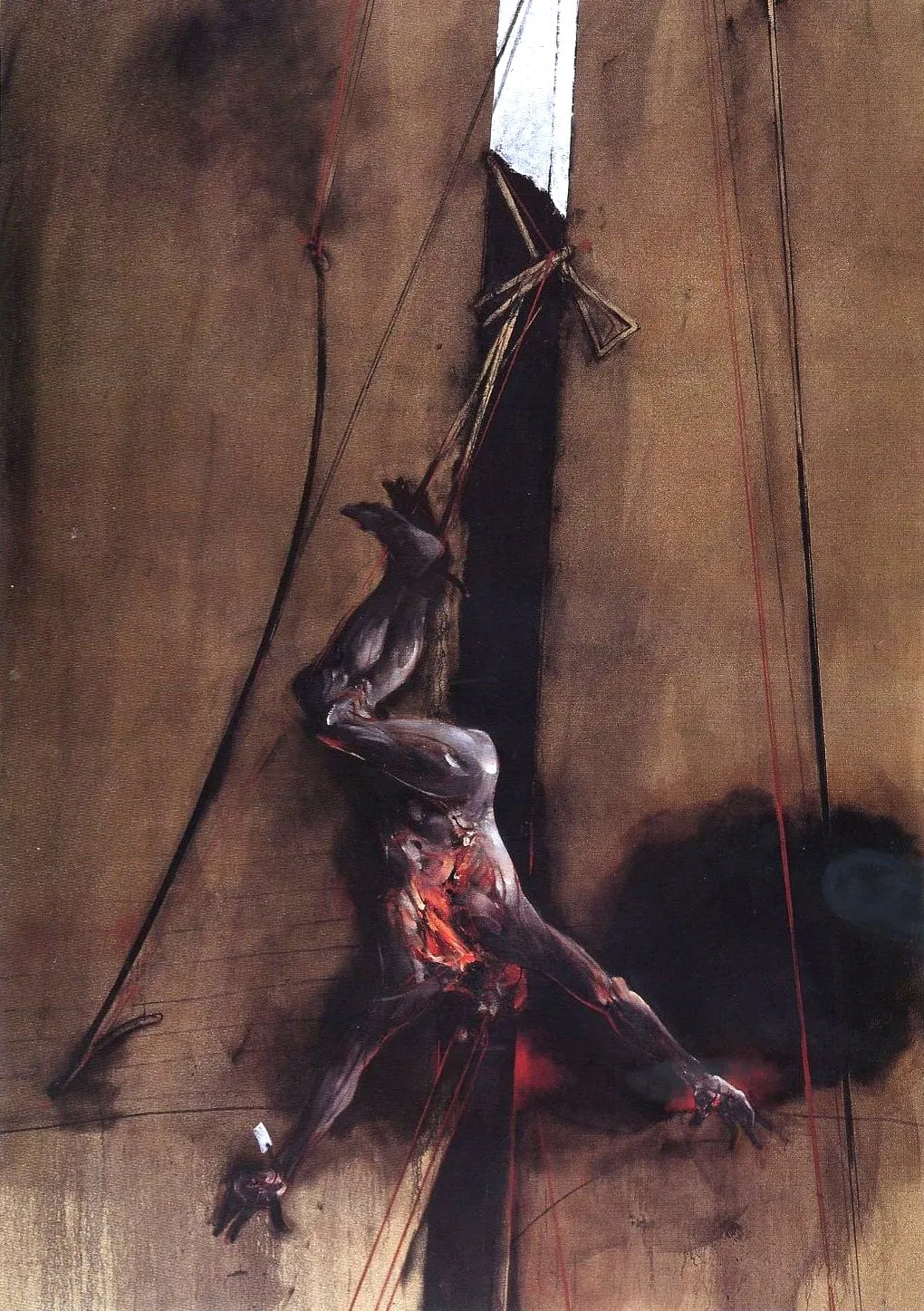
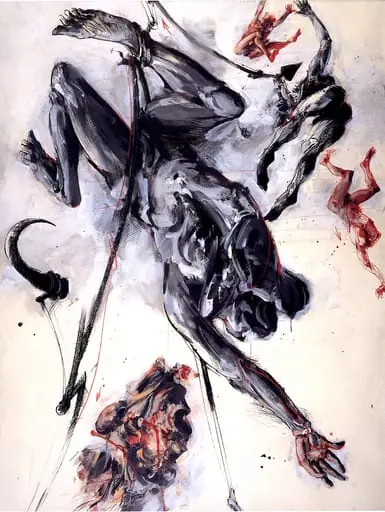
"1992" Σταύρωση Νο 3 is an unspecified painting by Vladimir Velickovic. It dates from 1996 and is held in the collection of the Metropolitan Organisation of Museums of Visual Arts of Thessaloniki – MOMus.
About this work
Overview
Vladimir Velickovic’s work titled “1992” Σταύρωση Νο 3 was completed in 1996. The oil painting, classified as a religious image, is part of the collection of the Museum of Ethnography. Its subject matter and execution place it within the artist’s later explorations of spiritual themes through a stark visual language.
Subject & Meaning
A narrow aperture above the scene admits a thin shaft of light that catches the face, suggesting a fleeting glimpse of divine presence amid darkness.
The canvas presents a solitary figure suspended from a cross, arms outstretched in a gesture that evokes both surrender and exposure. A narrow aperture above the scene admits a thin shaft of light that catches the face, suggesting a fleeting glimpse of divine presence amid darkness. The composition invites contemplation of suffering, redemption, and the tension between corporeal fragility and spiritual illumination.
Technique & Style
Velickovic applies paint in thick, tactile layers, employing the impasto method to give the figure’s body a rough, almost sculptural surface. The brushwork is vigorous, leaving visible strokes that render the skin uneven and shadowy. Warm brown and red tones dominate the background, applied in loose, gestural streaks that heighten the work’s raw, emotive quality.
History & Provenance
After its completion in 1996, the painting entered the holdings of the Museum of Ethnography, where it remains on display. The acquisition reflects the institution’s interest in contemporary works that engage with religious iconography and regional artistic traditions.
Context
Created in the post‑communist period of the Balkans, the piece reflects a broader cultural re‑engagement with religious motifs after decades of secular suppression. Velickovic’s use of impasto and expressive color aligns with a resurgence of figurative painting that seeks to reconcile modernist techniques with traditional spiritual narratives.
Legacy
While not widely reproduced, the work is cited in scholarly discussions of late‑20th‑century Balkan art for its synthesis of material vigor and theological subject matter. It continues to serve as a reference point for artists exploring the physicality of paint to convey existential themes.
Artist & collection
Artist
Vladimir Veličković was a Serbian painter who spent much of his adult life in Paris.
Museum
Metropolitan Organisation of Museums of Visual Arts of Thessaloniki – MOMus
Continue through works from the same source collection.