Artwork
The Christ Child Appearing to Saint Francis
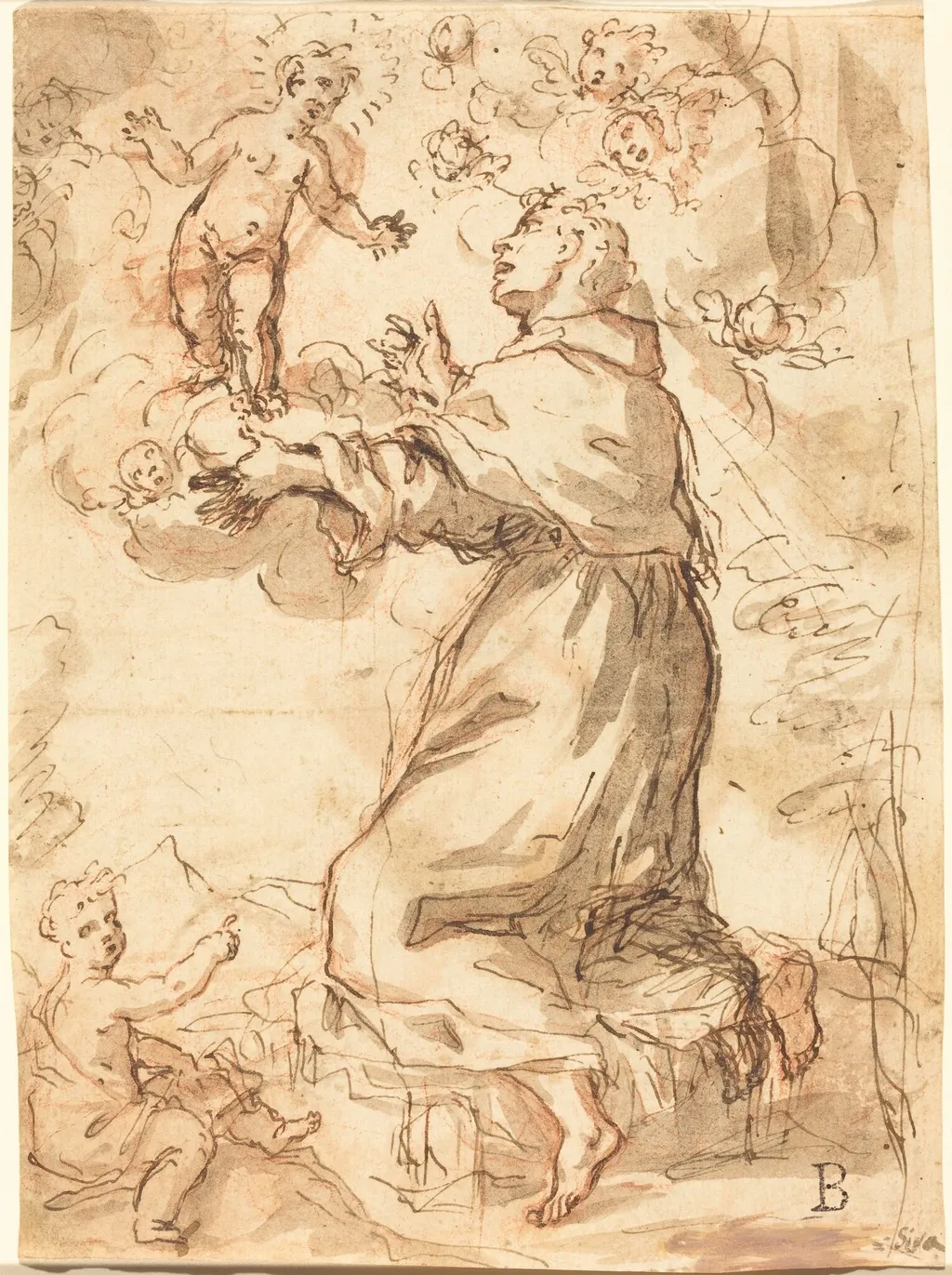
The Christ Child Appearing to Saint Francis is an ink drawing by the Baroque artist Venetian 17th Century. It is held in the collection of the National Gallery of Art. This drawing captures a moment of divine encounter, rendered in pen and brown ink with a gray-brown wash over red chalk on laid paper.
About this work
Overview
This drawing captures a moment of divine encounter, rendered in pen and brown ink with a gray-brown wash over red chalk on laid paper.
This drawing captures a moment of divine encounter, rendered in pen and brown ink with a gray-brown wash over red chalk on laid paper. The composition centers on Saint Francis, depicted in a posture of reverence, as the Christ Child appears before him. The artist employs delicate lines and restrained shading to evoke a quiet, contemplative atmosphere, leaving much of the background undetailed to focus attention on the figures.
Subject & Meaning
The scene portrays the visionary experience of Saint Francis of Assisi, a recurring theme in Christian art, where the saint encounters the Christ Child in a moment of spiritual revelation. The outstretched arms of Francis suggest devotion and humility, while the Child’s ethereal presence conveys innocence and divine grace. The interaction underscores the mystical connection between the saint and the sacred, emphasizing themes of faith and transcendence.
Technique & Style
The artist utilizes a combination of red chalk underdrawing, pen, and ink washes to build depth and texture. Soft, flowing lines define the drapery of Francis’s robe, while finer, more delicate strokes render the Christ Child, enhancing the contrast between earthly and divine forms. Subtle gradations of wash create volume without overpowering the sketch’s intimate scale, reflecting a mastery of draftsmanship and tonal control.
History & Provenance
The drawing’s origins and early ownership remain undocumented, though its technique and subject matter align with works produced in Italian artistic circles during the late Renaissance or Baroque periods. The use of laid paper and specific media suggests it may have been part of a study or preparatory work for a larger composition. Its survival in this form indicates careful preservation, though its path through collections is unrecorded.
Context
Depictions of Saint Francis’s visions were widespread in European art, particularly in regions influenced by Franciscan devotion. Such scenes often served as devotional aids or as expressions of Counter-Reformation spirituality, which emphasized personal piety and mystical experiences. This drawing may reflect the broader artistic engagement with religious narratives, where intimate, emotionally charged moments were favored over grand, narrative-driven compositions.
Legacy
While the artist’s identity and the drawing’s direct influence remain uncertain, its refined technique and evocative subject matter contribute to the understanding of devotional art in its era. The work exemplifies how draftsmanship could convey both technical skill and spiritual intensity, offering insight into the priorities of artists and patrons who valued intimacy and emotional resonance in religious imagery.
Artist & collection

Artist
This bronze caster shaped playful myth and quiet faith in 17th-century Venice. Their small sculptures—*Andiron with Figure of Venus* and its fiery twin *Andiron with Figure of Mars*—show Venus lounging on a hearth tool…

 Saint Anthony of Padua
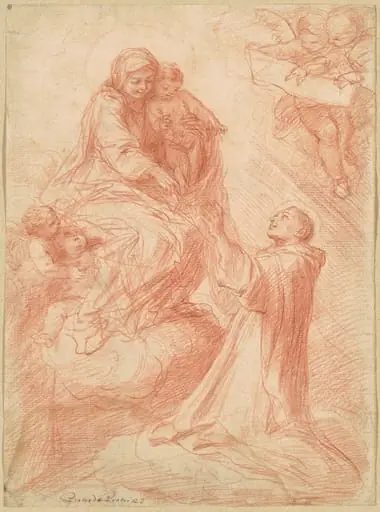 The Vision of Simon Stock
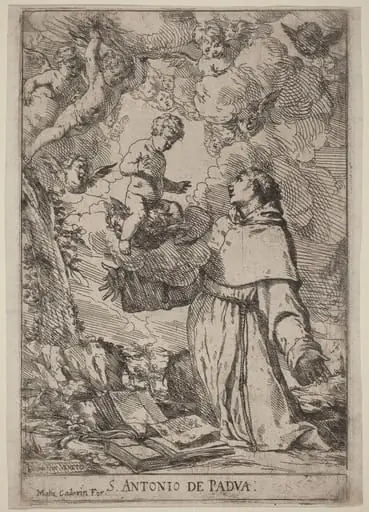 Saint Anthony of Padua
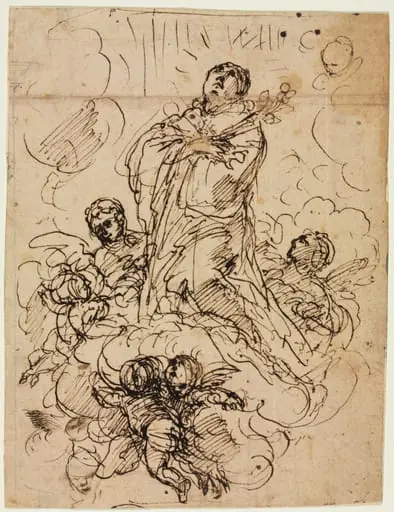 Apotheosis of a Saint
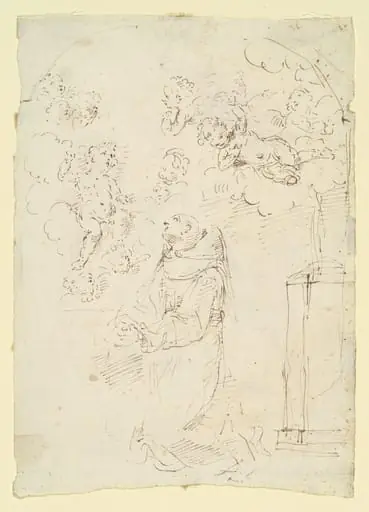 Vision of Saint Anthony of Padua
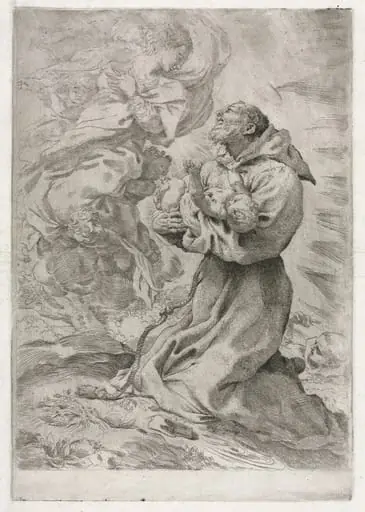 The Vision of St. Francis of Assisi
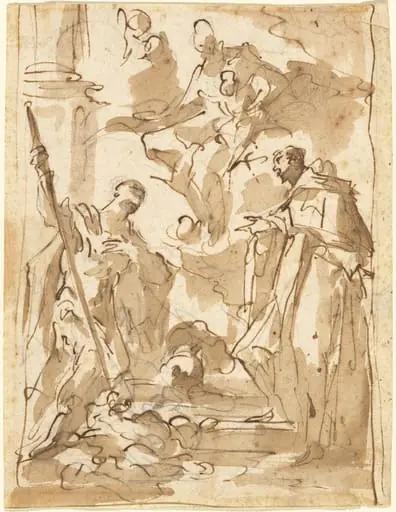 The Madonna and Child in Glory with Saint Theodore and a Monastic Saint
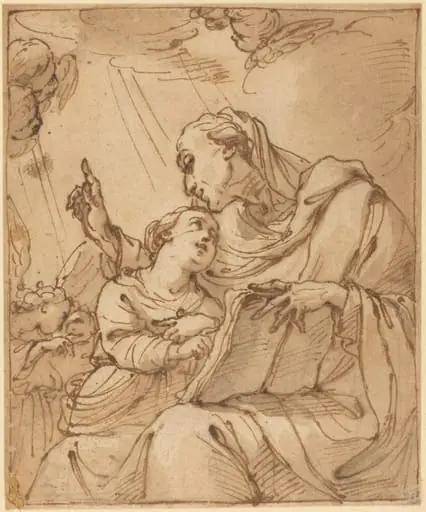 The Education of the Virgin
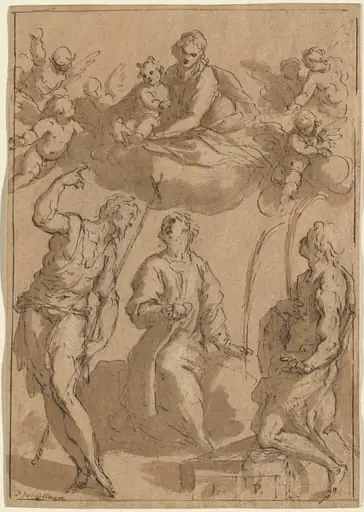 Madonna and Child in Glory with Saints John the Baptist, Stephen, and Lawrence