Artwork
Anne Boleyn
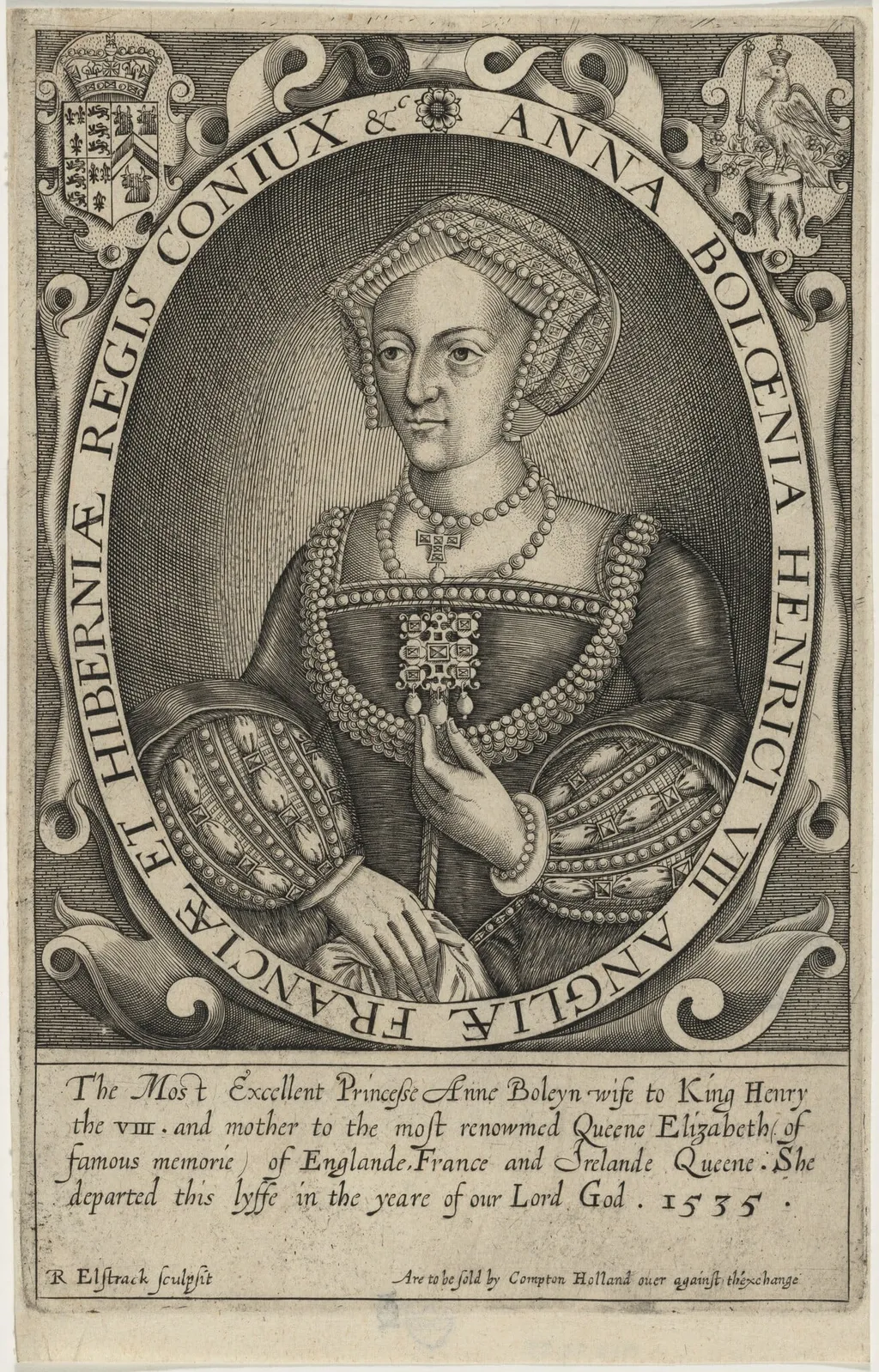
Anne Boleyn is an ink print by the Renaissance artist Renold Elstrack. It dates from 1598 and is held in the collection of the National Gallery of Art.
About this work
Overview
Executed with fine linear precision, the portrait presents her in profile, adorned with elaborate jewelry and a headdress resembling a crown.
This black-and-white engraving, produced by Renold Elstrack in 1598, depicts Anne Boleyn in formal attire typical of the late Tudor period. Executed with fine linear precision, the portrait presents her in profile, adorned with elaborate jewelry and a headdress resembling a crown. The composition is enclosed within a decorative border inscribed with Latin text, reinforcing its function as a commemorative image rather than a lifelike likeness.
Subject & Meaning
The portrait identifies Anne Boleyn as 'The Most Excellent Princesse,' a title reflecting her status as queen consort and mother of Elizabeth I. The globe and ornate fan she holds symbolize worldly authority and refined courtly grace, aligning her with ideals of royal virtue. Though created decades after her death, the image seeks to legitimize her legacy within the Tudor narrative, particularly under Elizabeth’s reign.
Technique & Style
Elstrack employed the engraving technique, using a burin to incise fine lines into a metal plate, allowing for detailed reproduction. The rendering of fabric folds, pearl clusters, and decorative motifs demonstrates meticulous control of line and tone. The absence of color emphasizes structure and texture, characteristic of Northern European printmaking traditions of the late 16th century.
History & Provenance
Created in 1598, the engraving emerged during Elizabeth I’s reign, a time when promoting the legitimacy of her lineage was politically significant. As one of the earliest printed portraits of Anne Boleyn, it likely served to reinforce her historical standing. Its survival suggests it was circulated among elite circles, possibly as part of a broader effort to shape public memory of the Tudor dynasty.
Context
In the decades following Anne Boleyn’s execution, her image was cautiously revived under Elizabeth I’s rule. This engraving reflects the careful rehabilitation of her reputation, avoiding overt religious or political controversy while emphasizing dignity and nobility. It aligns with a trend of using portraiture to construct dynastic continuity, particularly through visual references to royal authority and lineage.
Legacy
Elstrack’s engraving remains one of the most widely reproduced early images of Anne Boleyn. Though not based on a contemporary likeness, it established a visual archetype that influenced later depictions. Its formal composition and symbolic elements became reference points in historical and artistic representations, anchoring her identity in the public imagination through the medium of print.
Artist & collection

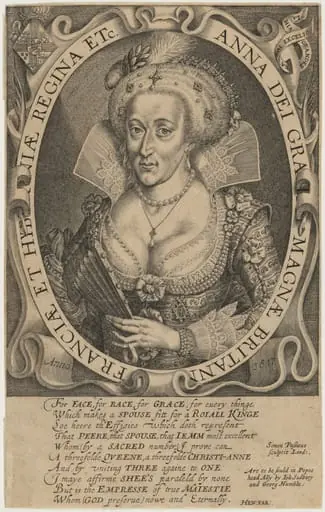 Anne of Denmark
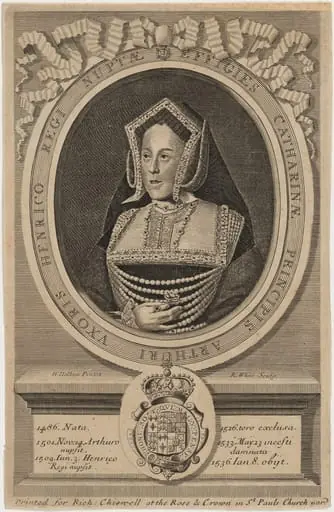 Catherine of Aragon, First Wife of Henry VIII
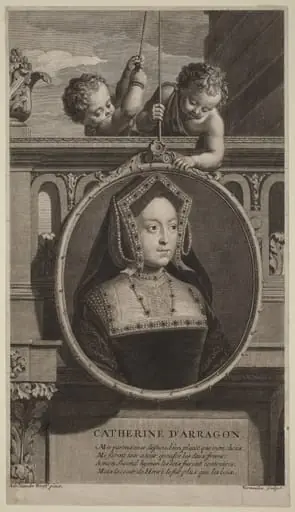 Catherine d'Arragon (Catherine of Aragon)
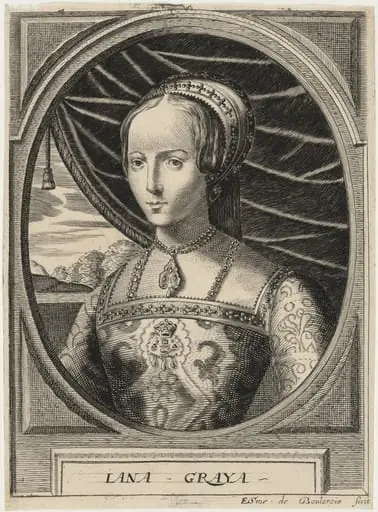 Lady Jane Gray
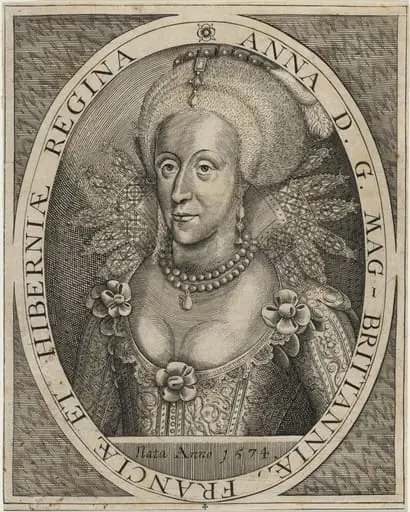 Anne of Denmark, Queen of James I
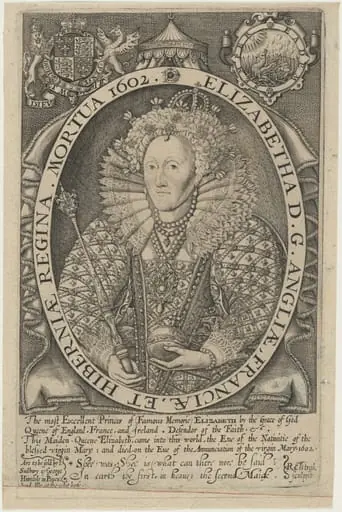 Queen Elizabeth
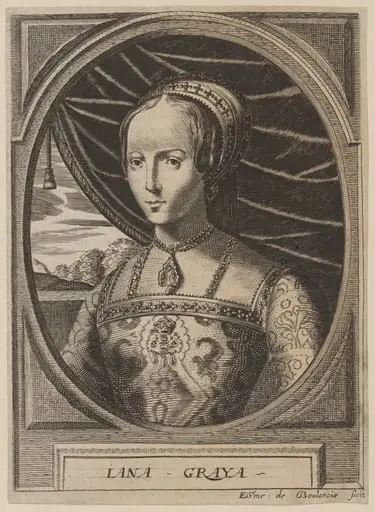 Lady Jane Gray
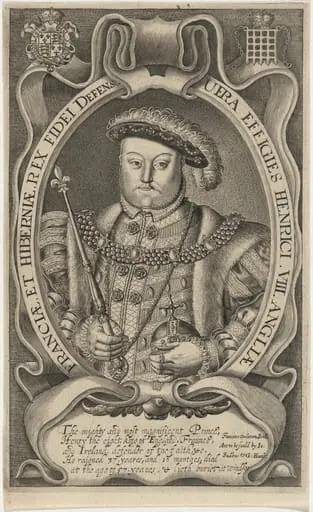 Henrici VIII Angliae, Franciae et Hiberniam Rex (King Henry VIII)
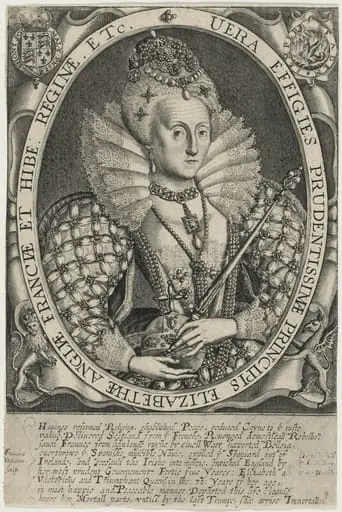 Elizabetha Anglia et Francae et Hibe. Reginae(Queen Elizabeth)