Artwork
Famille Arabe en voyage
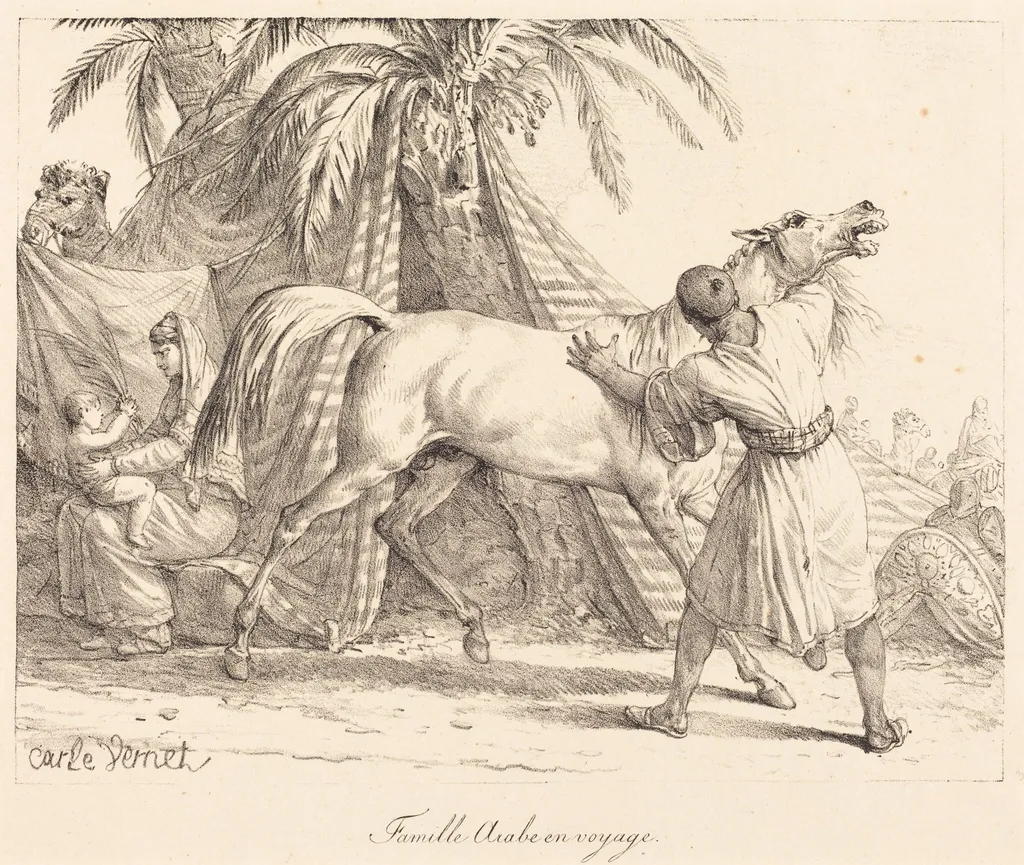
Famille Arabe en voyage is an ink print by the Romanticist artist Carle Vernet. It dates from 1818 and is held in the collection of the National Gallery of Art.
About this work
Overview
Carle Vernet’s lithograph *Famille Arabe en voyage*, executed around 1818 on wove paper, portrays a caravan moving through an arid landscape. The composition centers on a man guiding a camel, while other figures sit or walk alongside the animals, set against a backdrop of palm silhouettes and rocky terrain that suggest an extended desert trek.
Subject & Meaning
The work captures a moment of everyday travel for an Arab family, emphasizing the practical aspects of movement across the desert rather than a narrative episode. By focusing on the logistics of the journey—camels, ropes, and the surrounding environment—the print offers a glimpse into the rhythms of nomadic life in the early nineteenth century.
Technique & Style
Created as a lithograph on wove paper, the image employs the characteristic tonal gradations of the medium, allowing for delicate shading of sand, foliage, and fabric. Vernet’s line work balances precise detail in the figures with broader washes that convey atmospheric depth, reflecting the French academic approach to printmaking of the period.
History & Provenance
Antoine Charles Horace Vernet (1758–1836), known as Carle Vernet, was a French painter descended from a lineage of artists—son of landscape painter Claude‑Joseph Vernet and father of Horace Vernet. The lithograph was produced during a prolific phase of his career, when he explored Oriental subjects that were popular in European art circles of the time.
Artist & collection

Artist
Antoine Charles Horace Vernet, better known as Carle Vernet, was a French painter, the youngest child of painter Claude-Joseph Vernet and the father of painter Horace Vernet.

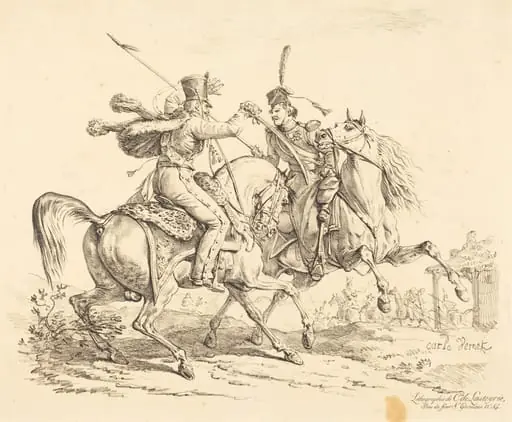
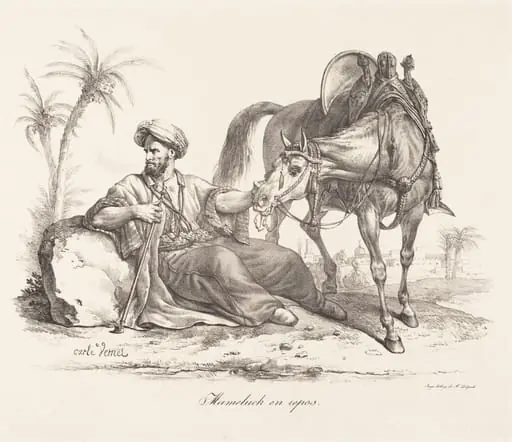
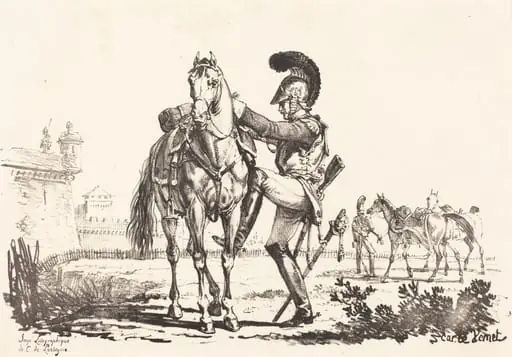
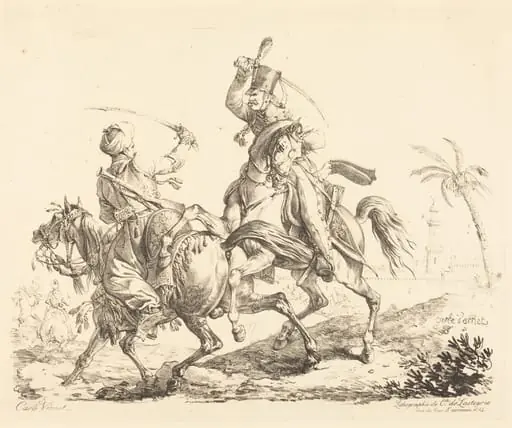 Hussard Striking a Mameluck
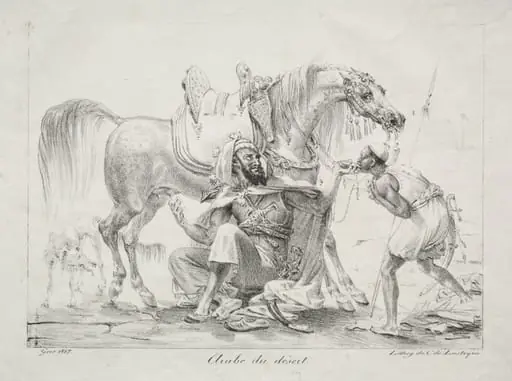 Arab of the Desert
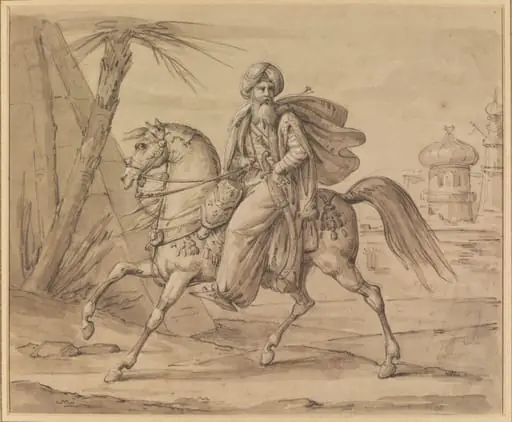 Mamluk on Horseback
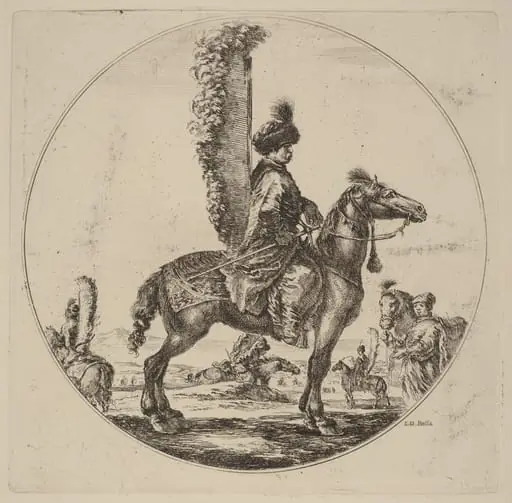 Polish Hussar
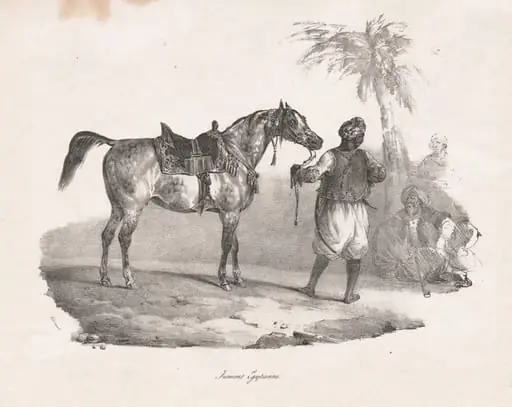 Egyptian Mare
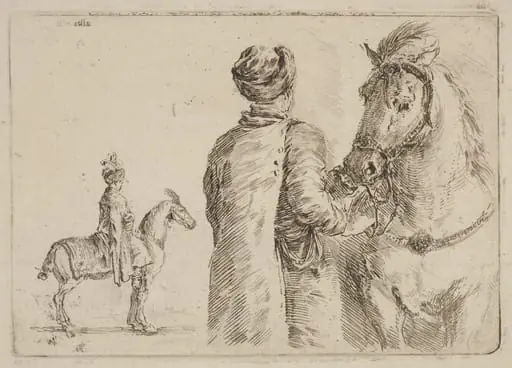 Polish Attendant Holding the Bridle of a Horse
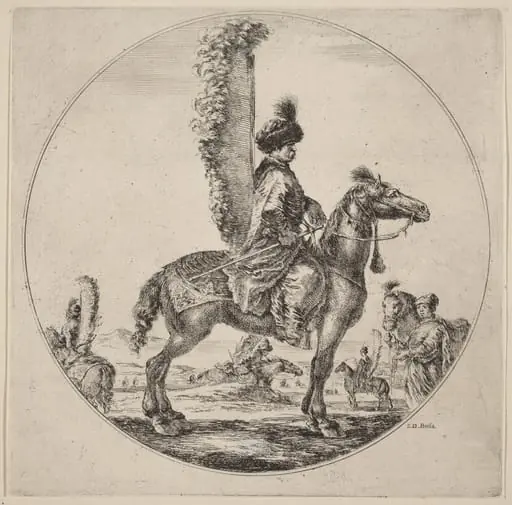 Polish Hussar
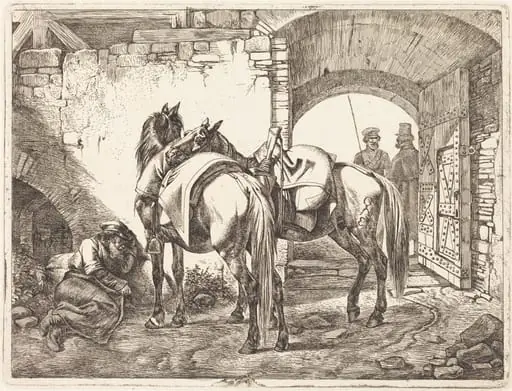 Cossack Horses in a Courtyard
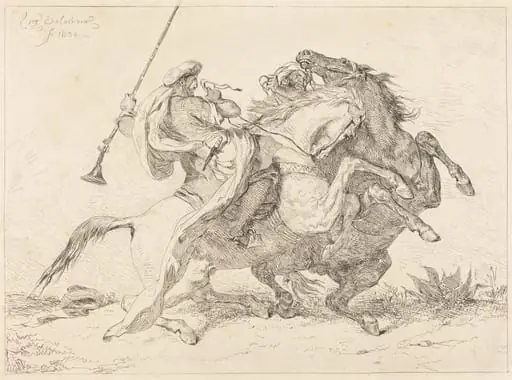 Encounter of the Moorish Horsemen (Rencontre de Cavaliers Maures)
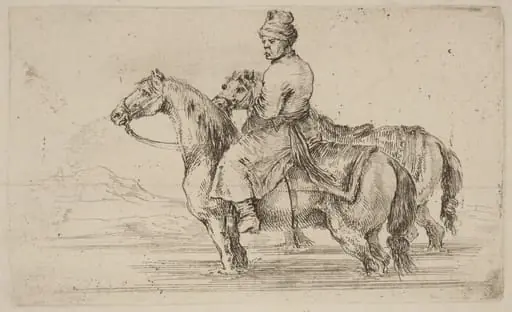 Polish Attendant with Two Horses
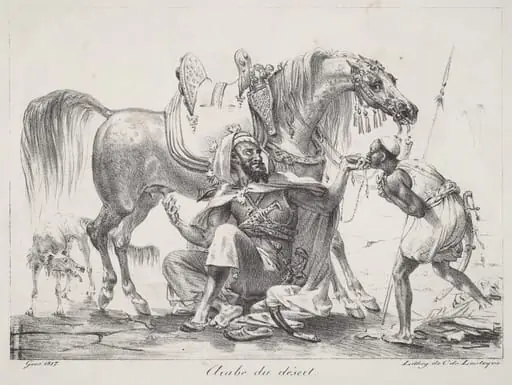 Arabe du désert (Desert Arab)