Artwork
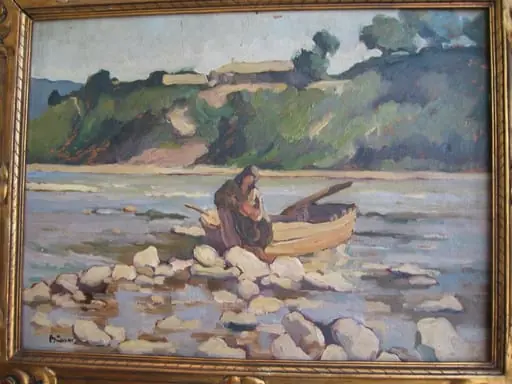
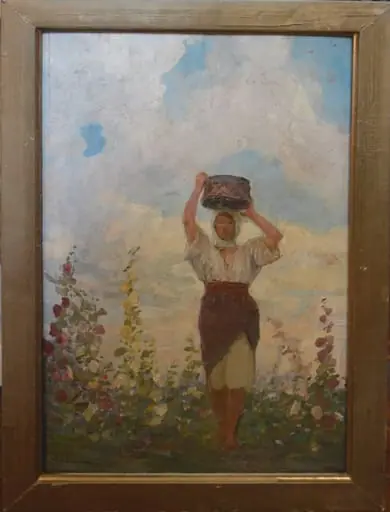
Cu cobilița la râu
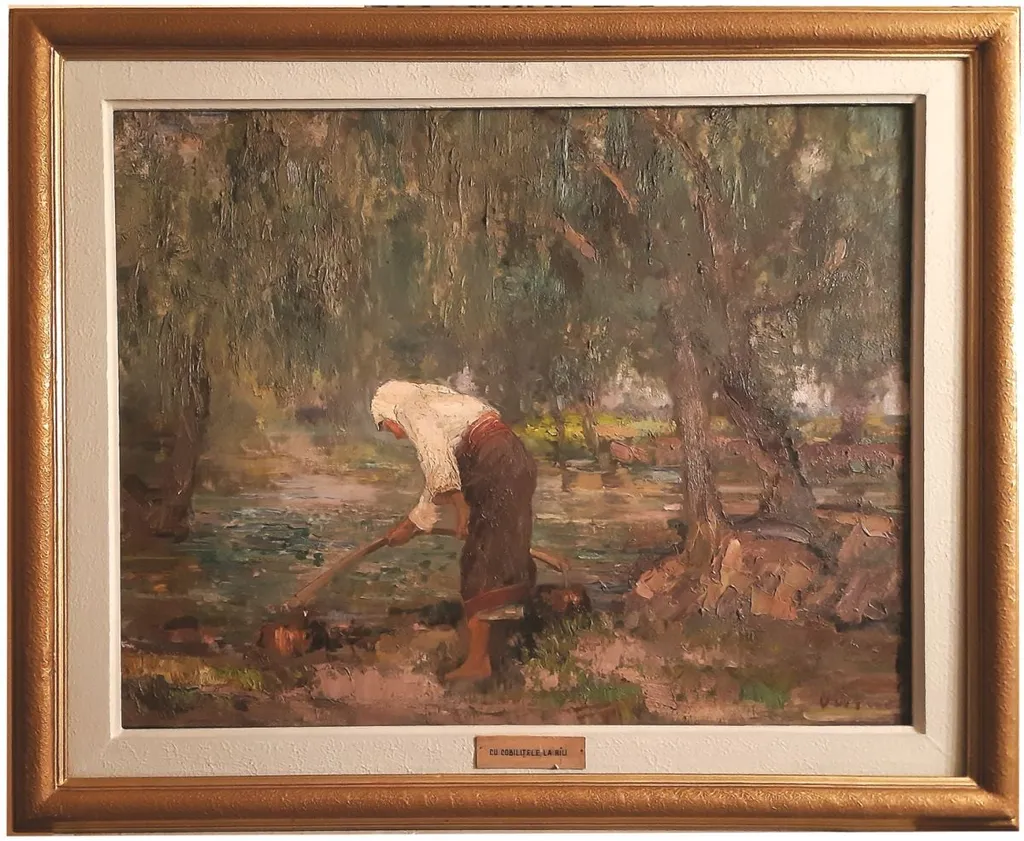
Cu cobilița la râu is an unspecified painting by Arthur Verona (Garguromin). It dates from 1949 and is held in the collection of the Cotroceni National Museum.
About this work
Overview
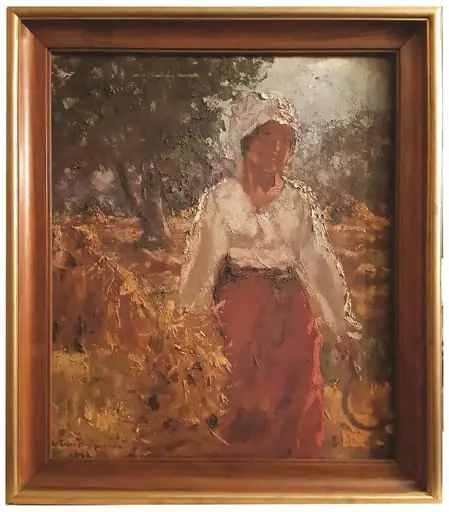
Cu cobilița la râu, created by Arthur Verona around 1949, is a painting housed at the Museum of Ethnography. The work depicts a figure engaged in an activity by a river, characterized by prominent, textured brushstrokes.
Subject & Meaning
The painting shows a person, dressed in a white top and dark pants, bent over a riverbank, holding a long pole. The context suggests fishing or riverside labor, though the focus appears to be on the serene, natural setting and the figure's interaction with it.
Technique & Style
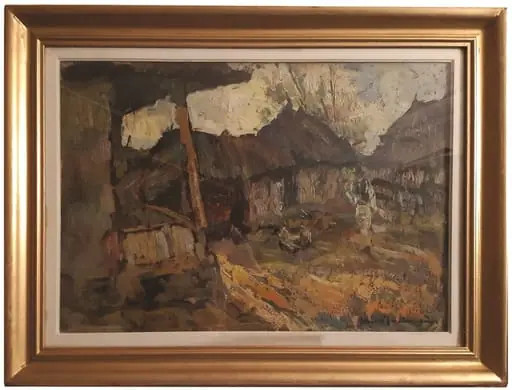
The artwork features thick, visible brushstrokes and layered paint, particularly evident on the figure's clothing and the water's surface, employing a technique akin to impasto to achieve a rough, textured appearance.
History & Provenance
Created circa 1949 by Arthur Verona, the painting is part of the collection at the Museum of Ethnography, with no detailed exhibition history or ownership changes highlighted in available information.
Context
While specific contextual details about the artist's intentions or the work's reception at the time of creation are not provided, the piece reflects a mid-20th-century approach to capturing everyday life in a naturalistic, yet textured, manner.
Legacy
The legacy of 'Cu cobilița la râu' is not extensively documented in the provided information, suggesting it may not be widely recognized beyond its presence in the Museum of Ethnography's collection.
Artist & collection
Artist
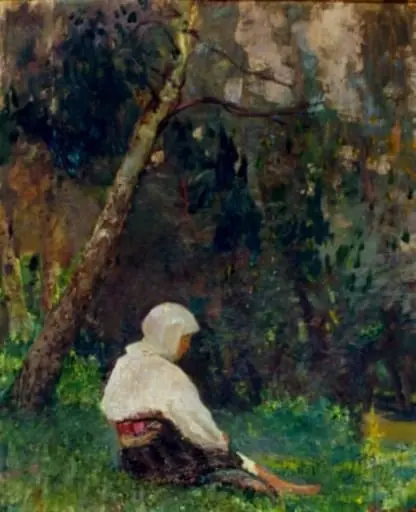
Arthur Verona (Garguromin) painted the Romanian countryside in the early 20th century—rivers, riders, forests, and quiet rooms.