Artwork
Apollo and Marsyas
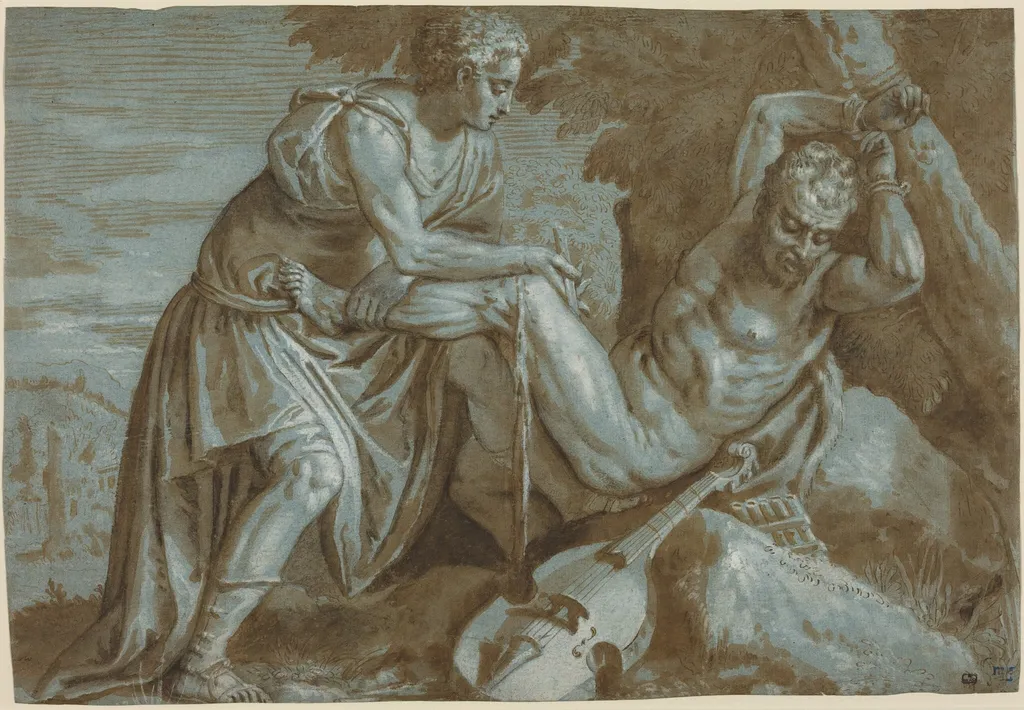
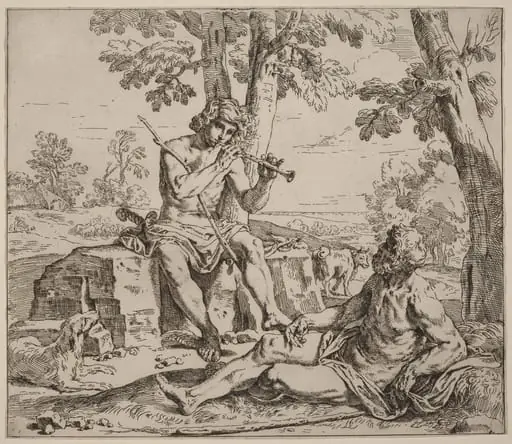
Apollo and Marsyas is a chalk drawing by the Renaissance artist Veronese. It is held in the collection of the National Gallery of Art.
About this work
Overview
Created around 1600, this drawing by Paolo Veronese depicts the myth of Apollo and Marsyas. Executed in pen and brown ink with a brown wash over black chalk, the composition is heightened with white gouache on blue laid paper, presenting a compact study of two contrasting figures within a stark landscape.
Subject & Meaning
The work illustrates the encounter between the god Apollo, seated and playing a lyre, and the satyr Marsyas, who lies prone with his head thrown back, gesturing in a moment of defeat. The juxtaposition underscores the myth’s theme of artistic rivalry and divine judgment.
Technique & Style
Veronese employs a limited palette of soft browns and blues, allowing the white gouache to accentuate the musculature and drapery. The drawing’s delicate lines suggest both the rocky terrain and atmospheric elements, while the contrast between the calm seated figure and the tense reclined form creates a dynamic visual tension.
History & Provenance
The drawing is attributed to Veronese’s early career, around the turn of the 17th century, and reflects his practice of preparing mythological subjects for larger compositions. Its provenance traces back to private collections before entering a museum context, where it is displayed as a representative study of Veronese’s mythological oeuvre.
Artist & collection


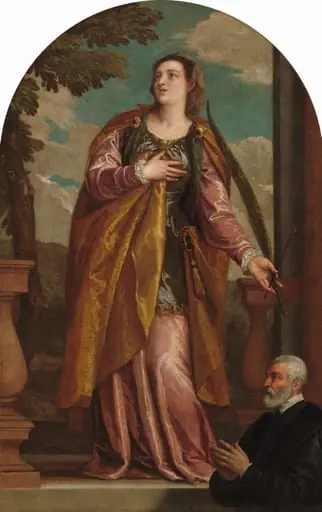 Saint Lucy and a Donor
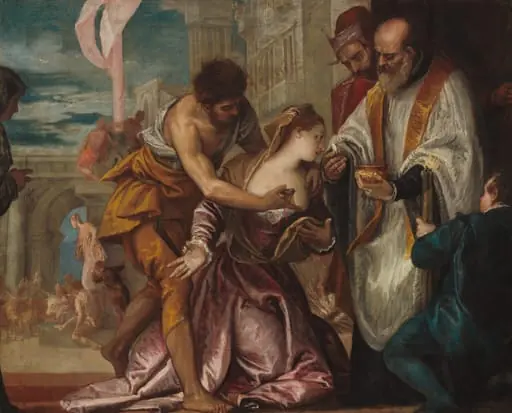 The Martyrdom and Last Communion of Saint Lucy
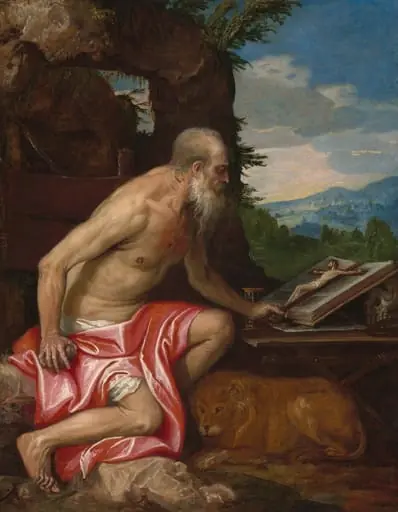 Saint Jerome in the Wilderness
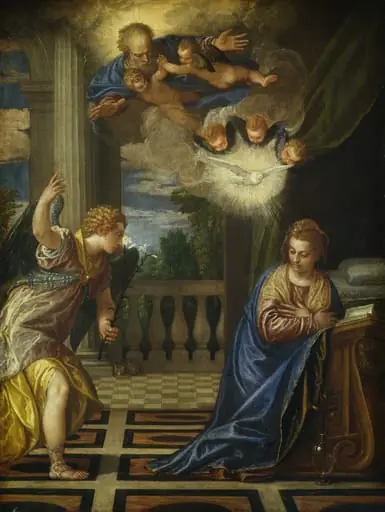 The Annunciation
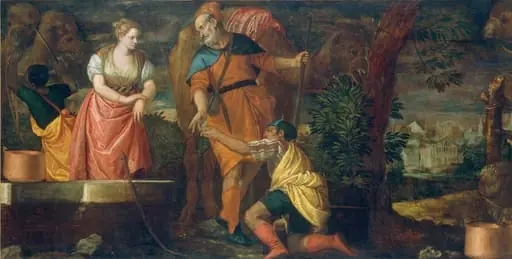 Rebecca at the Well
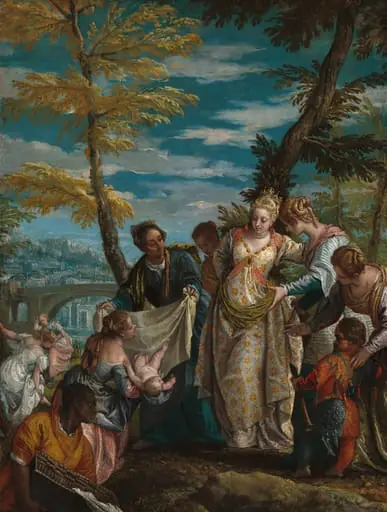 The Finding of Moses
![Studies for Judith and Holofernes, David and Goliath, The Finding of Moses, and Others [recto], by Veronese](https://artifactworldgallery.com/img/veronese--studies-for-judith-and-holofernes-david-and-goliath-the-find--e7509a7c8dd48fbb-w320.webp) Studies for Judith and Holofernes, David and Goliath, The Finding of Moses, and Others [recto]
Studies for Judith and Holofernes, David and Goliath, The Finding of Moses, and Others [recto]![Studies for the Raising of Lazarus and Other Compositions [verso], by Veronese](https://artifactworldgallery.com/img/veronese--studies-for-the-raising-of-lazarus-and-other-compositions-ve--f0c658fb1c49844f-w320.webp) Studies for the Raising of Lazarus and Other Compositions [verso]
Studies for the Raising of Lazarus and Other Compositions [verso]