Artwork
The Crucifixion
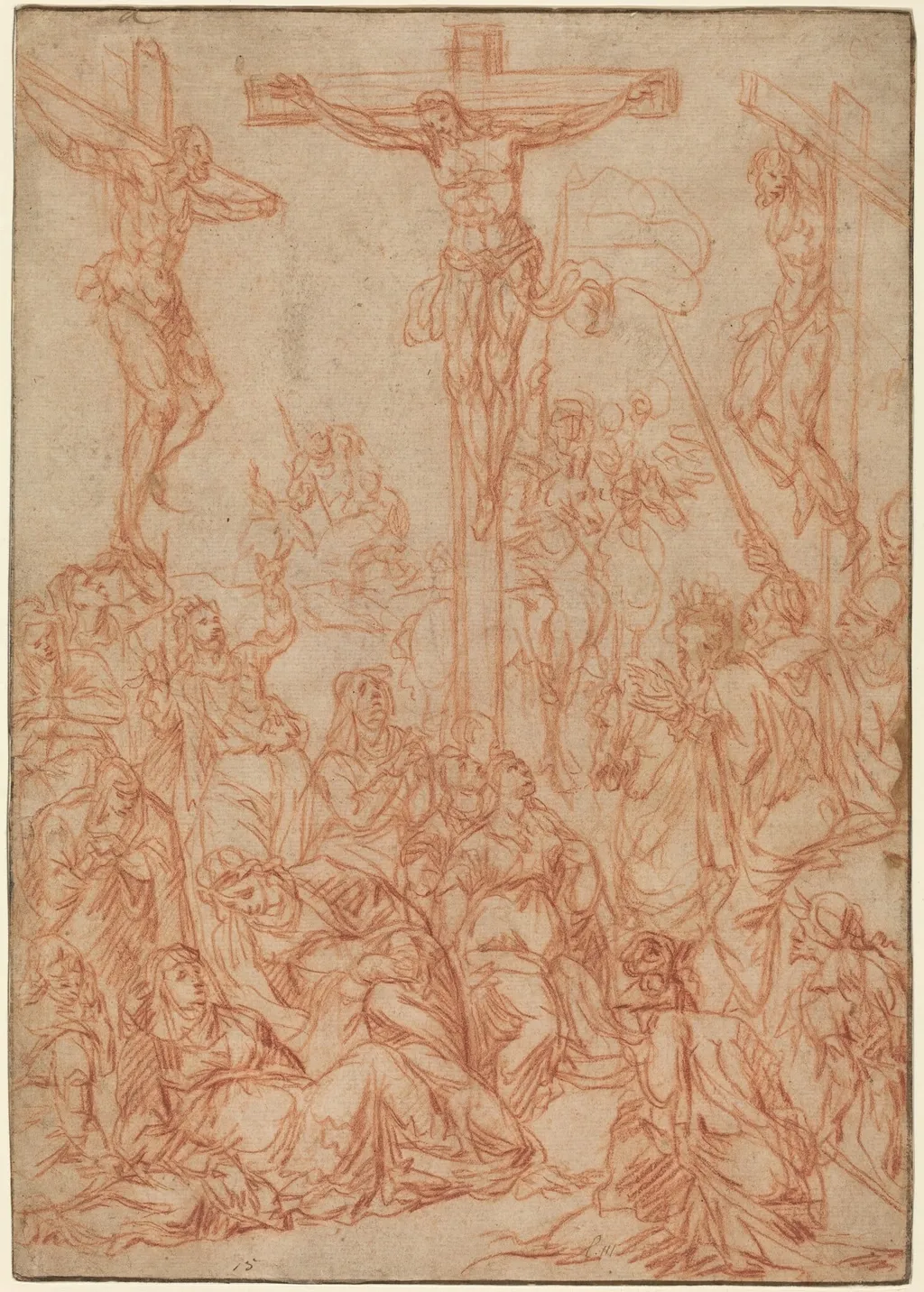
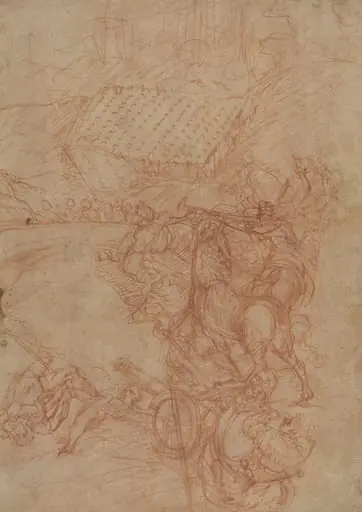
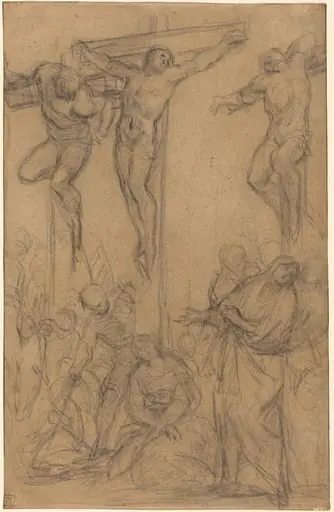
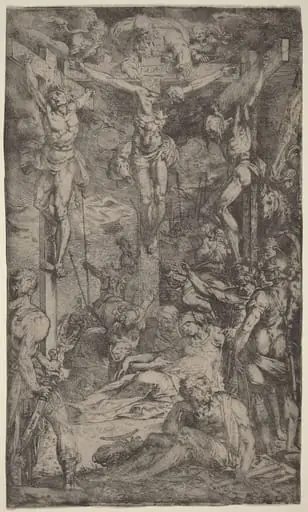
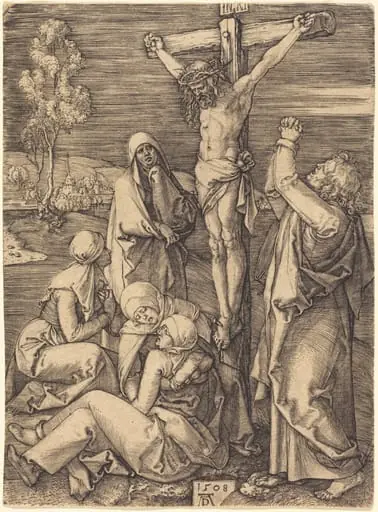
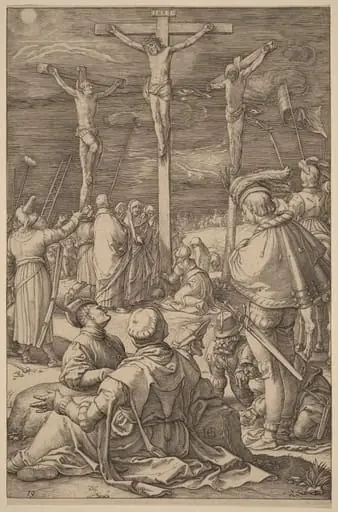
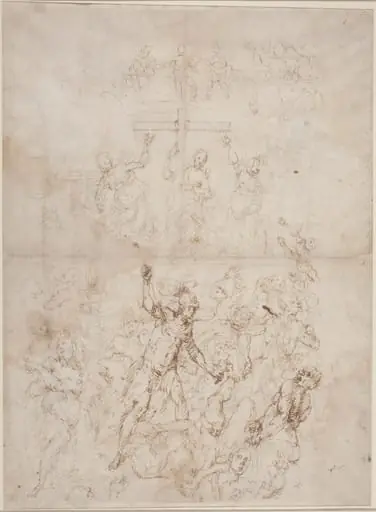
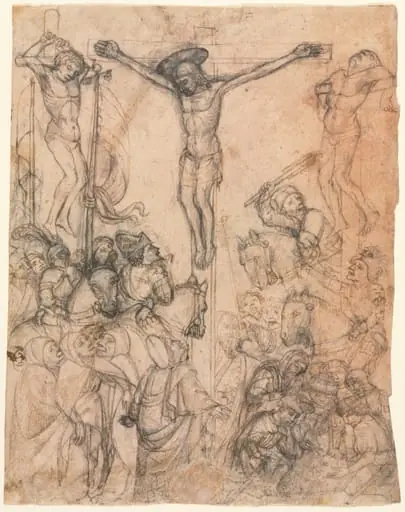
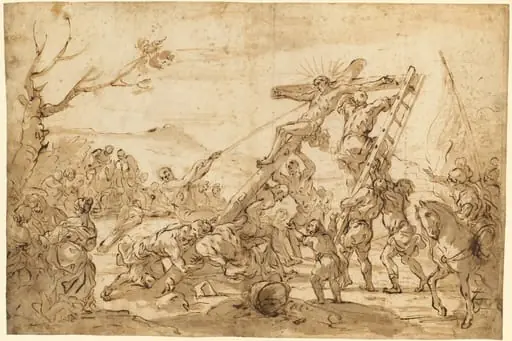
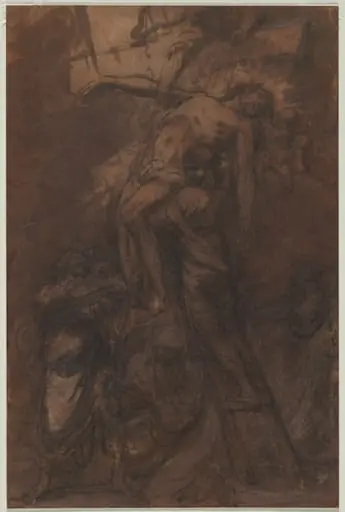
The Crucifixion is a chalk drawing by the Renaissance artist Andrea Vicentino. It dates from 1575 and is held in the collection of the National Gallery of Art.
About this work
Overview
Created around 1575, this drawing by Andrea Vicentino depicts the Crucifixion in red chalk on laid paper. A Venetian artist originally from Vicenza, Vicentino trained under Giovanni Battista Maganza before moving to Venice, where he engaged with the city’s artistic circles. The work exemplifies his engagement with religious subjects through a medium that emphasized immediacy and expressive line.
Subject & Meaning
The scene portrays Christ on the cross amid grieving figures, including the Virgin Mary and John the Evangelist. The composition focuses on emotional gravity rather than elaborate detail, emphasizing human sorrow and spiritual weight. The reduced visual complexity directs attention to the physical and emotional presence of the figures, reinforcing the devotional intent of the image.
Technique & Style
Vicentino employed red chalk with controlled, fluid strokes to model form and suggest volume. Subtle gradations in pressure create a sense of light and shadow, hinting at chiaroscuro without full tonal modeling. The lines convey movement and tension in the draped garments and contorted postures, reflecting Mannerist interest in expressive anatomy and emotional intensity.
History & Provenance
Vicentino’s later collaborations with Tintoretto suggest he was embedded in Venice’s active artistic milieu, where such drawings circulated among practitioners.
The drawing dates from Vicentino’s early Venetian period, shortly after his relocation from Vicenza. While no documented provenance precedes its modern acquisition, its execution aligns with preparatory studies for larger religious works of the time. Vicentino’s later collaborations with Tintoretto suggest he was embedded in Venice’s active artistic milieu, where such drawings circulated among practitioners.
Context
In late 16th-century Venice, religious drawings in chalk were often used as studies for altarpieces or fresco compositions. Vicentino’s work reflects the broader trend of artists refining emotional expression through direct, intimate media. His style bridges the late Renaissance’s clarity and Mannerism’s heightened drama, responding to Counter-Reformation demands for accessible spiritual imagery.
Legacy
Though Vicentino is less known than his contemporaries, this drawing illustrates his skill in conveying profound emotion through minimal means. It stands as a representative example of Venetian draftsmanship of the period, offering insight into how artists translated monumental religious narratives into intimate, handheld studies that informed larger commissions.
Artist & collection
Artist
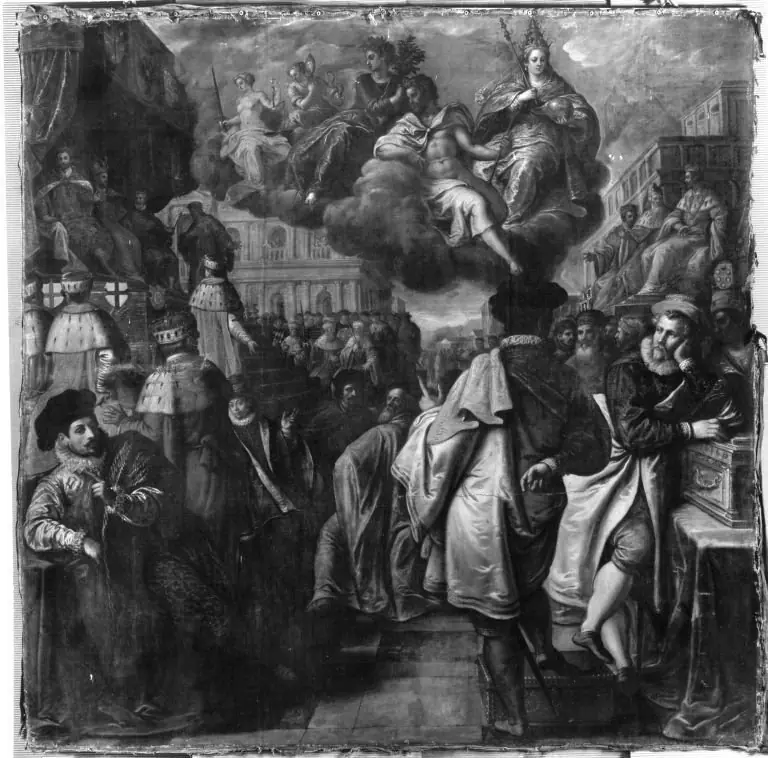
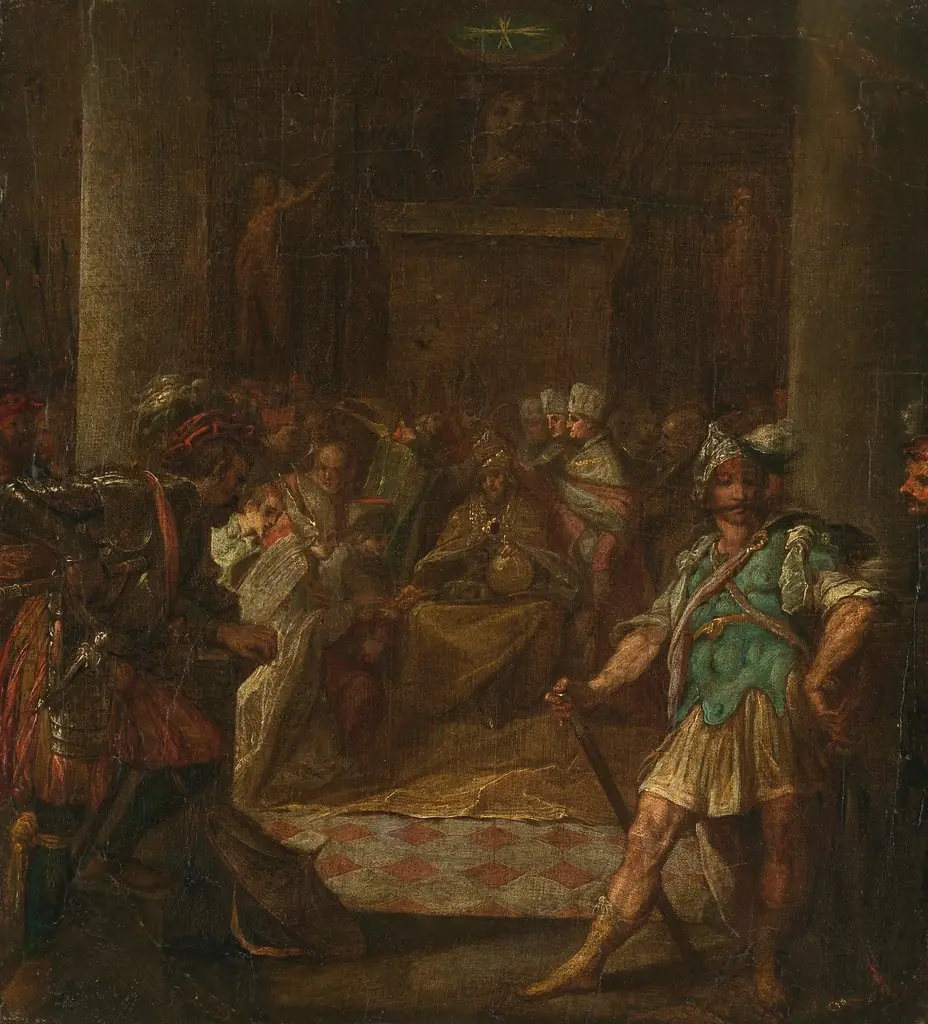
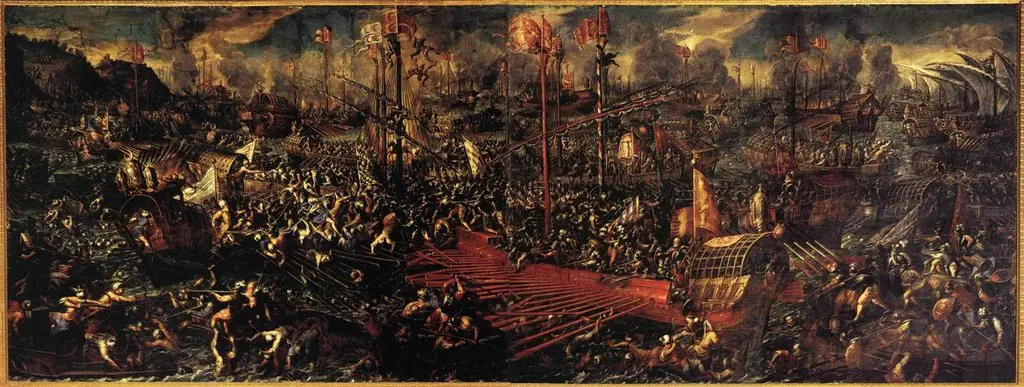
Andrea Vicentino (c. 1542 – 1617) was an Italian painter of the late-Renaissance or Mannerist period. He was a pupil of the painter Giovanni Battista Maganza. Born in Vicenza, he was also known as Andrea Michieli or…