Artwork
The Crucifixion
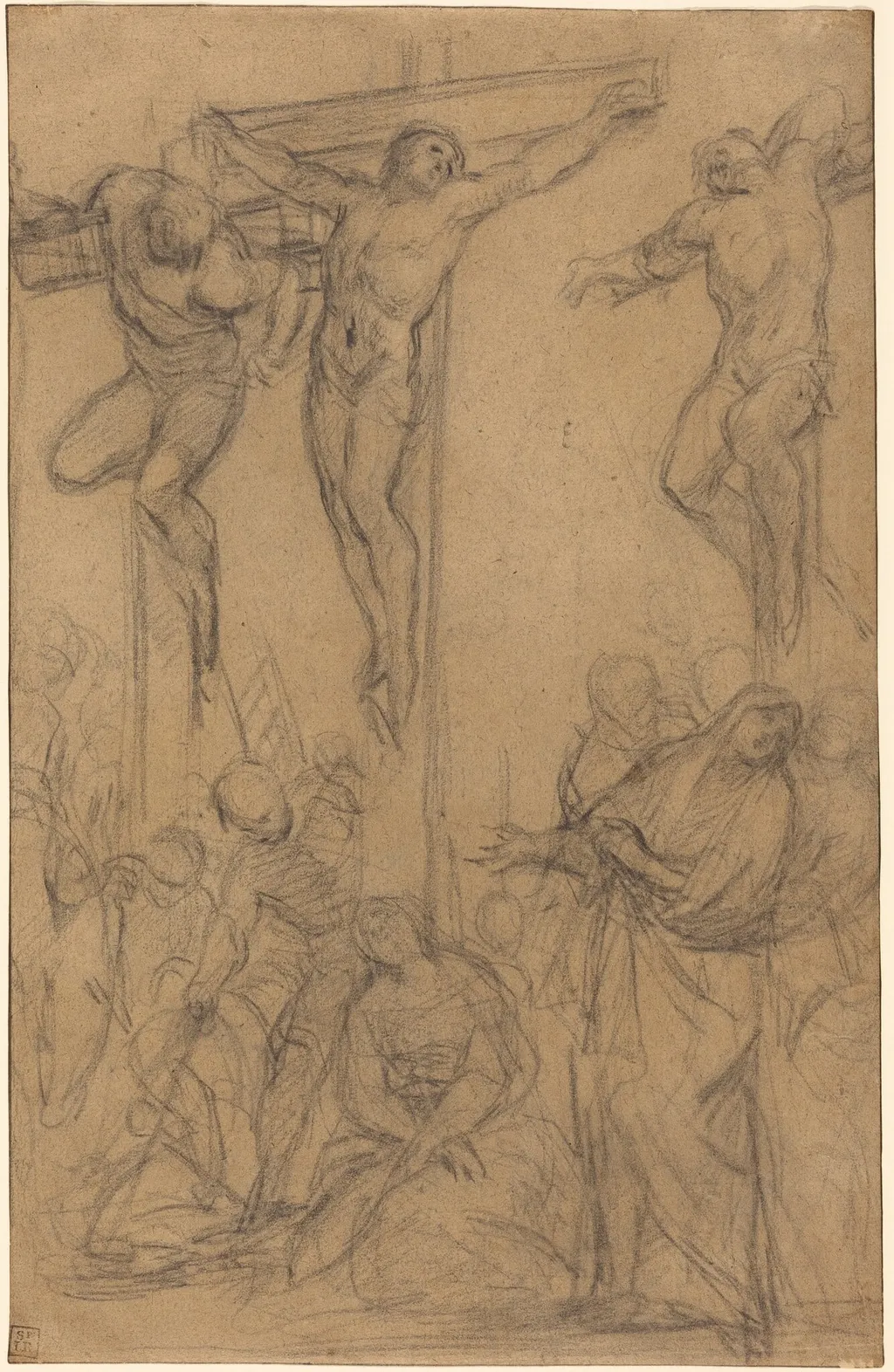
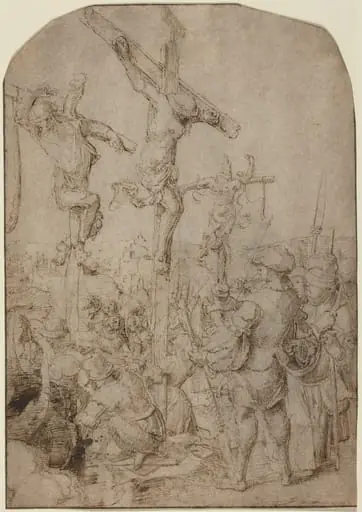
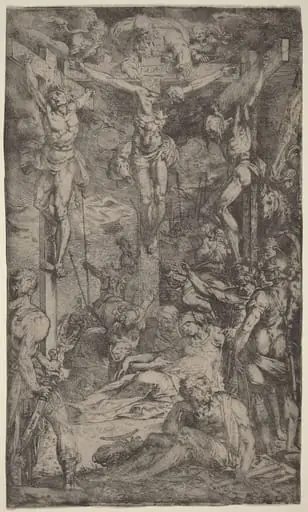
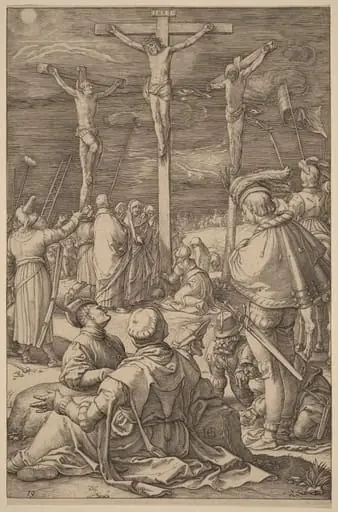
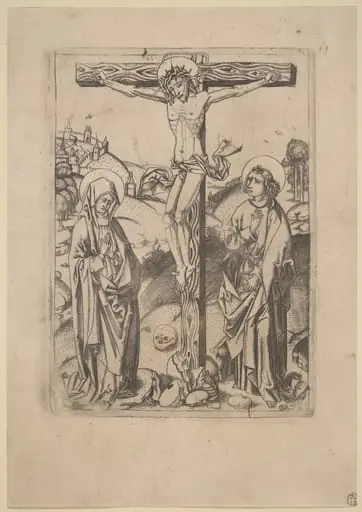
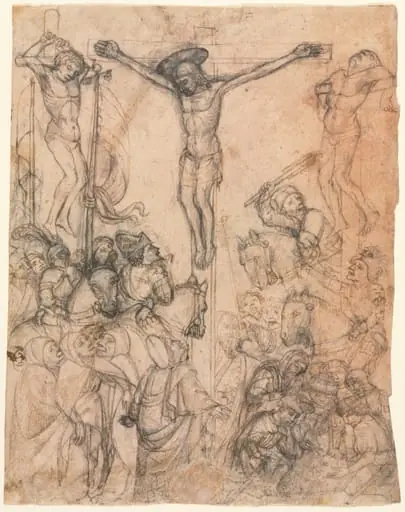
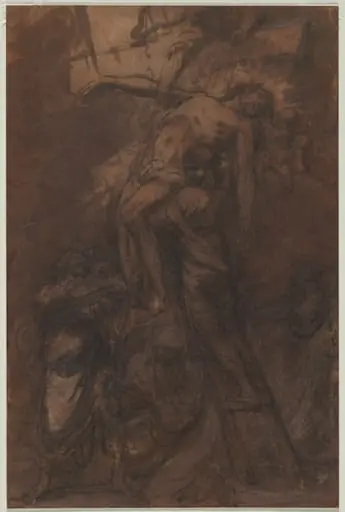
The Crucifixion is a chalk drawing by the Renaissance artist Giovanni Battista Naldini. It dates from 1564 and is held in the collection of the National Gallery of Art.
About this work
Overview
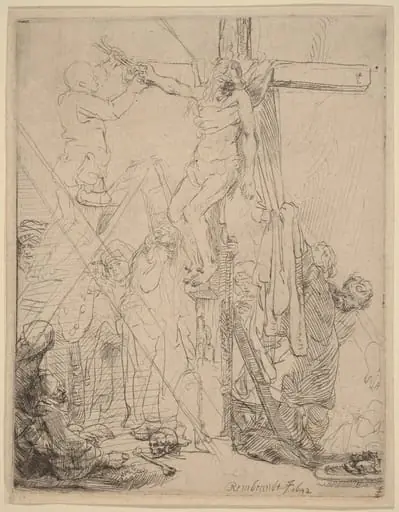
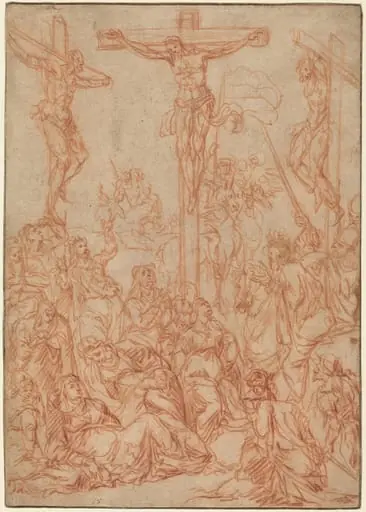
Giovanni Battista Naldini’s 1564 drawing, titled The Crucifixion, presents a stark depiction of Christ on the cross. Executed in black chalk on brown laid paper, the work measures the intimate scale typical of preparatory studies, yet conveys the gravity of the biblical episode through its monochrome palette.
Subject & Meaning
The composition centers on the crucified figure of Jesus, his body suspended upon a wooden cross. The portrayal emphasizes the physical suffering and spiritual sacrifice inherent in the Passion narrative, inviting contemplation of the theological themes of redemption and martyrdom.
Technique & Style
Naldini employs a vigorous, scratchy line quality that defines the musculature and drapery, while the contrast between deep shadows and illuminated areas creates a sense of depth on the flat paper surface. The use of brown laid paper lends a warm undertone, enhancing the drawing’s somber tone.
History & Provenance
Created in the mid‑sixteenth century, the drawing reflects Naldini’s engagement with Counter‑Reformation iconography. It entered the collection of the National Gallery of Art in Washington, where it remains part of the museum’s holdings of Renaissance drawings.
Context
During the 1560s, Italian artists often produced detailed chalk studies as preparatory steps for larger altarpieces or frescoes. Naldini’s work aligns with this practice, illustrating his skill in rendering human anatomy and emotive expression within a devotional framework.
Artist & collection
Artist
Giovanni Battista Naldini (1537–1591) was an artist, born in Florence.