Artwork
The Fishpond at Villa Madama
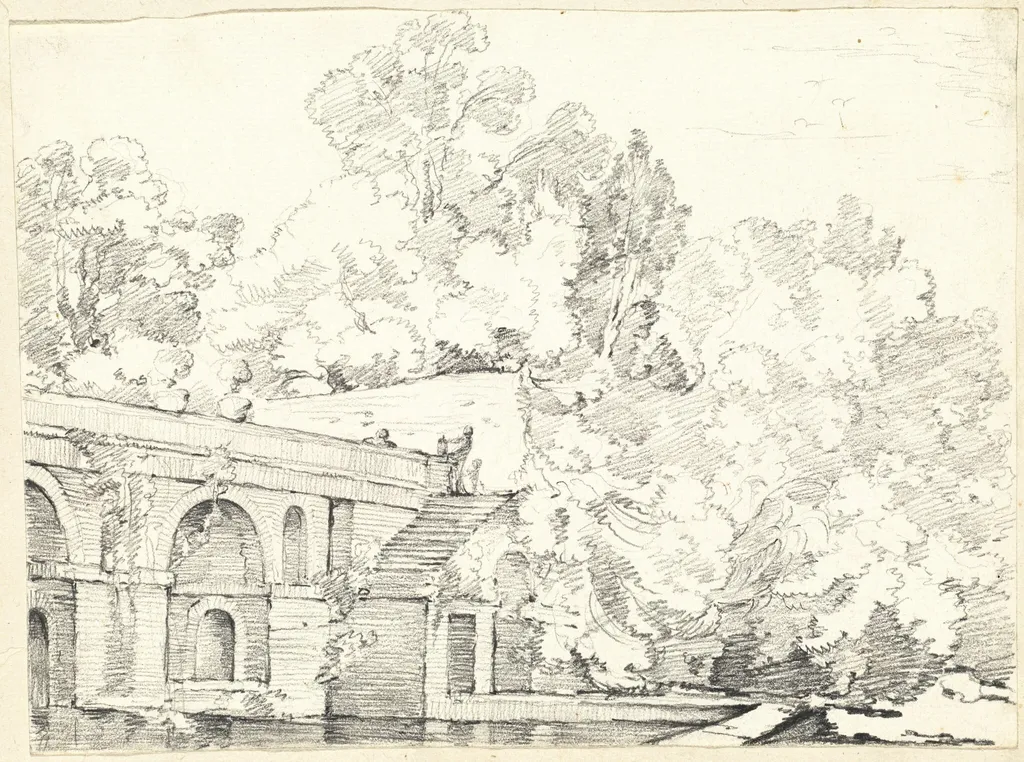
The Fishpond at Villa Madama is a chalk drawing by the Baroque artist Joseph-Marie Vien. It dates from 1748 and is held in the collection of the National Gallery of Art.
About this work
Overview
The drawing titled *The Fishpond at Villa Madama* was executed in 1748 by the French artist Joseph‑Marie Vien. Rendered in black chalk on laid paper, the work records an architectural landscape that includes a modest stone structure, a shallow pond, and surrounding foliage. It belongs to a group of studies Vien produced while traveling near Rome.
Subject & Meaning
The composition depicts a weathered stone building with arched openings, its walls showing signs of decay. In front of the edifice lies a small fishpond enclosed by a low retaining wall. Behind, a thicket of trees with tangled branches recedes into the distance, suggesting a quiet, somewhat abandoned rural setting.
Technique & Style
Vien employed rapid, loosely applied chalk strokes to suggest the play of light and shade across stone, water, and foliage. The sketchy handling creates a sense of immediacy, allowing the viewer to sense atmospheric conditions despite the drawing’s static subject matter.
History & Provenance
Created during Vien’s early period of study, the drawing reflects his engagement with classical and Renaissance precedents encountered while in Italy. Although Vien later rose to the position of Premier peintre du Roi (1789‑1791), this work belongs to his formative years before his official appointment in the French court.
Context
The piece is part of a series of drawings made for a villa situated outside Rome, likely intended as preparatory studies for decorative schemes or as records of the site’s architecture and landscape. Its focus on ruins and natural elements aligns with the 18th‑century fascination with antiquity and the picturesque.
Artist & collection

Artist
Joseph-Marie Vien (18 June 1716 – 27 March 1809) was a French painter. He was the last holder of the post of Premier peintre du Roi, serving from 1789 to 1791, before it was abolished during the French Revolution.



 Roman Ruins with a Stand of Cypresses
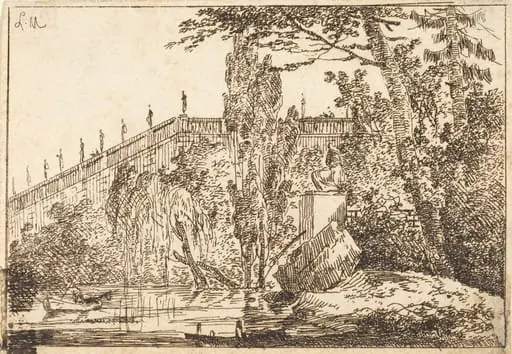 Park with Terrace and a Balustrade with Statues
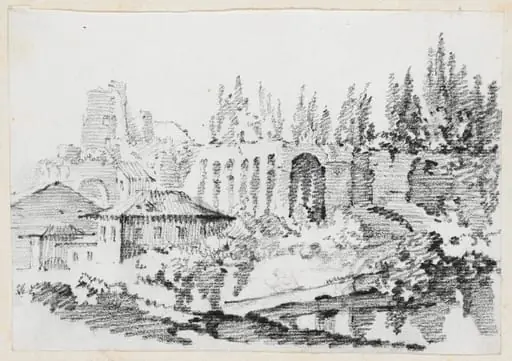 Ruins of the Imperial Palaces on the Palatine Hill
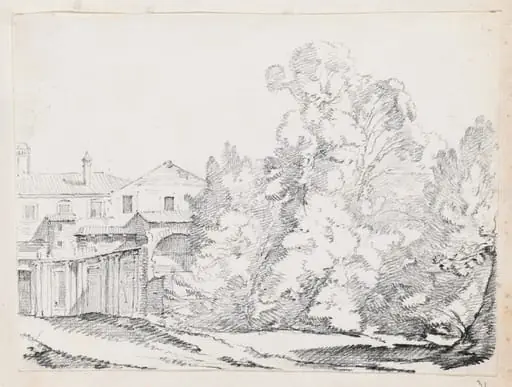 Trees Screening a House Built on Ancient Ruins
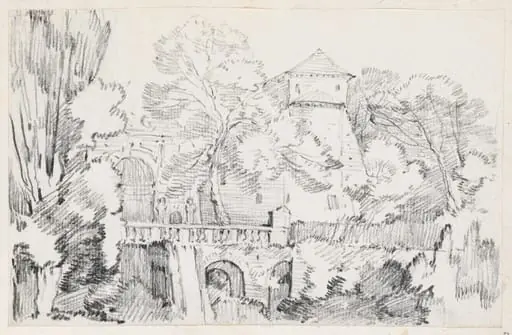 The Water Organ in the Gardens of the Villa d'Este, Tivoli
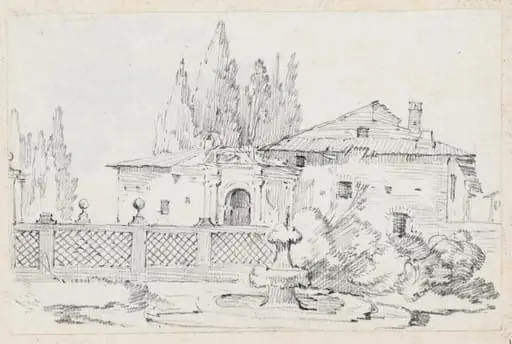 House and Trees across a Garden Wall
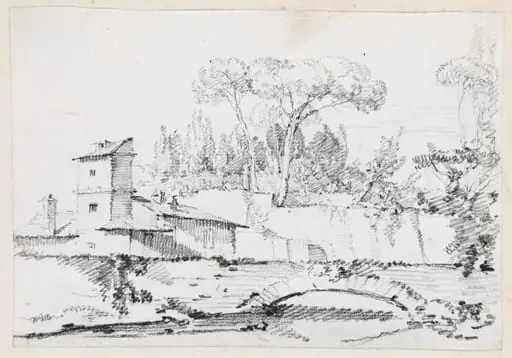 View of the Prato of the Villa Borghese
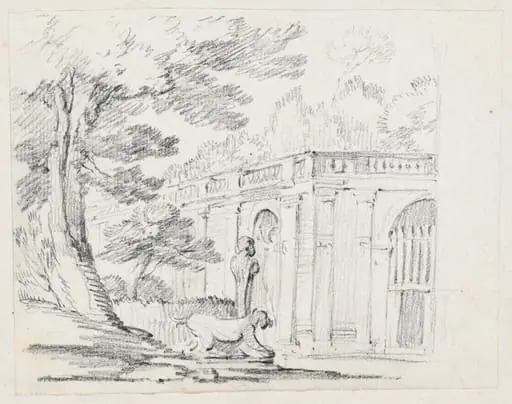 Loggia and Statuary in an Italian Garden