Artwork
CJB. [Charles John Barnet]
![CJB. [Charles John Barnet], by Godfrey Thomas Vigne, watercolor, 1844](https://artifactworldgallery.com/img/godfrey-thomas-vigne--cjb-charles-john-barnet--bae01afe8359ebfd-w1024.webp)
CJB. [Charles John Barnet] is a watercolor work on paper by the Biedermeier artist Godfrey Thomas Vigne. It dates from 1844 and is held in the collection of the Victoria and Albert Museum.
About this work
The note says it was made in March 1844 while the artist was on a ship called the *Loter’s Steamner*.
This sketch shows a man in profile, wearing a tall hat and a dark coat. His face is drawn in loose, quick lines, with light shading under his chin and around his eyes. The paper looks old and worn, with some faint writing in the corner.
The note says it was made in March 1844 while the artist was on a ship called the *Loter’s Steamner*. The drawing feels like a quick, personal moment rather than a polished work.
Next, look up Victoria and Albert Museum to see more sketches like this.
Overview
CJB is a watercolour portrait depicting Lieutenant-Colonel Charles John Barnet, created by Godfrey Thomas Vigne in March 1844. The sketch captures Barnet in profile, wearing a tall hat and dark coat, with loose, expressive lines and subtle shading. Executed on worn, aged paper with faint marginal writing, the piece conveys a sense of spontaneity, suggesting a personal, quickly rendered moment.
Subject & Meaning
The subject, Lieutenant-Colonel Charles John Barnet (1790-1856), was a distinguished British army officer and diplomat, notably serving as Consul at Warsaw (1833) and Consul-General in Egypt (1841-1846). The portrait, made during the artist's voyage on the *Loter’s Steamner*, may reflect a personal acquaintance or professional admiration.
Technique & Style
Vigne's technique in CJB emphasizes rapid, loose lines for the face and attire, contrasted with softer, more nuanced shading around the eyes and under the chin. The overall execution suggests a swift, possibly informal portrait, prioritizing capture of likeness over meticulous detail.
History & Provenance
Created in 1844, CJB was later acquired by Frank Vigne (the artist's great-nephew) from Charles Griffin of Monmouth in two transactions (August 1978 and July 1979) totaling £320.
Context
Comparable to other sketches of the era, particularly those from travel or naval contexts, CJB reflects the practice of quick, personal watercolour portraits among artists and travelers of the time. For similar examples, see the Victoria and Albert Museum's collections.
Legacy
While not widely recognized beyond its biographical interest, CJB provides insight into 19th-century diplomatic and military portraiture, as well as the artistic practices of traveling artists during this period.
Artist & collection


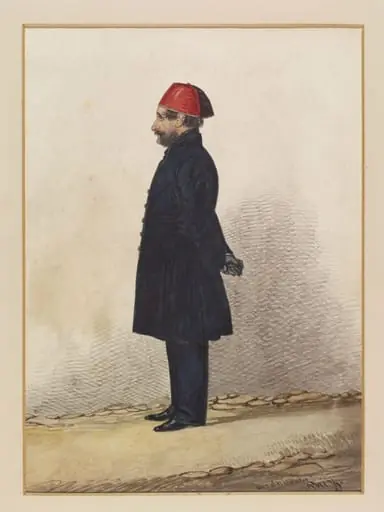 Our Ambassador
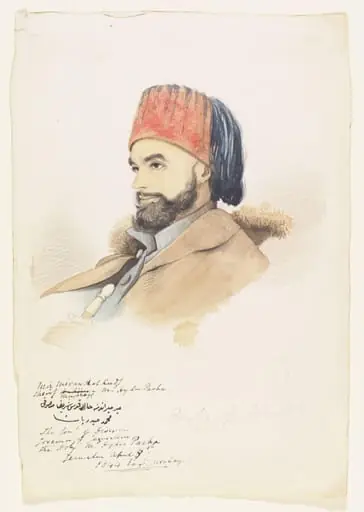 Mir Miran Hal Kuds Sherif Mushrafi Md. Hyder Pacha
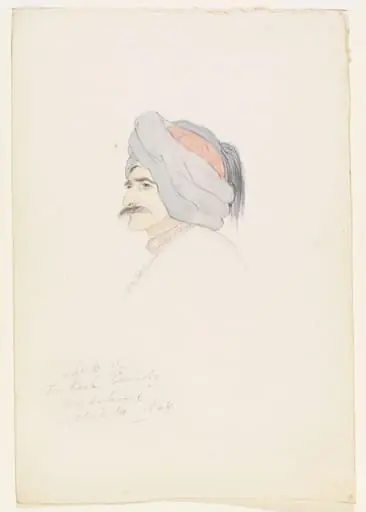 Sheik of Turkish Cavalry
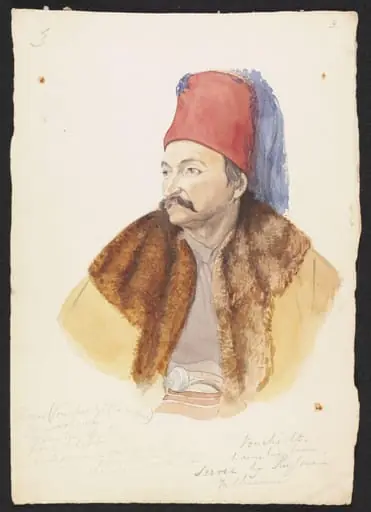 Thomas Vouchicht (the wolf's cub) Peri Schicsh, Minister of the home department in Servia
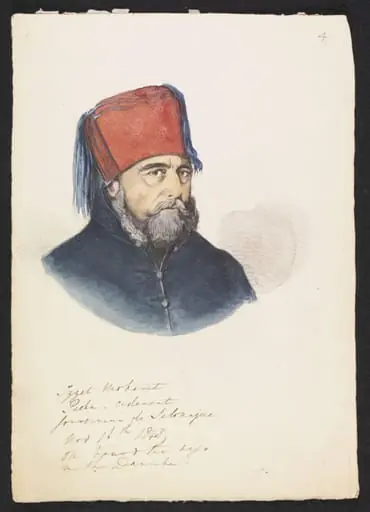 Izzet Mohamet Pasha - ci-devant Gouverneur de Salonique
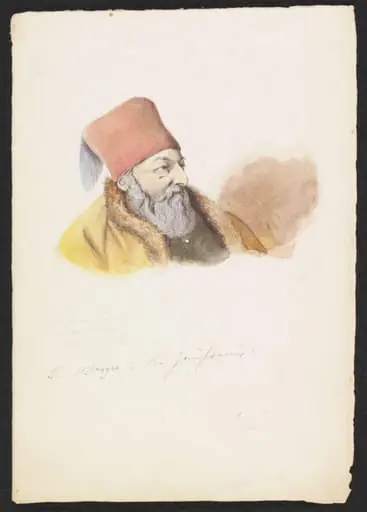 Hussein Pasha
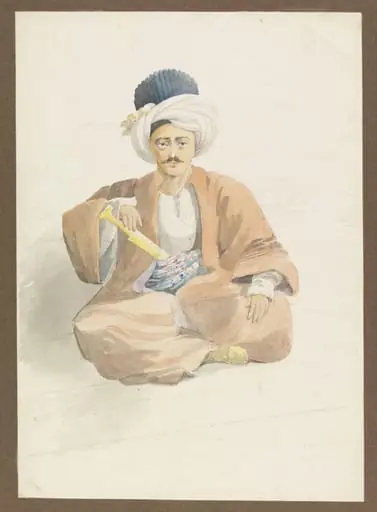 Jafer Beck Affendi
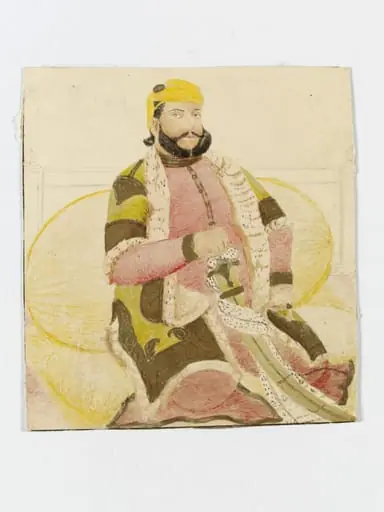 Raja Prithi Singh
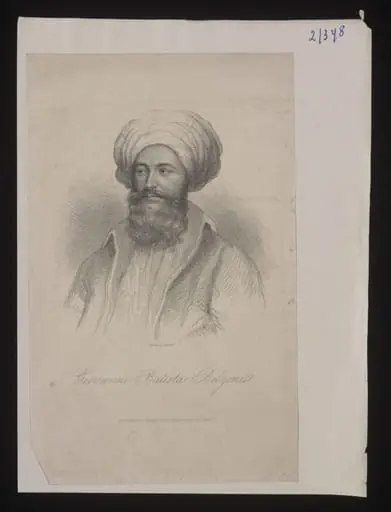 H Beard Print Collection
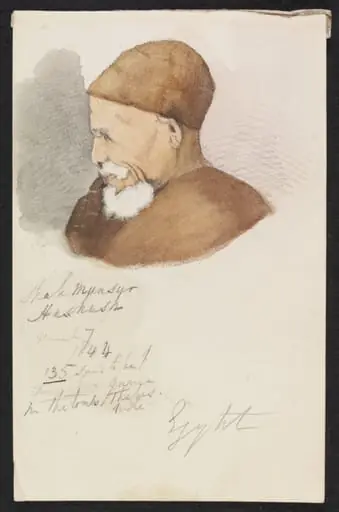 Shah Mansur Hashash
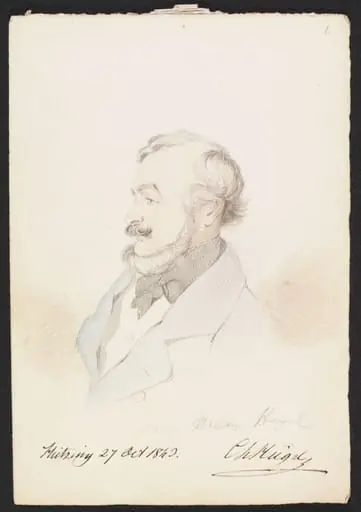 Baron Hugel