Artwork
Hussein Pasha
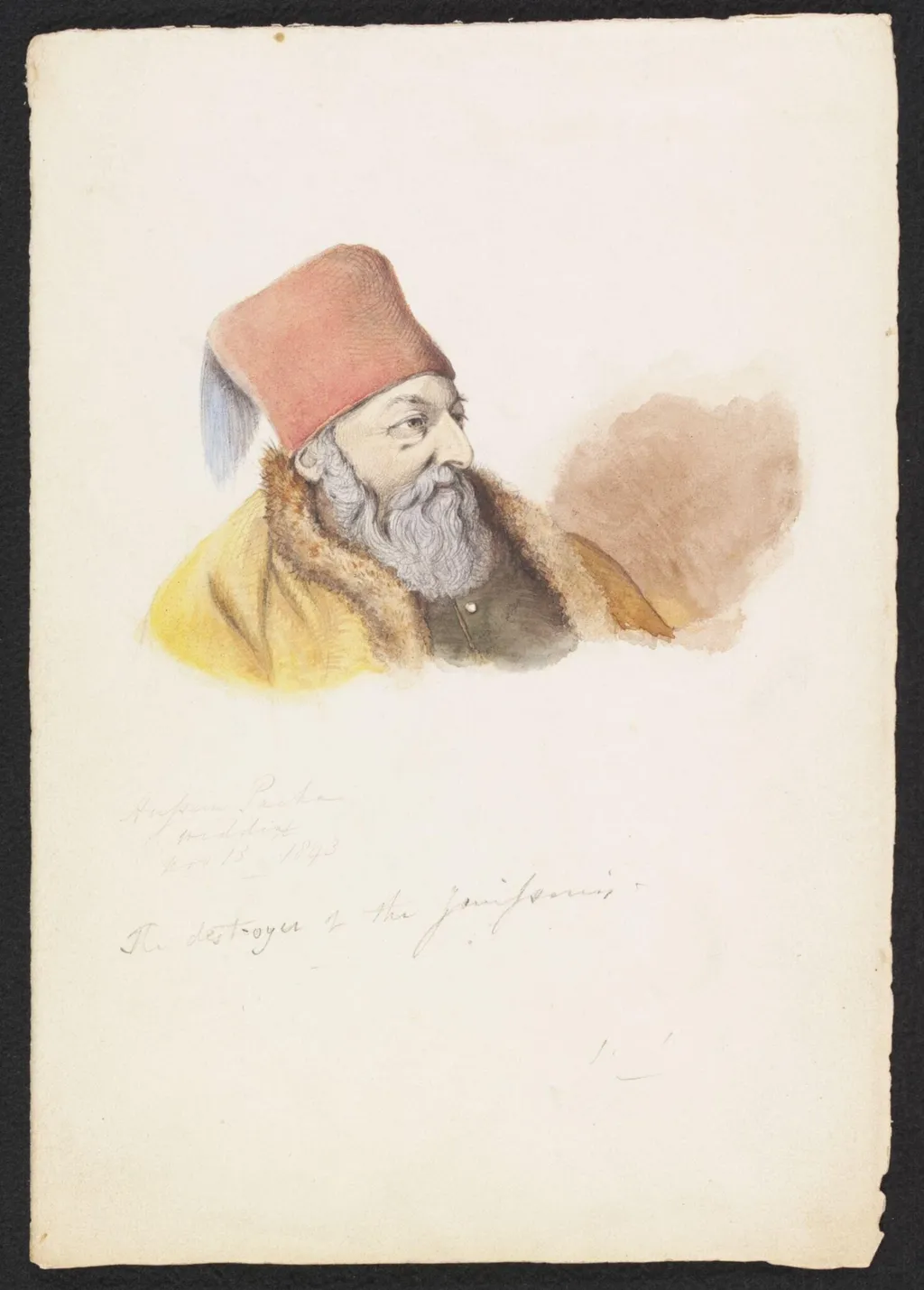
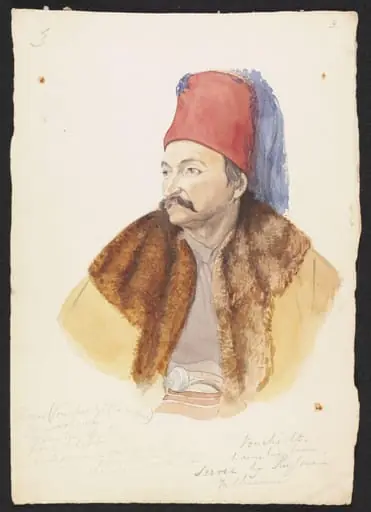
Hussein Pasha is a watercolor work on paper by the Orientalist artist Godfrey Thomas Vigne. It dates from 1843 and is held in the collection of the Victoria and Albert Museum.
About this work
This sketch shows a bearded man in a red hat and yellow coat. His face is half-lit, with shadows under his eyes and beard. The background is plain, with just a faint brown shape to one side.
The title says this is Hussein Pasha, drawn in 1843. The artist used loose brushstrokes, leaving some edges rough.
Next, check out the Victoria and Albert Museum to see more works like this.
Overview
This 1843 watercolour depicts Hussein Pasha, a military leader who played a key role in the Ottoman Empire's suppression of the Janissaries in 1826. The work portrays its subject in a distinctive red hat and yellow coat against a subdued background.
Subject & Meaning
The subject, Hussein Pasha, is historically significant for leading Ottoman forces to victory over the Janissaries on June 15, 1826, through innovative artillery use, as recorded by historian Bernard Lewis. The artwork captures him in a characteristic attire, with expressive facial features and partial shading, conveying a sense of personality.
Technique & Style
The watercolour employs loose, expressive brushstrokes, with intentionally rough edges. The composition contrasts a simply suggested background—a faint brown shape—with the detailed, half-lit portrayal of Hussein Pasha, emphasizing his presence.
History & Provenance
Acquired by the collection from Charles Griffin of Monmouth in two transactions (1978-1979) by Frank Vigne, the artist's great-nephew, for a total of £320.
Context
Created in 1843, seventeen years after the event it references, the piece reflects a nostalgic or historical interest in the Ottoman Empire's military reforms during the early 19th century.
Legacy
While the artwork's broader impact is not extensively documented, it remains a notable example of 19th-century watercolour portraiture with historical subject matter, accessible for study alongside similar works at institutions like the Victoria and Albert Museum.
Artist & collection


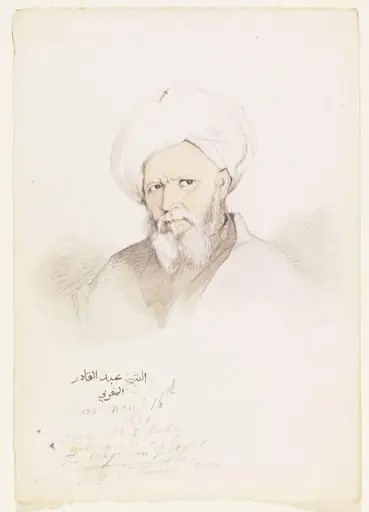
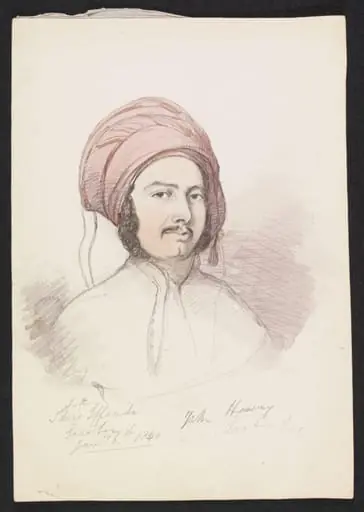
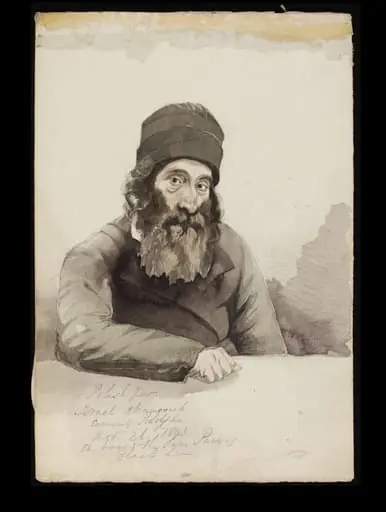
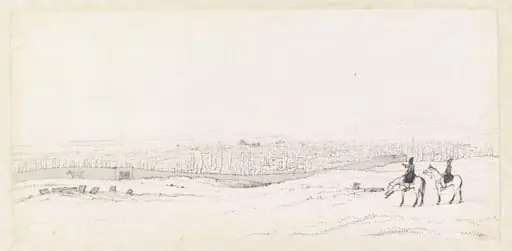
 Thomas Vouchicht (the wolf's cub) Peri Schicsh, Minister of the home department in Servia
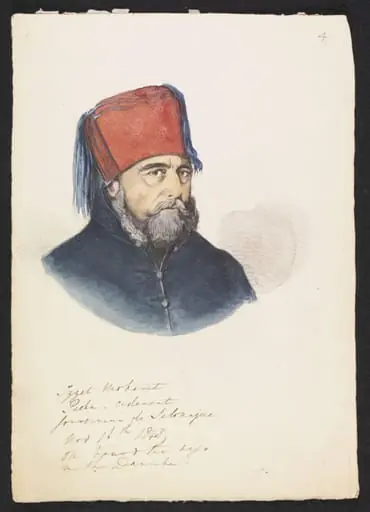 Izzet Mohamet Pasha - ci-devant Gouverneur de Salonique
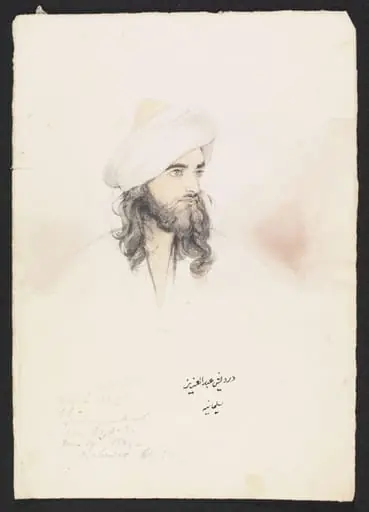 Dervish Abdul Aziz - Suleiman Momd from Bagdad
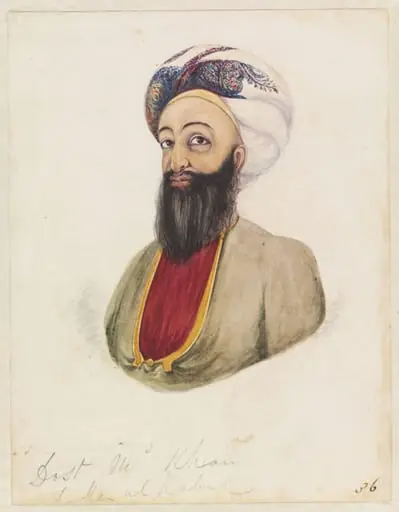 Dost Md Khan taken at Kabul
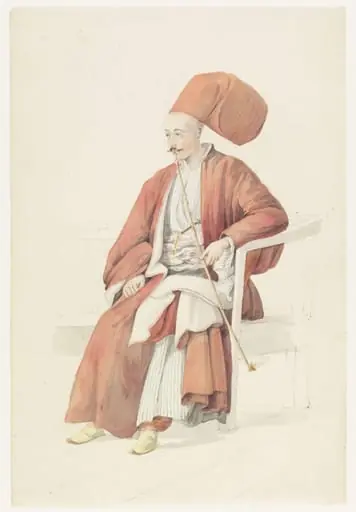 A Bostanci at the Court of the Sultan, seated on a bench, smoking
![CJB. [Charles John Barnet], by Godfrey Thomas Vigne](https://artifactworldgallery.com/img/godfrey-thomas-vigne--cjb-charles-john-barnet--bae01afe8359ebfd-w320.webp) CJB. [Charles John Barnet]
CJB. [Charles John Barnet]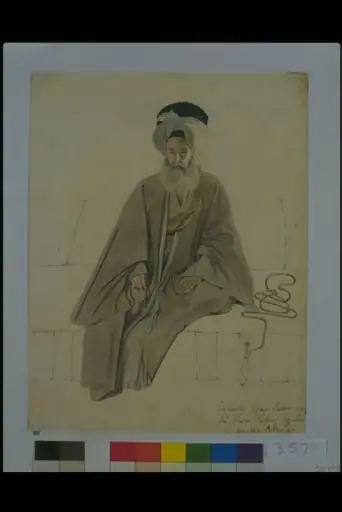 Mehmet Aga Salam
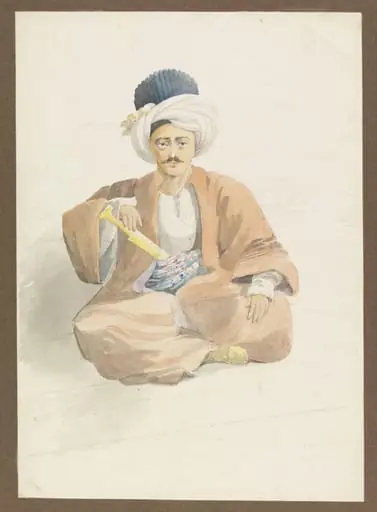 Jafer Beck Affendi
 Mahomet, a Turkish Merchant