Artwork
Sheik of Turkish Cavalry
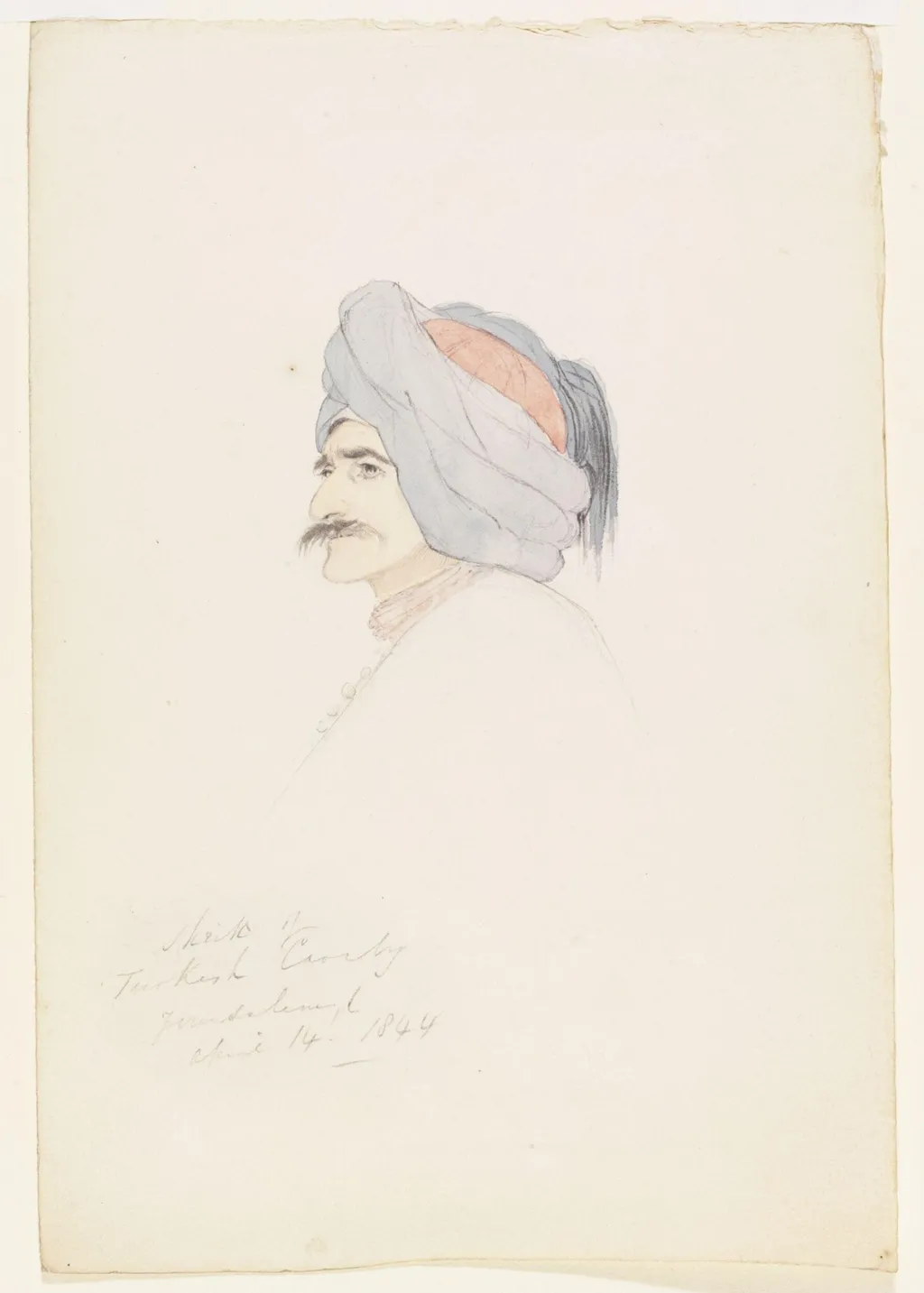
Sheik of Turkish Cavalry is a watercolor work on paper by the Orientalist artist Godfrey Thomas Vigne. It dates from 1844 and is held in the collection of the Victoria and Albert Museum.
About this work
Next, look up Romanticism to see how artists like this one used emotion and adventure in their work.
This sketch shows a man in profile wearing a large turban with a pinkish stripe. His mustache is thick, and the hat covers most of his head, leaving just his face and neck visible. The drawing is loose and quick, with soft watercolor strokes.
The signature notes this was drawn in Constantinople (now Istanbul) in 1844. The artist was sketching a sheik, or leader, of Turkish cavalry.
Next, look up Romanticism to see how artists like this one used emotion and adventure in their work.
Overview
Created in 1844, this watercolour depicts a Turkish cavalry leader, rendered in loose, fluid strokes by Godfrey Thomas Vigne. Executed during his travels in Constantinople, the work reflects the artist’s interest in documenting regional figures through direct observation. The piece entered the collection in the late 1970s via Frank Vigne, who acquired it from Charles Griffin of Monmouth in two separate transactions.
Subject & Meaning
The figure is identified as a sheik, a leader within the Turkish cavalry, portrayed in profile with a prominent turban and thick mustache. The emphasis on his facial features and headgear suggests an interest in cultural identity rather than individual portraiture. Vigne’s choice to depict a military leader in civilian attire may reflect the blending of authority and tradition in Ottoman society at the time.
Technique & Style
The drawing employs soft, transparent watercolour washes applied with a spontaneous, sketch-like hand. Contours are lightly defined, and the turban’s pinkish stripe is suggested rather than sharply outlined. The minimal detail and rapid brushwork convey immediacy, characteristic of travel sketches made on-site. The absence of background elements focuses attention entirely on the figure’s presence.
History & Provenance
The artwork was produced during Vigne’s journey through the Ottoman Empire in the early 1840s. It remained in the artist’s family until the late 1970s, when Frank Vigne, a descendant, acquired it from Charles Griffin of Monmouth through two purchases in 1978 and 1979. Its path from Constantinople to private British hands reflects the movement of Orientalist works through familial and collector networks.
Context
Vigne’s work aligns with 19th-century European travel literature and Orientalist documentation, where artists recorded unfamiliar cultures during imperial expansion. While not overtly romanticized, the sketch participates in a broader trend of depicting Eastern figures with a sense of exoticism and dignity, shaped by contemporary curiosity about the Ottoman world.
Legacy
As a modest, unembellished sketch, the work offers a quiet counterpoint to grander Orientalist paintings of the era. Its value lies in its directness and temporal specificity—capturing a moment in Constantinople’s social landscape without theatricality. It remains a tangible record of a traveler’s encounter with a local leader, preserved through family stewardship.
Artist & collection


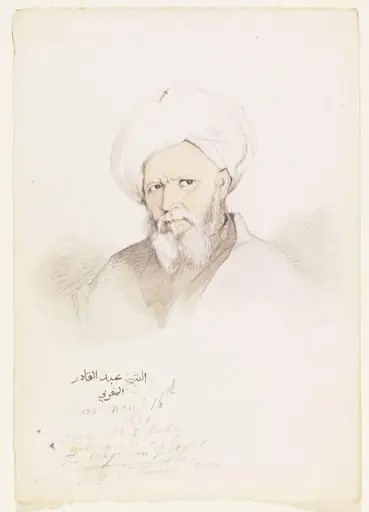
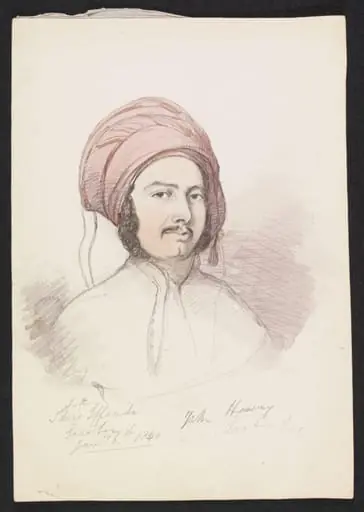
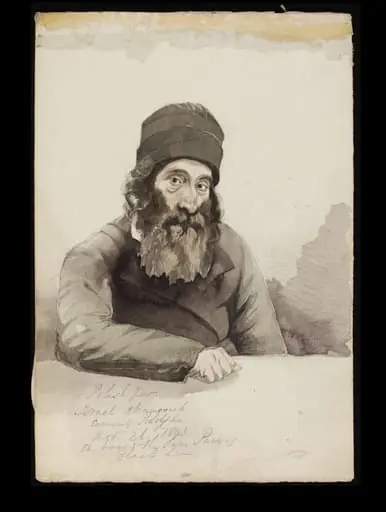
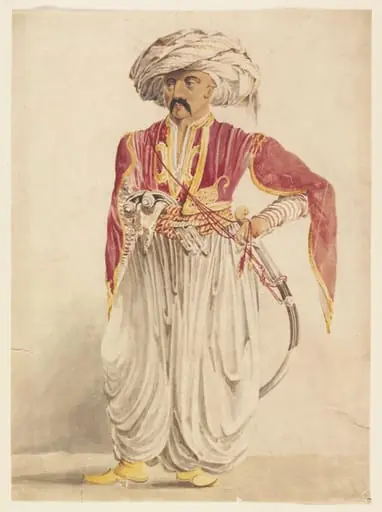 Figure of a Man in Turkish Military Costume
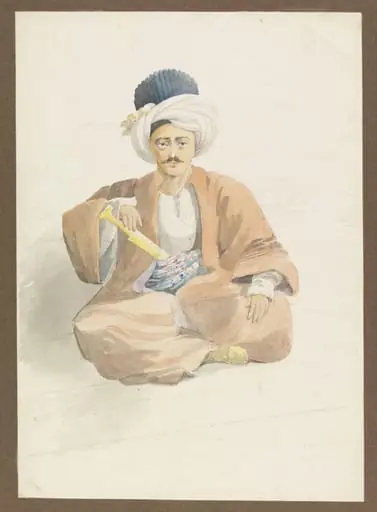 Jafer Beck Affendi
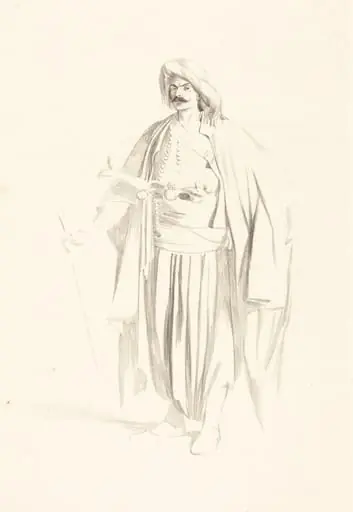 A Turk
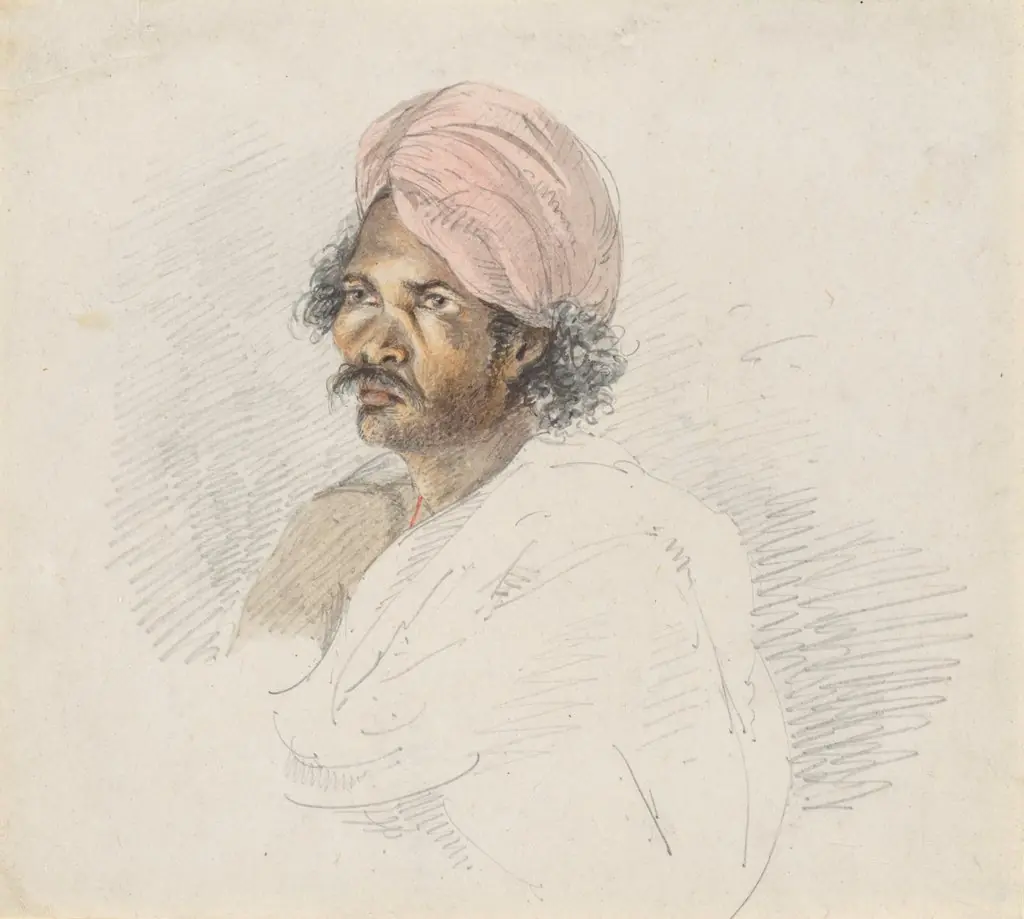 Portrait of a Sri Lankan Tamil
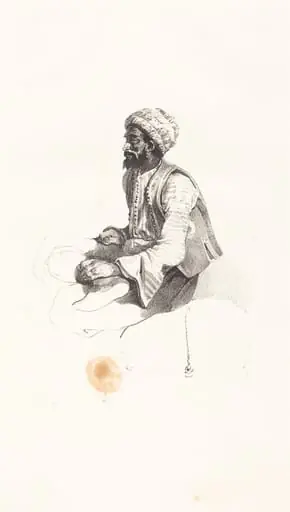 Seated Turk
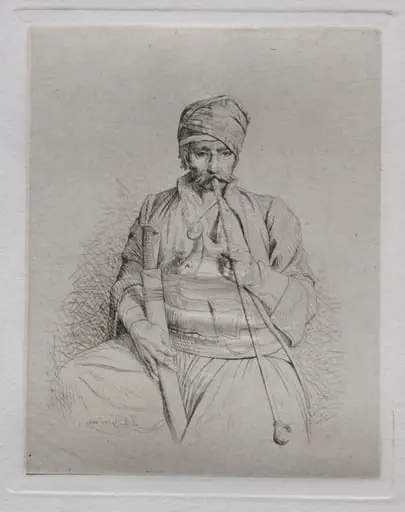 Egyptian Smoker
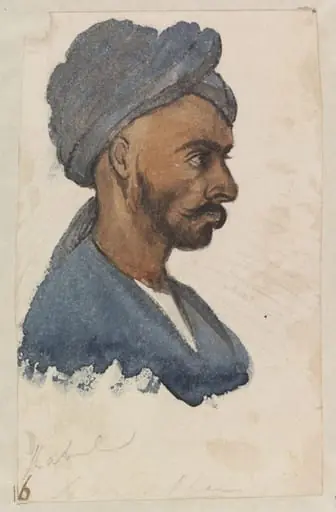 Suliman Khan Kabul
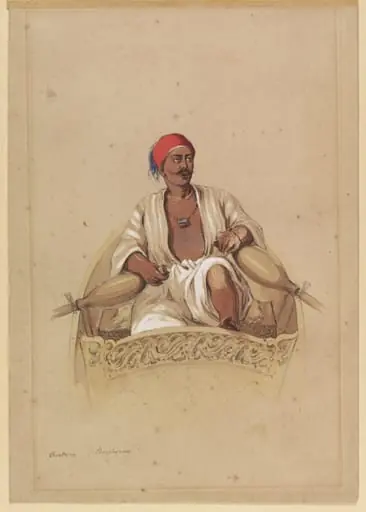 Boatman/ Bosphorus
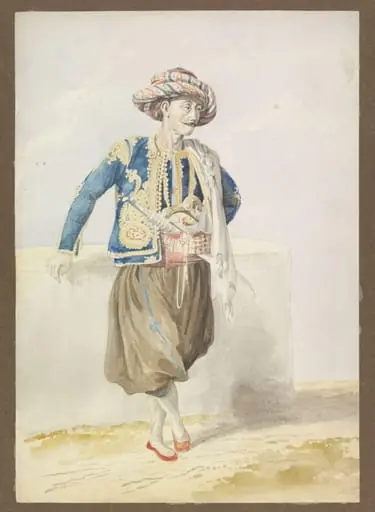 Kalyoncu, or Sea Captain
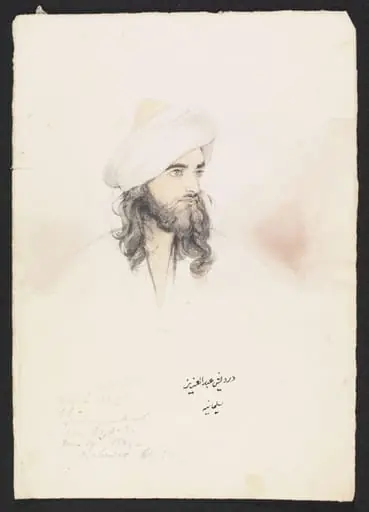 Dervish Abdul Aziz - Suleiman Momd from Bagdad
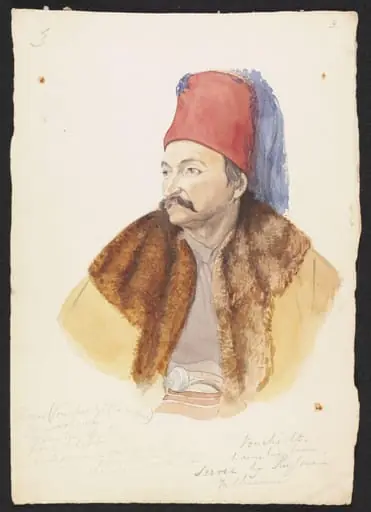 Thomas Vouchicht (the wolf's cub) Peri Schicsh, Minister of the home department in Servia
![CJB. [Charles John Barnet], by Godfrey Thomas Vigne](https://artifactworldgallery.com/img/godfrey-thomas-vigne--cjb-charles-john-barnet--bae01afe8359ebfd-w320.webp) CJB. [Charles John Barnet]
CJB. [Charles John Barnet]