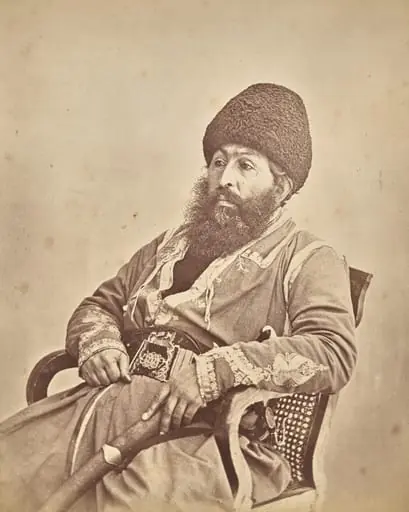
Artwork
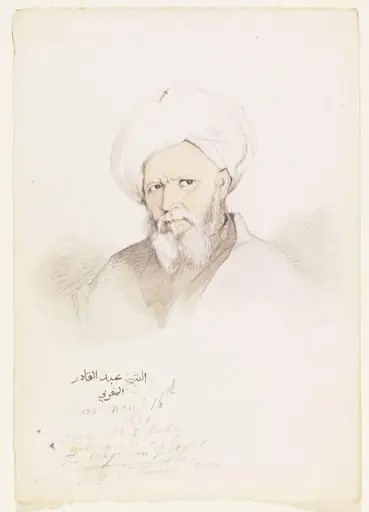
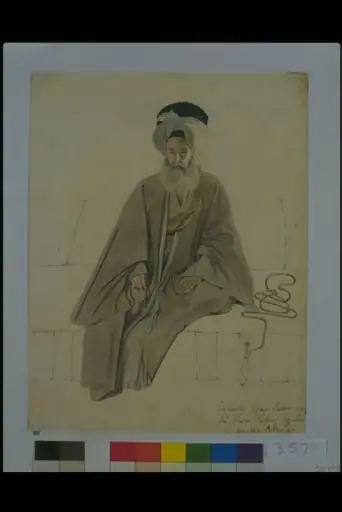
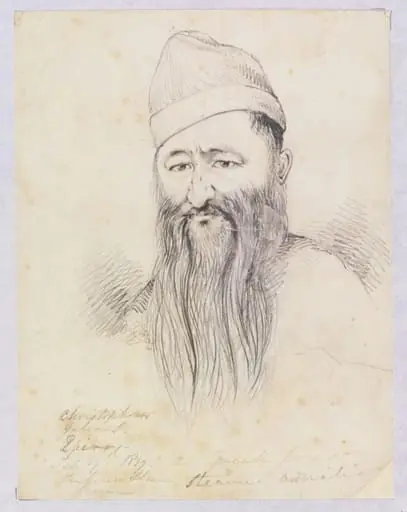
`Abdul Samud - Persian General in Dost Mohd.s. Service Kabul'
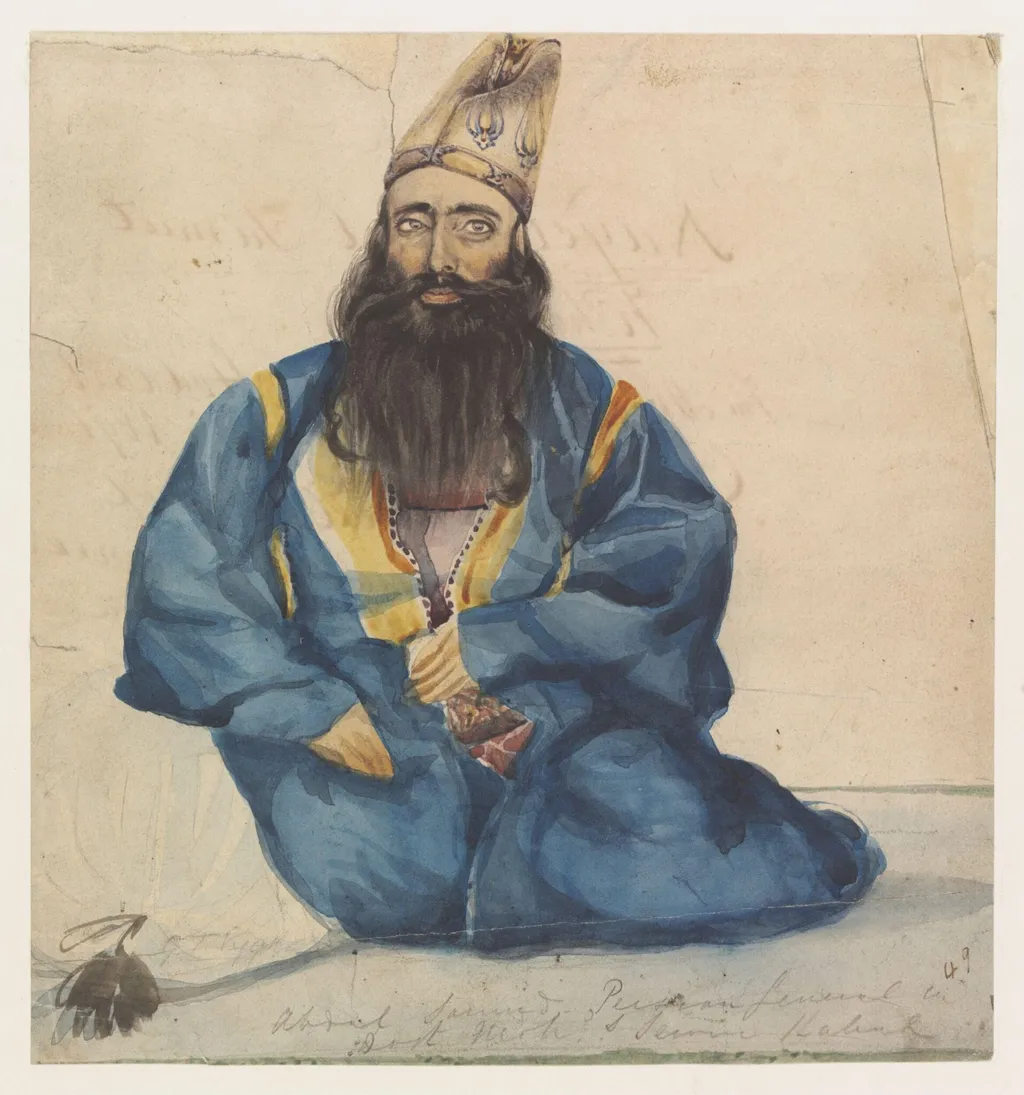
`Abdul Samud - Persian General in Dost Mohd.s. Service Kabul' is a watercolor work on paper by the Orientalist artist Godfrey Thomas Vigne. It dates from 1836 and is held in the collection of the Victoria and Albert Museum.
About this work
This is a portrait of Abdul Samud, a Persian General. It's a watercolour piece from 1836.
The artist, Godfrey Thomas Vigne, met Abdul Samud at the court of Dost Muhammad in Kabul. Vigne was not fond of him, but their encounter is an interesting part of the story.
To learn more about the style of this piece, look into the movement: Romanticism.
Overview
Painted in 1836 by Godfrey Thomas Vigne, this watercolour portrait depicts Abdul Samud, a Persian military officer serving under Dost Muhammad, ruler of Kabul.
Painted in 1836 by Godfrey Thomas Vigne, this watercolour portrait depicts Abdul Samud, a Persian military officer serving under Dost Muhammad, ruler of Kabul. Vigne, an English traveler and amateur artist, encountered Samud during his journey through Central Asia. The work is a direct observation from life, capturing a figure of political significance in a region rarely documented by Western artists at the time.
Subject & Meaning
Abdul Samud was a powerful figure at Dost Muhammad’s court, later rising to prominence in Bukhara as a close advisor to its ruler. He became infamous for his role in the detention and execution of two British officers in 1842. Vigne’s portrait, though made before these events, reflects the tension of their initial meeting—marked by mutual distrust. The image serves as a visual record of a man whose influence extended beyond military command into the realm of political terror.
Technique & Style
Executed in watercolour, the portrait employs restrained washes and precise line work to convey texture and presence. Vigne’s approach aligns with the ethnographic traditions of early 19th-century travel art, emphasizing individual character over idealization. The composition focuses on the subject’s facial expression and attire, with minimal background detail, directing attention to his demeanor and status as a regional authority.
History & Provenance
Vigne painted the portrait during his stay in Kabul in 1836. The image later appeared as a lithograph in Joseph Wolff’s 1845 account of his mission to Bukhara, where Samud had relocated. Wolff’s narrative, which details the fate of the executed British officers, used the portrait to authenticate his account. The watercolour’s survival offers rare visual evidence of a figure central to Anglo-Russian rivalries in Central Asia.
Context
The portrait was created amid growing British concern over Russian influence in Afghanistan and Central Asia. Vigne’s travels occurred during the early stages of the Great Game, a period of geopolitical tension. Samud’s presence at Dost Muhammad’s court reflected the complex alliances between Persian elites and Afghan rulers. His later actions in Bukhara underscored the volatility of the region and the risks faced by foreign envoys.
Legacy
The portrait endures as a primary visual source for understanding the personalities involved in 19th-century Central Asian politics. Though not widely exhibited, its inclusion in Wolff’s published narrative ensured its circulation among British audiences. It remains a quiet but significant artifact of cross-cultural encounter, documenting a man whose notoriety grew after the image was made.
Artist & collection