Artwork
Persian
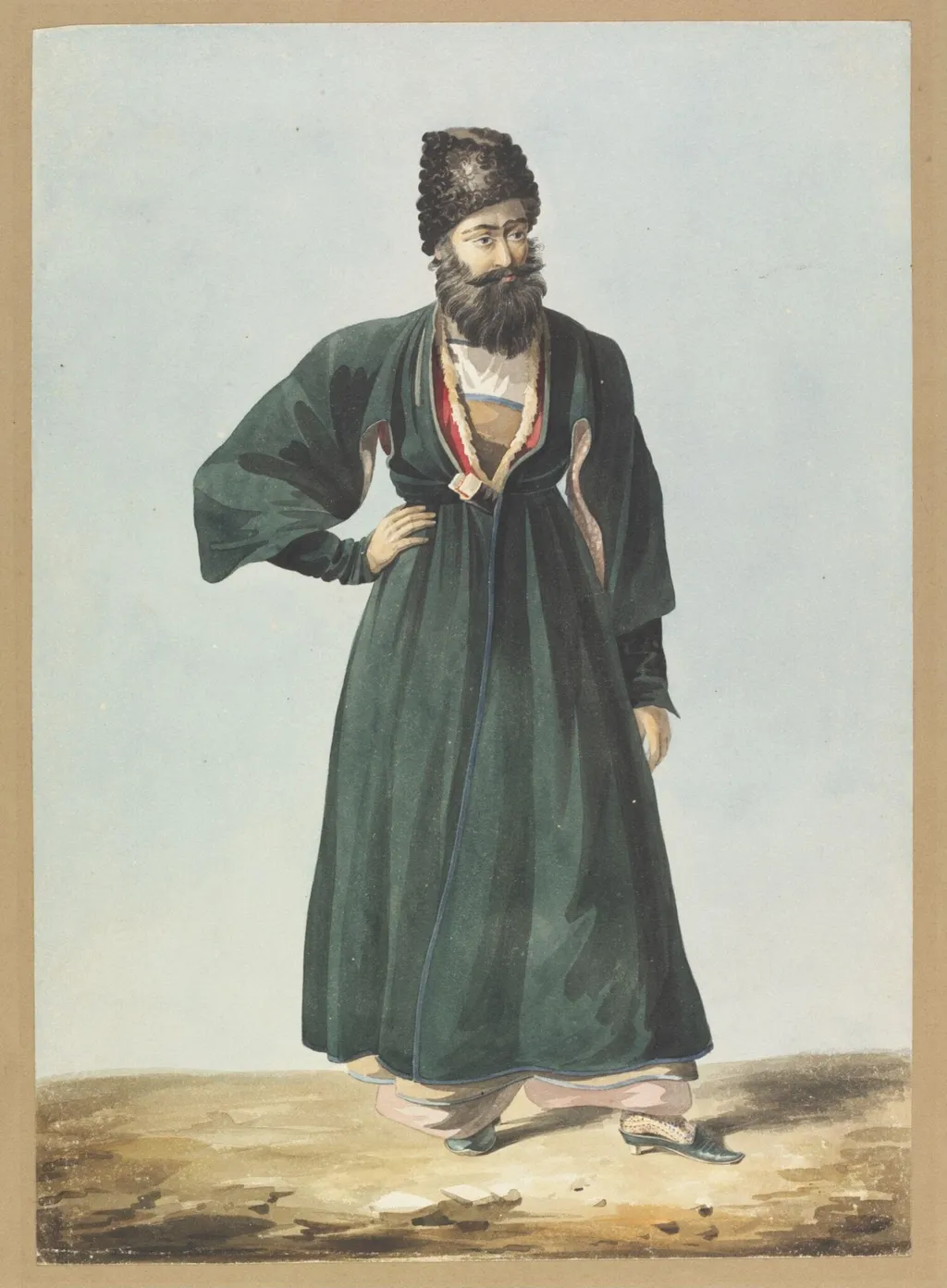
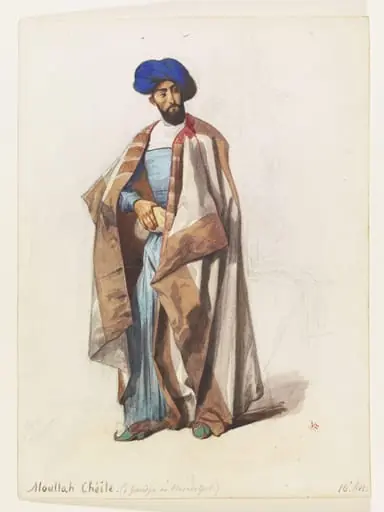
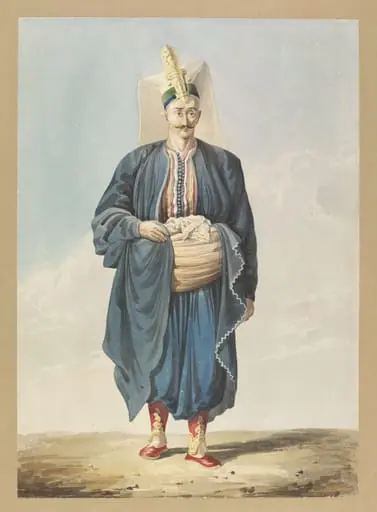
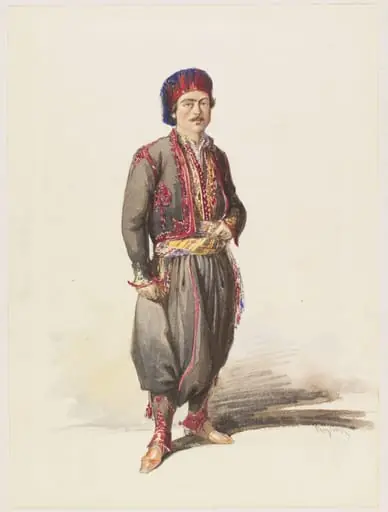
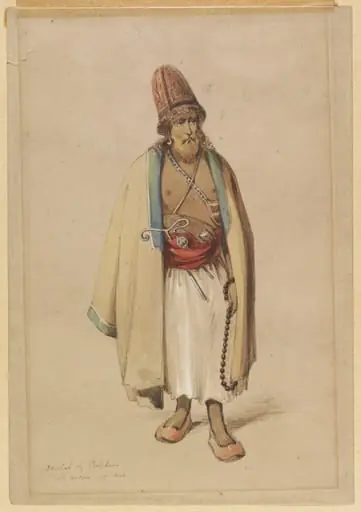
Persian is a watercolor work on paper by the American Folk Art artist William Page. It dates from 1820 and is held in the collection of the Victoria and Albert Museum.
About this work
Overview
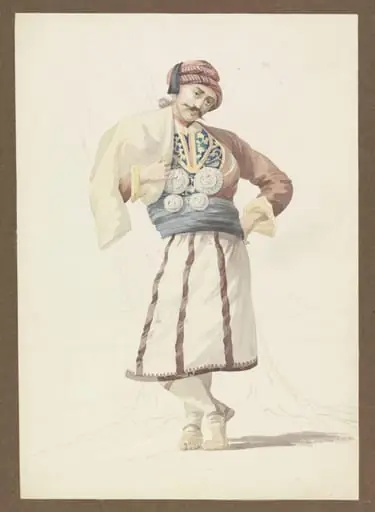
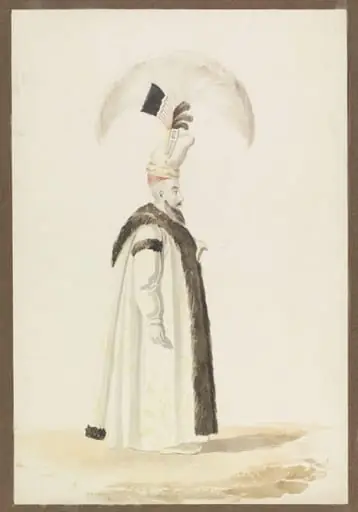
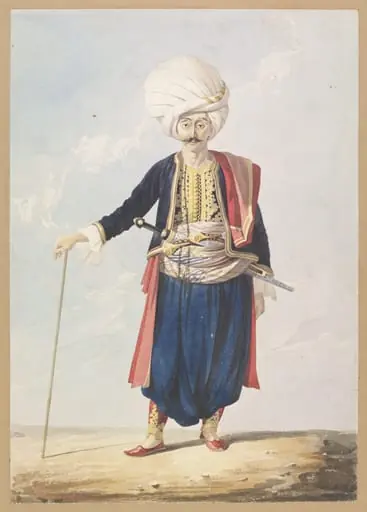
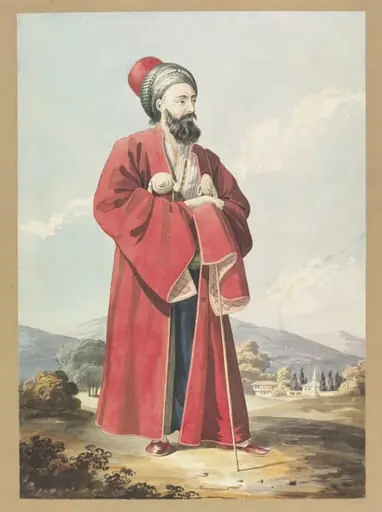
The work is neither a portrait nor a narrative scene but a focused study of dress and presence, reflecting an interest in cultural observation.
This watercolour by William Page portrays a male figure in Persian attire, executed in delicate brushwork and muted tones. It belongs to a group of costume studies Page produced during his early career, likely between the 1810s and early 1820s, informed by his travels in the Near East. The work is neither a portrait nor a narrative scene but a focused study of dress and presence, reflecting an interest in cultural observation.
Subject & Meaning
The figure stands with hands on hips, his expression composed and solemn, suggesting dignity rather than theatricality. His attire—dark green robe, fur-lined hat, and a vivid red sash—signals regional identity and social bearing. The restrained background isolates the figure, emphasizing the cultural specificity of his garments. The red sash, a subtle but deliberate contrast, draws attention to the interplay of color and form without overt symbolism.
Technique & Style
Page employs transparent watercolour washes to define fabric folds and texture, with fine linework outlining contours and facial features. The light, neutral background enhances the figure’s solidity, while the sash’s intensity is achieved through layered pigment. The style aligns with early 19th-century academic drawing practices, blending observational precision with a Romantic-era sensitivity to exoticism and individual character.
History & Provenance
The work was once held in a private collection acquired by the London dealers Maggs in June 1967. Prior to that, its ownership history is undocumented. It entered its current institutional holding following that acquisition, likely as part of a broader group of Page’s studies. No exhibition or publication record from the 19th century is known for this specific piece.
Context
Page’s Persian studies emerged during a period of growing European interest in Eastern cultures, fueled by travel literature and diplomatic missions. Though not a commissioned ethnographic record, these works reflect the era’s fascination with foreign dress and customs. His approach, grounded in direct observation where possible, distinguishes them from purely imaginative depictions common in Orientalist art of the time.
Legacy
Though not widely exhibited, Page’s costume studies remain valuable as early examples of British artists engaging with Near Eastern subjects through firsthand experience. They offer a quieter counterpoint to the more dramatic Orientalist paintings of his contemporaries, preserving details of attire and posture that might otherwise have been lost to stylization or stereotype.
Own this work as a print
Artist & collection