Artwork
The Baptism of St. John
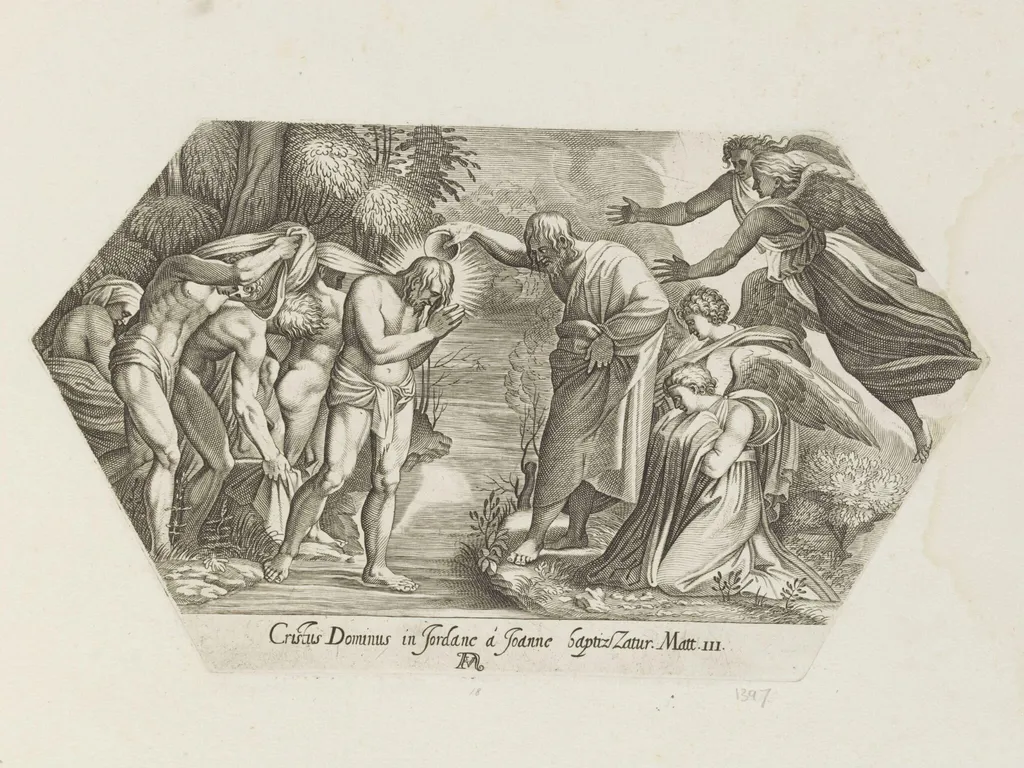
The Baptism of St. John is a print by the Baroque artist Francesco Villamena. It is held in the collection of the Victoria and Albert Museum.
About this work
Overview
' Villamena translated these painted narratives into a reproducible graphic form, making sacred stories accessible beyond the confines of the papal chambers.
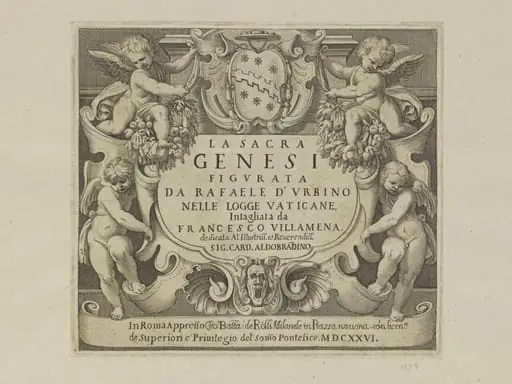
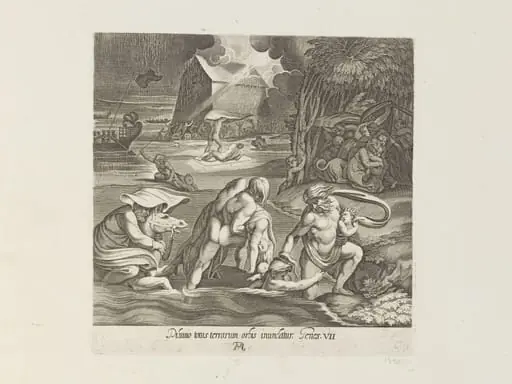
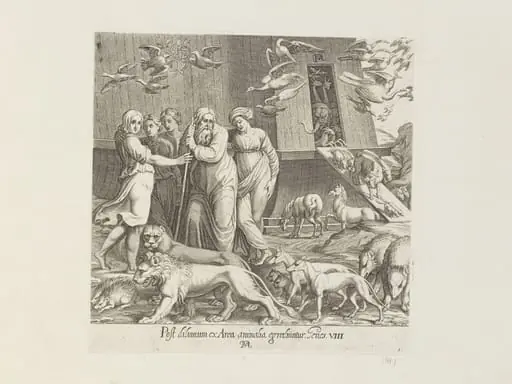
Created in 1626, Francesco Villamena’s etching captures the baptism of John the Baptist, rendered in intaglio on paper. It belongs to a cycle of twenty prints inspired by Raphael’s frescoes in the Vatican’s Loggie, known collectively as the 'Raphael Bible.' Villamena translated these painted narratives into a reproducible graphic form, making sacred stories accessible beyond the confines of the papal chambers.
Subject & Meaning
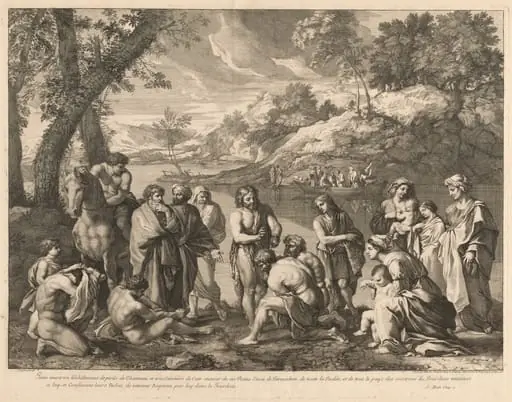
The scene portrays John the Baptist receiving baptism from a figure traditionally understood as Christ, though not explicitly labeled. Figures gather around the water’s edge, their gestures and postures conveying reverence and anticipation. A child held by a woman suggests generational continuity, while the stillness of onlookers contrasts with the central act, emphasizing its spiritual gravity within the biblical narrative.
Technique & Style
Villamena employed fine, controlled lines typical of etching to model form through chiaroscuro. Deep shadows define folds of fabric and rocky terrain, while highlights isolate the central figures, guiding the viewer’s focus. The dense cross-hatching and varying line weights create a sense of volume and movement, adapting Raphael’s painterly composition into the precise, linear language of printmaking.
History & Provenance
The print was produced during a period when reproductive engravings of Raphael’s works were widely circulated among collectors and clergy. Villamena, active in Rome, was part of a tradition of artists translating High Renaissance compositions into prints. This series likely served devotional and educational purposes, extending Raphael’s influence beyond the Vatican walls into private and ecclesiastical collections.
Context
In early 17th-century Italy, the Catholic Church encouraged visual representations of scripture to reinforce doctrine after the Council of Trent. Reproducing Raphael’s frescoes in print aligned with this agenda, offering accessible, standardized imagery. Villamena’s work reflects both the enduring authority of Raphael’s designs and the growing market for religious prints among literate, devout audiences.
Legacy
Villamena’s series contributed to the dissemination of Raphael’s iconography across Europe, influencing later printmakers and shaping how biblical scenes were visually understood. Though less celebrated than his sources, his technical fidelity and compositional discipline preserved the narrative clarity of the original frescoes, ensuring their continued presence in private and institutional collections well into the 18th century.
Artist & collection
Artist
Francesco Villamena (1564–1624) was an Italian engraver, drawing teacher and art collector.