Artwork
Brutto Buono Stoned by His Enemies
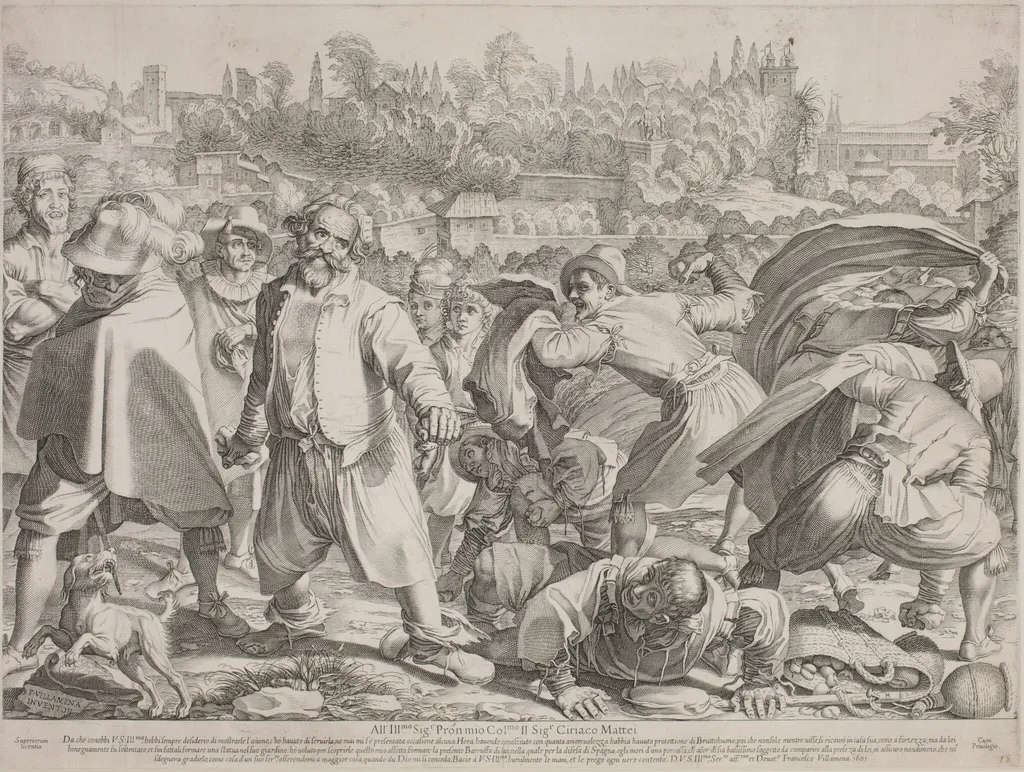
Brutto Buono Stoned by His Enemies is an ink print by the Renaissance artist Francesco Villamena. It dates from 1595 and is held in the collection of the National Gallery of Art.
About this work
Overview
Created in 1595 by Francesco Villamena, an Italian engraver active in Rome, this print is one of several works exploring moral and allegorical themes.
Created in 1595 by Francesco Villamena, an Italian engraver active in Rome, this print is one of several works exploring moral and allegorical themes. Executed in intaglio, the technique involves incising lines into a metal plate to hold ink, allowing for fine detail and tonal variation. Villamena, trained under Cornelis Cort and influenced by Agostino Carracci, used this method to translate complex narratives into printed form, often drawing from religious or classical sources.
Subject & Meaning
The figure labeled 'Brutto Buono'—literally 'Ugly Good'—is shown enduring a mob’s violence, suggesting a moral paradox: virtue punished by ignorance. The scene may allude to the persecution of the righteous, a common theme in Counter-Reformation art. The inclusion of a barking dog and a distant figure preparing a stone adds layers of tension, implying complicity and moral blindness among the crowd. The title invites reflection on societal judgment versus inner worth.
Technique & Style
Villamena employed precise cross-hatching and fine line work to model form and suggest movement in the chaotic scene. The textures of fabric, stone, and foliage are rendered with meticulous attention, demonstrating mastery of the engraver’s burin. The composition directs the viewer’s eye through layered spatial planes—from the foreground dog to the distant cityscape—enhancing narrative depth without relying on color or shading beyond line.
History & Provenance
The print was made during Villamena’s time in Rome, where he produced numerous engravings for religious and scholarly audiences. Though not widely documented in early collections, it appears in later 17th-century European print portfolios. Its survival in institutional holdings suggests it was valued for its technical skill and moral resonance, even if its subject remained obscure outside specialist circles.
Context
In late 16th-century Rome, engravings served as vehicles for moral instruction and artistic exchange. Villamena’s work reflects the influence of Bolognese naturalism and the Mannerist interest in emotional intensity. The theme of unjust persecution resonated amid religious tensions of the Counter-Reformation, where figures of virtue were often vilified by institutional or popular forces.
Legacy
While not widely reproduced or studied today, the engraving exemplifies the capacity of printmaking to convey complex narratives with subtlety. Villamena’s technique influenced later engravers in Rome, and the work remains a rare example of allegorical printmaking that blends social critique with formal precision, offering insight into the moral anxieties of its time.
Artist & collection
Artist
Francesco Villamena (1564–1624) was an Italian engraver, drawing teacher and art collector.

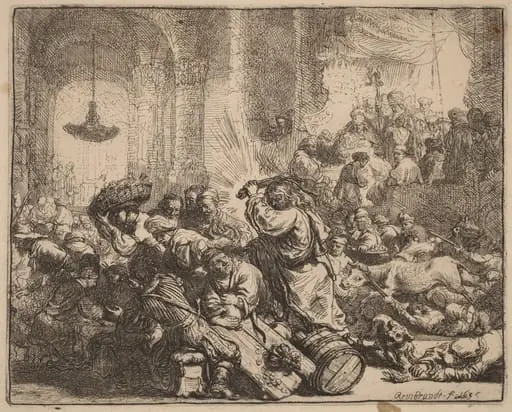 Christ Driving the Money Changers from the Temple
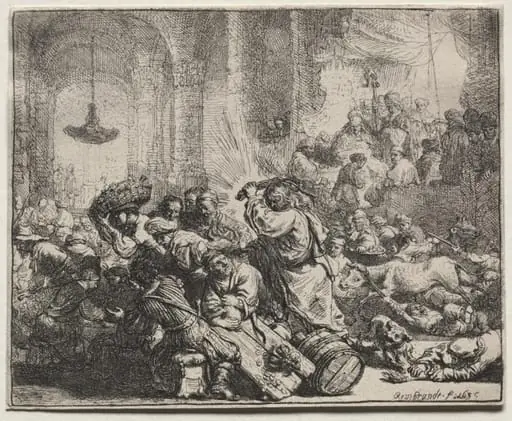 Christ Driving the Money Changers from the Temple
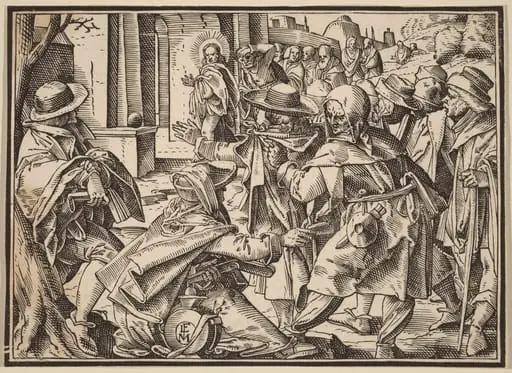 Christ Tells His Disciples of the Last Judgment
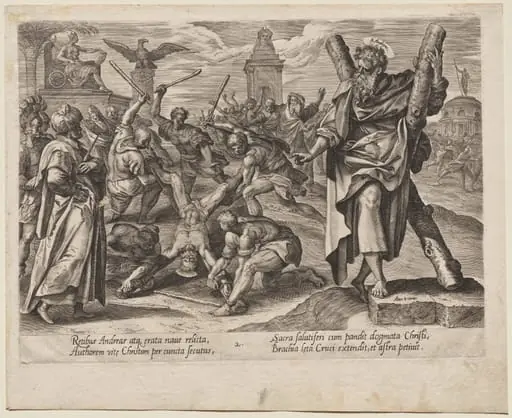 St. Andrew
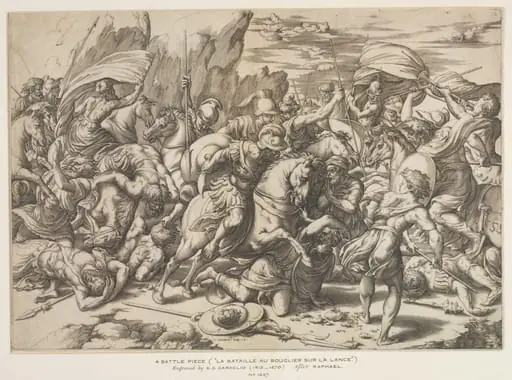 La bataille au bouclier sur la lance
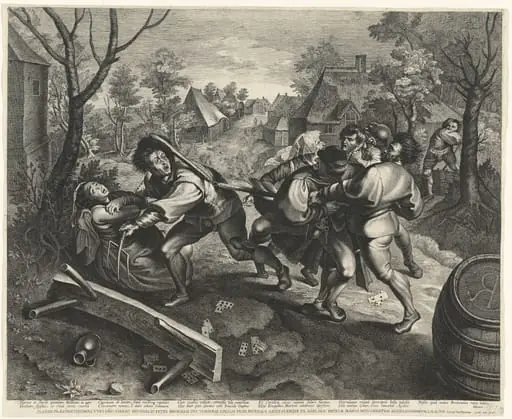 Peasants Fighting over a Game of Cards
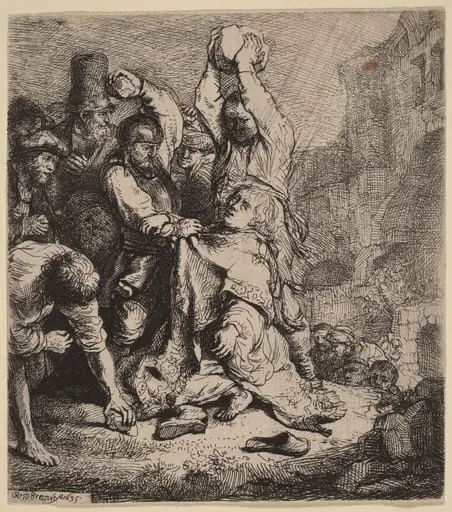 The Stoning of Saint Stephen
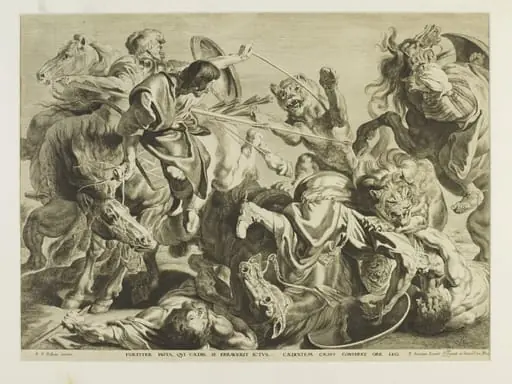 The Hunt of the Lion and Lioness
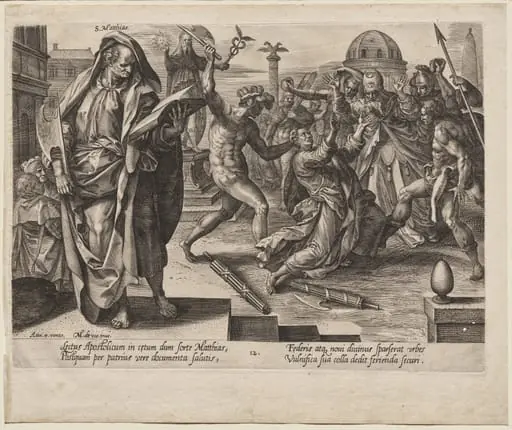 St. Matthias
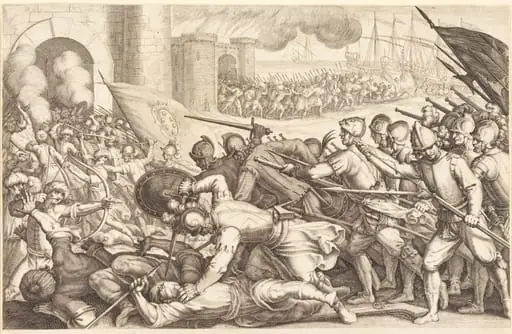 The Troops Forcing the Gate of a Town
![Abraham Entertaining the Angels [verso], by German 16th Century](https://artifactworldgallery.com/img/german-16th-century--abraham-entertaining-the-angels-verso--69d1b25f4eba0a53-w320.webp) Abraham Entertaining the Angels [verso]
Abraham Entertaining the Angels [verso]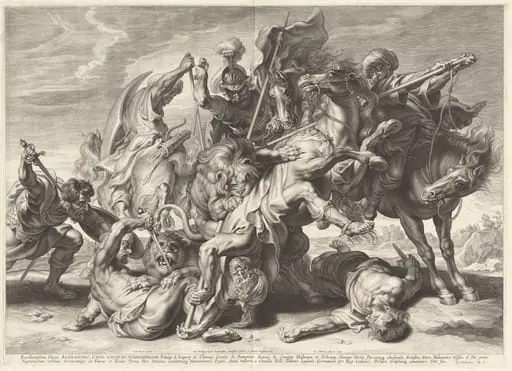 Lion Hunt