Artwork
Italian Coastal Village
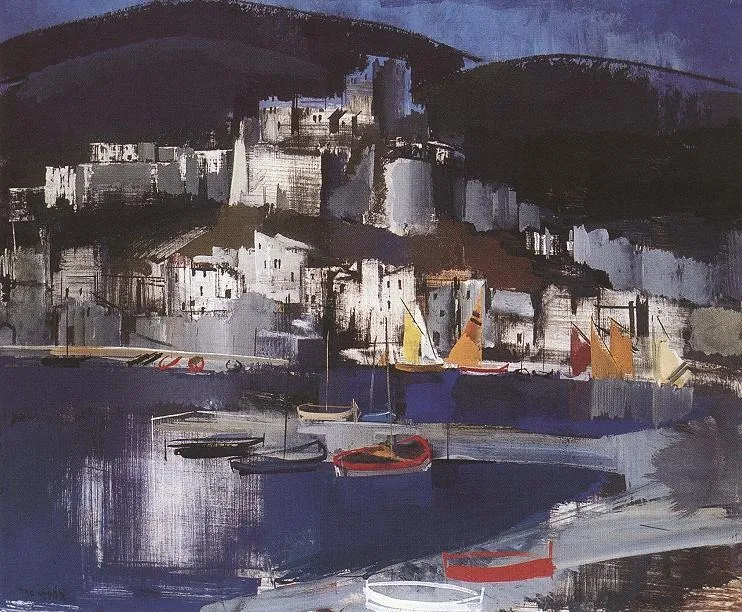
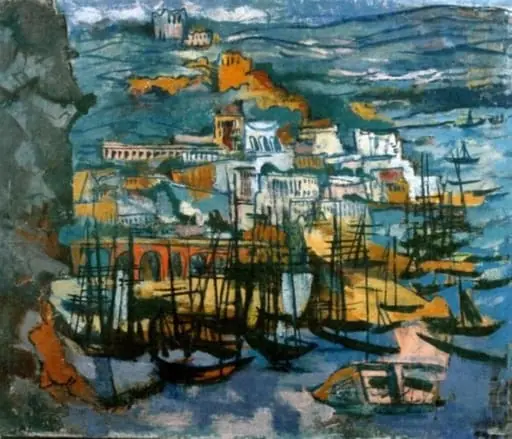
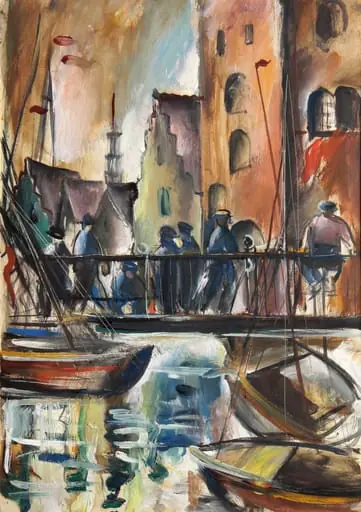
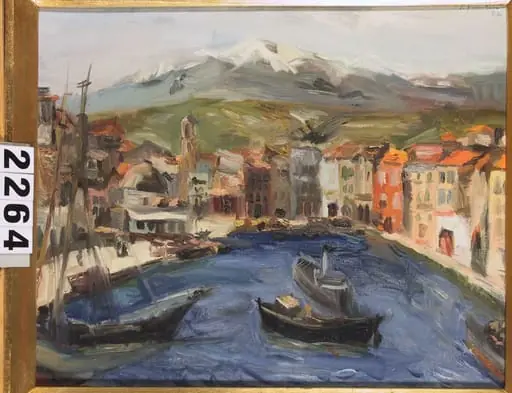
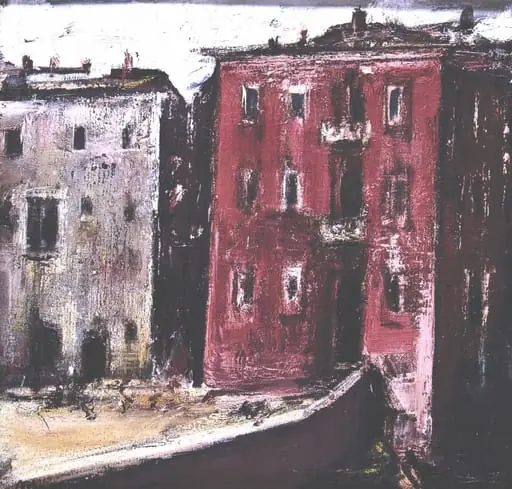
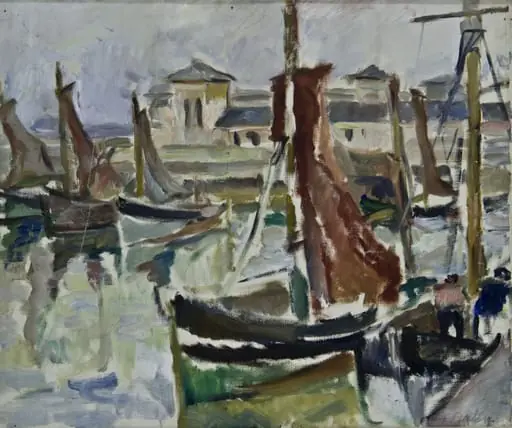
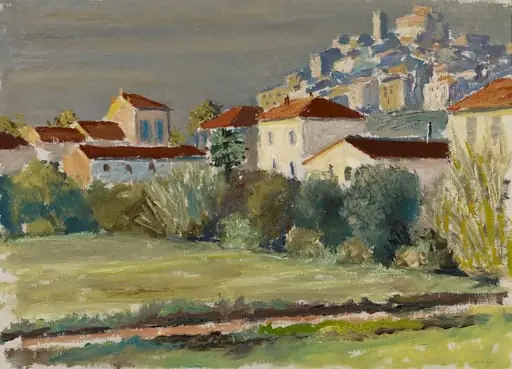
Italian Coastal Village is a tempera painting by the Post-Impressionist artist Vilmos Aba-Novák. It dates from 1930 and is held in the collection of the Hungarian National Gallery.
About this work
Overview
Vilmos Aba-Novák painted *Italian Coastal Village* in 1930 using tempera on a support typical of his smaller-scale works.
Vilmos Aba-Novák painted *Italian Coastal Village* in 1930 using tempera on a support typical of his smaller-scale works. Though Hungarian by nationality, the subject reflects a journey to Italy, capturing a quiet coastal settlement. The piece is part of the Hungarian National Gallery’s collection and represents a departure from his larger public frescoes, offering a more intimate, contemplative view of landscape.
Subject & Meaning
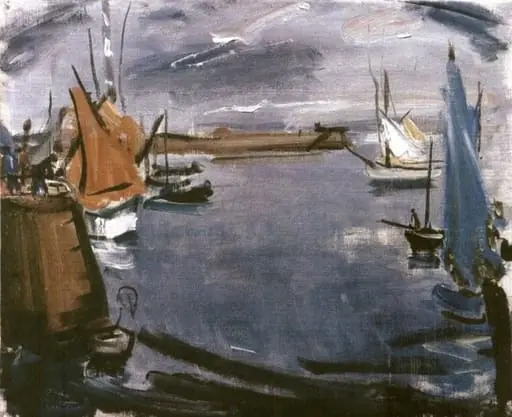
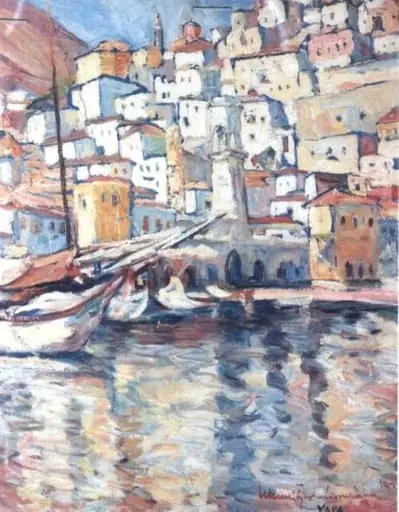
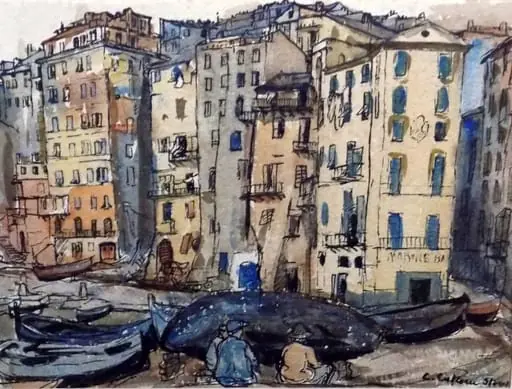
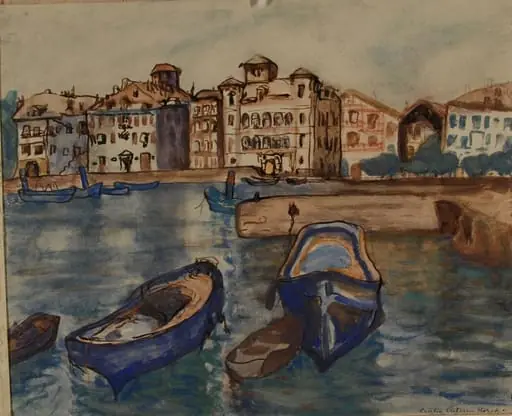
The painting portrays a modest Italian seaside village, with clustered buildings and a single church steeple anchoring the horizon. No figures are present, emphasizing stillness and solitude. The absence of human activity invites reflection on place and time, aligning with post-impressionist tendencies to convey mood over narrative. The quiet rhythm of the architecture and sea suggests a harmonious, unchanging rural existence.
Technique & Style
Aba-Novák employed tempera for its matte finish and precise layering, allowing subtle transitions in tone. Earthy ochres, soft greens, and pale blues dominate, with delicate highlights on the water suggesting reflected light. Brushwork is controlled yet expressive, emphasizing texture in stone and foliage without overt detail. The composition avoids dramatic perspective, favoring a flattened plane that enhances the meditative quality of the scene.
History & Provenance
Created during a period when Aba-Novák was actively commissioned for large religious and civic murals, *Italian Coastal Village* stands as a personal counterpoint to his public works. It entered the Hungarian National Gallery’s collection shortly after its completion, likely acquired through state support for national artists. Its preservation reflects its significance as a representative example of his lyrical phase beyond monumental art.
Context
In the early 1930s, Hungarian artists were navigating between modernist experimentation and national identity. Aba-Novák, while known for bold frescoes, also engaged with quieter, observational subjects influenced by European post-impressionism. This painting aligns with broader trends in Central European art that sought emotional resonance in landscape, distinct from the political or social themes dominating other contemporary works.
Legacy
Though less celebrated than his frescoes, *Italian Coastal Village* remains a key example of Aba-Novák’s range. It demonstrates his ability to convey atmosphere through restrained color and composition, influencing later Hungarian landscape painters. The work continues to be studied for its synthesis of modern technique with traditional subject matter, offering insight into the artist’s private vision beyond public commissions.
Artist & collection
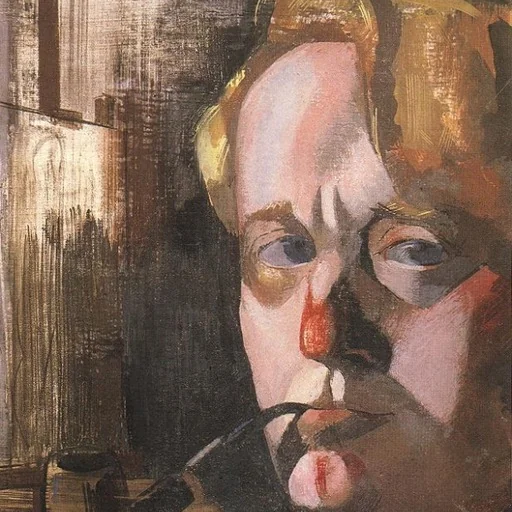
Artist
Vilmos Aba-Novák (Hungarian: Aba-Novák Vilmos, until 1912: Hungarian: Novák Vilmos; March 15, 1894 – September 29, 1941) was a Hungarian painter and graphic artist.