Artwork
Portrait of Paul-Eugène Milliet, Second Lieutenant of the Zouaves
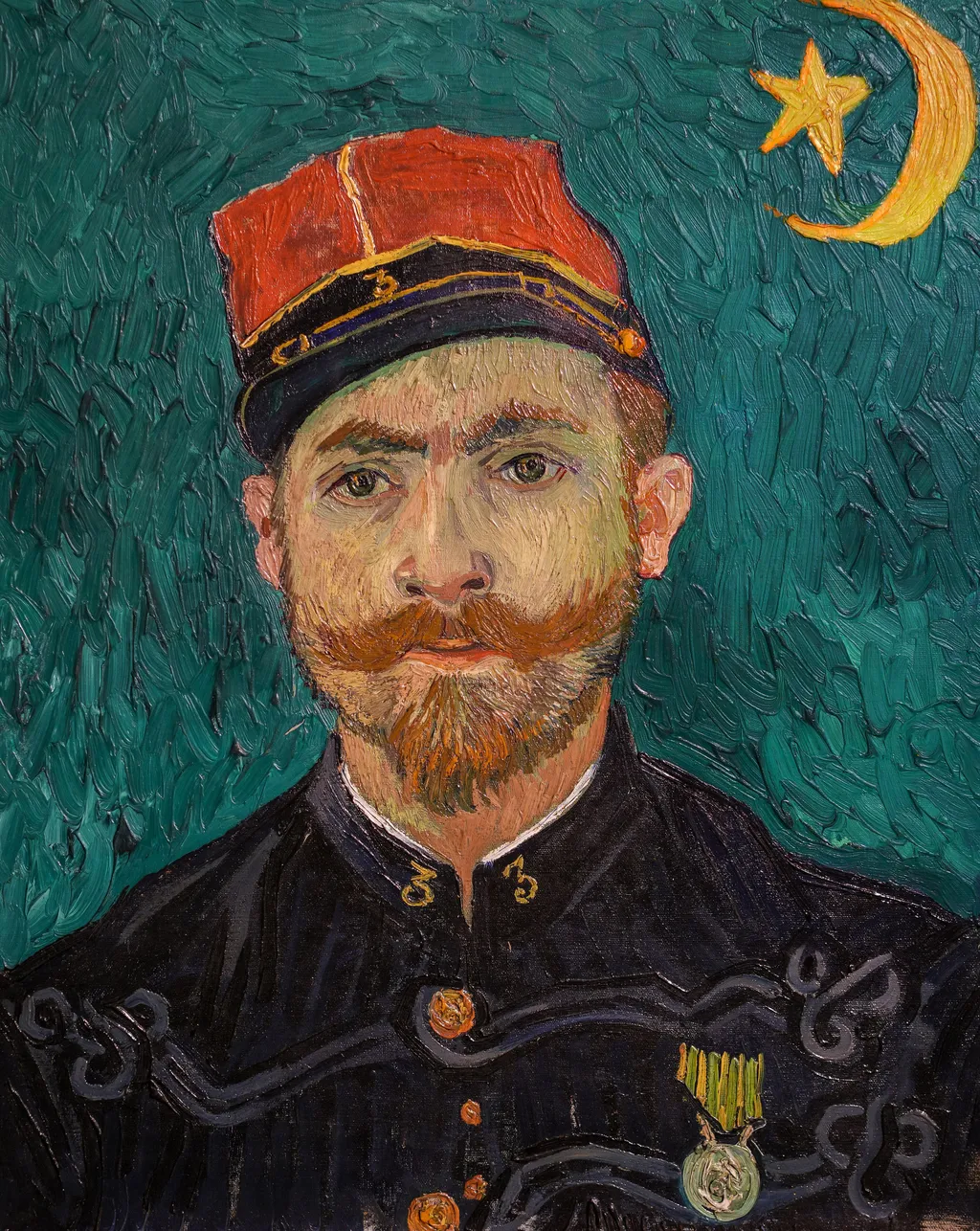
Portrait of Paul-Eugène Milliet, Second Lieutenant of the Zouaves is an oil painting by the Post-Impressionist artist Vincent van Gogh. It is held in the collection of the Kröller-Müller Museum.
About this work
Overview
Vincent van Gogh painted a portrait of Paul‑Eugène Milliet, a second lieutenant in the French Zouave regiment, in 1894. Executed in oil on canvas, the work presents the officer in his distinctive uniform and is part of the collection of the Kröller‑Müller Museum in the Netherlands.
Subject & Meaning
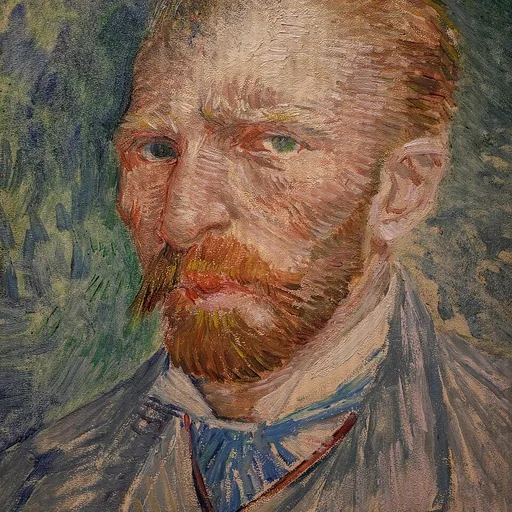
The sitter, Milliet, is shown in a dark blue coat trimmed with gold buttons, a red fez with a black band, and a small green medal with a yellow ribbon on his chest. His thick reddish‑brown beard and mustache dominate his face, suggesting a mature, seasoned military figure. The portrait’s composition emphasizes the individuality of the officer within the broader context of French colonial troops.
Technique & Style
Van Gogh employs his characteristic impasto, layering thick, textured brushstrokes to render the facial features and fabric. The background consists of swirling teal and green strokes, punctuated by a yellow crescent moon and star in the upper right, creating a vivid contrast that heightens the portrait’s dynamism.
History & Provenance
Created during Van Gogh’s later period, the painting entered the Kröller‑Müller Museum’s holdings, where it remains on display. The work reflects the artist’s interest in portraiture and his brief engagement with military subjects during his time in the Netherlands.
Own this work as a print
Artist & collection
Artist
Vincent Willem van Gogh was a Dutch Post-Impressionist painter who is among the most famous and influential figures in the history of Western art.