Artwork
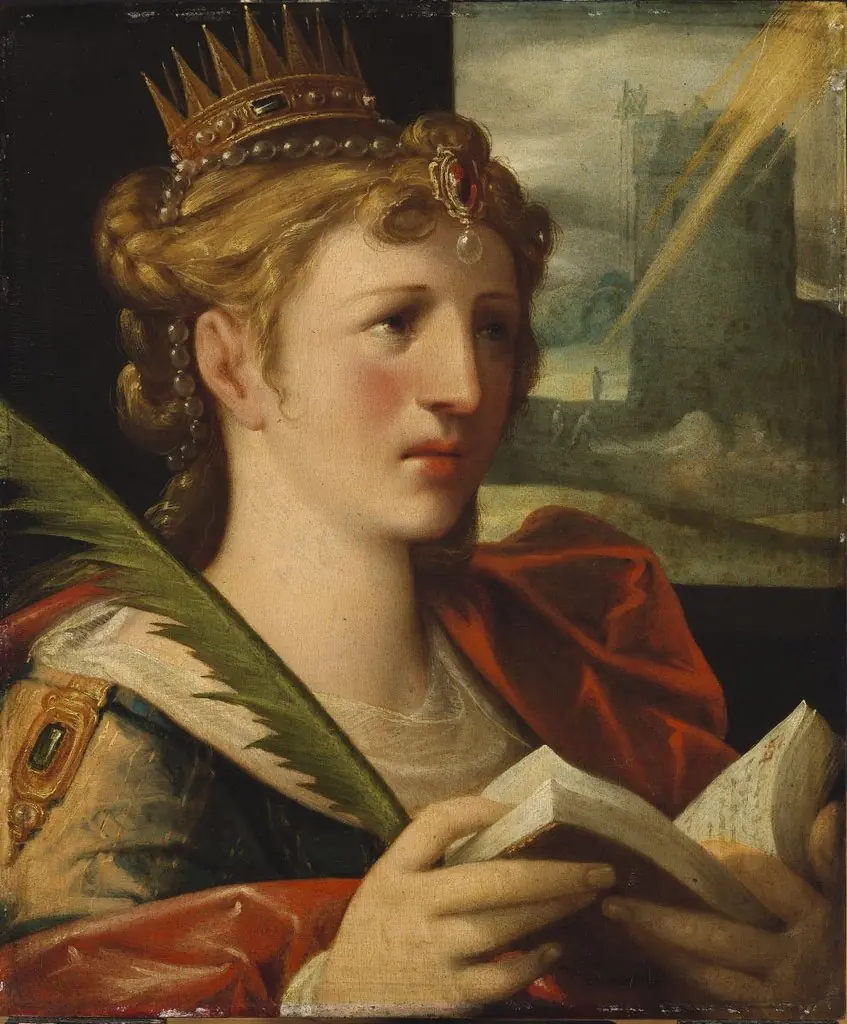
Saint Barbara
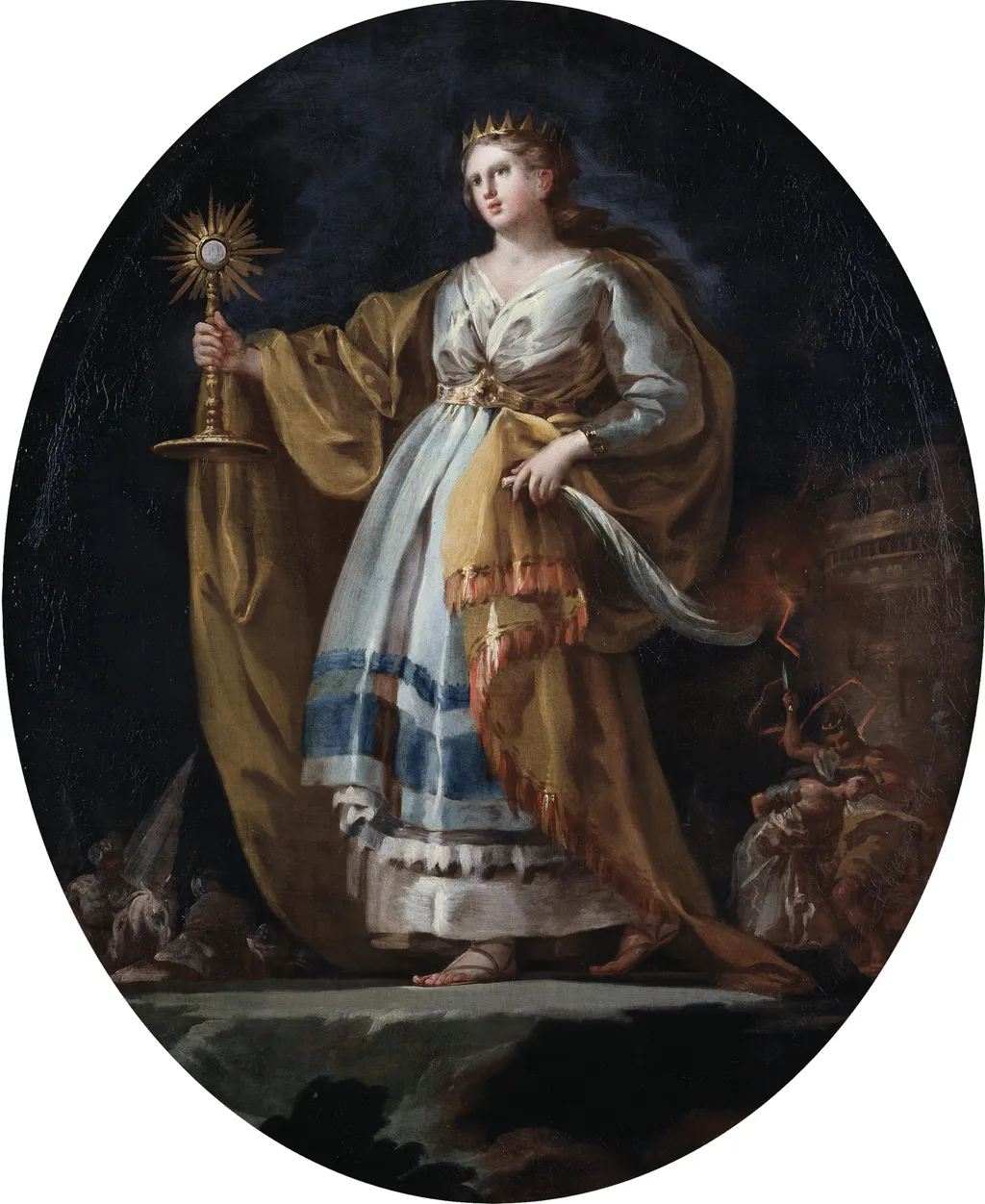
Saint Barbara is an oil painting by the Rococo painting artist Francisco Goya. It dates from 1772 and is held in the collection of the Museo del Prado.
About this work
Overview
Created in 1772, this oil painting by Francisco Goya portrays Saint Barbara, a figure from Christian hagiography. The work belongs to Goya’s early period, when he was still working within the Rococo aesthetic that dominated Spanish religious art. Today the canvas is part of the collection of the Museo del Prado in Madrid.
Subject & Meaning
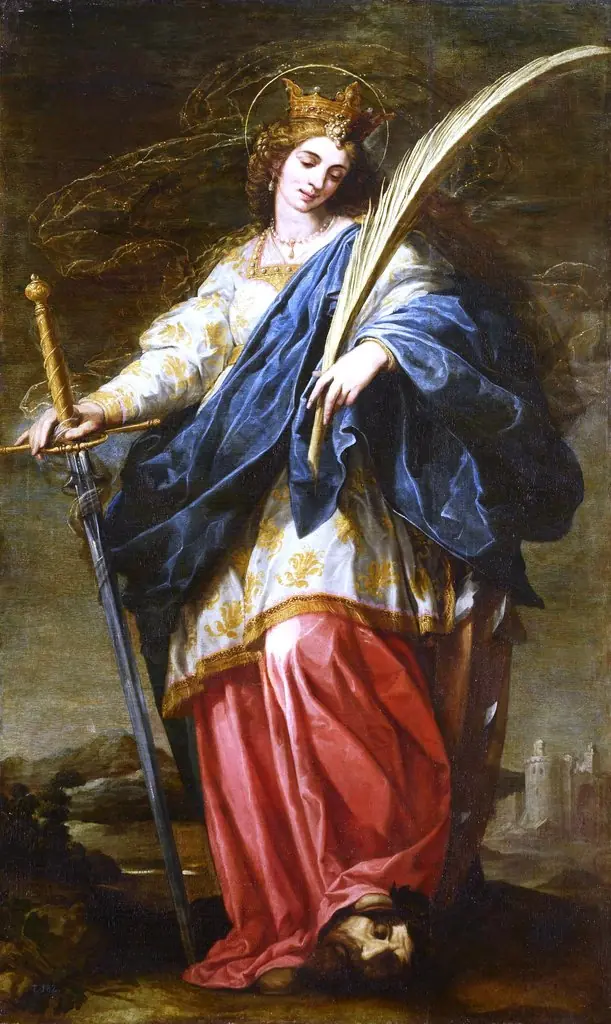
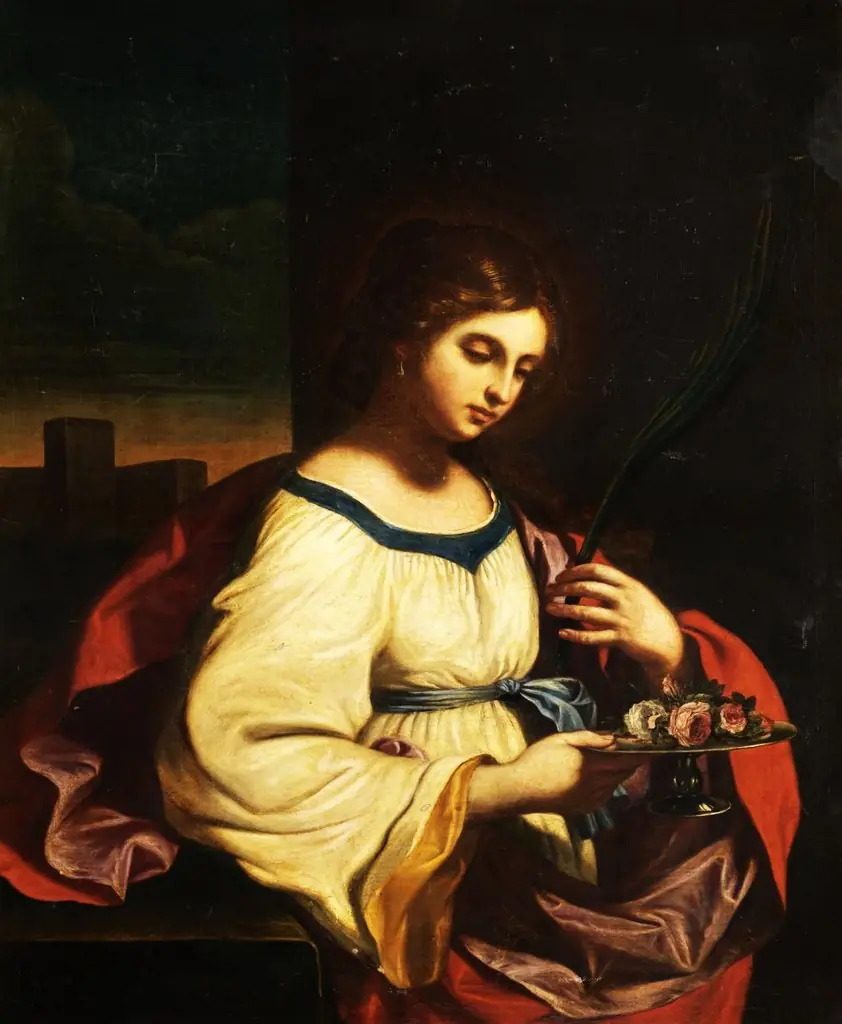
The central figure is a woman in a white gown trimmed with a gold sash, crowned and holding a golden ciborium in her right hand while her left hand rests on her hip. The attire and the liturgical vessel identify her as Saint Barbara, a martyr traditionally invoked for protection against sudden death, lending the composition a tone of solemn reverence.
Technique & Style
Executed in oil on canvas, the painting employs a limited palette dominated by the luminous white of the dress against a deep, almost tenebristic background. Goya’s handling of light emphasizes the saint’s haloed head and the reflective metal of the ciborium, while the soft modeling of flesh reflects the Rococo’s graceful elegance.
History & Provenance
Goya painted the work while still a young artist, before his later turn toward darker, more personal subjects. It entered the Museo del Prado’s holdings in the 19th century, where it has remained on display as an example of his formative religious commissions.
Artist & collection
Artist
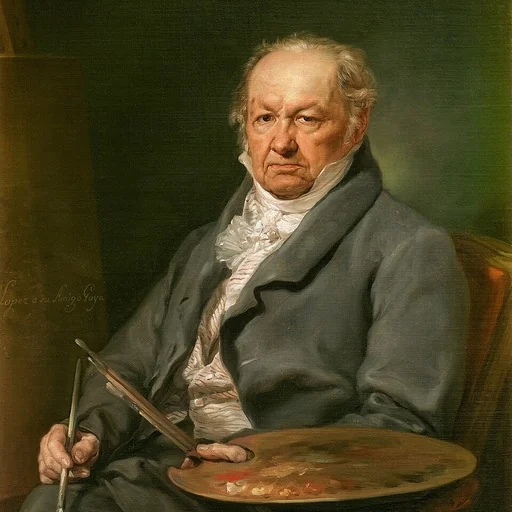
Francisco José de Goya y Lucientes (; Spanish: ; 30 March 1746 – 16 April 1828) was a Spanish romantic painter and printmaker.

 Santa Catalina
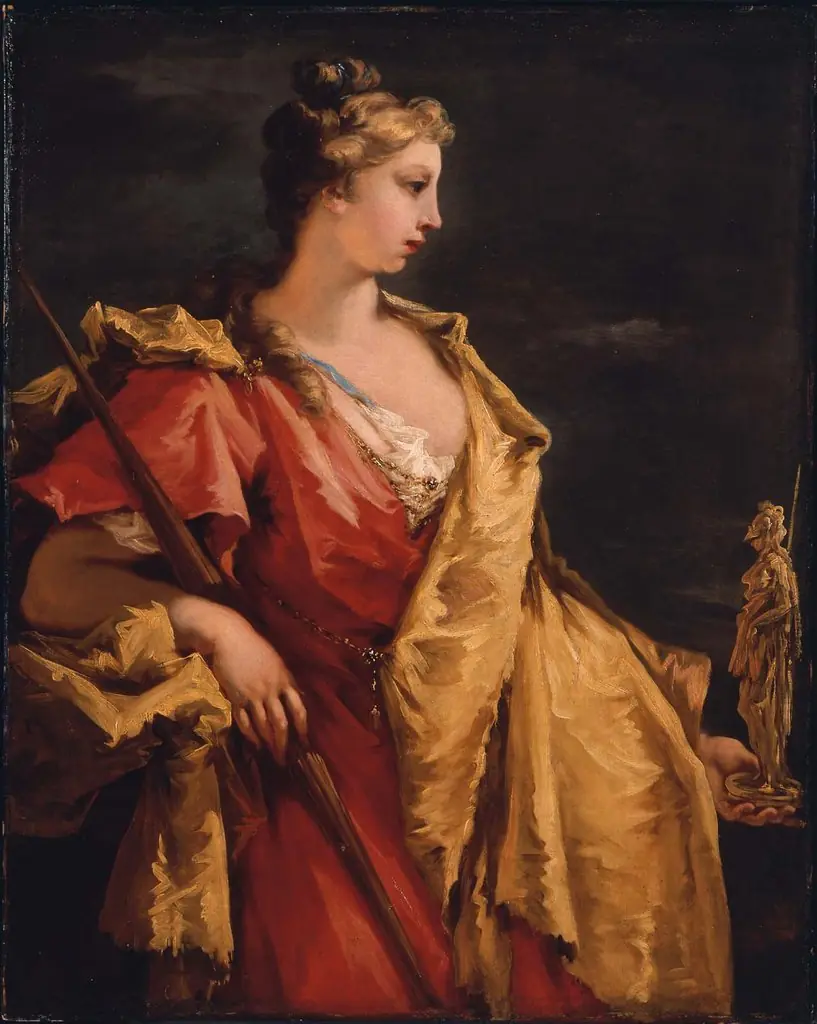 Nobility Holding a Statue of Athena
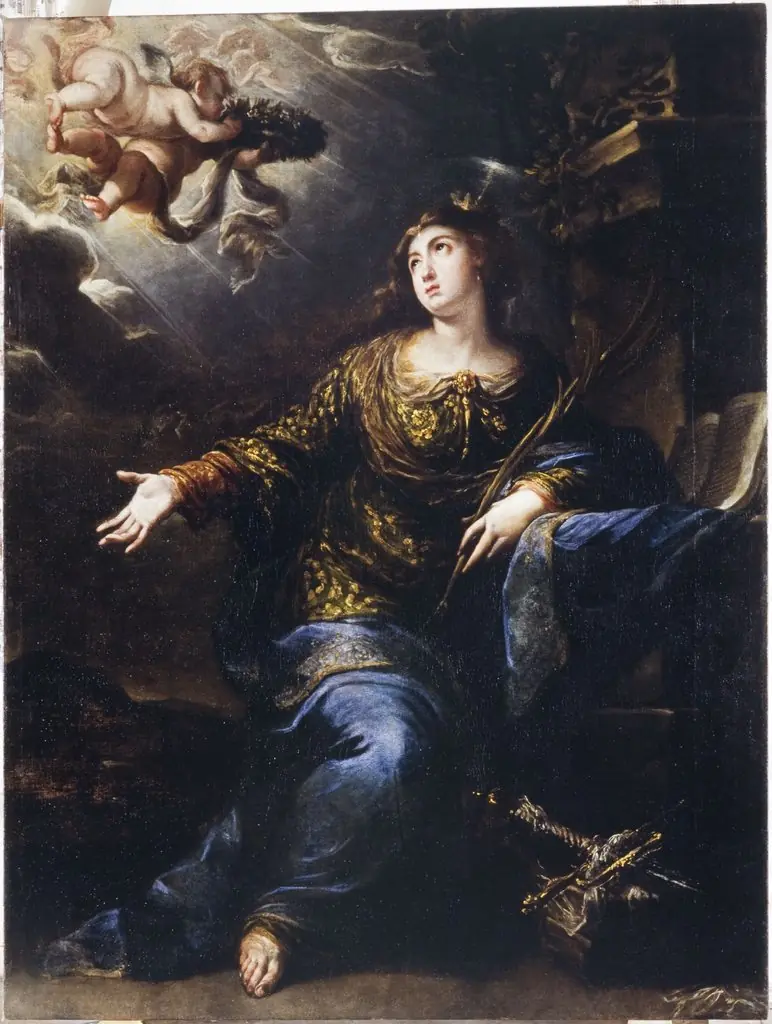 Saint Catherine of Alexandria
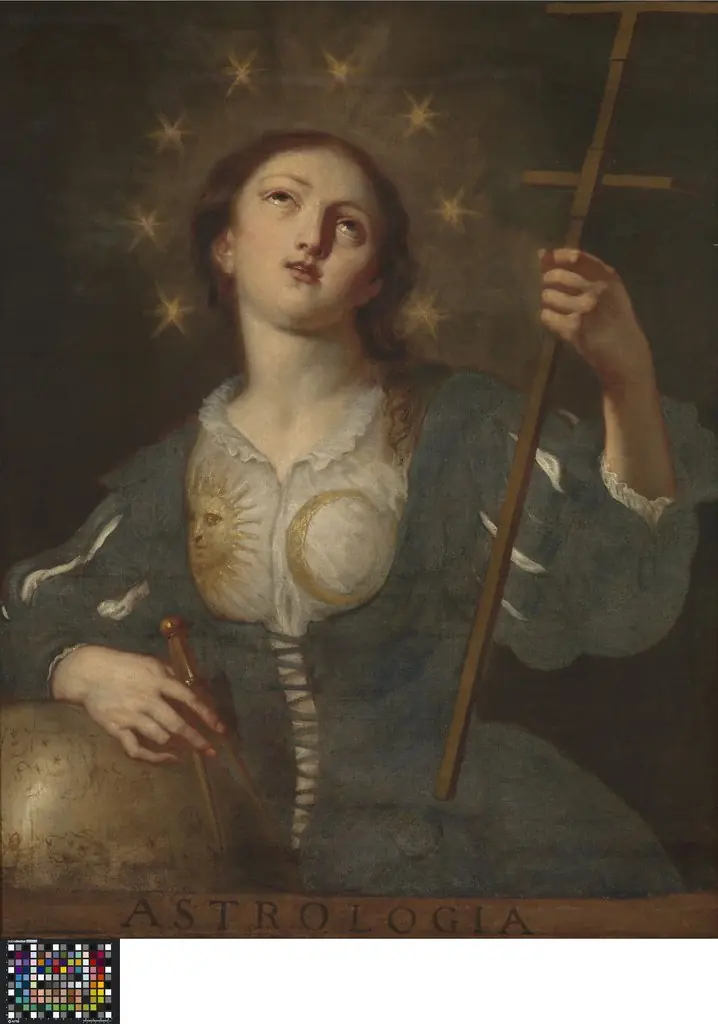 Astronomia
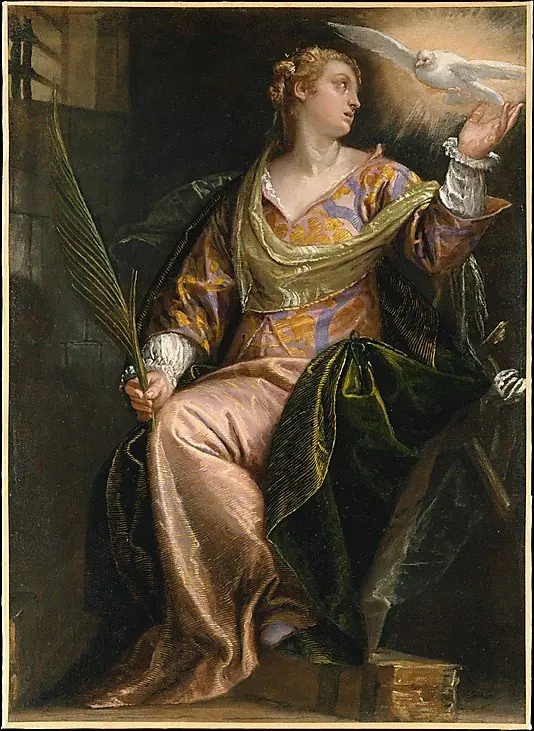 Saint Catherine of Alexandria in Prison
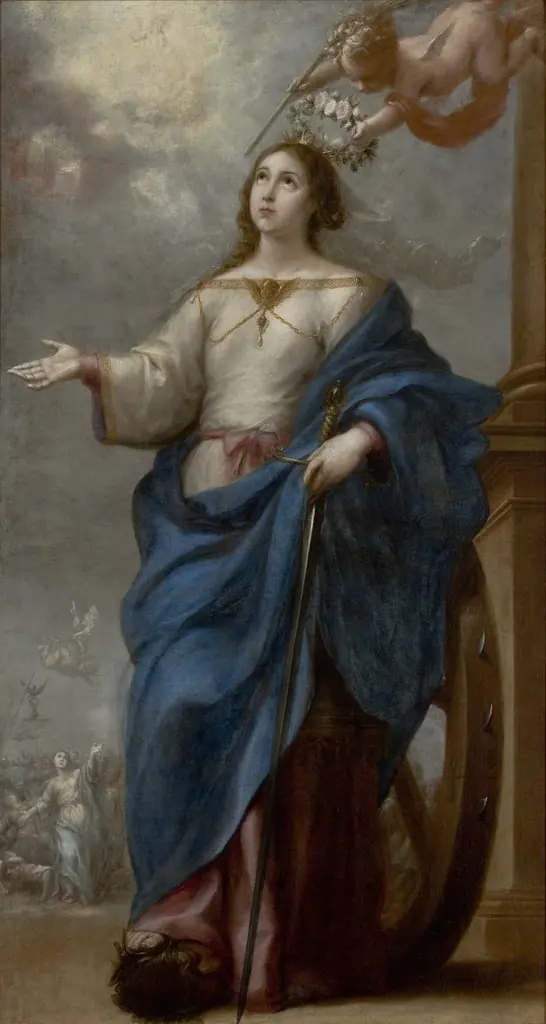 Heilige Katharina von Alexandrien
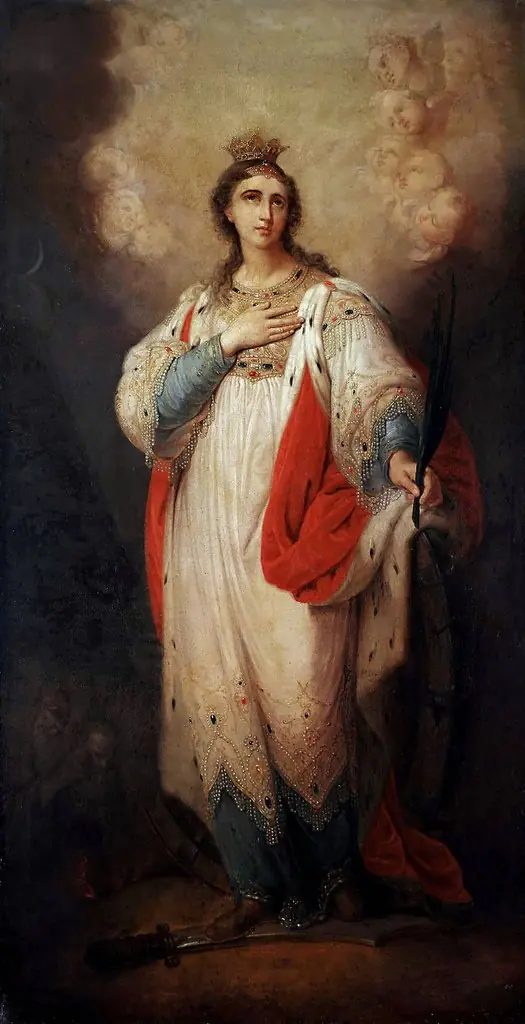 St. Catherine
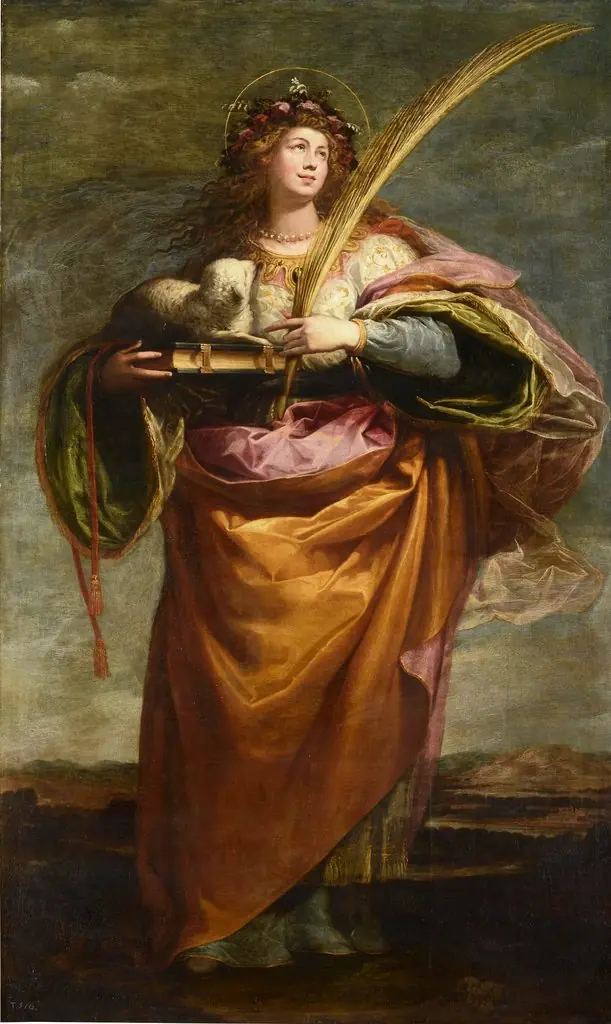 Santa Inés
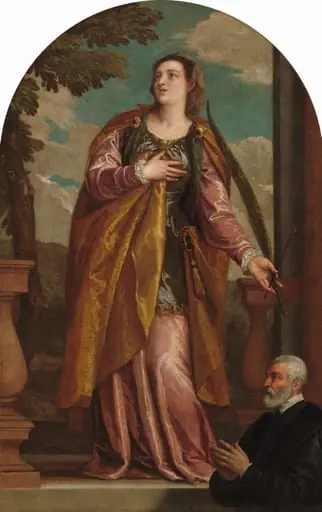 Saint Lucy and a Donor
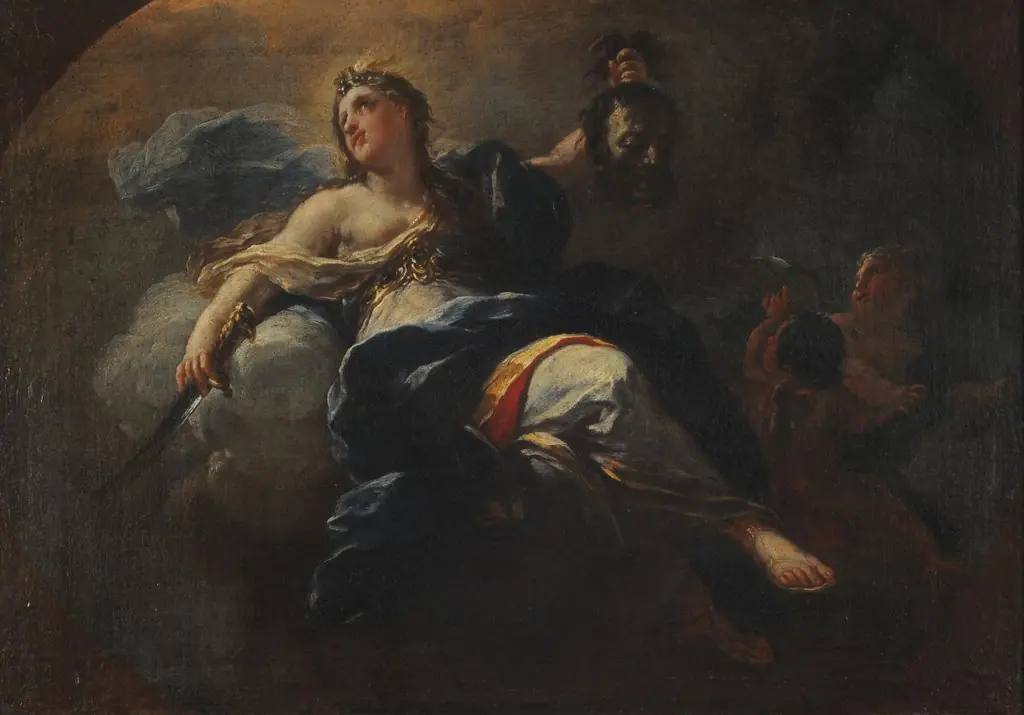 Apoteosis de Judith (Tit. Ant.: Judith llevando -en triunfo- la cabeza de Holofernes)
 Saint Agatha
 Saint Barbara