Artwork
Andrea Odoni
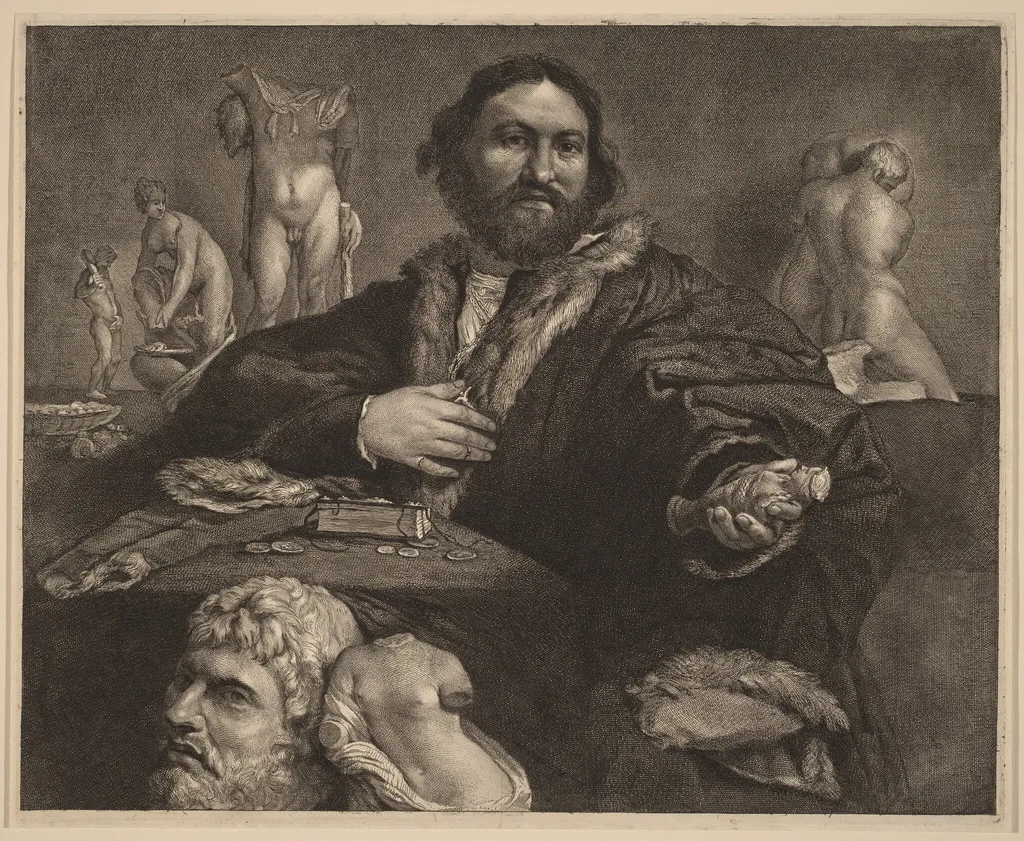
Andrea Odoni is an ink print by the Baroque artist Cornelis Visscher. It dates from 1660 and is held in the collection of the National Gallery of Art.
About this work
Overview
Cornelis Visscher’s engraving titled Andrea Odoni dates from around 1660. Executed on laid paper, the print presents a richly detailed interior scene in monochrome, characteristic of Dutch printmaking in the mid‑seventeenth century.
Subject & Meaning
He holds a small box and a ring, while a collection of coins, a miniature architectural model, and scattered papers surround him.
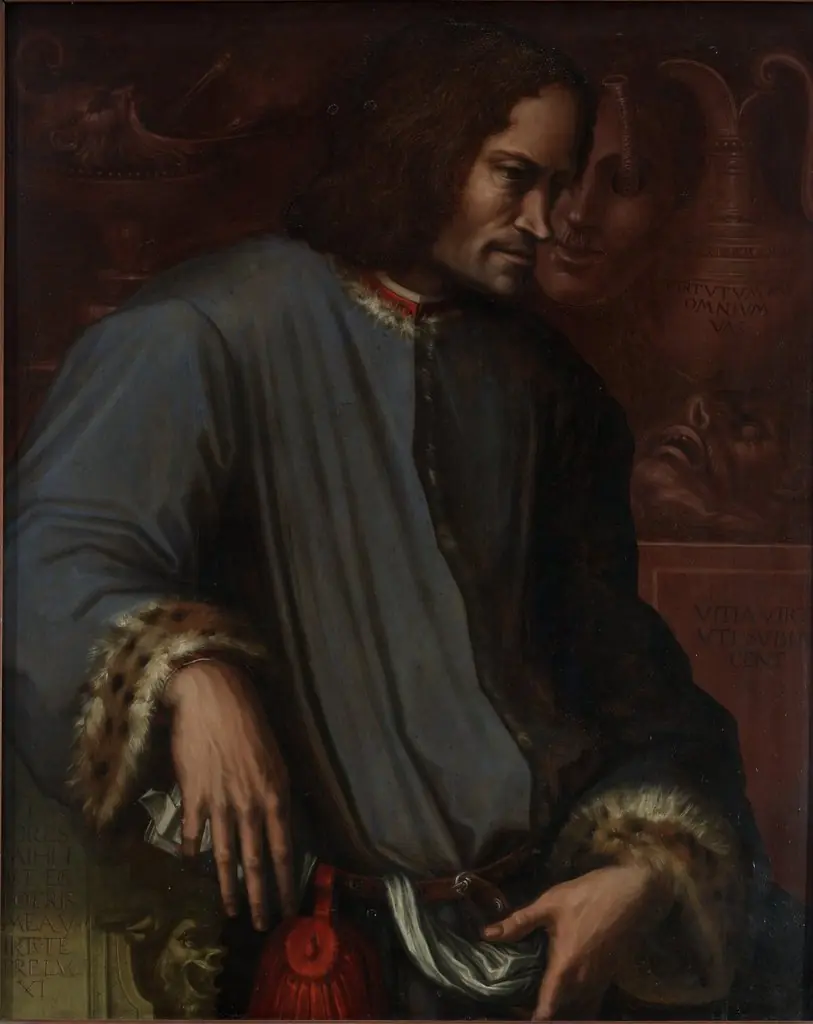
The composition centers on a bearded gentleman dressed in a fur‑trimmed coat, seated at a cluttered desk. He holds a small box and a ring, while a collection of coins, a miniature architectural model, and scattered papers surround him. Two female statues—one bearing a scroll—stand on nearby shelves, and the heads of two elderly men emerge from a pile of documents, suggesting a scholarly or collecting milieu.
Technique & Style
Visscher employs fine cross‑hatching to render shadows, texture, and volume, giving the scene a three‑dimensional quality despite the flat medium. The meticulous line work creates subtle gradations of tone, while the precise incisions convey the intricate details of objects such as the fur lining, the metal ring, and the marble statues.
History & Provenance
The print was produced in the Dutch Republic during Visscher’s mature period, a time when he was known for portraiture and genre scenes. Though specific ownership records are scarce, copies of the engraving have appeared in several eighteenth‑century collections, indicating its circulation among connoisseurs of Dutch prints.
Context
Andrea Odoni reflects the seventeenth‑century Dutch fascination with antiquarianism and the display of collected curiosities. The inclusion of classical statues, coins, and architectural models aligns with contemporary interests in humanist learning and the accumulation of knowledge through objects.
Legacy
Visscher’s work contributes to the broader tradition of Dutch engraving that emphasized technical precision and narrative depth. The print remains a valuable example of how printmakers documented the intellectual culture of their era, offering insight into the visual language of collecting and scholarship.
Artist & collection


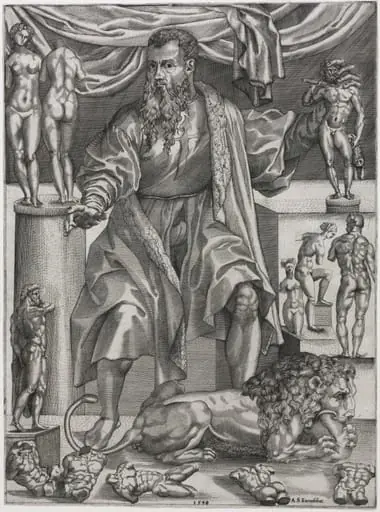 Portrait of Baccio Bandinelli with Lion
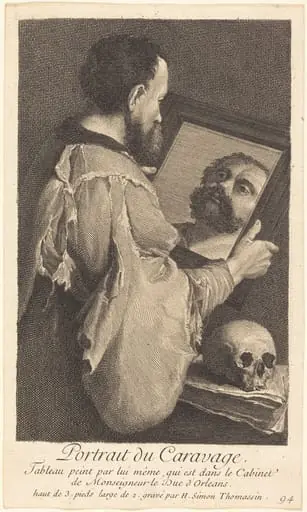 Portrait du Caravage (Portrait of Caravaggio)
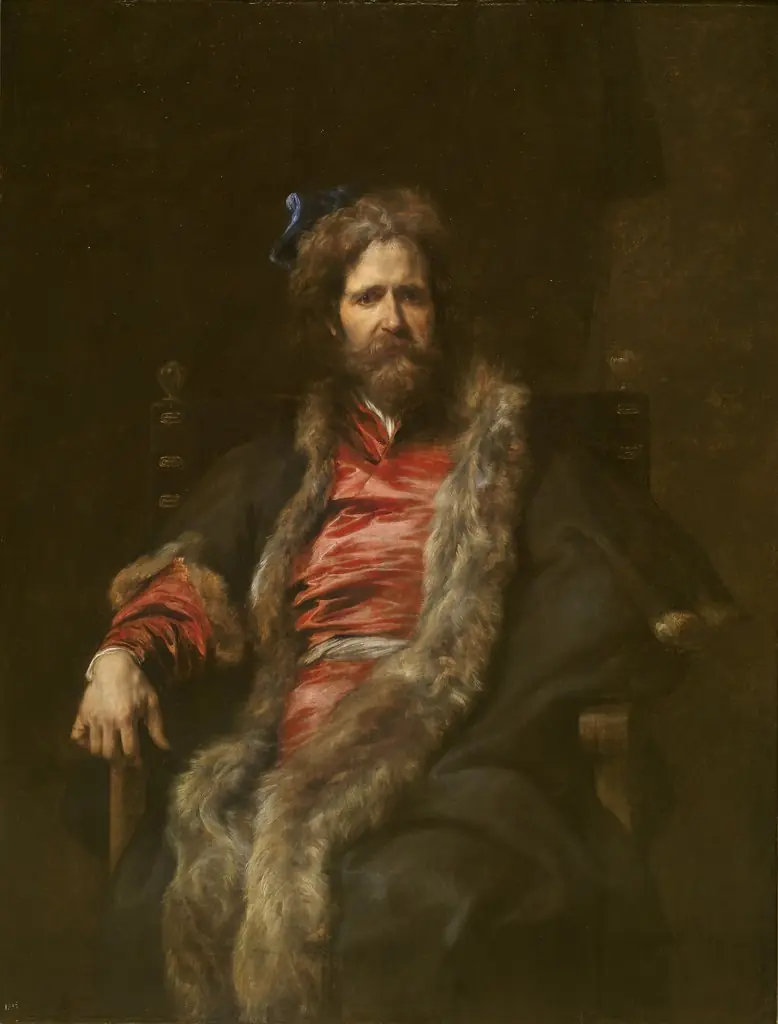 The Painter Martin Ryckaert
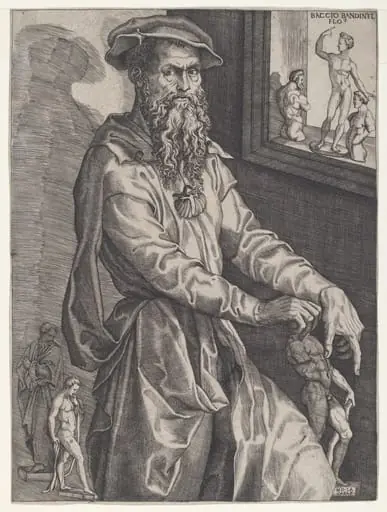 Baccio Bandinelli
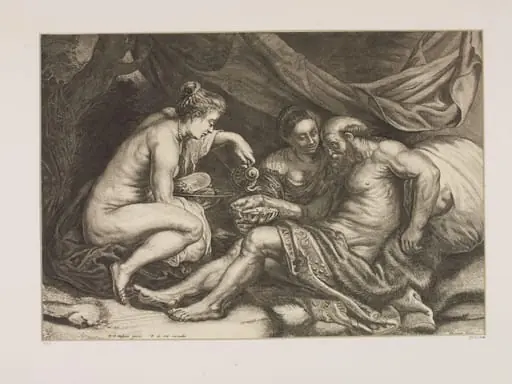 Lot intoxicated by his daughters
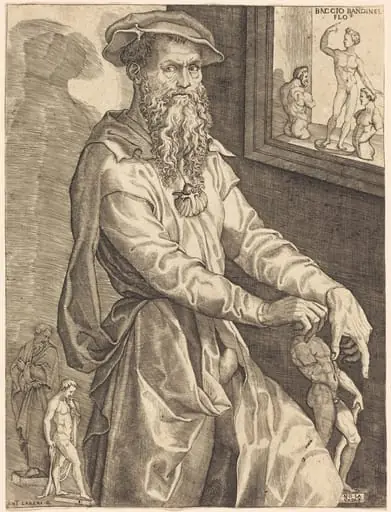 Baccio Bandinelli
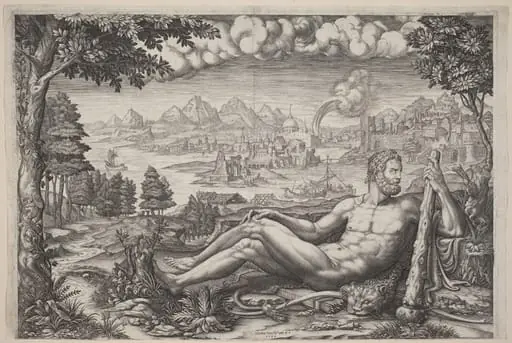 Hercules Resting from His Labors
 The Fortune Teller
 Hercules and Telephos
 Rubens painting ‘The Allegory of Peace’
 Man with a Penknife
 Portrait of Lorenzo de' Medici