Artwork
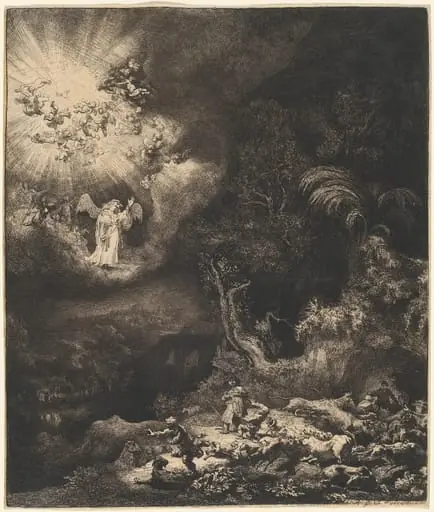
The Angel Appearing to the Shepherds
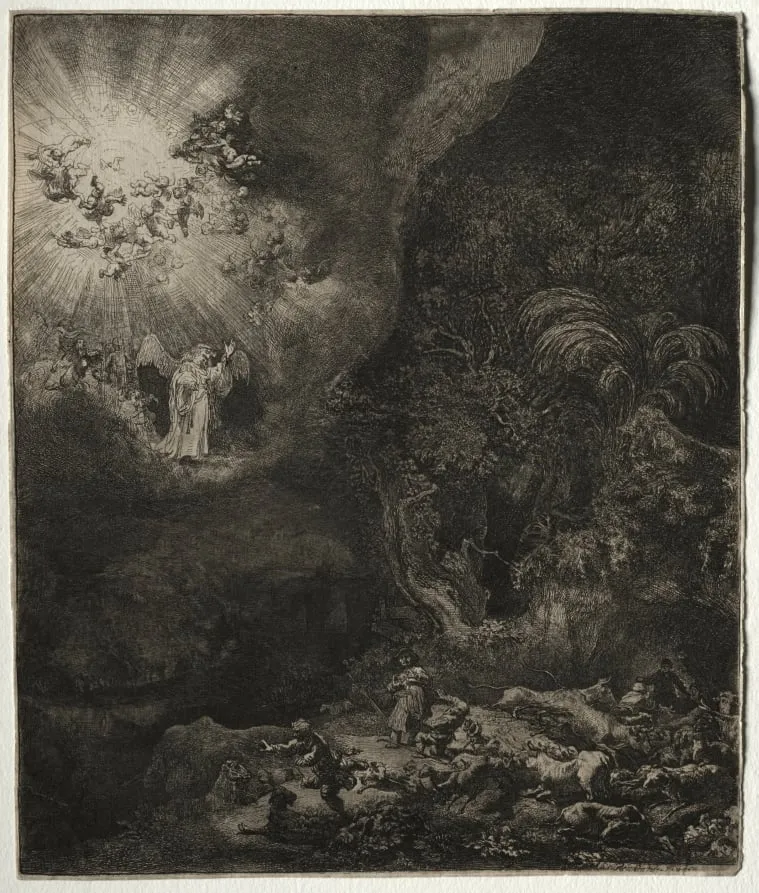
The Angel Appearing to the Shepherds is a print by the Baroque artist Rembrandt. It dates from 1634 and is held in the collection of the Cleveland Museum of Art.
About this work
Overview
Created in 1634, this print by Rembrandt van Rijn depicts the biblical moment when an angel announces Christ’s birth to sleeping shepherds. Executed in etching and drypoint, it is part of the collection at The Cleveland Museum of Art. The composition emphasizes dramatic contrasts between light and dark, a hallmark of Rembrandt’s graphic work during this period.
Subject & Meaning
The scene captures the divine revelation to humble shepherds, a moment of sacred interruption in an ordinary night. The angel, illuminated and gesturing skyward, signals the presence of heavenly hosts above, while the shepherds below remain in shadow, reacting with awe and uncertainty. The contrast underscores the theme of divine grace descending upon the earthly and overlooked.
Technique & Style
Rembrandt employed etching and drypoint to achieve deep blacks and nuanced gradations of light. The angel’s radiance is rendered with bold, incised lines, while the shepherds and landscape are suggested through delicate, sparse strokes. The stark division between light and dark areas demonstrates his mastery of chiaroscuro, enhancing emotional tension and spatial depth.
History & Provenance
The print was made during Rembrandt’s most prolific period in Amsterdam, when he was refining his approach to biblical narratives in printmaking. It entered The Cleveland Museum of Art’s collection in the 20th century, acquired as part of a broader effort to build a comprehensive holding of Dutch graphic art.
Context
In the 1630s, Rembrandt was deeply engaged with religious subjects, responding to both personal devotion and market demand for biblical imagery. His prints circulated widely among collectors and clergy, offering intimate, emotionally charged interpretations of scripture that diverged from idealized Renaissance traditions.
Legacy
This print exemplifies Rembrandt’s influence on the evolution of printmaking as a vehicle for psychological depth. His use of light to convey spiritual presence became a model for later artists, reinforcing the print’s role not merely as reproduction but as a medium for expressive storytelling.
Artist & collection
Artist
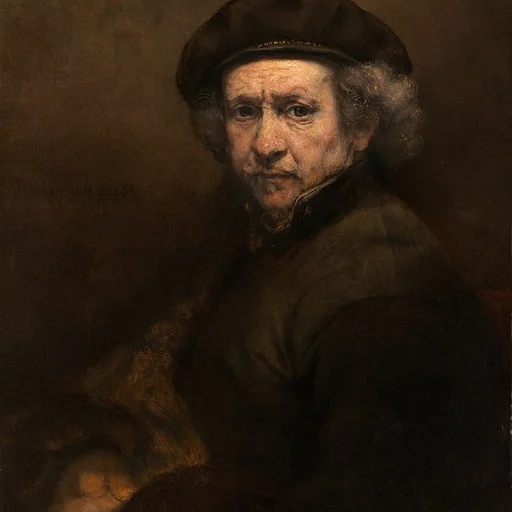
Rembrandt Harmenszoon van Rijn (15 July 1606 – 4 October 1669), known mononymously as Rembrandt, was a Dutch Golden Age painter, printmaker, and draughtsman.

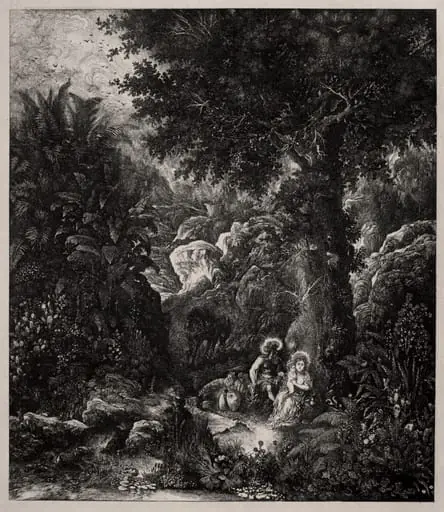 Rest on the Flight into Egypt with a Saddled Donkey
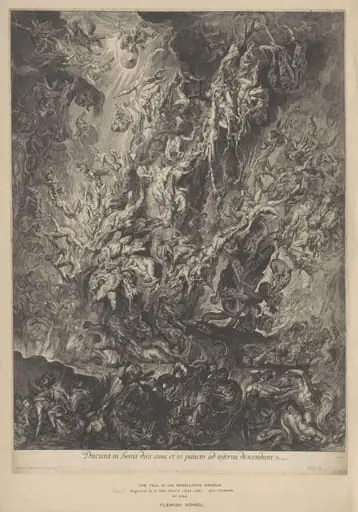 The Fall of the Rebellious Angels
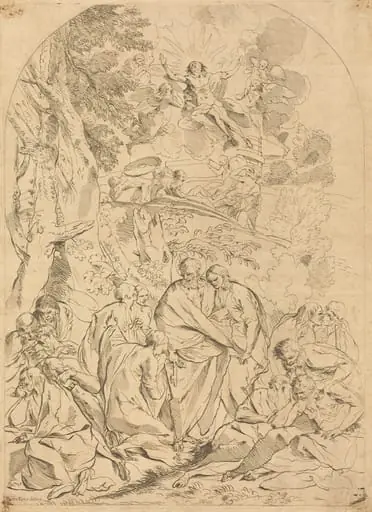 The Resurrection
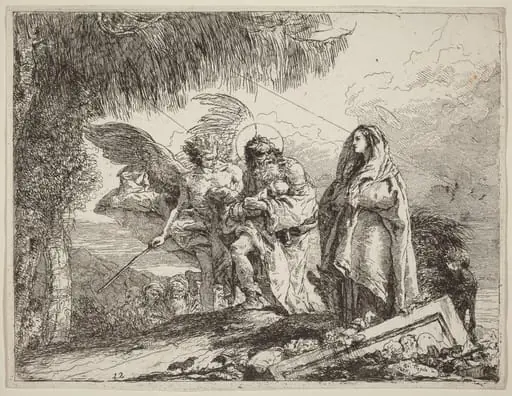 The Flight, Holy Family Walking with Angel
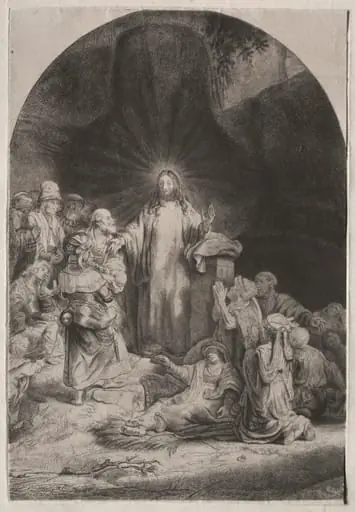 The Hundred Guilder Print, central section
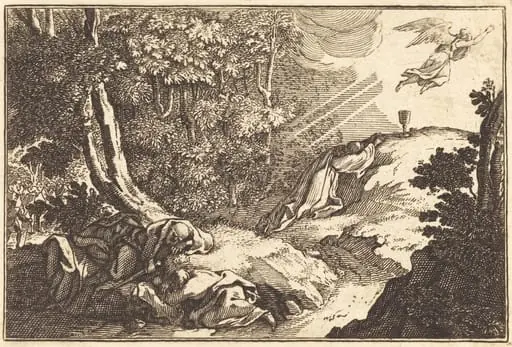 Agony in the Garden
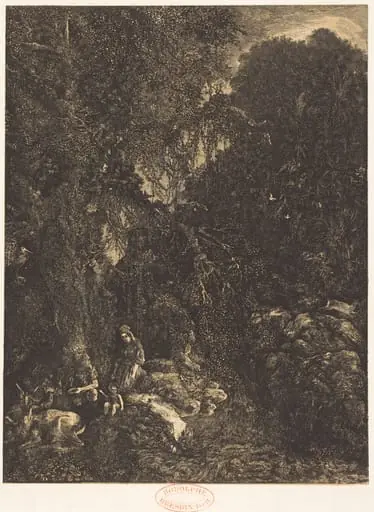 The Holy Family with the Does
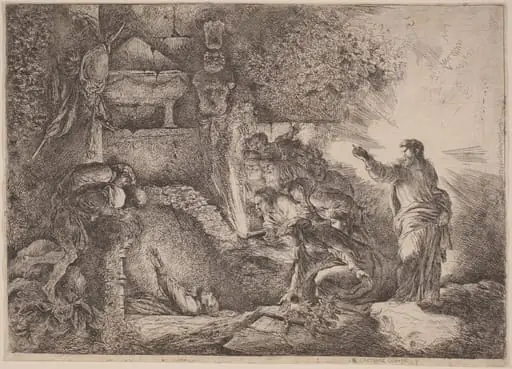 The Resurrection of Lazarus
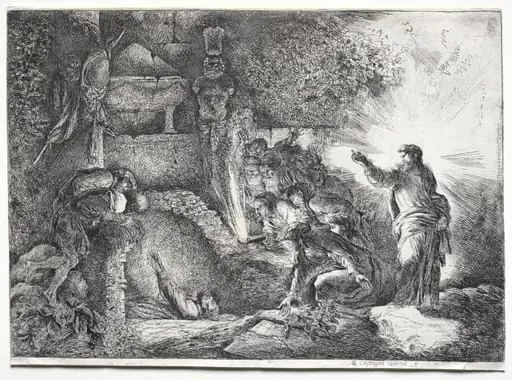 The Resurrection of Lazarus
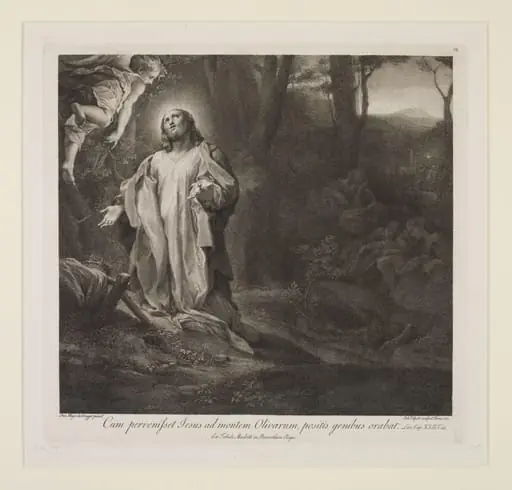 Christ Praying on the Mount of Olives
 The Angel Appearing to the Shepherds
 The Raising of Lazarus: Small Plate