Artwork
Marriage in Cana
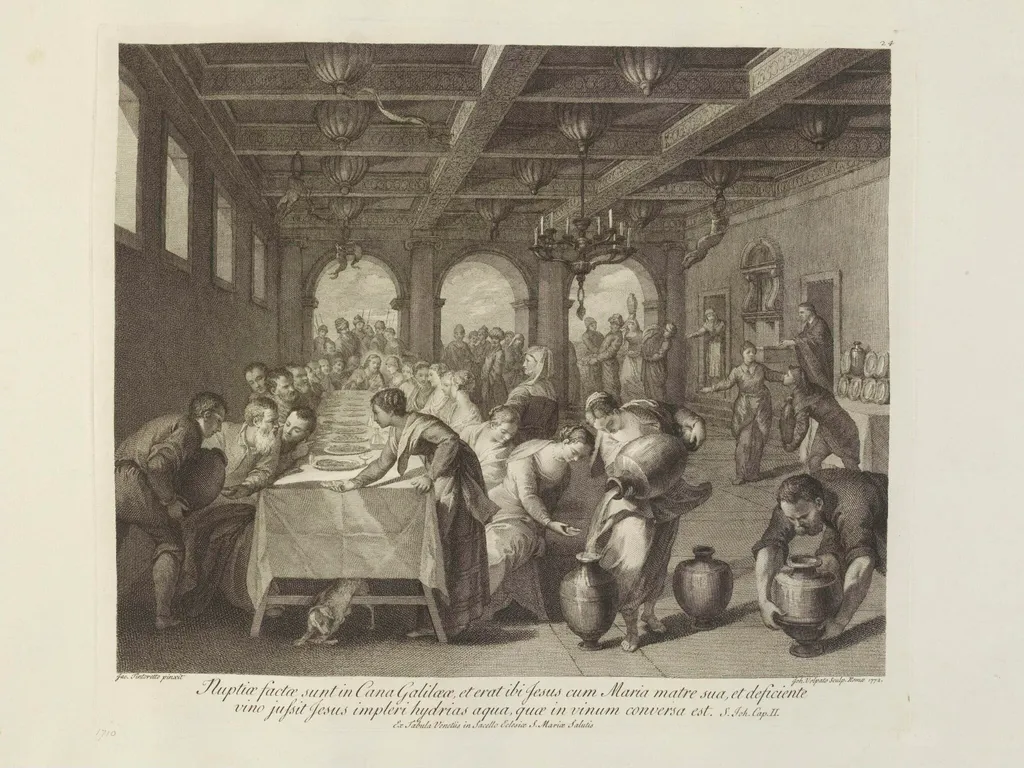
Marriage in Cana is a print by Giovanni Volpato. It is held in the collection of the Victoria and Albert Museum. This print reproduces a scene from the biblical story of the Marriage at Cana, originally composed by Jacopo Tintoretto.
About this work
Overview
This print reproduces a scene from the biblical story of the Marriage at Cana, originally composed by Jacopo Tintoretto. Created by Giovanni Volpato in 1850, it is a paper-based engraving that translates the painterly composition into a detailed graphic format. The work captures a moment of celebration within a lavish interior, emphasizing movement and social interaction among numerous figures.
Subject & Meaning
The narrative hinges on quiet divine intervention amid human celebration, subtly signaled by the presence of Christ and his disciples among the crowd.
The scene illustrates the miracle at Cana, where Jesus turns water into wine during a wedding feast, as recounted in the Gospel of John. The composition focuses on the bustling atmosphere of the event, with servants attending to guests and vessels of wine prominently displayed. The narrative hinges on quiet divine intervention amid human celebration, subtly signaled by the presence of Christ and his disciples among the crowd.
Technique & Style
Volpato employed fine line engraving to translate Tintoretto’s dramatic lighting into a printed medium. Strong contrasts between light and shadow—chiaroscuro—define forms and guide the viewer’s eye through the crowded space. Figures in the foreground are sharply rendered, while those in the background recede into softer tones, creating spatial depth. The texture of fabrics, ceramics, and architectural details is meticulously suggested through controlled etching.
History & Provenance
The print was produced in 1850 by Giovanni Volpato, a noted Italian engraver known for reproducing Renaissance and Baroque paintings. It derives from Tintoretto’s original canvas, completed in the late 16th century for the San Marcuola church in Venice. Volpato’s version was likely made for collectors and institutions seeking accessible versions of celebrated artworks during the 19th-century revival of interest in classical Italian art.
Context
In mid-19th century Europe, engraved reproductions of Old Master paintings were widely circulated as educational and decorative objects. Volpato’s print reflects this trend, making Tintoretto’s grand composition available beyond museum walls. The emphasis on narrative clarity and theatrical lighting aligns with contemporary tastes for historical and religious subjects, even as new artistic movements began to emerge.
Legacy
Though not an original painting, Volpato’s engraving preserved and disseminated Tintoretto’s composition for generations. It served as a reference for scholars, artists, and the public, sustaining awareness of Baroque narrative painting well into the modern era. The print remains a tangible link between Renaissance innovation and 19th-century print culture, illustrating how mechanical reproduction extended the reach of historical art.
Artist & collection

Artist
Giovanni Volpato (1735–1803) was an Italian engraver. He was also an excavator, dealer in antiquities and manufacturer of biscuit porcelain figurines.

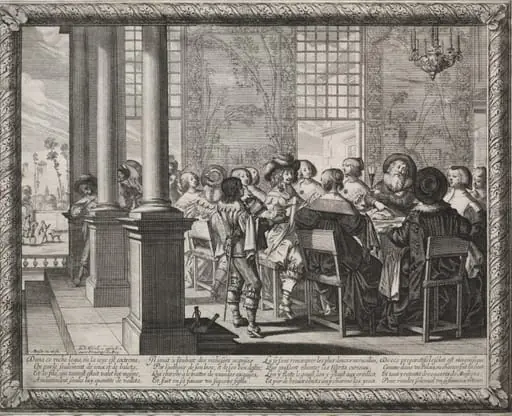 The Prodigal Son: The Feast in Honor of the Prodigal's Return
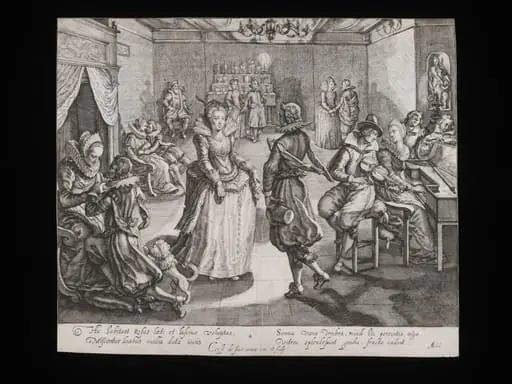 Feast in the house of the Rich Man
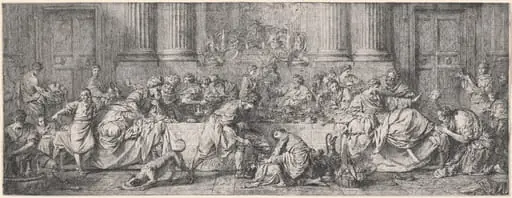 The Feast in the House of Simon
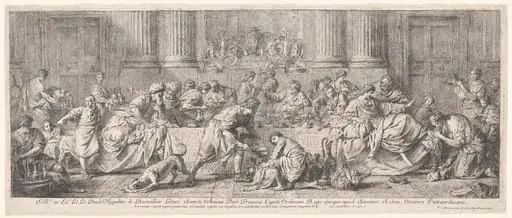 The Banquet in the House of Simon the Pharisee
 lo levò in aria gridando, ecco il pane della providenza (I Held It Aloft and Cried, "Behold the Bread of Divine Providence!")
 The Harlot's Progress
 The Feast Celebrating the Return of the Prodigal Son
 An Election Entertainment
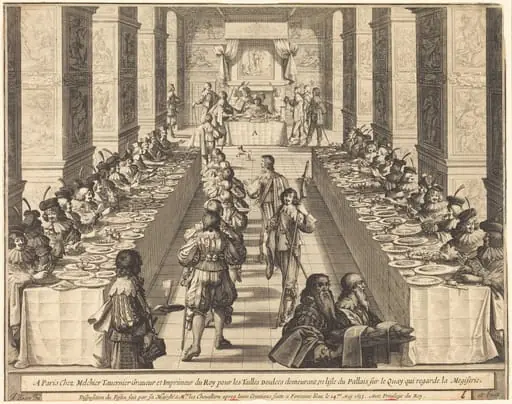 Banquet Given by the King to the New Knights
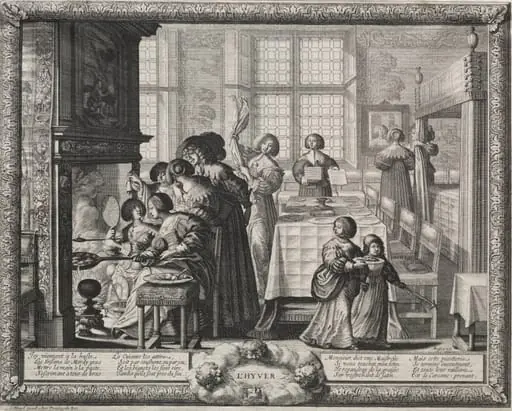 The Four Seasons: Winter
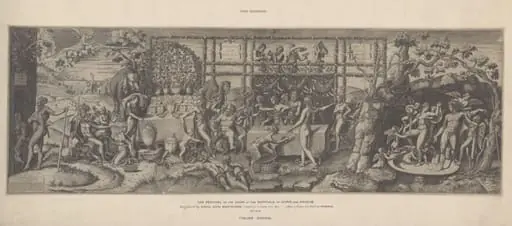 Festival of the Gods
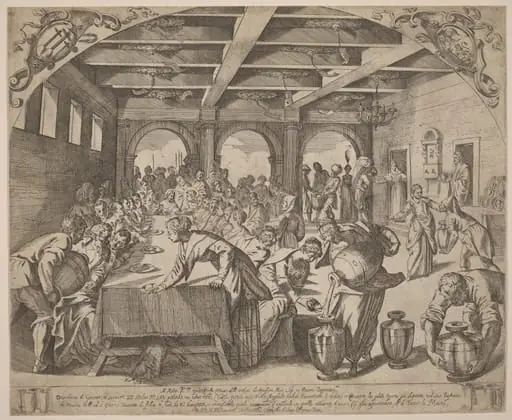 The Marriage at Cana