Artwork
Apollo, Diana, and Time with the Cyclic Vicissitudes of Human Life
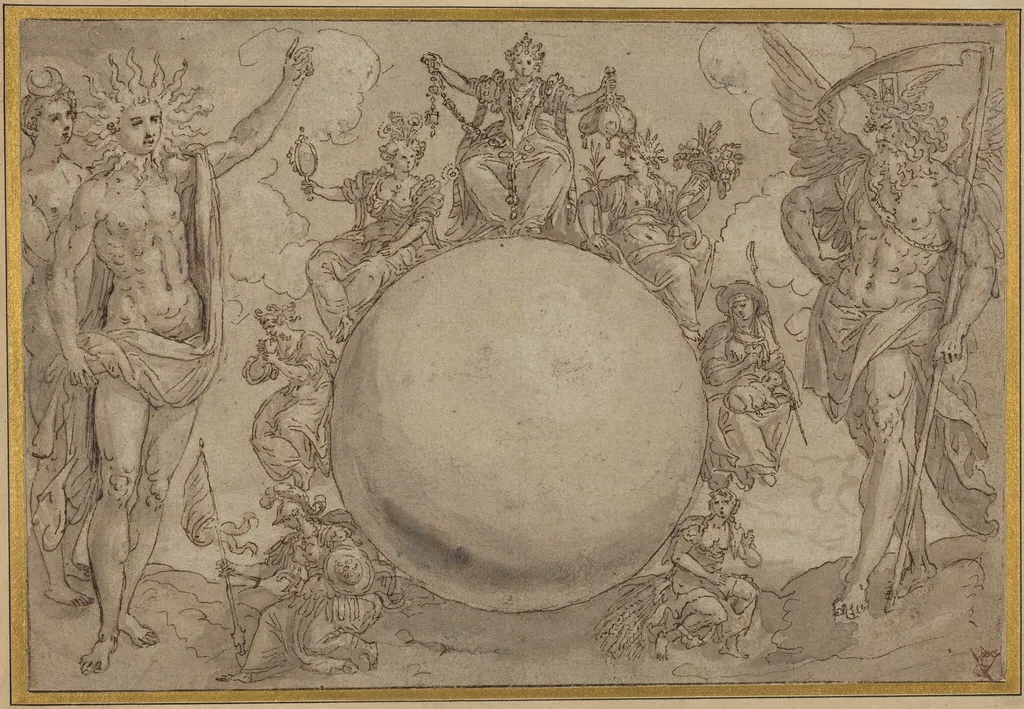
Apollo, Diana, and Time with the Cyclic Vicissitudes of Human Life is an ink drawing by the Renaissance artist Maarten de Vos. It dates from 1561 and is held in the collection of the National Gallery of Art.
About this work
Overview
Created around 1561, this pen and brown‑ink drawing on laid paper, enhanced with a gray wash and faint graphite underdrawing, presents a densely populated mythological tableau. The composition centers on the deities Apollo and Diana together with the personification of Time, surrounded by a multitude of smaller figures that illustrate the cycles of human existence.
Subject & Meaning
The work intertwines classical mythology with allegorical commentary: Apollo, god of the sun and the arts, and Diana, goddess of the hunt, are positioned alongside Time, suggesting the interplay of divine order and the relentless passage of life. The surrounding vignettes portray birth, work, love, and death, visualising the perpetual vicissitudes that define human experience.
Technique & Style
The inclusion of a graphite underdrawing reveals the preparatory stages of the composition, a practice common among Northern Renaissance draftsmen.
Executed with fine pen lines and brown ink, the artist incised the drawing for transfer, allowing for delicate hatching that creates texture and a sense of depth. A subtle gray wash overlays the ink, softening forms while preserving the crispness of the line work. The inclusion of a graphite underdrawing reveals the preparatory stages of the composition, a practice common among Northern Renaissance draftsmen.
History & Provenance
Attributed to Maarten de Vos, a Flemish painter and draftsman active in the mid‑16th century, the drawing reflects his engagement with both religious and mythological subjects. Though specific ownership records are limited, the piece aligns with de Vos’s known output for private collectors who favored intricate allegorical imagery.
Context
During the 1560s, Northern European artists increasingly incorporated classical motifs into their work, merging them with contemporary moralizing themes. This drawing exemplifies that trend, using mythic figures to explore ethical ideas about the fleeting nature of worldly affairs, a concern echoed in the humanist literature of the period.
Artist & collection


 Design for an Altar
 Fragments of a design for a fresco in the Palazzo Vecchio, Florence
 Cloud-Borne Saints above a Lake
 Sea-nymphs playing with tritons and a man; on the left a semi-draped giant, holding a book or stone, seated on a rock; possibly Polyphemus with Acis and Galatea
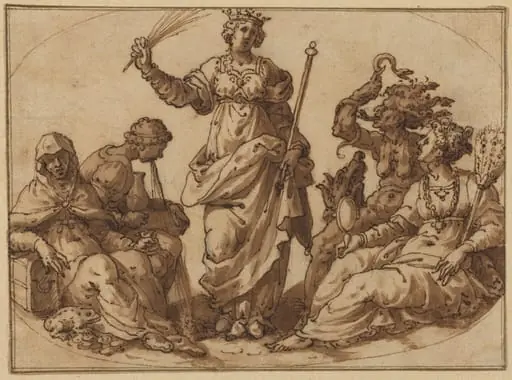 Virtue Triumphing over Vices
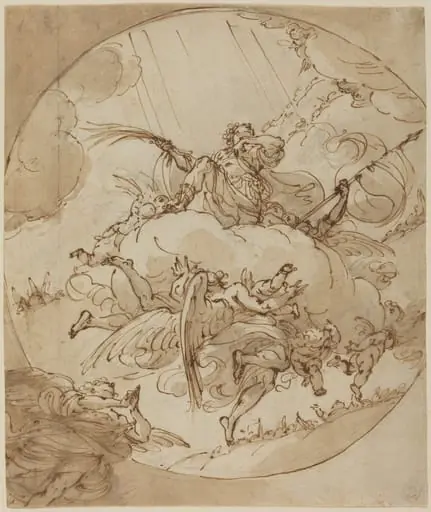 The Apotheosis of San Vitale
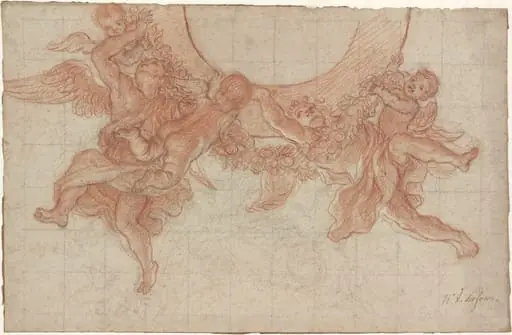 Angels and Putti Flying with a Garland: Design for a Ceiling
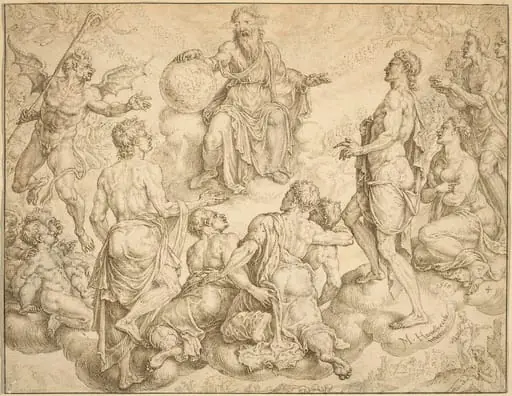 Satan Challenges God to Remove his Protection from Job
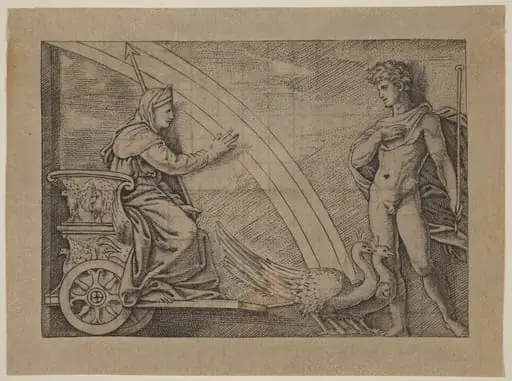 Juno in a Chariot Pulled by Peacocks
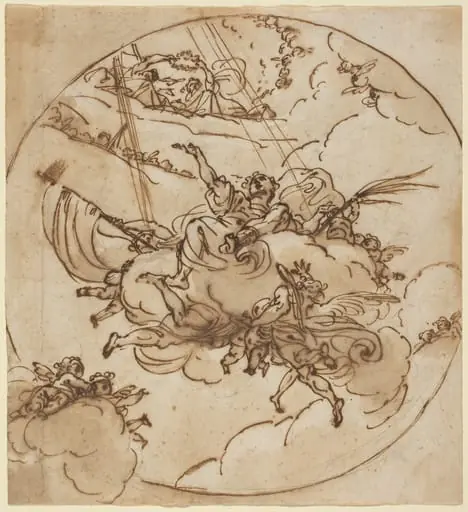 The Apotheosis of San Vitale
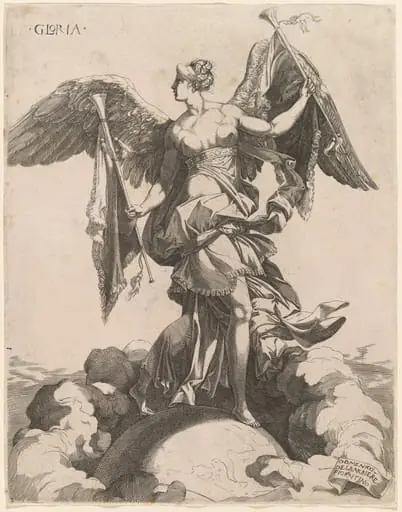 Gloria
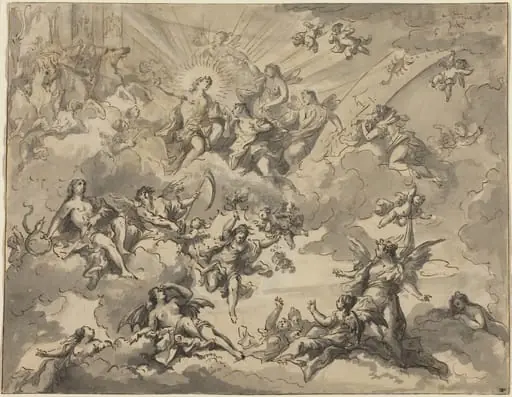 Apollo and the Muses