Artwork
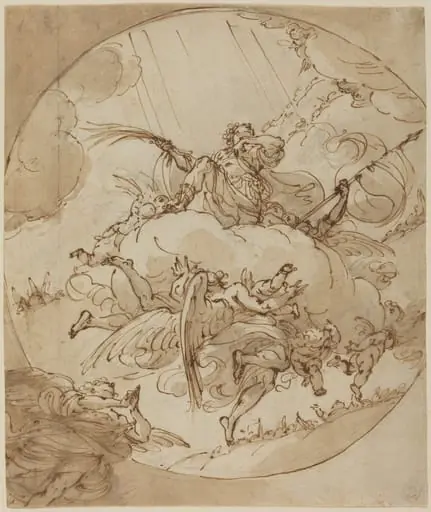
The Apotheosis of San Vitale
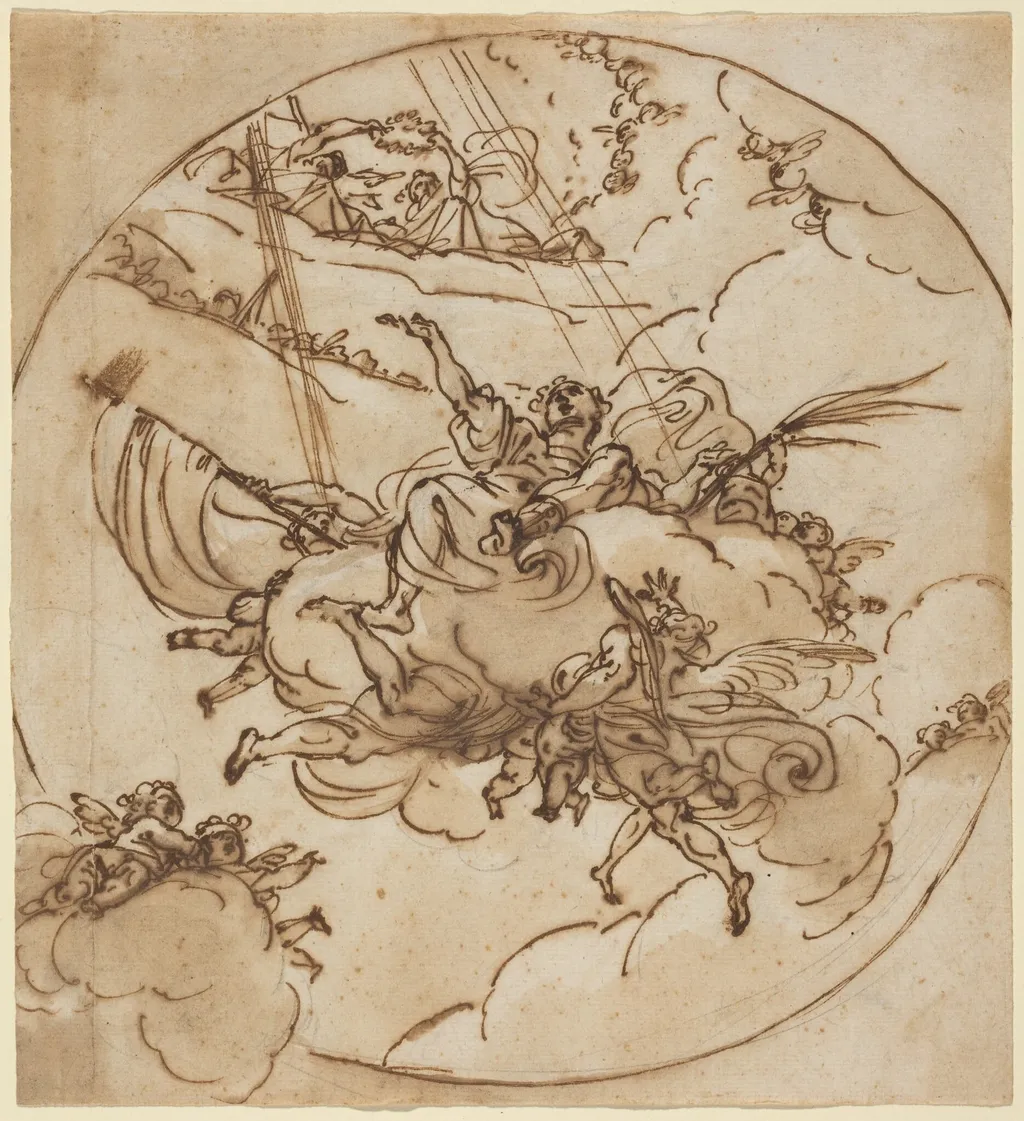
The Apotheosis of San Vitale is a chalk drawing by the Romanticist artist Ubaldo Gandolfi. It dates from 1781 and is held in the collection of the National Gallery of Art.
About this work
The Apotheosis of San Vitale is a drawing made in 1781.
It's interesting because it was created during a time when artists were starting to explore new ways of expressing emotion. The fact that it's an allegory suggests that the artist was trying to convey a deeper meaning.
You can learn more about this style by looking into the movement: Romanticism.
Overview
The Apotheosis of San Vitale is a drawing created by Ubaldo Gandolfi in 1781 using pen, brown ink, brown wash, and black chalk on laid paper. It exemplifies the artist's skill as a draughtsman during the late-Baroque period.
Subject & Meaning
The drawing depicts the apotheosis of Saint Vitalis, a Christian martyr, conveying a scene of ascension or glorification. This allegorical subject reflects Gandolfi's tendency to explore themes of biblical and Christian significance.
Technique & Style
Gandolfi's use of pen and brown ink with brown wash over black chalk demonstrates his mastery of various mediums and techniques. The work's style is characteristic of the late-Baroque period, with its emphasis on expressive and emotive representation.
Context
Created in 1781, The Apotheosis of San Vitale reflects a transitional period in art, as artists began to explore new ways of expressing emotion, laying groundwork for subsequent artistic movements.
Artist & collection
Artist
Ubaldo Gandolfi (1728–1781) was an Italian painter, draughtsman and sculptor of the late-Baroque period, mainly active in and near Bologna.

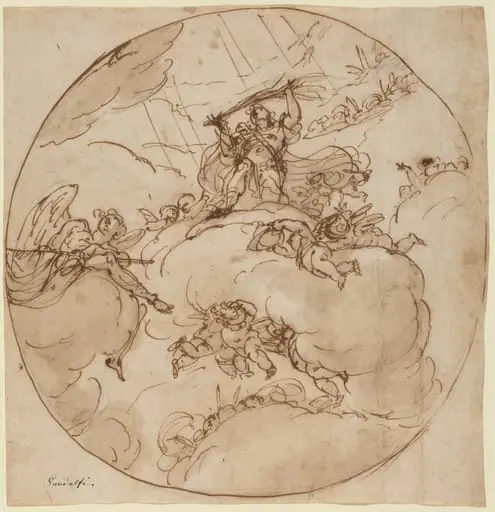
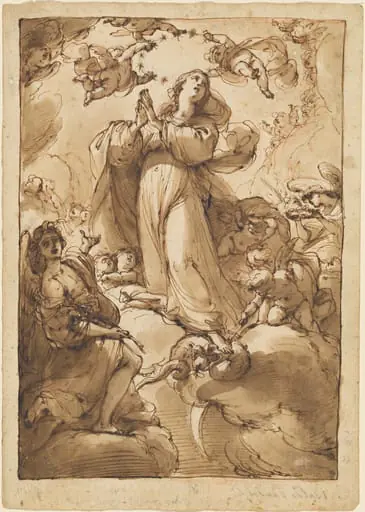
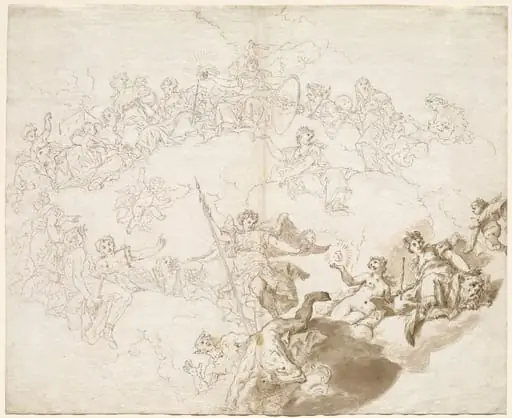 The Triumph of Virtue and Divine Wisdom
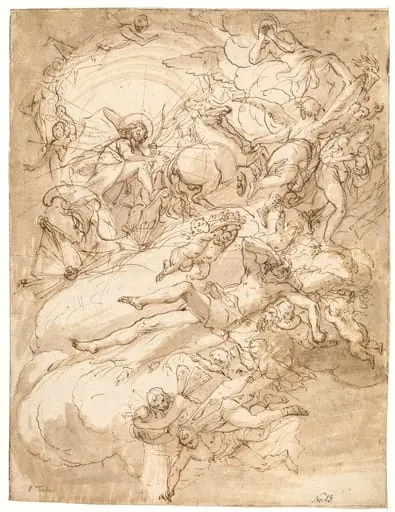 Apollo in his chariot, design for a ceiling painting
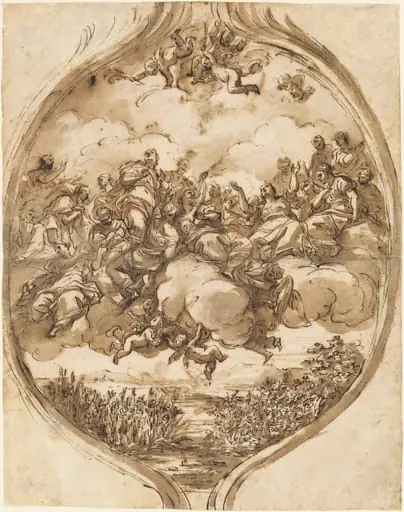 Cloud-Borne Saints above a Lake
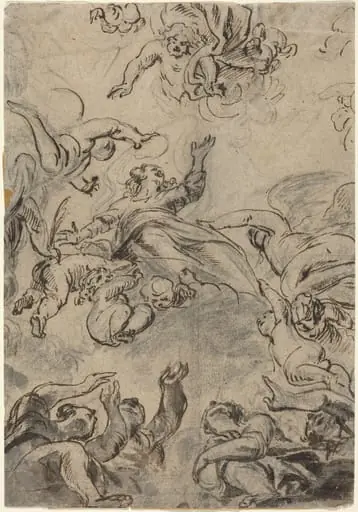 The Assumption of the Virgin
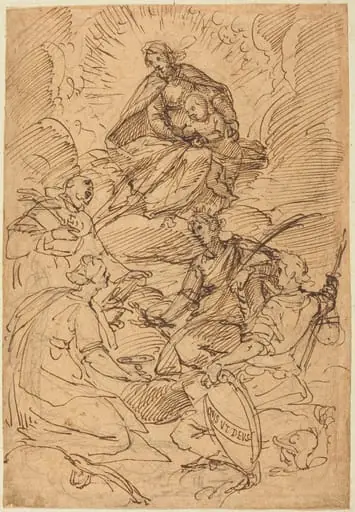 The Madonna and Child in Glory Adored by Saints
![Bradamante Tries to Catch Hold of the Hippogryph [recto], by Jean Honoré Fragonard](https://artifactworldgallery.com/img/jean-honore-fragonard--bradamante-tries-to-catch-hold-of-the-hippogryph-recto--f9c9ee68fd17e997-w320.webp) Bradamante Tries to Catch Hold of the Hippogryph [recto]
Bradamante Tries to Catch Hold of the Hippogryph [recto]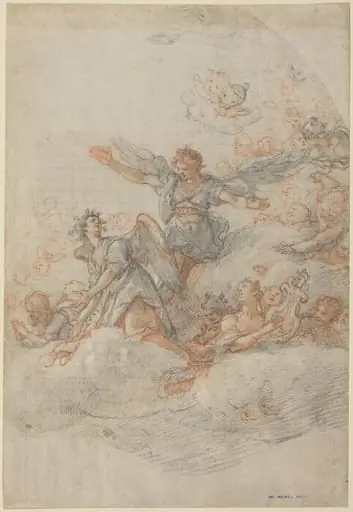 Angels and Putti in the Clouds
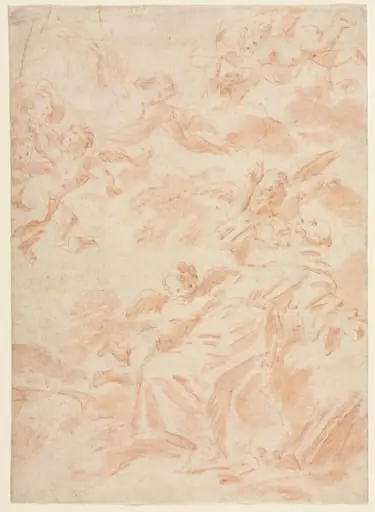 The Stigmatization of Saint Francis
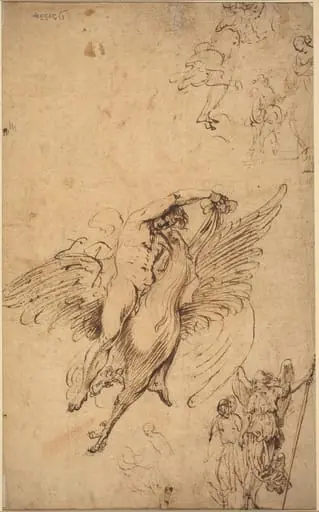 Ganymede