Artwork
The Finding of Moses
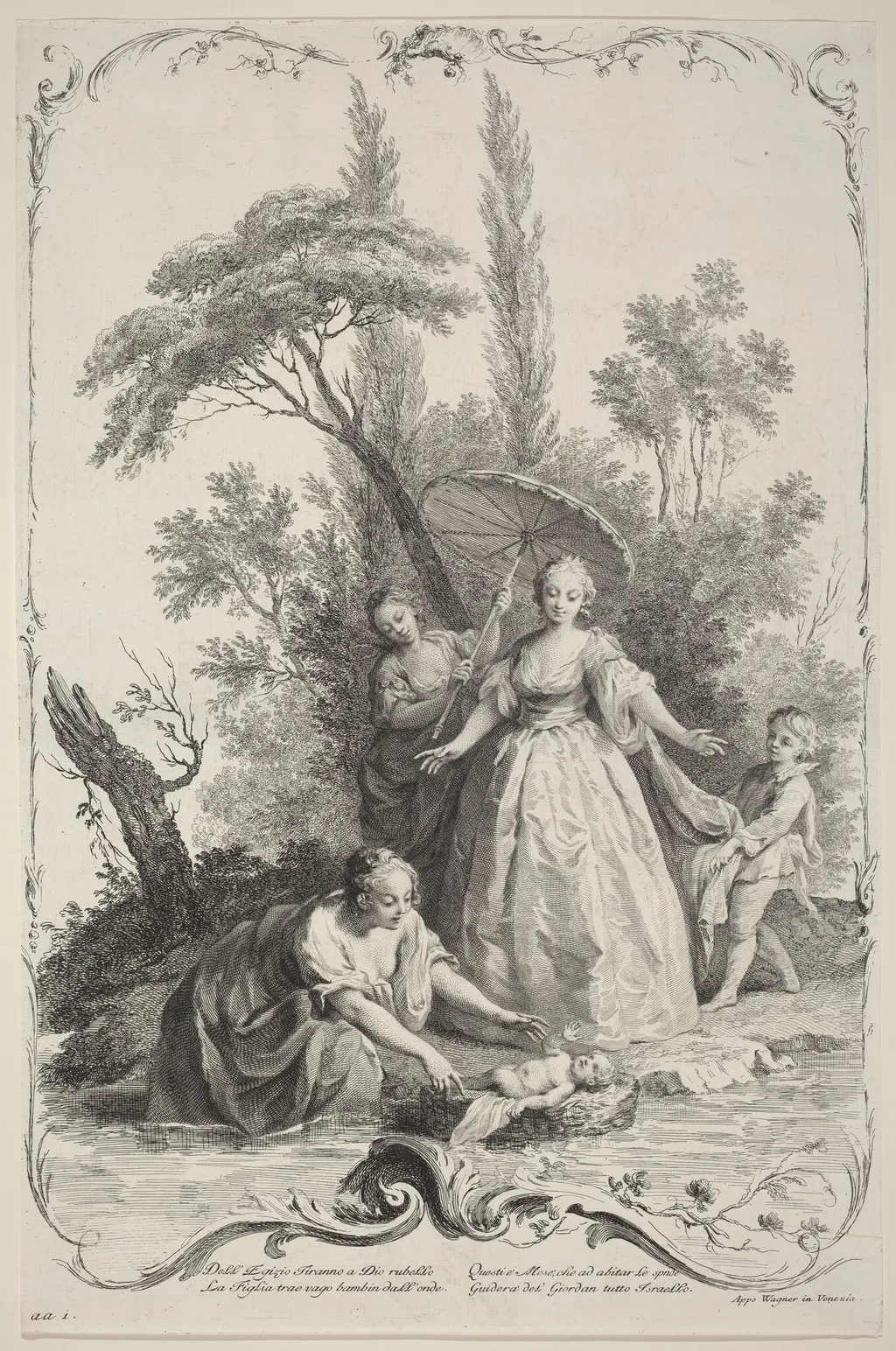
The Finding of Moses is an ink print by the Baroque artist Joseph Wagner. It dates from 1745 and is held in the collection of the National Gallery of Art.
About this work
Overview
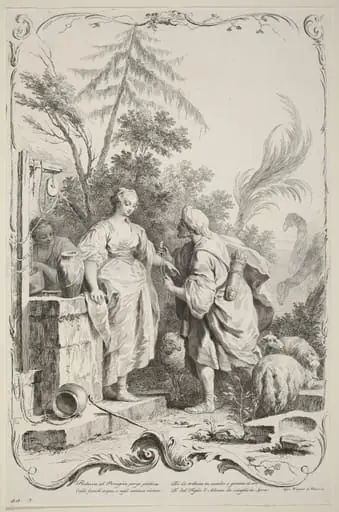
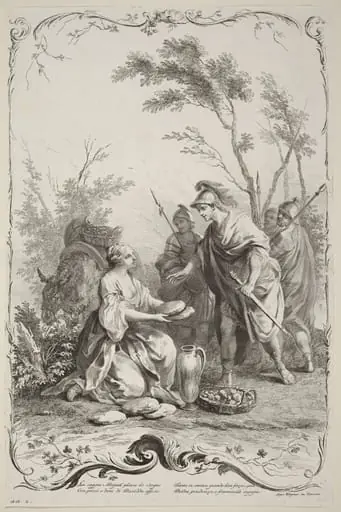
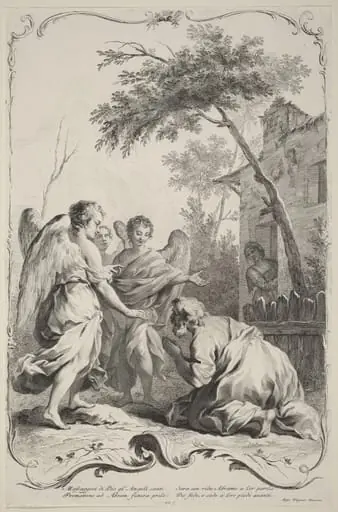
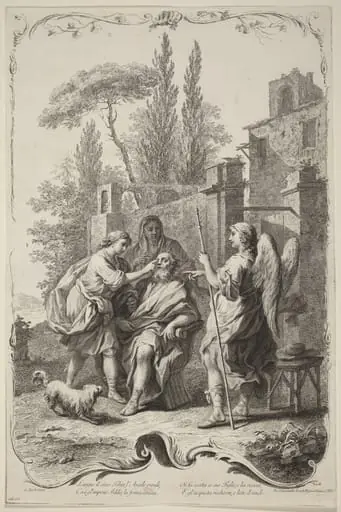
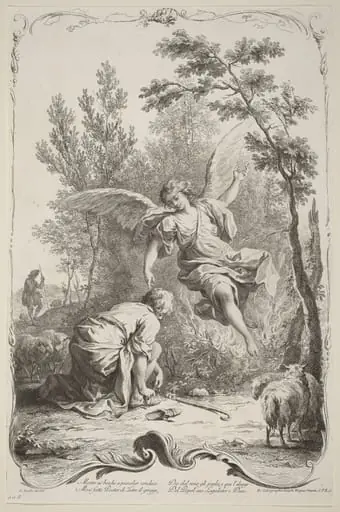
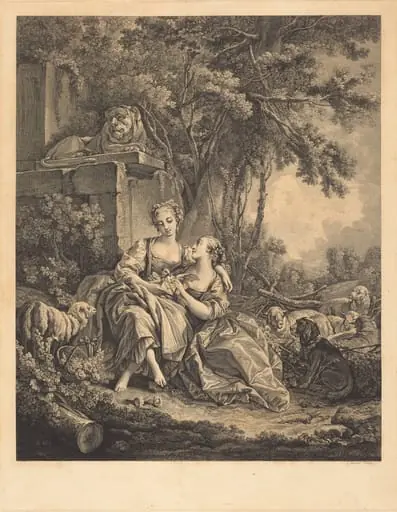
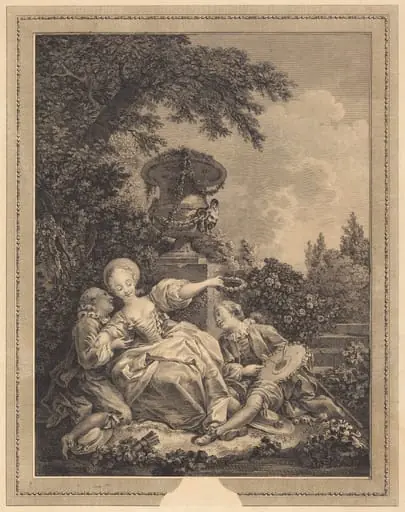
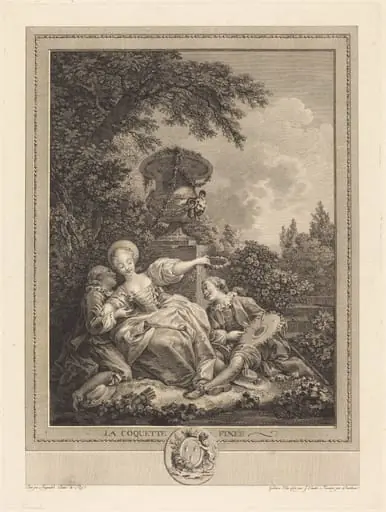
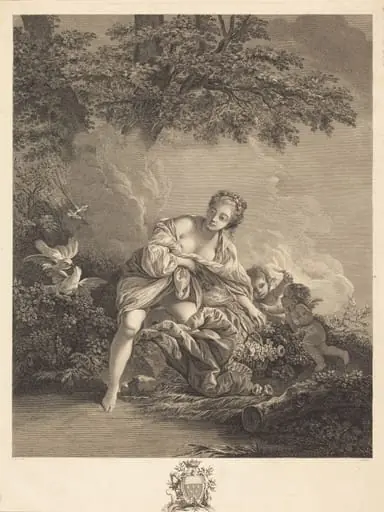
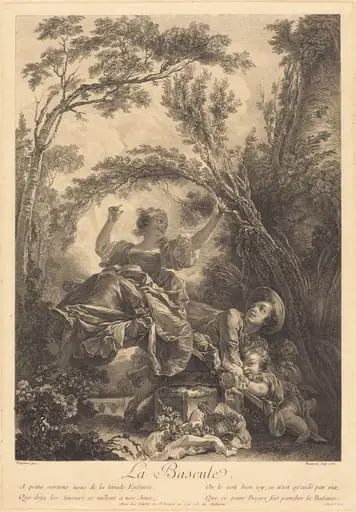
Joseph Wagner’s print, titled The Finding of Moses, dates from around 1745 and combines etching with engraving on laid paper. The composition presents a tranquil woodland scene where a woman in a long dress stands beneath a tree, holding an umbrella, while three children engage with a basket on the ground. Birds flutter overhead, adding a sense of natural stillness to the work.
Subject & Meaning
The basket and the children’s activity hint at a domestic or preparatory aspect of the story, inviting viewers to consider the human side of the legend.
Although the title references the biblical episode of Moses’s discovery, the image does not depict the dramatic moment itself. Instead, it isolates a quiet, everyday encounter in nature, suggesting a contemplative pause before the narrative’s climax. The basket and the children’s activity hint at a domestic or preparatory aspect of the story, inviting viewers to consider the human side of the legend.
Technique & Style
Wagner employed a hybrid process, using both etching’s fluid lines and engraving’s precise incisions to render textures such as foliage, fabric, and feathered birds. The laid paper’s faint ribbed pattern contributes subtle tonal variation, while the interplay of light and shadow creates depth in the wooded setting. The overall style reflects mid‑18th‑century European printmaking, balancing detail with a gentle, atmospheric tone.
History & Provenance
Created circa 1745, the print belongs to Wagner’s mature period, when he was active in the German‑Italian artistic circuit. It was likely produced for the market of collectors interested in biblical subjects rendered in a domestic, genre‑like manner. Surviving copies are held in several European print collections, indicating a modest but steady circulation during the Enlightenment era.
Context
The work emerges at a time when artists frequently reinterpreted biblical narratives through genre scenes, aligning sacred stories with contemporary everyday life. Wagner’s choice to foreground a serene natural environment reflects the period’s growing interest in pastoral idealism and the moralizing potential of quiet, virtuous scenes.
Artist & collection