Artwork
The Blind Tobias
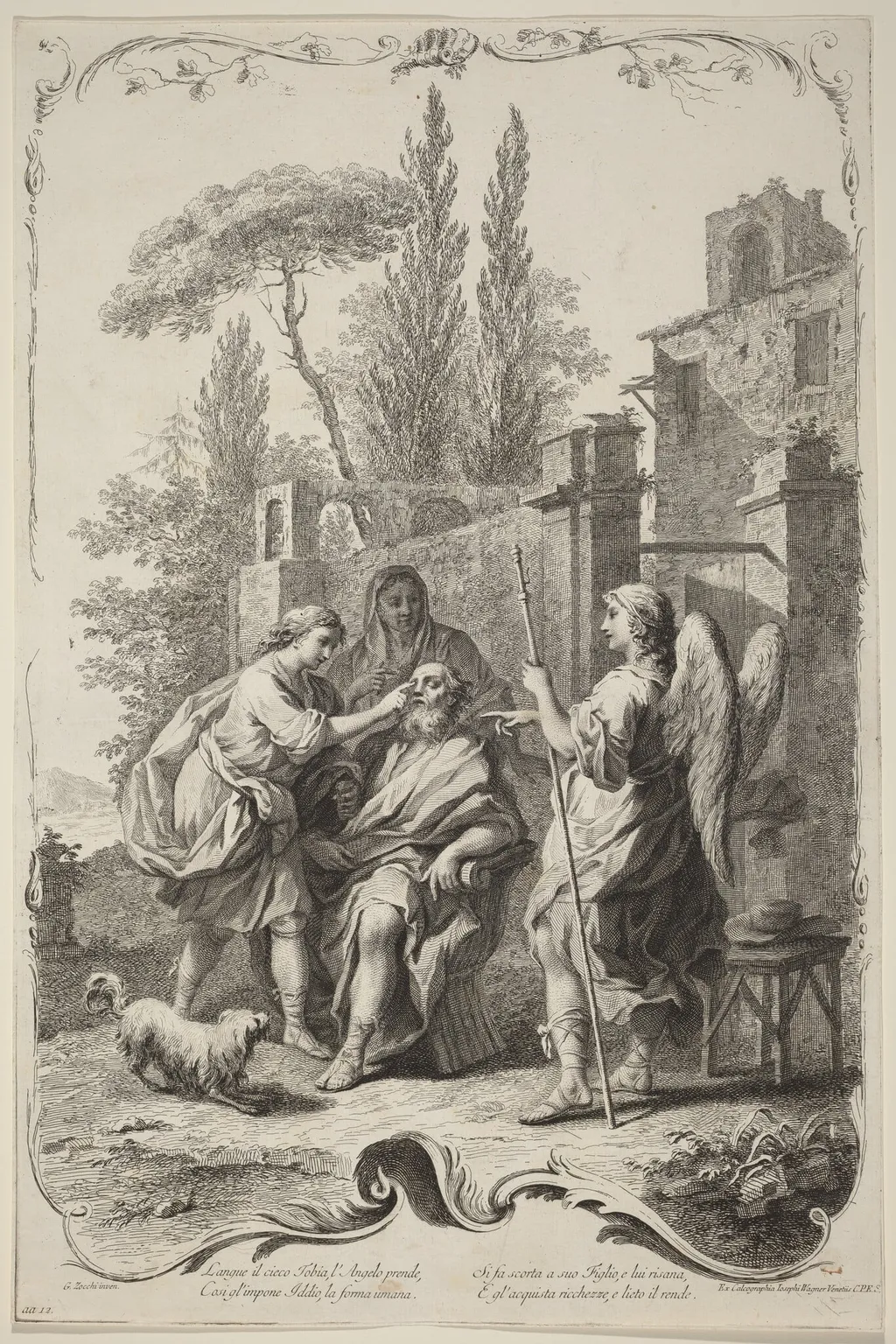
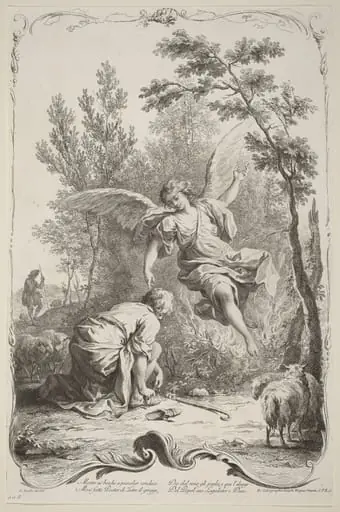
The Blind Tobias is an ink print by the Baroque artist Joseph Wagner. It dates from 1745 and is held in the collection of the National Gallery of Art.
About this work
Overview
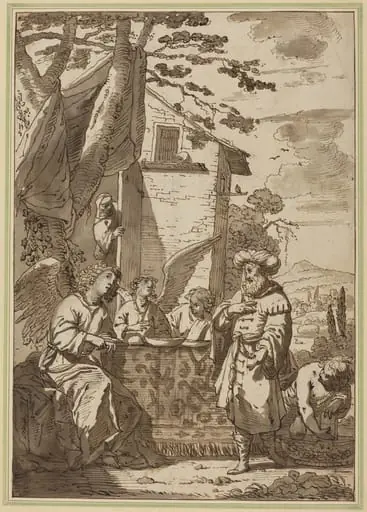
Joseph Wagner’s print, titled The Blind Tobias, dates from around 1745. Executed as a combined etching and engraving on laid paper, the work presents a quiet domestic scene centered on a blind figure named Tobias, surrounded by attendants and a possible celestial presence.
Subject & Meaning
The composition shows Tobias seated in a chair, his sightless gaze attended by a woman who gently touches his face, another woman standing behind him, and a third figure—interpreted as an angel—holding a staff and observing the blind man. The inclusion of a dog, trees, and distant architecture adds a sense of everyday life surrounding the moment of compassionate care.
Technique & Style
Wagner employs the fine lines of engraving alongside the softer tonal qualities of etching, allowing for delicate modeling of flesh and fabric. The print’s restrained lighting and measured gestures align with Baroque sensibilities, emphasizing subtle emotional resonance rather than overt drama.
History & Provenance
Created in the mid‑18th century, the image reflects Wagner’s activity as a printmaker in the German‑Italian artistic circles of the period. While specific ownership records are scarce, the work has been catalogued among his known prints and appears in several 19th‑century collections of Baroque graphic art.
Context
The subject draws on the biblical story of Tobias, a figure associated with guidance and healing. By portraying him blind, Wagner highlights themes of vulnerability and assistance, resonating with contemporary moral and religious narratives that valued charity and divine intervention.
Artist & collection