Artwork
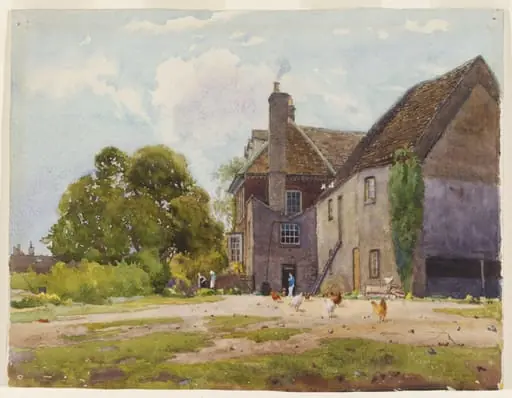
At the back of The White Hart, St. Ives
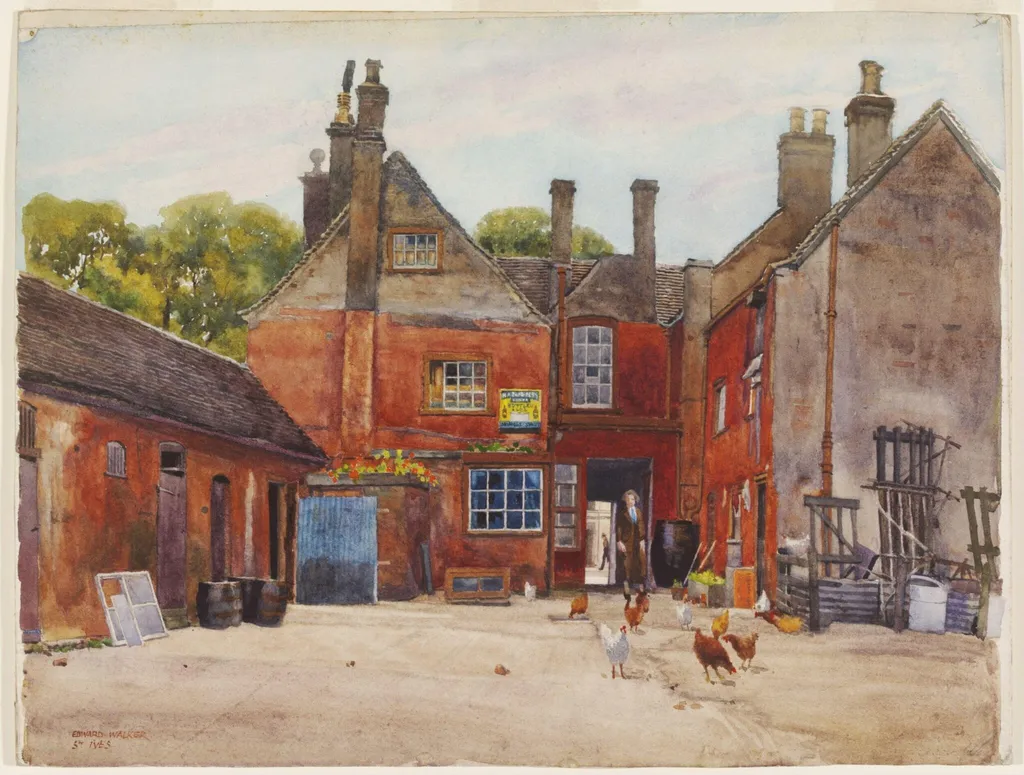
At the back of The White Hart, St. Ives is a watercolor work on paper by the British Romanticist artist Walker. It dates from 1941 and is held in the collection of the Victoria and Albert Museum. The watercolor, executed in 1941, portrays the rear courtyard of The White Hart inn in St.
About this work
Overview
The watercolor, executed in 1941, portrays the rear courtyard of The White Hart inn in St. Ives, Cambridgeshire. Red‑brick structures, sloping roofs and a modest doorway frame a scene where chickens peck at a dusty floor, while a solitary figure in dark clothing walks toward the entrance. The composition captures a moment of everyday rural life.
Subject & Meaning
The work records a quiet, functional space of a country inn, emphasizing ordinary activity such as poultry foraging and the presence of a corrugated‑iron pen. By focusing on these modest details, the image reflects the continuity of local routines despite the broader disruptions of wartime Britain.
Technique & Style
The artist employs delicate watercolor washes to render the play of light on brick surfaces and the subtle shadows cast on the ground. Soft, fluid strokes convey the texture of weathered walls, the roughness of barrels and crates, and the muted atmosphere of the courtyard.
History & Provenance
Created under the Recording Britain project, the piece was part of a government‑sponsored effort to document the nation's landscape and built environment during the early 1940s. The scheme, funded by the Pilgrim Trust and overseen by Sir Kenneth Clark, commissioned artists to capture scenes considered at risk of disappearance amid wartime change.
Context
The painting belongs to a larger body of work aimed at preserving a visual record of British identity during World War II. By selecting a modest inn courtyard, the artist contributes to a collective archive that highlights everyday places as components of the nation's cultural heritage.
Artist & collection
Artist
An English watercolorist active in the early 1940s, this artist painted the spires, bridges, and inns of small-town England in quick, transparent washes.

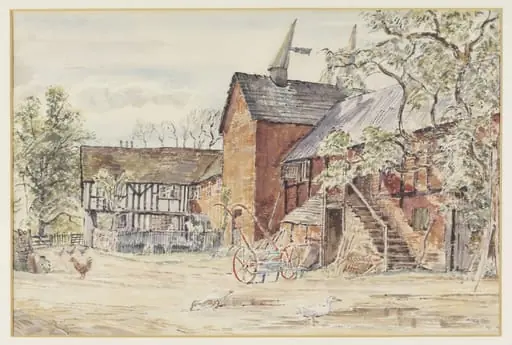 Blackhall Farm, King's Pyon
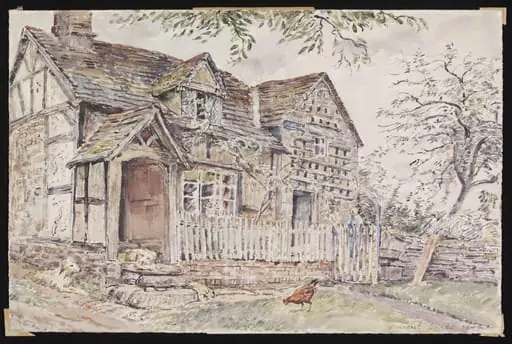 Pigeon House and Post Office, Mansel Lacy
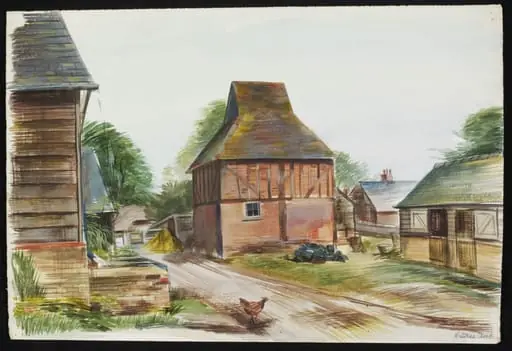 Sixteenth Century Dovehouse, Offley
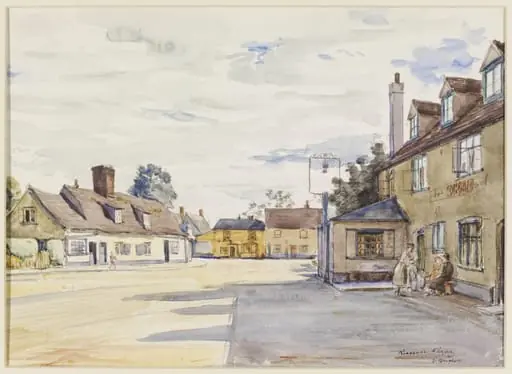 East Bergholt
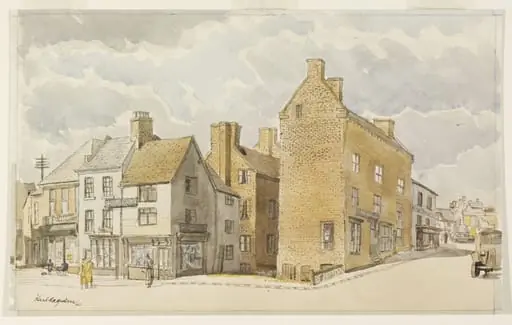 Ashbourne
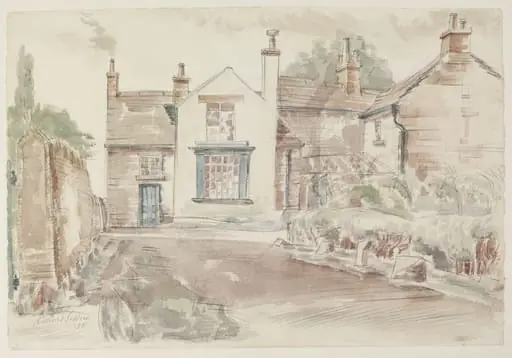 Cottages at Norton, No.1
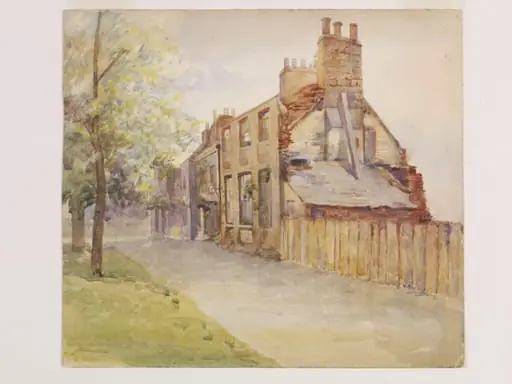 Old brick residences in the grounds of the South Kensington Museum (now the Victoria and Albert Museum)
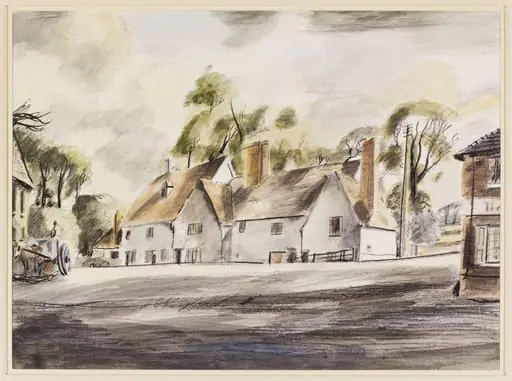 Old Houses, Ballingdon
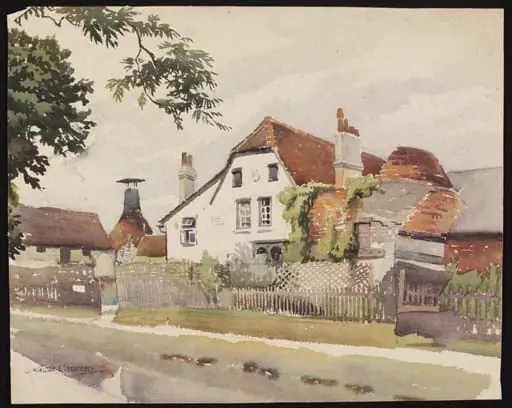 Kilns and Maltings on the Canal Bank, Bishop's Stortford
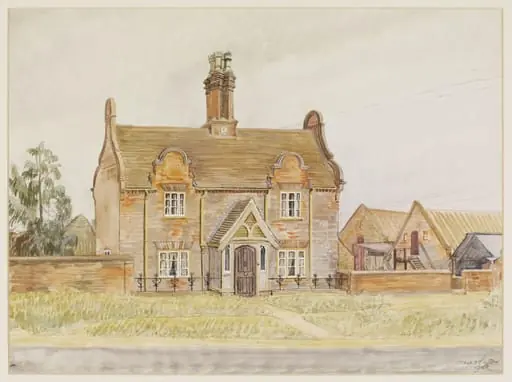 Chantry Farm in Orford