Artwork
Ancestral figure
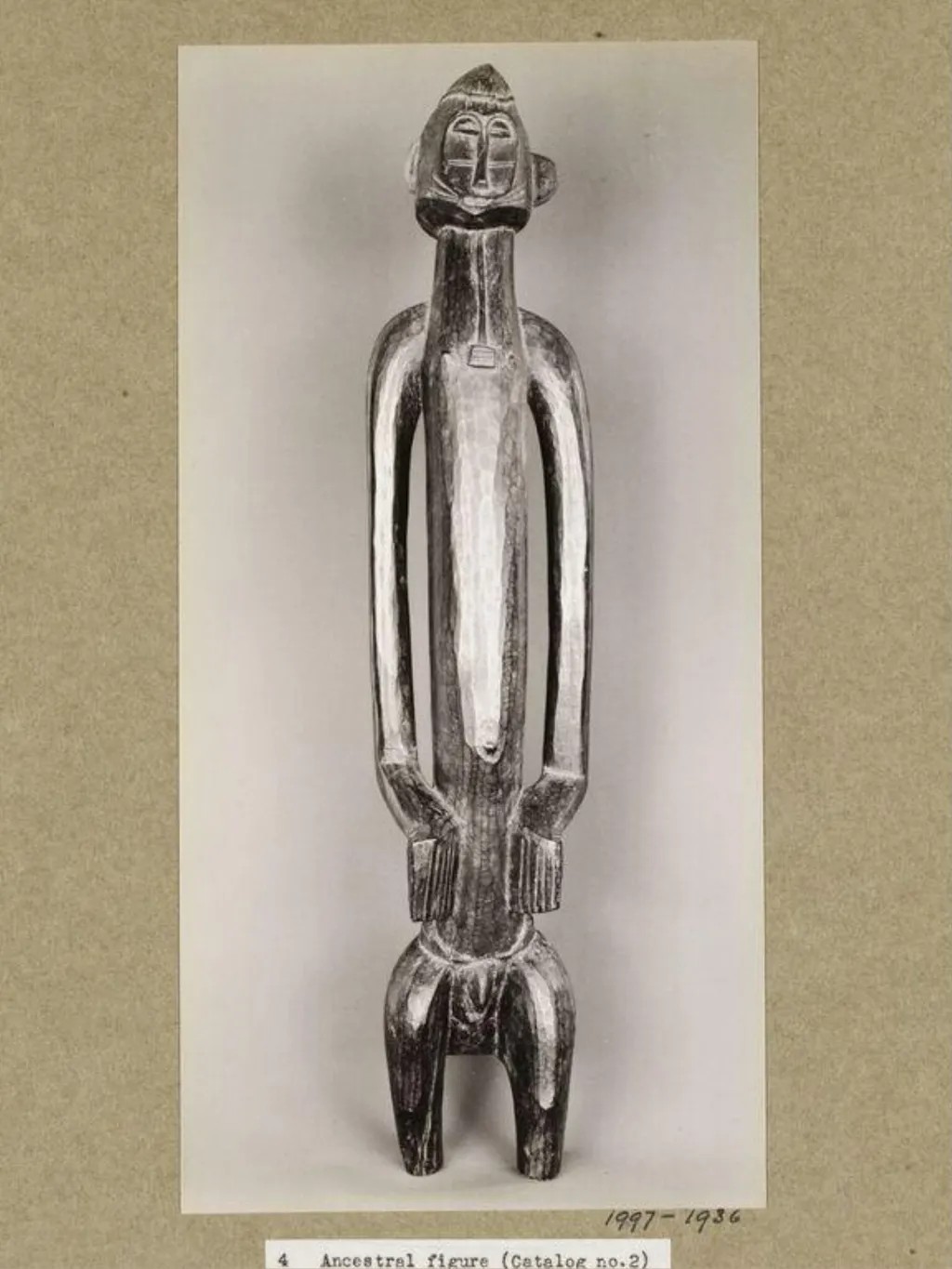
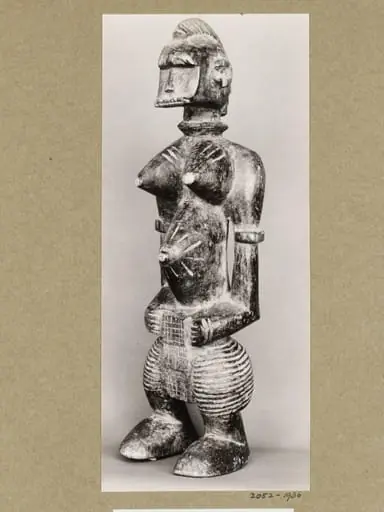
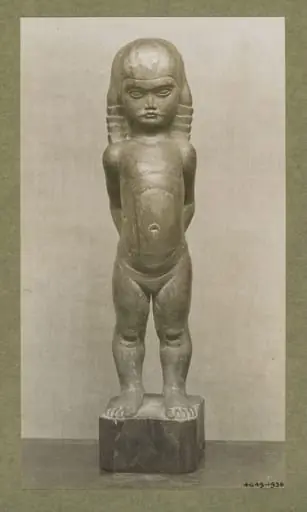
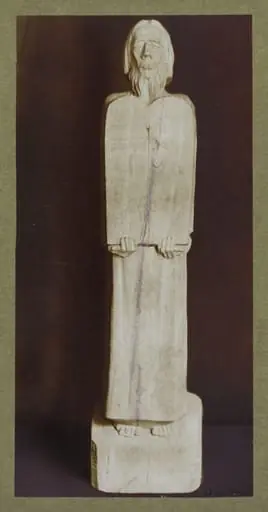
Ancestral figure is a photographic photography by Walker Evans. It dates from 1935 and is held in the collection of the Victoria and Albert Museum.
About this work
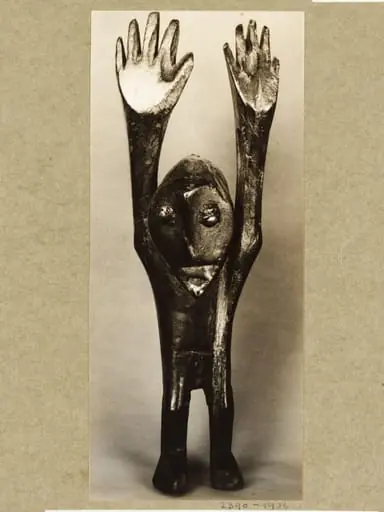
Its arms are straight at its sides, and its legs are wide apart, almost like a tripod.
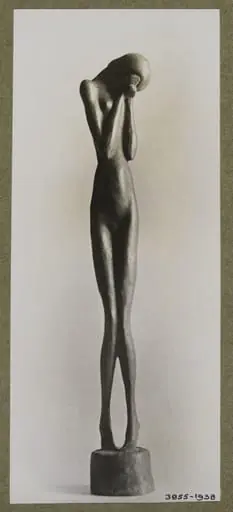
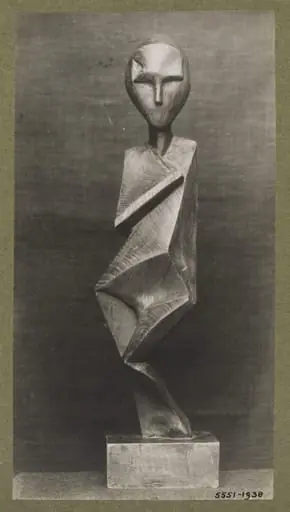
This is a black-and-white photo of a wooden figure. It stands tall and stiff, with a simple, geometric shape. The figure has a smooth head with straight, carved lines for eyes and a flat nose. Its arms are straight at its sides, and its legs are wide apart, almost like a tripod. The wood looks worn, with dark and light patches showing age or carving marks.
This photo was taken by Walker Evans in 1935. He focused on everyday objects and people, often in a straightforward way.
Next, check out the Victoria and Albert Museum to see more items in their collection.
Overview
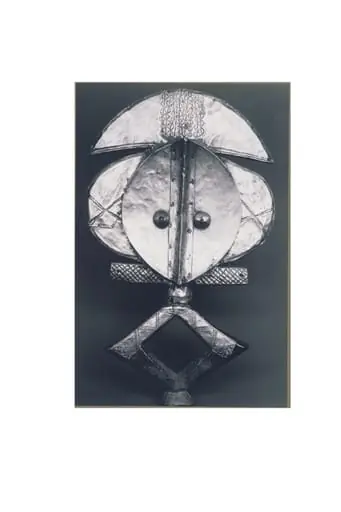
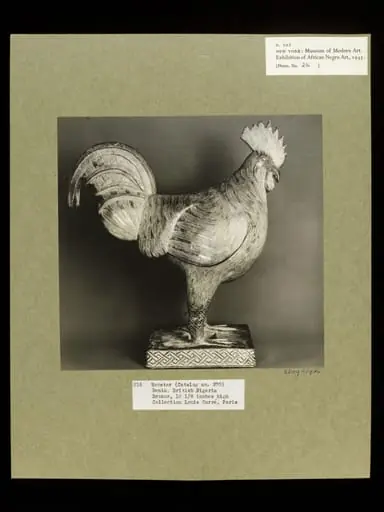
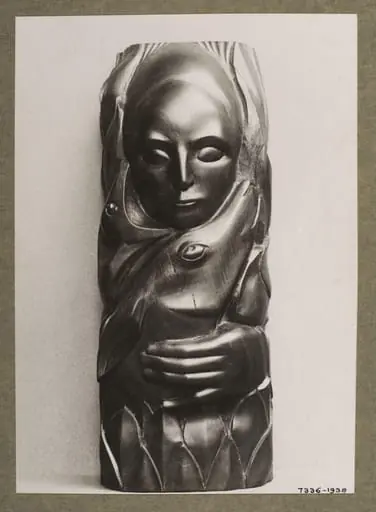
In 1935, Walker Evans was commissioned by the Museum of Modern Art to document its exhibition *African Negro Art*. He produced 477 photographs of the displayed objects, capturing them with a direct, unadorned approach. This particular image records a single wooden ancestral figure from the show. The resulting set of prints was later acquired by the Victoria and Albert Museum for $50, preserving a record of early 20th-century museum practices and the presentation of non-Western artifacts in Western institutions.
Subject & Meaning
The subject is a carved wooden ancestral figure, likely from Central or West Africa, intended to embody lineage or spiritual presence. Its rigid posture, geometric features, and worn surface suggest ritual use and long-term handling. In the context of the 1935 exhibition, it was presented as an ethnographic artifact rather than a work of art, reflecting contemporary Western frameworks that often detached such objects from their cultural origins and spiritual functions.
Technique & Style
Evans employed a straightforward, documentary style: the figure is centered, evenly lit, and photographed against a neutral background. No embellishment or dramatic angle alters its form. The black-and-white medium emphasizes texture and volume, highlighting the wood’s weathered surface and the precision of its carving. His method prioritizes clarity and neutrality, aligning with his broader practice of recording ordinary subjects with quiet precision.
History & Provenance
The photograph was made as part of a systematic documentation project for MoMA’s 1935 exhibition. Evans’s images were intended for scholarly and curatorial use, not public display. One complete set of 477 prints was purchased by the Victoria and Albert Museum in 1936 for $50, a modest sum reflecting the limited commercial value assigned to such photographic records at the time. The set remains part of the V&A’s collection today.
Context
The 1935 exhibition framed African sculptures as formal inspirations for modern art, often ignoring their original cultural and religious roles. Evans’s photographs, while technically neutral, participated in this framing by isolating objects from context. His images contributed to a growing trend in Western museums of treating non-Western artifacts as aesthetic objects, shaping how audiences perceived African art for decades.
Legacy
Evans’s photographs of the exhibition remain valuable as historical records of how African art was curated and perceived in mid-20th-century America. They document both the objects themselves and the institutional frameworks that defined them. Today, these images are studied not only for their formal qualities but also as artifacts of colonial-era museum practices and evolving attitudes toward cultural representation.
Artist & collection
Artist
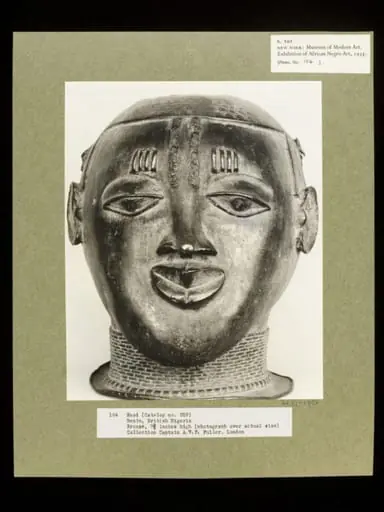
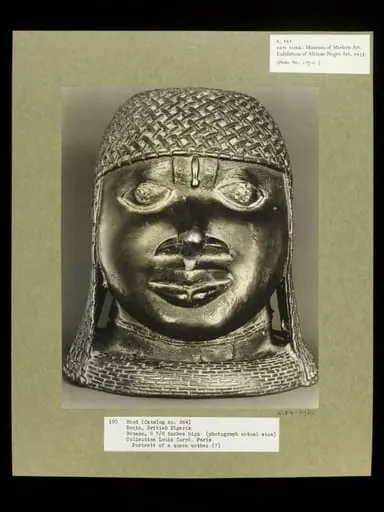
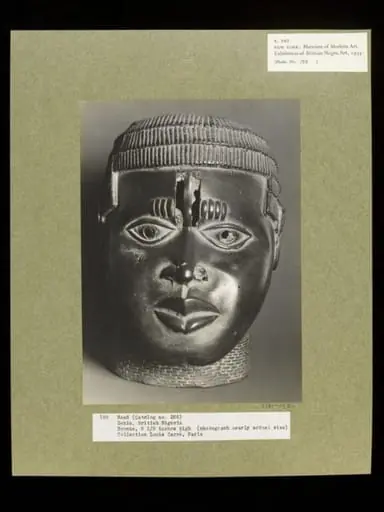
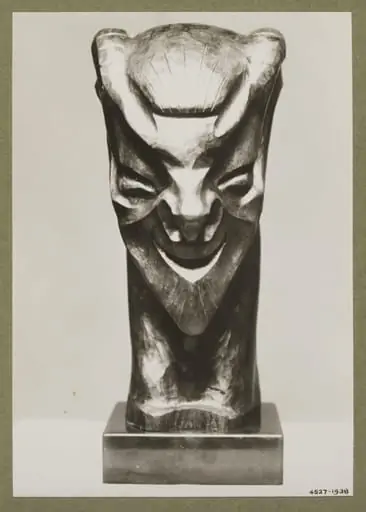
Walker Evans made stark black-and-white photos of carved wooden heads from Benin in 1935.

 Untitled
 Untitled
 Untitled
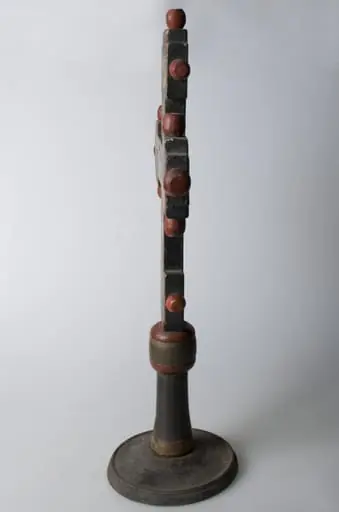 Crucea treflată este realizată din lemn de esență moale cu postament rotund, având câte trei bulbi pe cele trei brațe ale crucii și doi bulbi la bază. Aceasta are două fețe, fiind prelungită cu un mâner. Pe una dintre fețele crucii este pictată scena Botezul Domnului: central este reprezentat Iisus Hristos, iar deasupra un porumbel printre nori reprezentând Duhul Sfânt. În partea stângă este prezent Ioan Botezătorul, iar în dreapta o altă persoană. Pe cealaltă față este ilustrată scena Răstignirea Domnului: în partea centrală este Iisus Hristos, răstignit pe cruce. În partea stângă este pictată Maica Domnului, iar în partea dreaptă este pictat ucenicul iubit, Ioan. În registrul superior sunt reprezentate soarele și luna. Cromatică: alb; roșu; negru; bleumarin.
 Untitled
 Untitled
 Untitled
 Untitled