Artwork
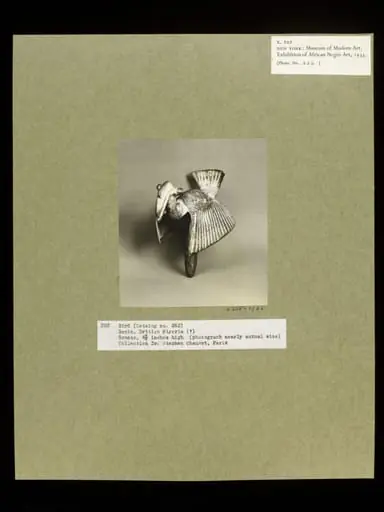
Rooster. Benin.
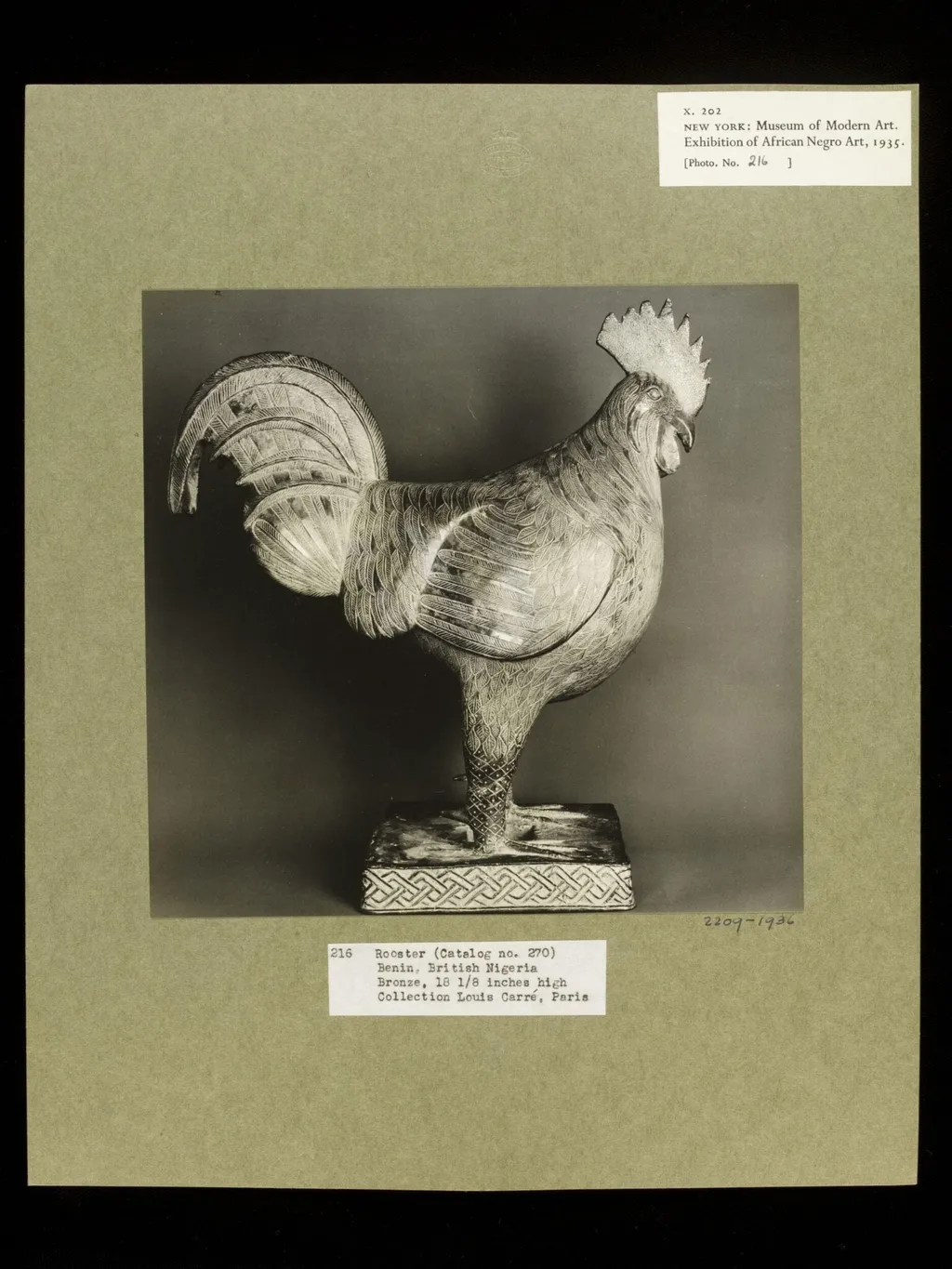
Rooster. Benin. is a photographic photography by Walker Evans. It dates from 1935 and is held in the collection of the Victoria and Albert Museum.
About this work
Overview
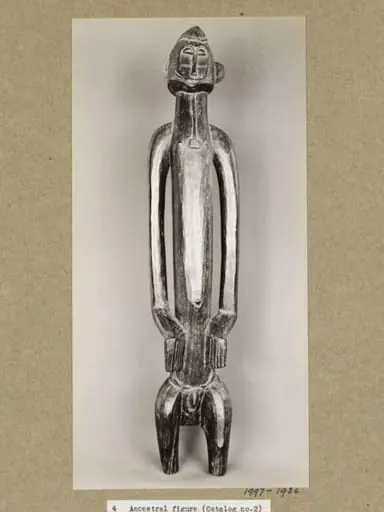
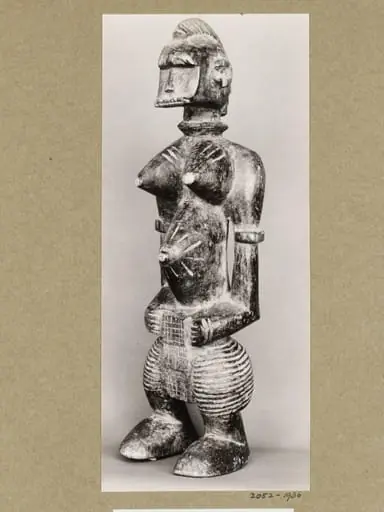
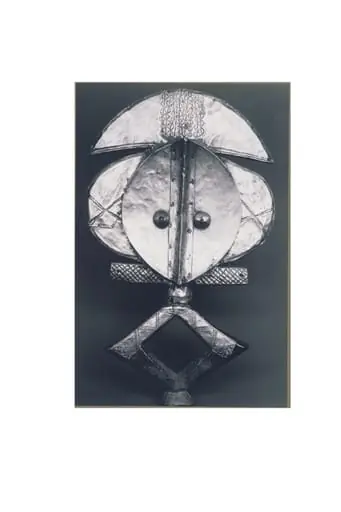
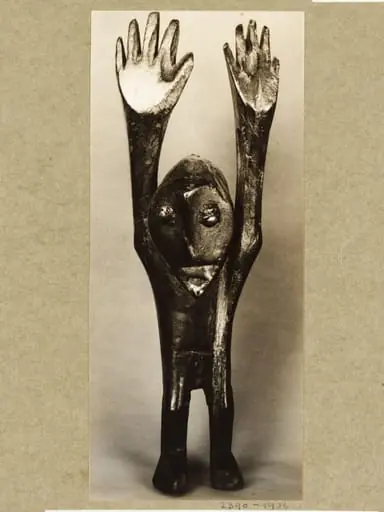
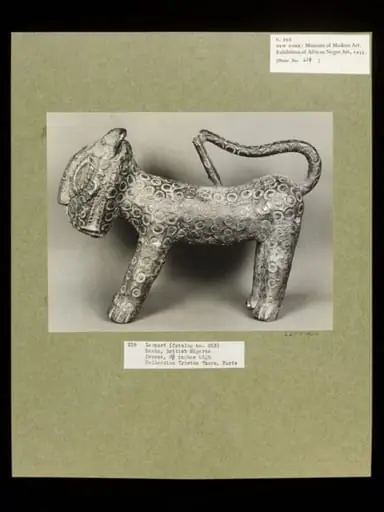
A 1935 photograph by Walker Evans captures a bronze rooster sculpture from a public exhibition of African art.
A 1935 photograph by Walker Evans captures a bronze rooster sculpture from a public exhibition of African art. The image focuses tightly on the object, isolating it from its surroundings to emphasize form and texture. The rooster stands on a square base adorned with geometric patterns, its posture alert and stylized. Evans’s composition highlights the sculpture’s surface details, rendered in a dark, even patina.
Subject & Meaning
The rooster, a common motif in West African art, symbolizes vigilance, vitality, and ancestral communication. Its raised tail and turned head suggest motion and awareness, aligning with cultural associations of the bird as a mediator between worlds. While the photograph does not clarify the object’s original ritual or ceremonial function, its presence in the exhibition reflects early 20th-century efforts to catalog African artifacts as artistic expressions.
Technique & Style
The sculpture is cast in bronze using the lost-wax method, typical of Benin craftsmanship. Fine details—individual tail feathers, the curvature of the beak, and the textured base—are preserved with precision. Evans’s photographic approach enhances these features through controlled lighting and close framing, minimizing context to draw attention to the object’s materiality and sculptural rhythm.
History & Provenance
The sculpture was displayed in 1935 as part of a U.S. exhibition categorized under the then-prevalent term 'negro art.' Its origin is traced to the Kingdom of Benin, likely from the 18th or 19th century. The photograph’s archival status suggests it was made for documentation rather than public display, part of a broader effort by institutions to record non-Western art during a period of shifting museological priorities.
Context
In the mid-1930s, American museums and scholars began reevaluating African objects as art rather than ethnographic curiosities. Evans’s photograph emerged within this transition, capturing a Benin work amid growing interest in African aesthetics. Yet the exhibition’s framing still reflected outdated racial categories, revealing tensions between emerging appreciation and persistent colonial frameworks.
Legacy
The photograph endures as a record of how African art was presented in early American institutions. It preserves the visual language of a sculpture whose cultural context was often obscured by exhibition practices of the time. Today, it serves as both an artifact of photographic history and a reminder of the evolving discourse around the representation of African artistic heritage.
Artist & collection
Artist
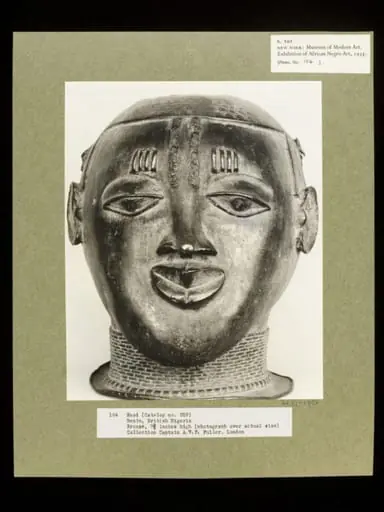
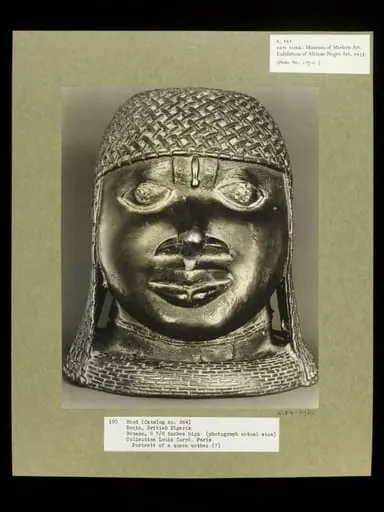
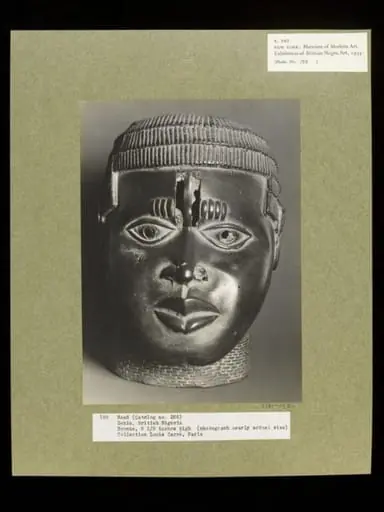
Walker Evans made stark black-and-white photos of carved wooden heads from Benin in 1935.