Artwork
Head of a Woman, Benin
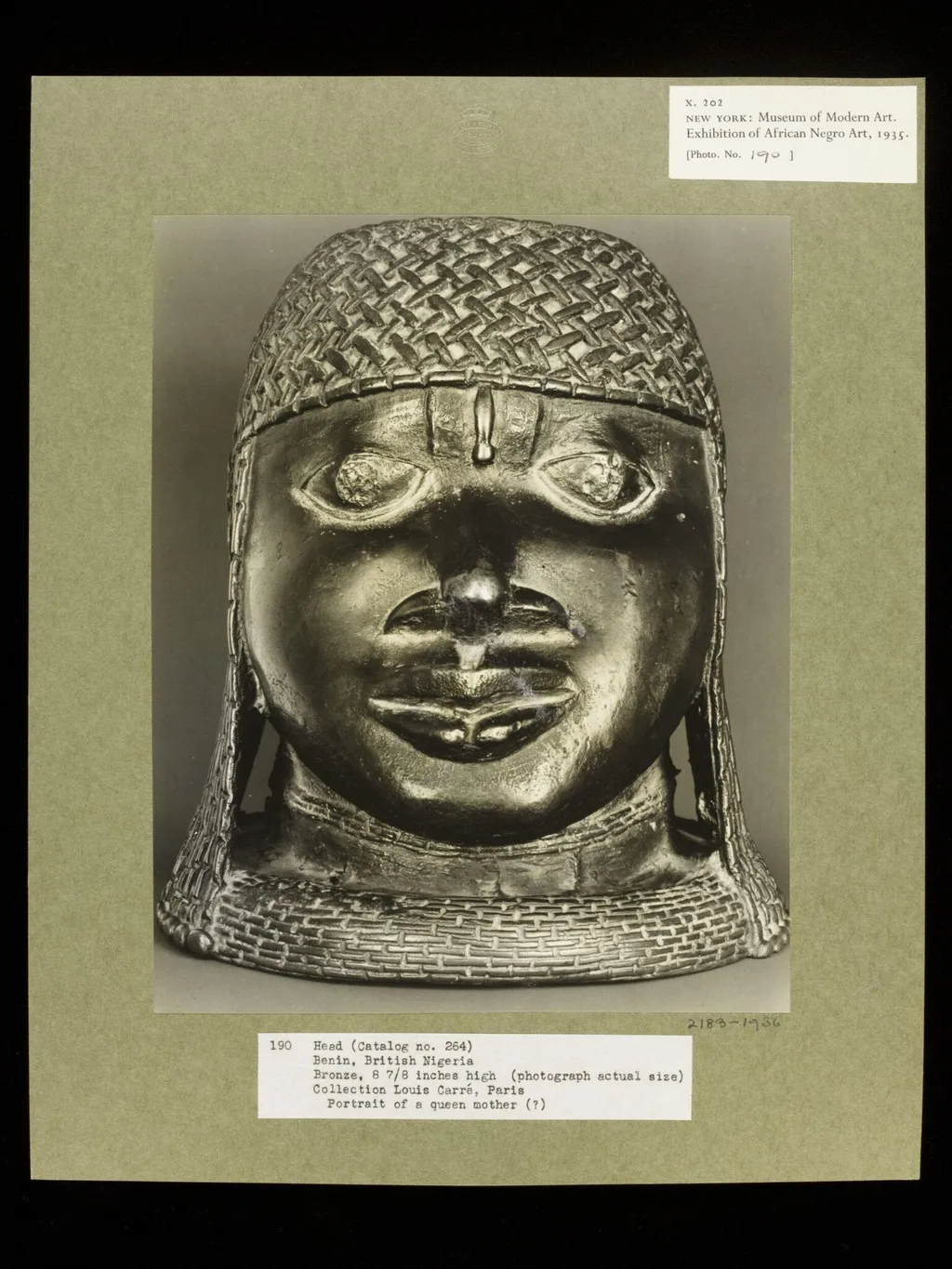
Head of a Woman, Benin is a photographic photography by Walker Evans. It dates from 1935 and is held in the collection of the Victoria and Albert Museum. A black-and-white photograph from 1935 captures a bronze head sculpted in the Benin tradition.
About this work
The label calls it a "portrait of a queen mother," though we can’t confirm that.
This is a black-and-white photo of a bronze head. The face has a calm, slightly smiling mouth and closed eyes. The head is topped with a woven hat and a beaded necklace sits around the neck.
The photo was taken in 1935 as part of an exhibition of African art. The label calls it a "portrait of a queen mother," though we can’t confirm that.
Check out the Victoria and Albert Museum to see this piece in person.
Overview
A black-and-white photograph from 1935 captures a bronze head sculpted in the Benin tradition. Taken by Walker Evans during a documented survey of African art objects, the image serves as a record of an artifact displayed in a museum setting. The photograph emphasizes formal qualities of the sculpture rather than its cultural origin, reflecting mid-20th-century practices of collecting and presenting non-Western art.
Subject & Meaning
The sculpture depicts a female figure with closed eyes and a subtle, serene expression. Adorned with a woven crown and beaded necklace, it suggests high status, possibly representing a royal woman. While labeled as a 'portrait of a queen mother,' this identification remains unverified. The work aligns with Benin court traditions where such heads honored ancestral rulers, though its exact ceremonial role is not confirmed by the photograph alone.
Technique & Style
The bronze head exhibits the refined casting techniques characteristic of Benin artisans, with smooth surfaces and delicate detailing in the facial features and adornments. The photograph renders these qualities in tonal contrast, highlighting the texture of the metal and the precision of the beaded collar and crown. The composition isolates the head against a neutral background, focusing attention on its form and craftsmanship.
History & Provenance
The sculpture was photographed in 1935 as part of Walker Evans’s project to document cultural artifacts, likely during an exhibition in the United States. Its presence in such a context indicates it had been removed from its original setting in the Kingdom of Benin, possibly following the 1897 British punitive expedition. The photograph preserves its appearance at a time when African art was often categorized under outdated and reductive terms like 'negro art.'
Context
In the 1930s, African sculptures were frequently displayed in Western museums as ethnographic specimens rather than as works of art with specific cultural meanings. The labeling and framing of this object reflect the period’s limited understanding and colonial frameworks. Evans’s documentation, while meticulous, participated in a broader system that detached objects from their original contexts and narratives.
Legacy
The photograph endures as a historical record of how Benin art was perceived and presented in the early 20th century. It contributes to ongoing scholarly efforts to recontextualize these objects, acknowledging their original significance while recognizing the colonial conditions of their displacement. Today, institutions like the Victoria and Albert Museum hold the physical artifact, inviting renewed engagement with its true provenance.
Artist & collection
Artist
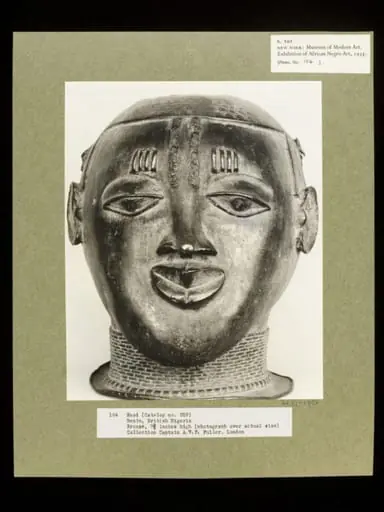
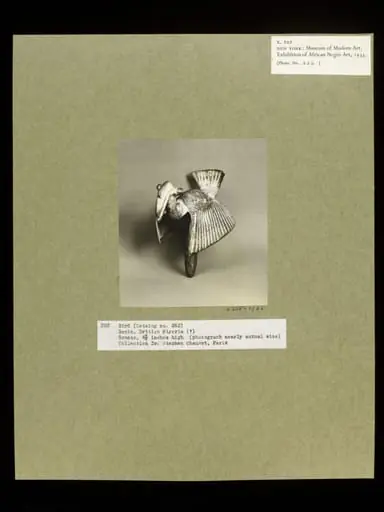
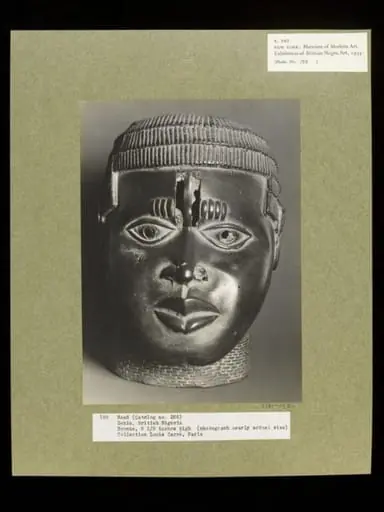
Walker Evans made stark black-and-white photos of carved wooden heads from Benin in 1935.

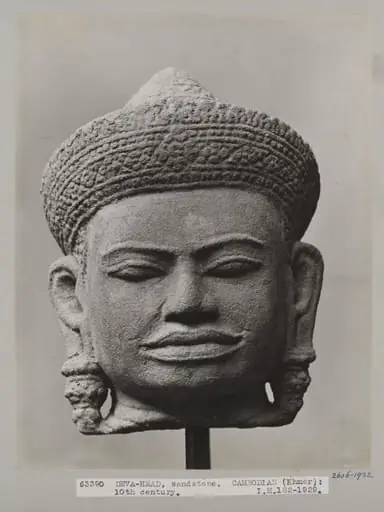 Cambodian sandstone sculpture of head of Deva, 10th century, V&A Museum, London
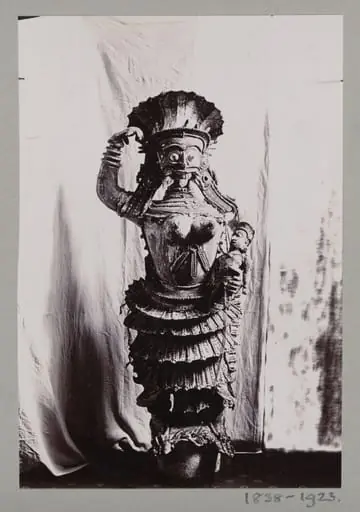 Carved wood sculpture, Goddess, Javanese (?)
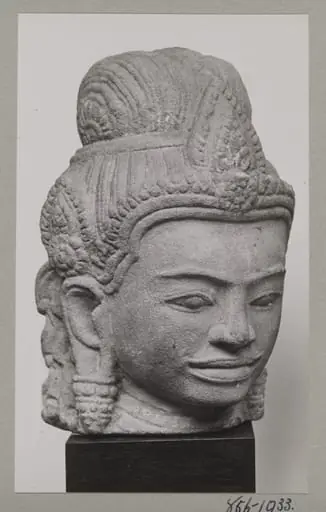 Sculpture, head of Asura, Ankor region, 12th - 13th century, H.G. Quaritch Wales collection
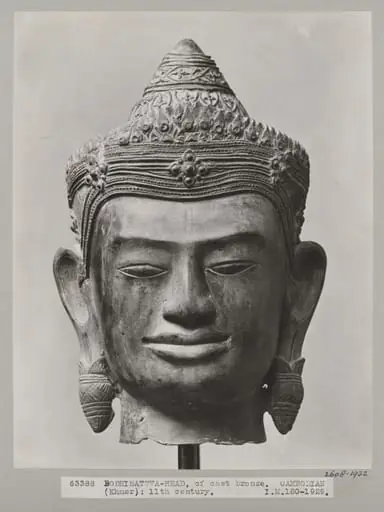 Cambodian bronze sculpture of head of Bodhisattva, 11th century A.D., V&A Museum, London
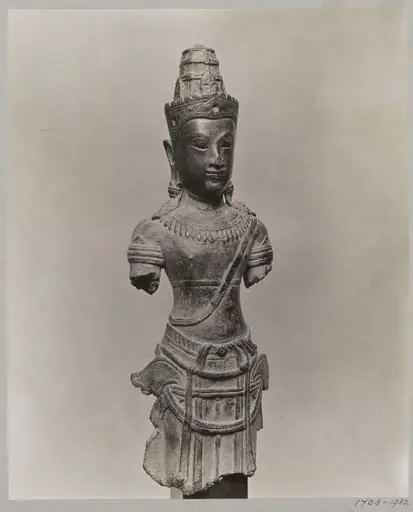 Bronze Cambodian sculpture of Bodhisattva, ca. 13th century, A.D., V&A Museum, London
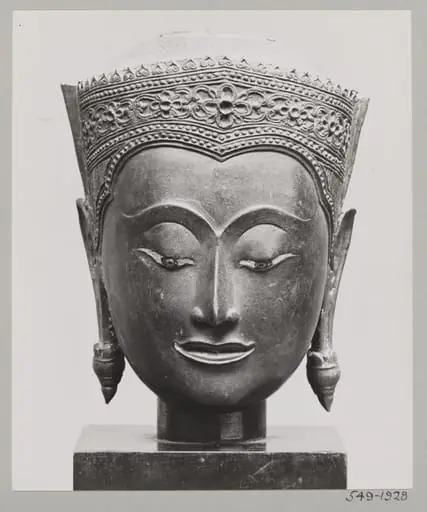 Siamese bronze sculpture of Buddha, 14th or 15th century, V&A Museum