Artwork
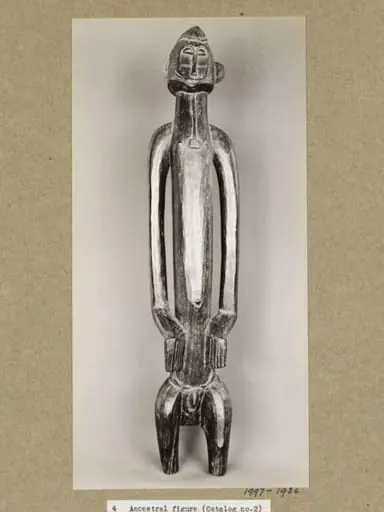
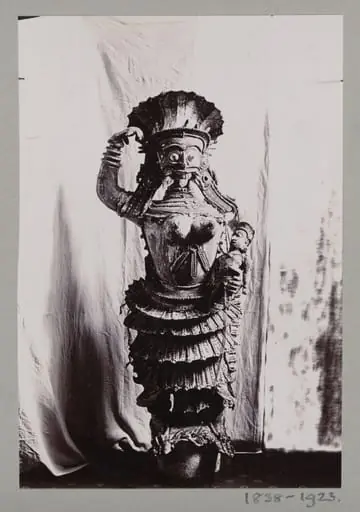
Figure of a woman. Senufo, Ivory Coast, border of Sudan.
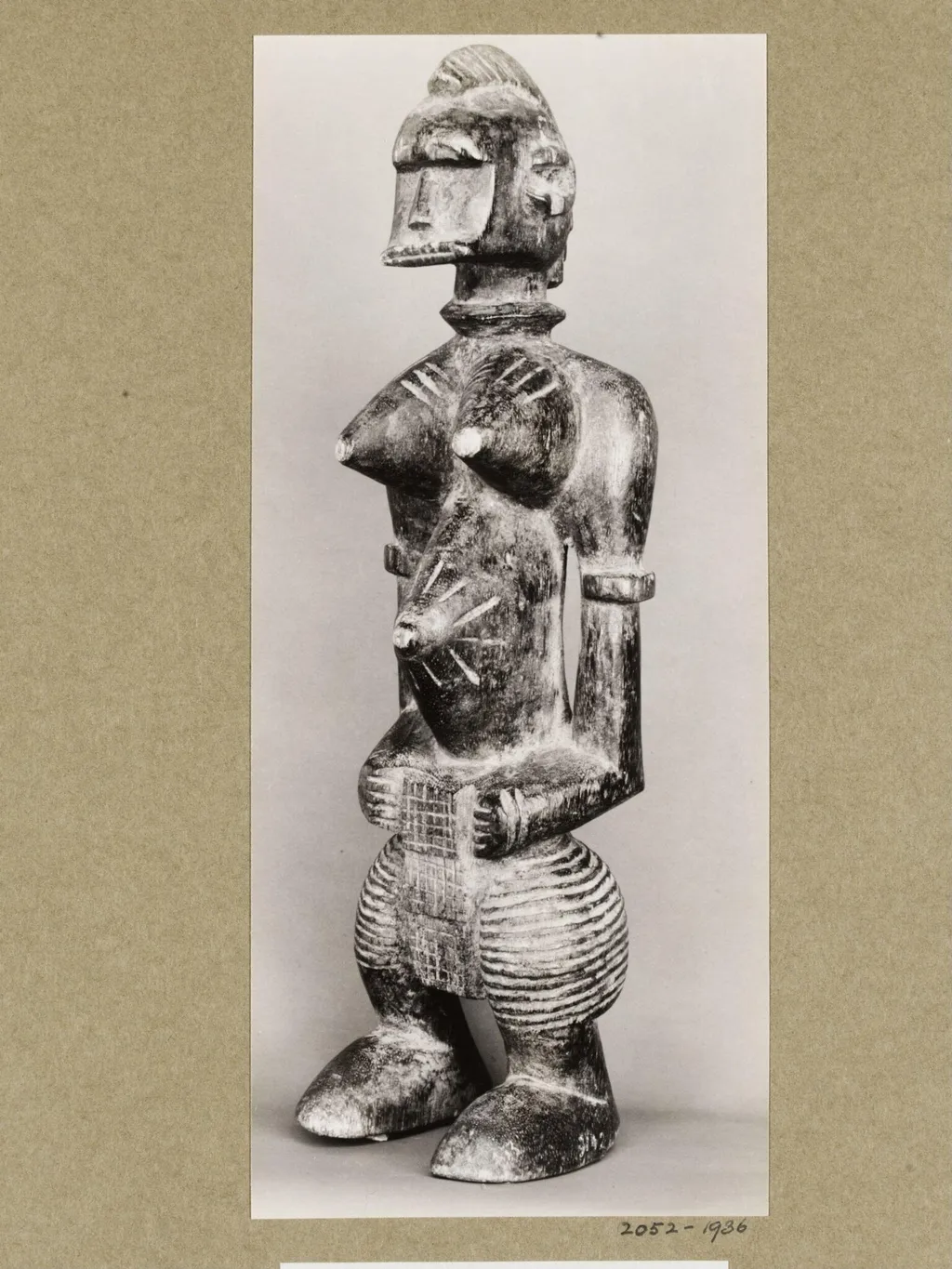
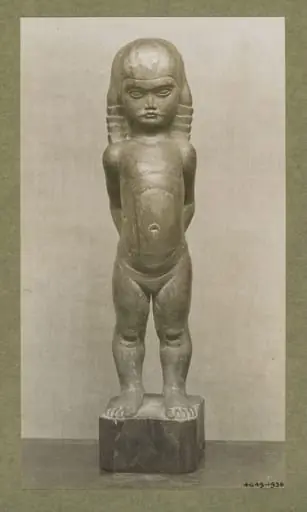
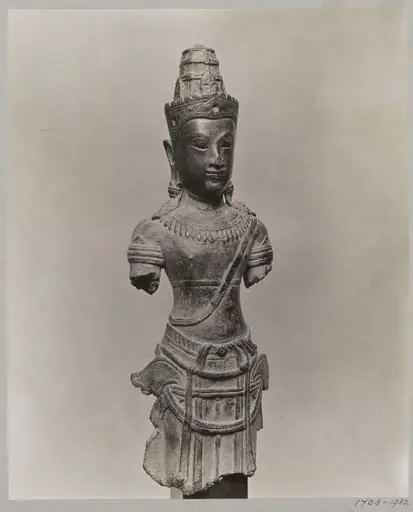
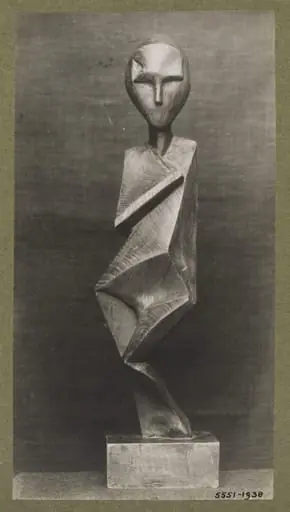
Figure of a woman. Senufo, Ivory Coast, border of Sudan. is a photographic photography by Walker Evans. It dates from 1935 and is held in the collection of the Victoria and Albert Museum.
About this work
The figure itself comes from the Senufo culture in West Africa, where wooden carvings often hold spiritual meaning.
This is a black-and-white photo of a carved wooden figure. The figure shows a woman sitting with her legs tucked under her. Her arms rest on her knees, and she has a simple, geometric face with a high forehead. The carving is rough but detailed, especially in the patterned fabric draped over her body.
This photo was taken in 1935 by Walker Evans, who focused on everyday objects and people. The figure itself comes from the Senufo culture in West Africa, where wooden carvings often hold spiritual meaning.
Next, check out Walker Evans to see more of his striking photographs.
Overview
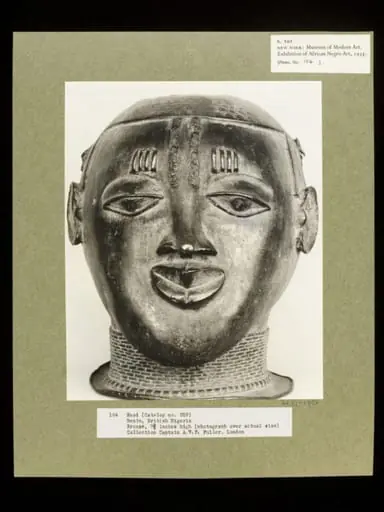
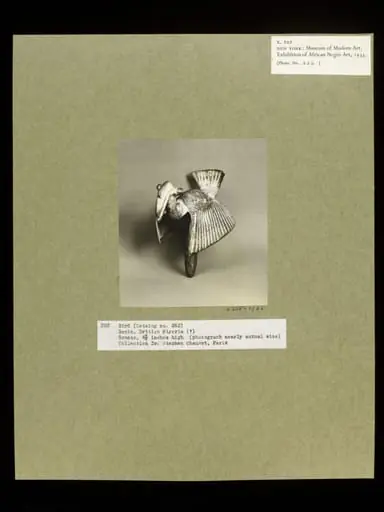
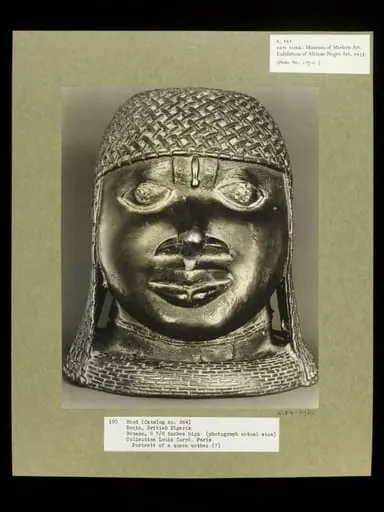
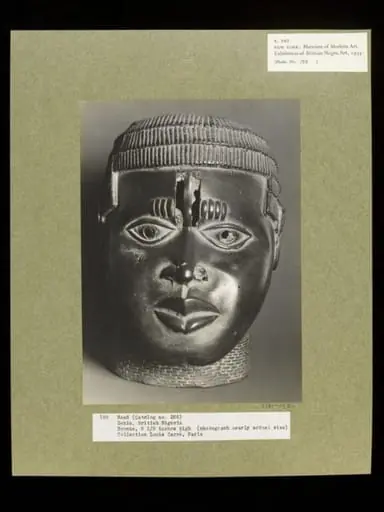
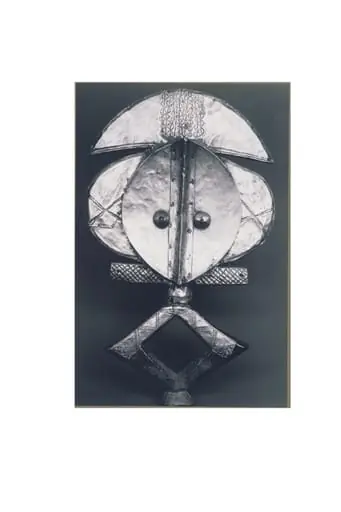
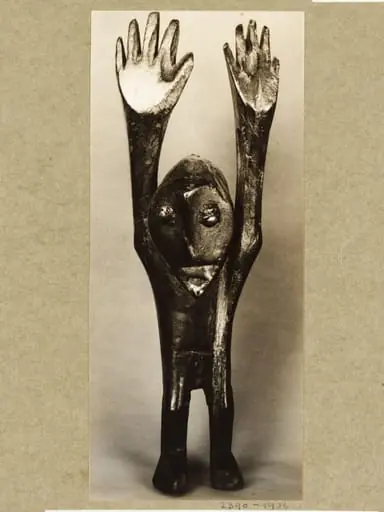
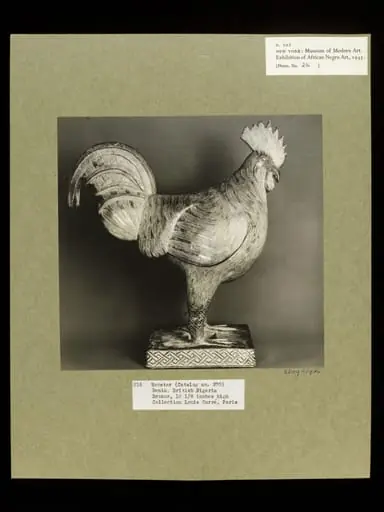
A gelatin silver print by Walker Evans, made in 1935, captures a Senufo wooden sculpture of a seated female figure. Commissioned by the Museum of Modern Art, the photograph was part of a larger project documenting the *African Negro Art* exhibition. Evans produced 477 images for this assignment, and this particular print was later acquired by the Victoria and Albert Museum for fifty dollars, reflecting its role as a documentary record rather than an artistic object in its own right.
Subject & Meaning
The sculpture depicts a woman seated with legs folded beneath her, arms resting on her knees. Her face is rendered with minimal features—a high forehead and simplified contours—typical of Senufo aesthetic conventions. Though the photograph records the object, the figure itself likely served a ritual or ancestral function within Senufo communities, where such carvings often embodied spiritual presence or social authority, particularly in initiation or protective contexts.
Technique & Style
Evans employed a straightforward, documentary approach, using natural light to emphasize the sculpture’s form and surface texture. The black-and-white medium highlights the contrast between the carved wood’s roughness and the intricate patterns of the draped fabric. The composition centers the figure against a neutral background, avoiding theatricality to preserve the object’s material presence and cultural specificity.
History & Provenance
The photograph was created during Evans’s 1935 assignment for MoMA’s *African Negro Art* exhibition, which aimed to present African objects as art rather than ethnographic curiosities. Seventeen sets of the 477 photographs were printed; one set entered the Victoria and Albert Museum’s collection in the late 1930s. The original sculpture’s provenance remains undocumented beyond its Senufo origin near the Ivory Coast–Sudan border.
Context
In the 1930s, Western institutions increasingly collected African sculptures, often detached from their cultural contexts. Evans’s photographs contributed to a growing effort to treat these objects as formal artworks, aligning with modernist interests in abstraction and simplicity. Yet the images also preserved a record of objects removed from their ritual environments, raising questions about representation and cultural displacement.
Legacy
Evans’s photographs of African art helped shape early 20th-century perceptions of non-Western sculpture within modernist discourse. While they elevated the aesthetic status of these objects in Western museums, they also obscured their original functions. Today, the images serve as historical documents, bridging ethnographic collection practices and the evolving recognition of African art as part of global visual heritage.
Artist & collection
Artist
Walker Evans made stark black-and-white photos of carved wooden heads from Benin in 1935.