Artwork
Print Collection
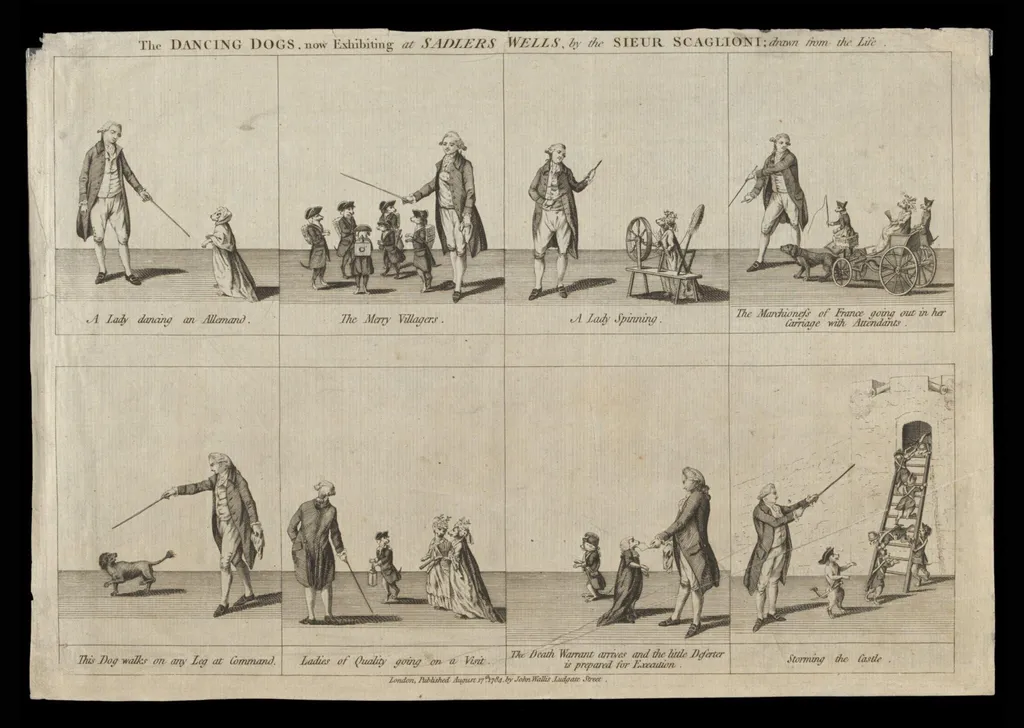
Print Collection is a print by the Romanticist artist John Wallis. It dates from 17 and is held in the collection of the Victoria and Albert Museum.
About this work
John Wallis made a print in 1784 called Print Collection. The print shows eight scenes from a dog show act at Sadler’s Wells. It’s a print, not a painting.
This print tells us about entertainment in the 1700s. It was published the same year the show happened, so it’s like a poster today.
Look up the Victoria and Albert Museum.
Overview
Titled 'The Dancing Dogs, now exhibiting at Sadlers Wells, by the Sieur Scaglioni, drawn from the life,' it presents eight sequential scenes of the act.
This 1784 print, published by John Wallis, captures a live performance of trained dogs at Sadler’s Wells Theatre in London. Titled 'The Dancing Dogs, now exhibiting at Sadlers Wells, by the Sieur Scaglioni, drawn from the life,' it presents eight sequential scenes of the act. As a commercial print, it functioned as both advertisement and souvenir, offering the public a lasting record of a transient entertainment event.
Subject & Meaning
The print depicts a troupe of dogs performing choreographed movements, likely trained by the Italian performer Sieur Scaglioni. These acts reflected the 18th-century fascination with animal training and spectacle, blending amusement with displays of human control over nature. The inclusion of the performer’s name suggests a celebrity-driven culture, where novelty acts attracted urban audiences seeking diversion.
Technique & Style
Executed as a single-sheet engraving, the print uses fine linear detail to distinguish each of the eight scenes arranged in a grid. The composition is narrative rather than atmospheric, prioritizing clarity and sequential storytelling over emotional depth. The style is straightforward, typical of popular prints of the period designed for mass reproduction and immediate recognition.
History & Provenance
Produced in the same year as the performance, the print was likely sold at the theatre or through print shops in London. It entered the collection of the Victoria and Albert Museum, where it remains as evidence of popular entertainment in late 18th-century Britain. Its survival reflects its role as a cultural artifact rather than a fine art object.
Context
During the 1780s, Sadler’s Wells was a hub for diverse public entertainments, including animal acts, acrobatics, and melodrama. The popularity of dog performances mirrored broader trends in urban leisure, where spectacle and novelty drew mixed-class audiences. Such prints helped extend the reach of live shows beyond the theatre walls, functioning as early forms of media promotion.
Legacy
This print contributes to the historical record of popular culture in Georgian England. It illustrates how entertainment was commodified and documented through print, offering insight into public tastes and the commercialization of performance. Today, it serves as a primary source for scholars studying the social history of leisure and visual culture in the 1700s.
Artist & collection
Artist
John Wallis made early prints in the late 1700s, mostly single-sheet engravings sized around 7 by 9 inches.

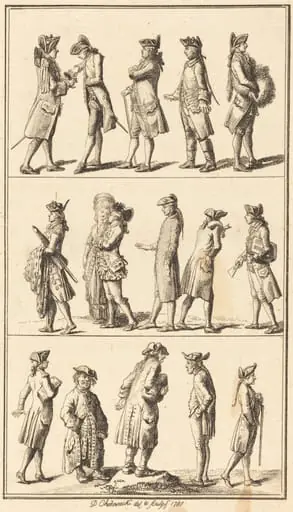 Servants
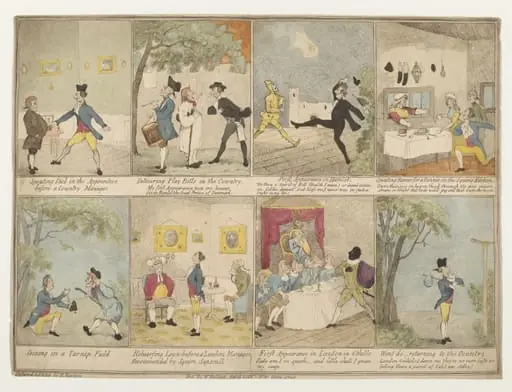 H Beard Print Collection
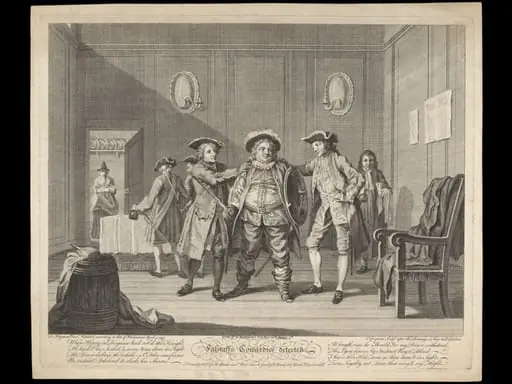 H Beard Print Collection
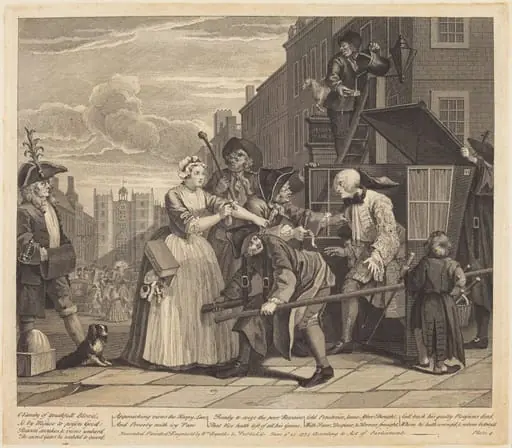 A Rake's Progress: pl.4
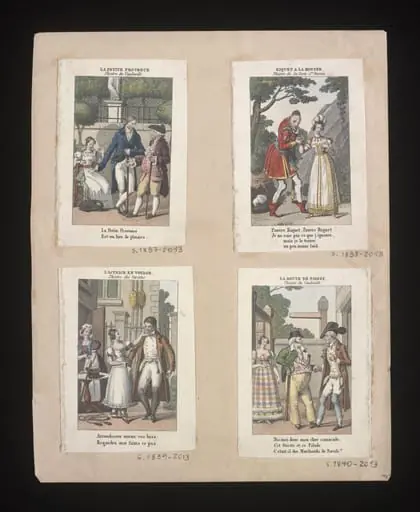 La Route de Poissy at Théatre du Vaudeville
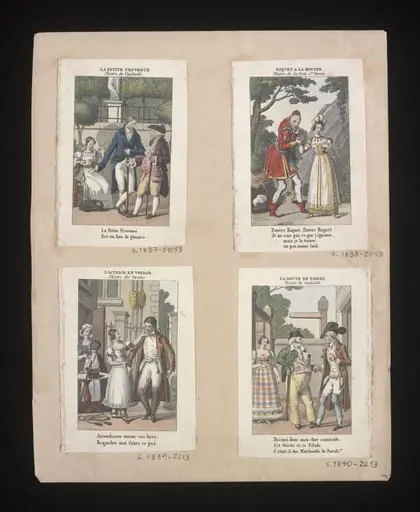 La Petite Provence, Théatre du Vaudeville,
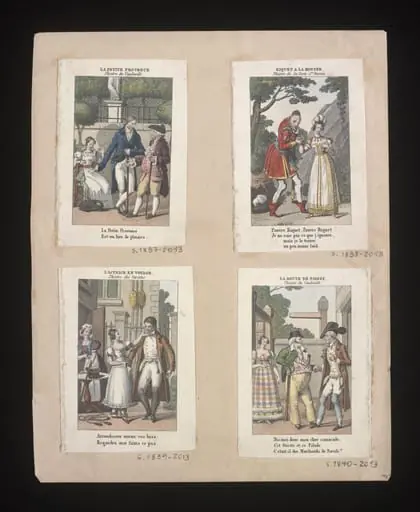 Riquet a la Houppe, Théatre de la Porte St Martin
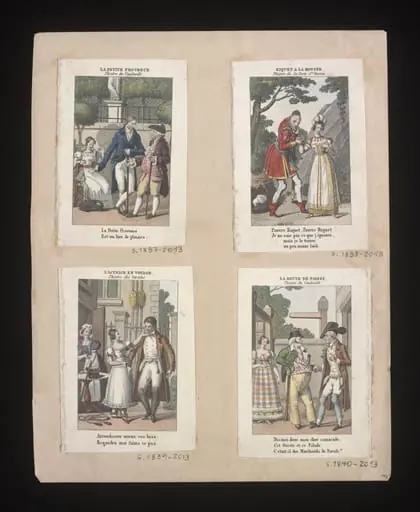 L'Actrice en Voyage, Théatre des Varietes
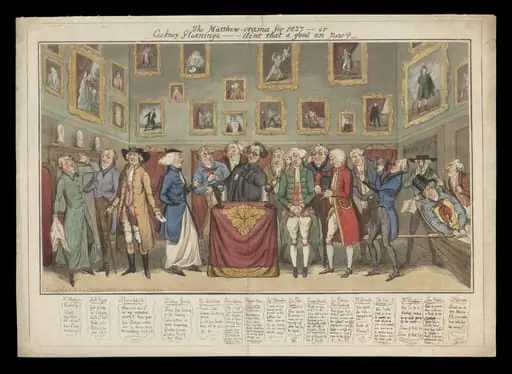 H Beard Print Collection
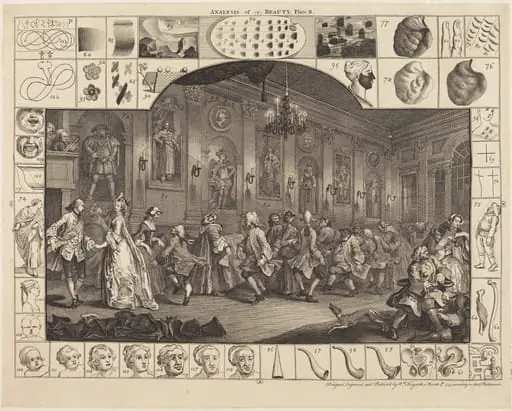 Analysis of Beauty: pl.2
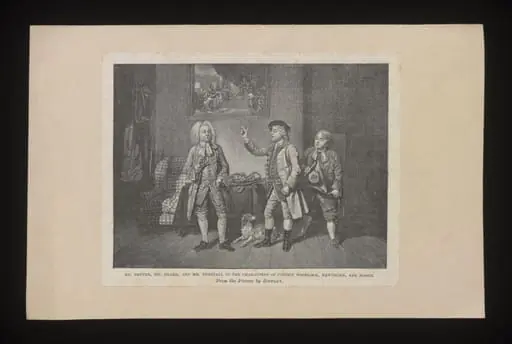 Mr Shuter, Mr. Beard, and Mr. Dunstall in the charaters of Justice Woodcock, Hawthorn and Hodge
 H Beard Print Collection