Artwork
The Daughters of Sir Thomas Frankland
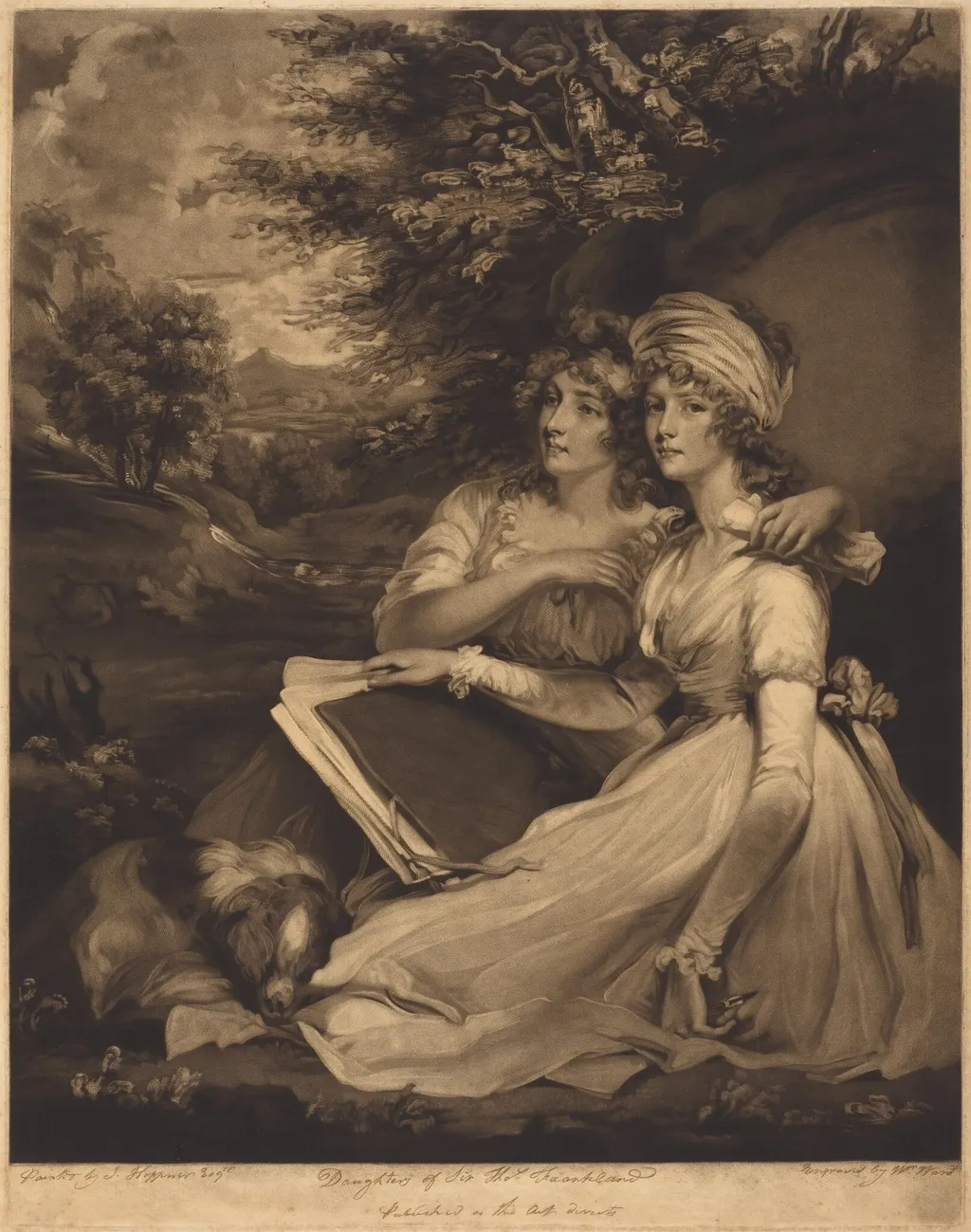
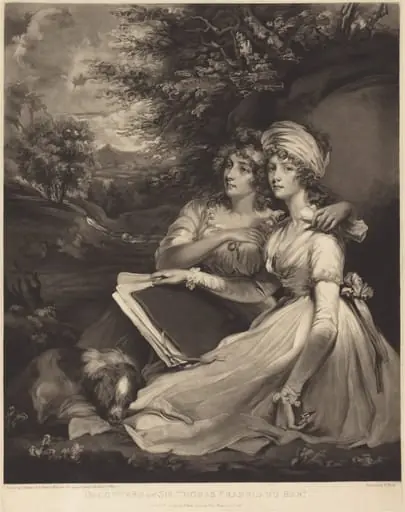
The Daughters of Sir Thomas Frankland is an ink print by the Romanticist artist William Ward. It dates from 1797 and is held in the collection of the National Gallery of Art.
About this work
Overview
Created in 1797 by William Ward, this mezzotint depicts the two daughters of Sir Thomas Frankland in a quiet outdoor setting. The print captures a moment of stillness, emphasizing the girls’ composed posture and the calmness of their surroundings. Mezzotint, a tonal engraving technique, allows for subtle gradations of light and shadow, enhancing the gentle atmosphere of the scene.
Subject & Meaning
The two young women, dressed in modest, flowing gowns and styled hair, are portrayed in a moment of quiet contemplation.
The two young women, dressed in modest, flowing gowns and styled hair, are portrayed in a moment of quiet contemplation. One holds a book, suggesting education or introspection, while a dog rests at their feet, reinforcing domestic harmony. The composition avoids theatricality, instead conveying an idealized vision of genteel femininity and familial serenity typical of late 18th-century portraiture.
Technique & Style
Ward employed mezzotint, a process involving roughening a metal plate to hold ink, then smoothing areas to create light. This method enabled rich, velvety blacks and delicate transitions in tone, ideal for rendering soft fabrics and atmospheric depth. The background fades into hazy hills and trees, using tone rather than line to suggest space, aligning with the era’s preference for emotional resonance over precise detail.
History & Provenance
Commissioned by Sir Thomas Frankland, the print was likely produced as a private keepsake for the family. It was published in London in 1797, a period when mezzotints were popular for reproducing portraits among the gentry. No public exhibition record exists, indicating its role as an intimate, domestic object rather than a public display.
Context
In late 18th-century Britain, portraits of children and young women often emphasized moral virtue and domestic tranquility. The inclusion of a book and natural setting reflects Enlightenment ideals linking education, nature, and refined character. Ward’s work aligns with a broader trend of prints that translated oil paintings into accessible formats for middle- and upper-class households.
Legacy
Though not widely exhibited, the print survives as an example of mezzotint’s capacity to convey emotional nuance in reproductive art. It reflects the period’s aesthetic values and the role of printmaking in shaping private visual culture. Ward’s technique here remains a quiet testament to the skill required to translate portraiture into tonal monochrome.
Artist & collection

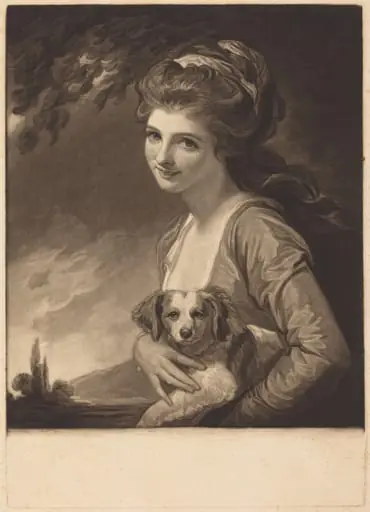 Lady Hamilton as Nature
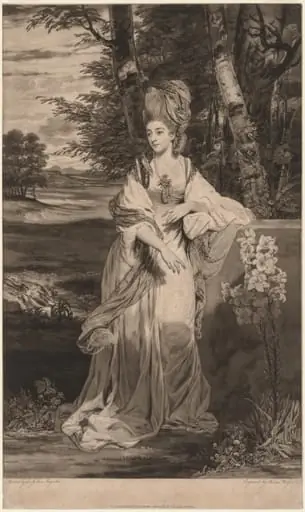 Lady Bampfylde
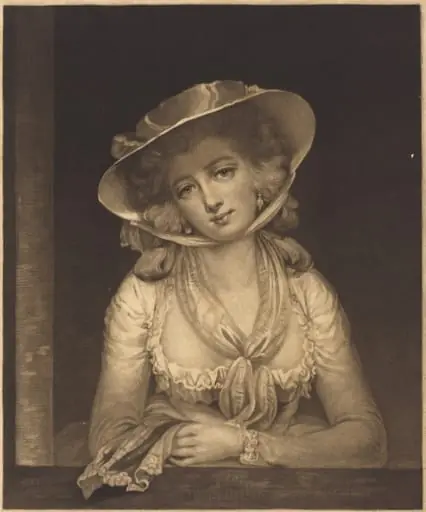 Sophia Western, Fieldings Tom Jones
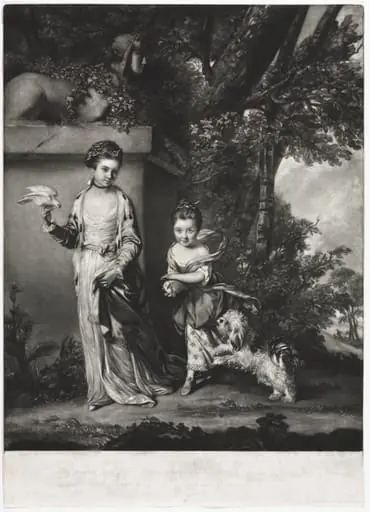 The Ladies Amabel and Mary Jemima Yorke
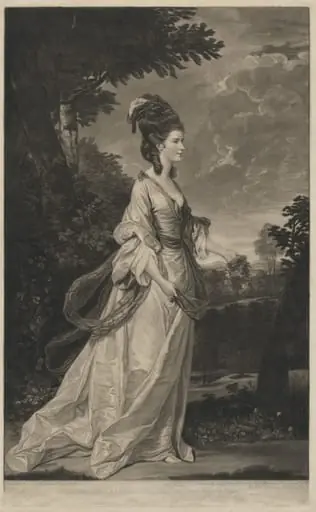 Jane (Fleming), Countess of Harrington
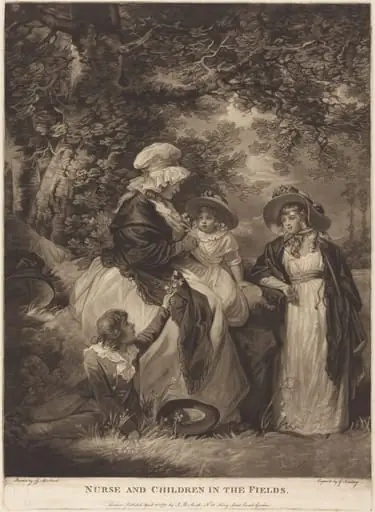 Nurse and Children in the Fields
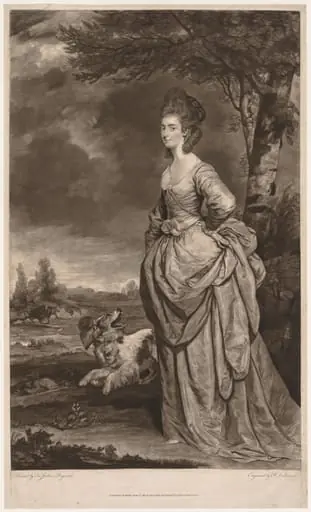 Mrs. Matthew Ellis
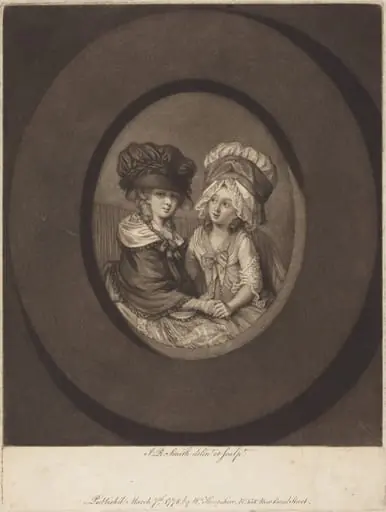 Les Deux Ami (The Two Friends)
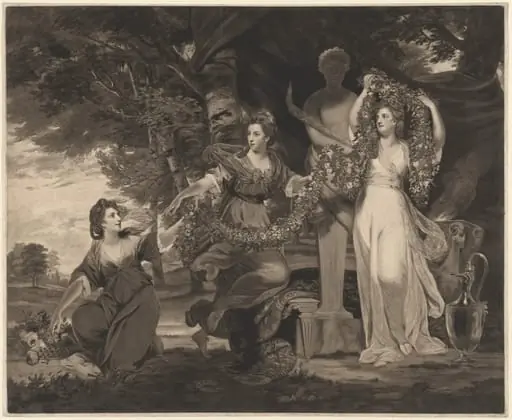 A Sacrifice to Hymen (Three Daughters of Sir William Montgomery)
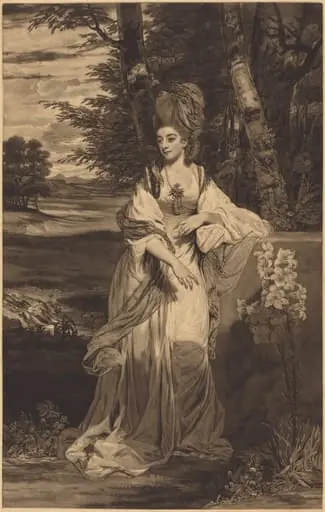 Catherine, Lady Bampfylde