Artwork
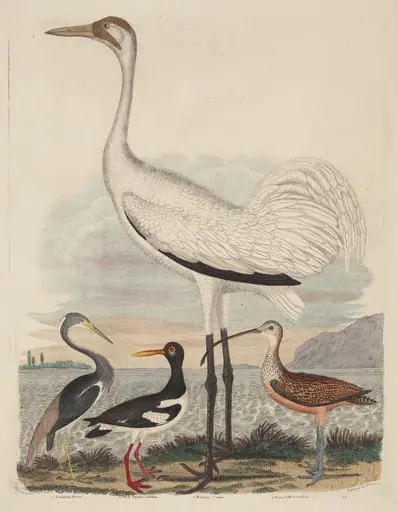
Wood Ibis, Scarlet Ibis, Flamingo, and White Ibis
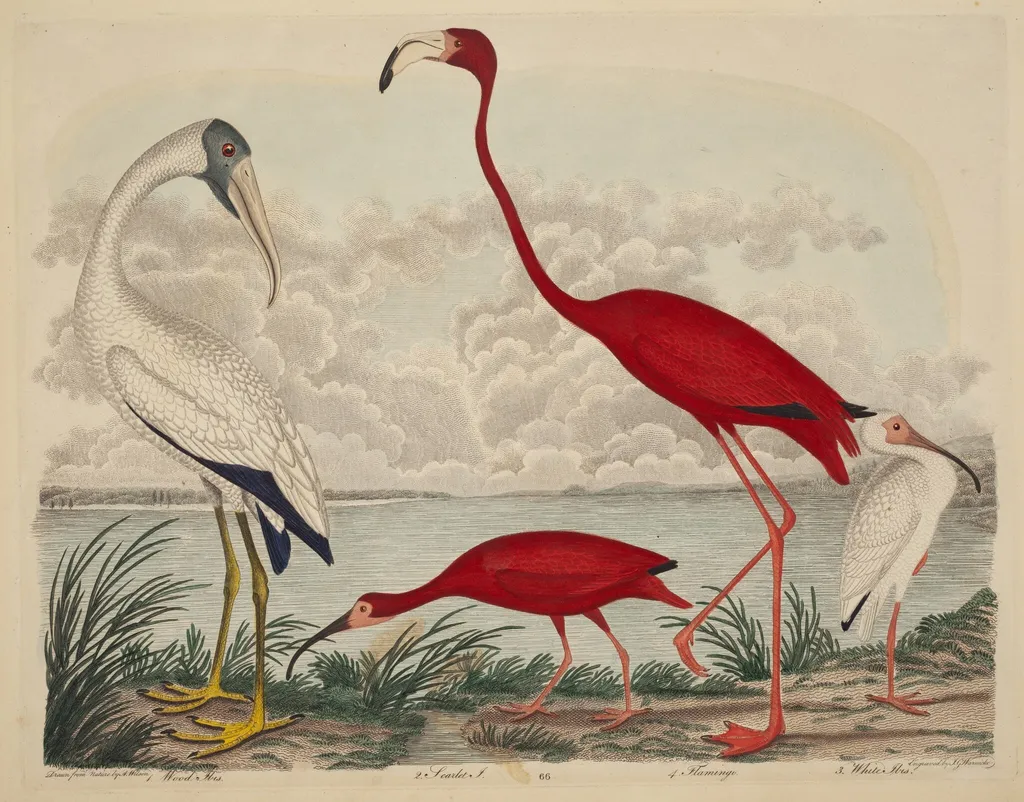
Wood Ibis, Scarlet Ibis, Flamingo, and White Ibis is an ink print by the Romanticist artist John G. Warnicke. It dates from 1811 and is held in the collection of the National Gallery of Art. John G.
About this work
Overview
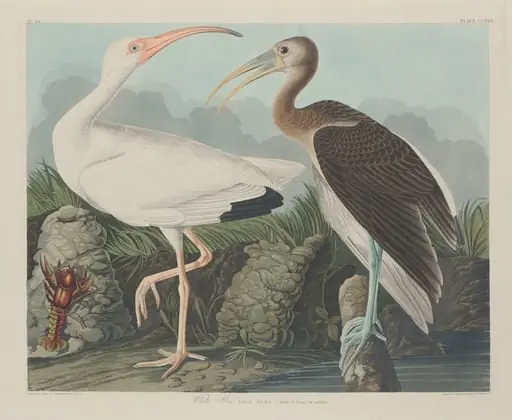
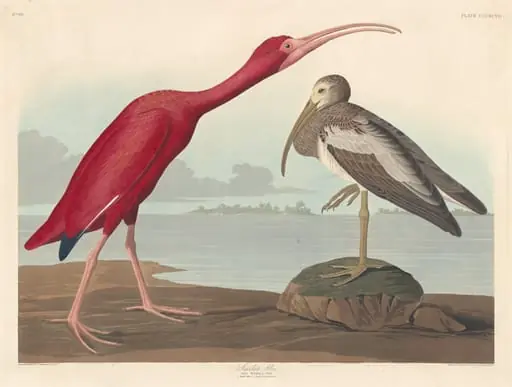
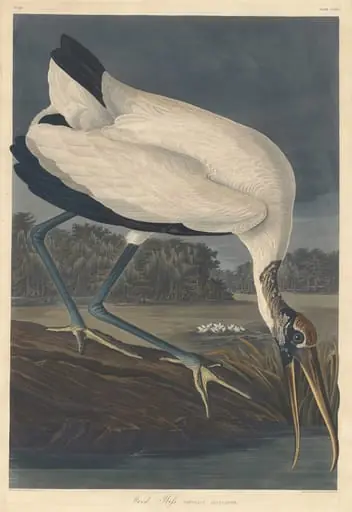
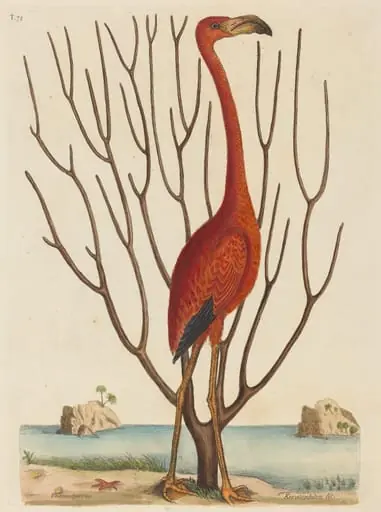
John G. Warnicke’s 1811 print, titled Wood Ibis, Scarlet Ibis, Flamingo, and White Ibis, presents a quartet of waterbirds gathered at a shoreline. The composition is rendered on wove paper, combining hand‑coloring with engraving and etching techniques to depict the birds against a muted sky and simple horizon.
Subject & Meaning
The work juxtaposes four distinct species: a white ibis with its long, curved beak; a vivid scarlet ibis displaying a bright red plumage and an S‑shaped neck; a flamingo rendered in similar red tones; and a smaller white ibis. Their arrangement suggests a study of avian diversity and the contrasting coloration of tropical birds.
Technique & Style
Warnicke employed fine engraving lines to delineate feathers and anatomy, while the etching adds tonal depth. Hand‑coloring introduces precise hues—red, white, blue‑gray, and yellow—enhancing the naturalistic detail. The flat background and clear outlines reflect early 19th‑century natural history illustration conventions.
History & Provenance
Created in 1811, the print reflects the period’s growing interest in exotic wildlife, likely intended for scientific or educational audiences. The original plate and hand‑colored impressions have circulated among collectors of early natural history prints, though specific ownership records remain limited.
Artist & collection