Artwork
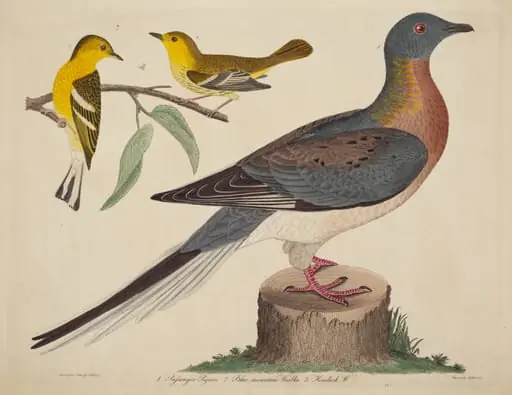
Passenger Pigeon, Blue-mountain Warbler, and Hemlock Warbler
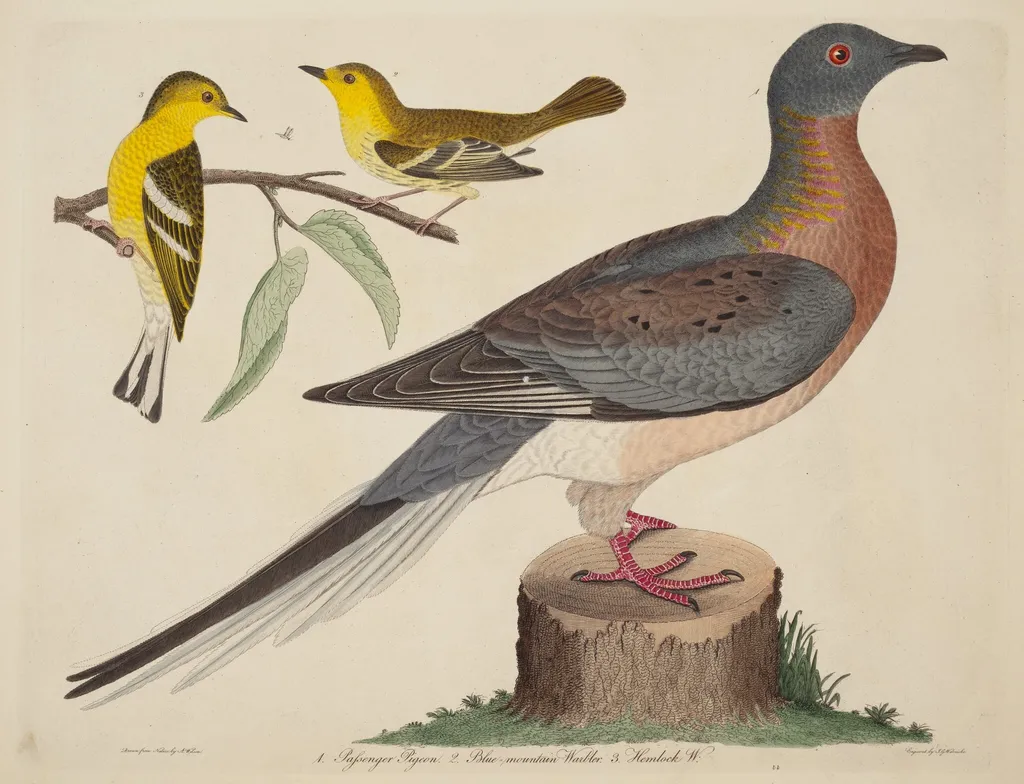
Passenger Pigeon, Blue-mountain Warbler, and Hemlock Warbler is an ink print by the Romanticist artist John G. Warnicke. It dates from 1811 and is held in the collection of the National Gallery of Art. Created in 1811 by John G.
About this work
Overview
The composition presents each bird in isolation against a bare background, emphasizing their form and plumage without contextual elements.
Created in 1811 by John G. Warnicke, this print depicts three North American bird species rendered in hand-colored engraving and etching on wove paper. The composition presents each bird in isolation against a bare background, emphasizing their form and plumage without contextual elements. The technique combines precise line work with delicate color application, typical of early 19th-century natural history illustration.
Subject & Meaning
The image features the passenger pigeon, blue-mountain warbler, and hemlock warbler—species observed in the eastern woodlands of the United States. Each bird is shown in a natural posture, suggesting an intent to document appearance rather than behavior. The inclusion of these specific birds reflects contemporary scientific interest in cataloging native fauna, though no symbolic or narrative layer is evident beyond taxonomic representation.
Technique & Style
Warnicke employed etching to define fine feather textures and anatomical details, then added color by hand to enhance realism. The wove paper provided a smooth surface for both ink and pigment, allowing subtle gradations in tone. Backgrounds are left unmodeled, directing attention solely to the birds. The style aligns with scientific illustration of the period, prioritizing accuracy over artistic flourish.
History & Provenance
The print was produced in 1811 during a period of growing interest in American natural history. Warnicke, active in Philadelphia, contributed to regional publications documenting local wildlife. While the original publication context is unclear, the work likely served as a plate in a private or institutional ornithological collection. No major public ownership records are documented prior to 20th-century museum acquisitions.
Context
This print emerged amid early American efforts to classify native species, paralleling the work of naturalists like Alexander Wilson. The passenger pigeon, then abundant, was a common subject; its depiction here predates its dramatic decline. The inclusion of two warblers reflects increasing attention to small songbirds, often overlooked in earlier ornithological works. The image belongs to a transitional phase between artistic representation and empirical zoology.
Legacy
Warnicke’s print survives as a historical record of avian biodiversity in the early 1800s. The passenger pigeon, now extinct, lends the image an added layer of ecological testimony. While not widely known today, such works contributed to the foundation of American ornithology. The print remains a quiet artifact of pre-industrial natural history, valued for its precision and temporal witness.
Artist & collection


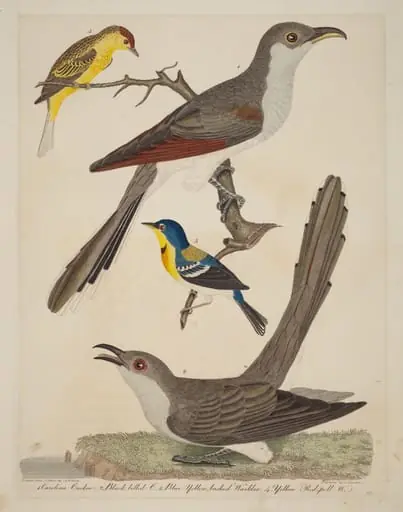 Carolina Cuckoo, Black-billed Cuckoo, Blue Yellow-backed Warbler, and Yellow Red-poll Warbler
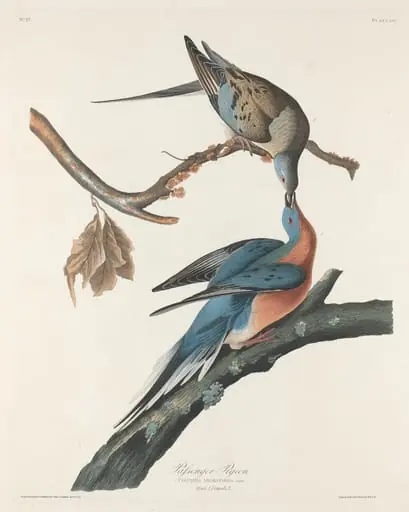 Passenger Pigeon
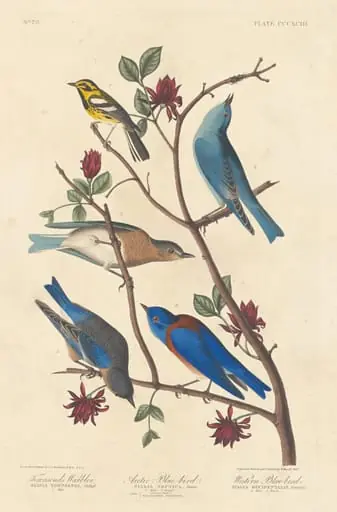 Townsend's Warbler, Arctic Blue Bird and Western Blue Bird
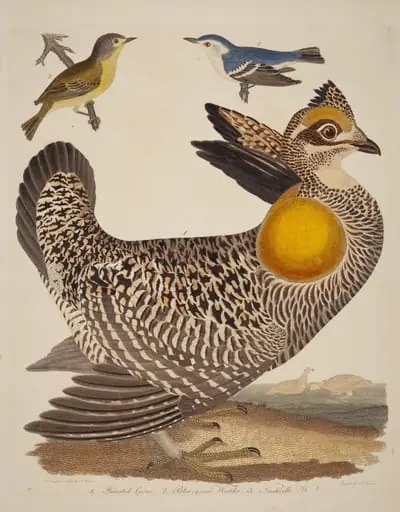 Pinnated Grous, Blue-green Warbler, and Nashville Warbler
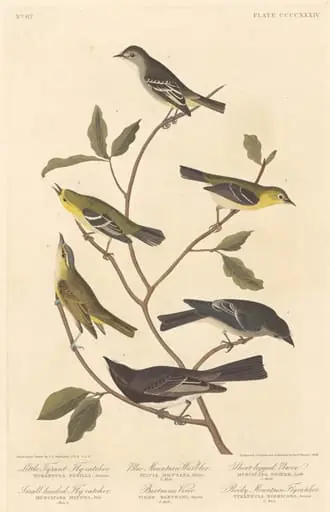 Little Tyrant Flycatcher, Small-Headed Flycatcher, Blue Mountain Warbler, Bartram's Vireo, Short-Legged Pewee, and Rocky Mountain Flycatcher
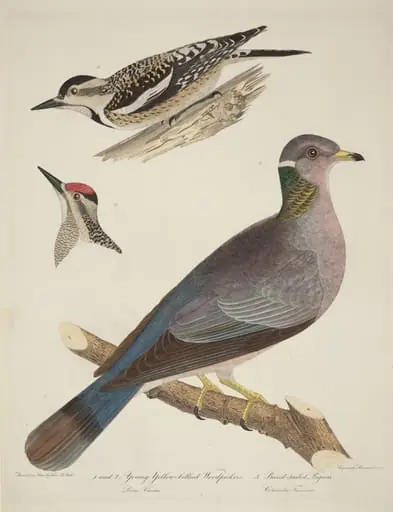 Young Yellow-bellied Woodpeckers and Band-tailed Pigeon
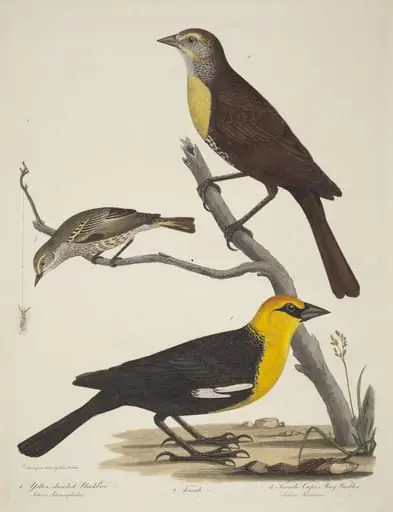 Yellow-headed Blackbird, Female Blackbird, and Female Cape May Warbler
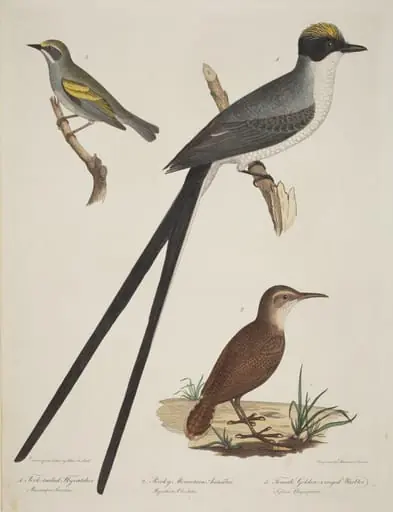 Fork-tailed Flycatcher, Rocky Mountain Anteater, and Female Golden-winged Warbler
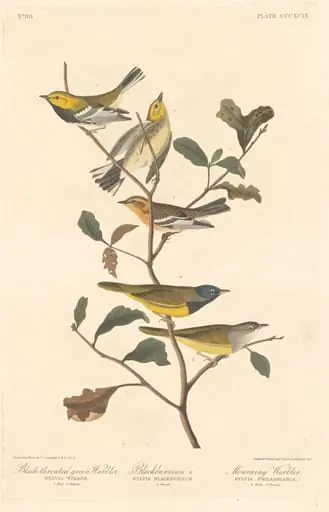 Black-throated Green Warbler, Blackburnian Warbler and Mourning Warbler
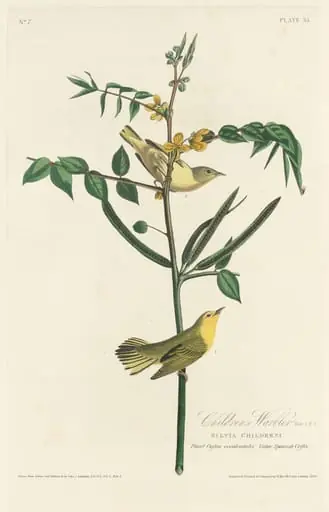 Children's Warbler
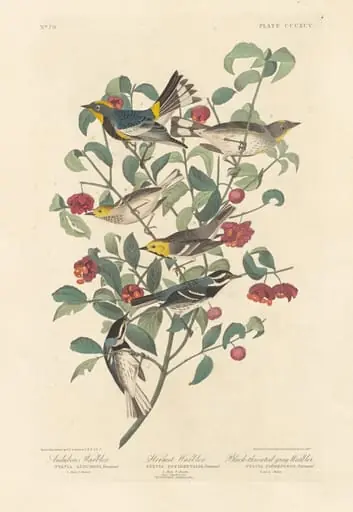 Audubon's Warbler, Hermit Warbler and Black-throated Gray Warbler