Artwork
Toddywallah's hut in a grove of date palms near Breach Candy, Bombay
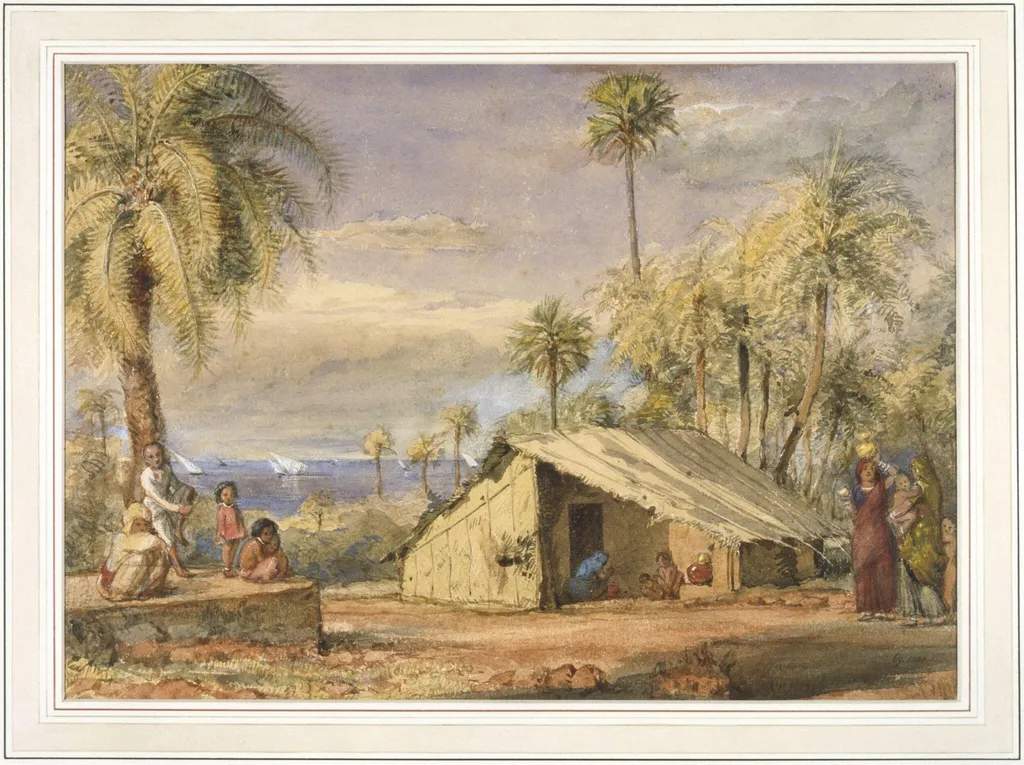
Toddywallah's hut in a grove of date palms near Breach Candy, Bombay is a paint painting by the Patna School of Painting artist William Carpenter. It dates from 1850 and is held in the collection of the Victoria and Albert Museum.
About this work
Overview
William Carpenter, trained at the Royal Academy Schools, spent six years in India between 1850 and 1856, documenting daily life through watercolor.
William Carpenter, trained at the Royal Academy Schools, spent six years in India between 1850 and 1856, documenting daily life through watercolor. His work captures the textures and rhythms of urban and rural scenes across western India, with particular attention to light and local detail. This painting, created during his travels near Bombay, reflects his commitment to observing ordinary moments with precision and sensitivity.
Subject & Meaning
The scene depicts a toddy seller at work beside a modest hut, surrounded by date palms near Breach Candy. His white turban and focused posture suggest a quiet routine, while the steaming clay pot implies the immediacy of his trade. The setting reveals a coastal landscape still largely undeveloped, offering a glimpse into pre-industrial Bombay where such street-level commerce was integral to daily life.
Technique & Style
Carpenter employed loose, energetic brushwork to render the scene with immediacy, favoring warm tones to convey the intensity of Bombay’s sunlight. The long shadows and subtle gradations in the sky and ground suggest a keen awareness of atmospheric conditions. His watercolor technique balances spontaneity with careful observation, avoiding idealization in favor of authentic detail.
History & Provenance
After returning to England, Carpenter’s Indian watercolors were reproduced in The Illustrated London News, broadening their public reach. In 1881, he exhibited 275 works at the South Kensington Museum, leading to the acquisition of his entire collection by what is now the Victoria and Albert Museum. This painting remains part of that enduring archive, preserved as a record of mid-19th-century Indian life.
Context
In the 1850s, Bombay was undergoing rapid transformation under British colonial administration, yet areas like Breach Candy retained rural character. Carpenter’s focus on such scenes contrasts with the era’s dominant imperial narratives, offering instead a quiet ethnographic record. His work documents a transitional landscape where traditional livelihoods persisted amid encroaching urbanization.
Legacy
Carpenter’s watercolors remain among the most detailed visual records of mid-19th-century India by a British artist. His emphasis on ordinary subjects, rendered without romantic embellishment, provides valuable insight into social and environmental conditions of the time. The V&A’s holding of his complete collection ensures continued access for study and historical reflection.
Artist & collection
Artist
William Carpenter (1818–1899) was an English watercolour artist. He travelled for six or seven years in the 1850s painting scenes of India, its people and its life. The Victoria and Albert Museum bought over 280 of his…

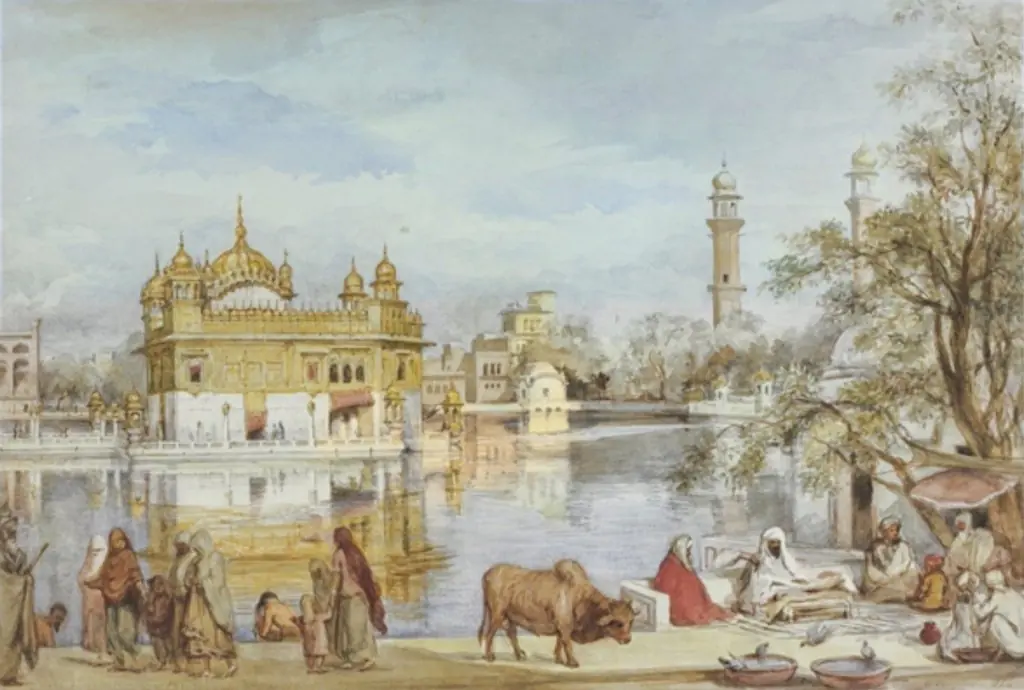 The Golden Temple, Amritsar
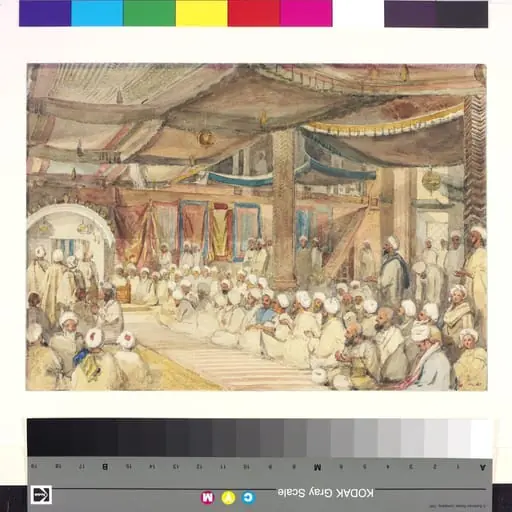 Interior of Shah Hamadan's Masjid during a religious ceremony
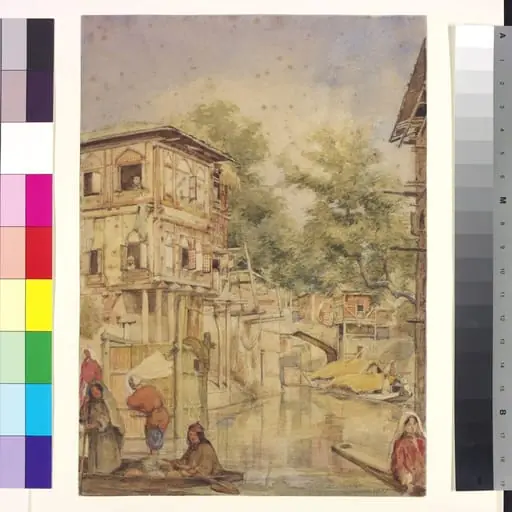 On the Mar Canal at Srinagar, Kashmir
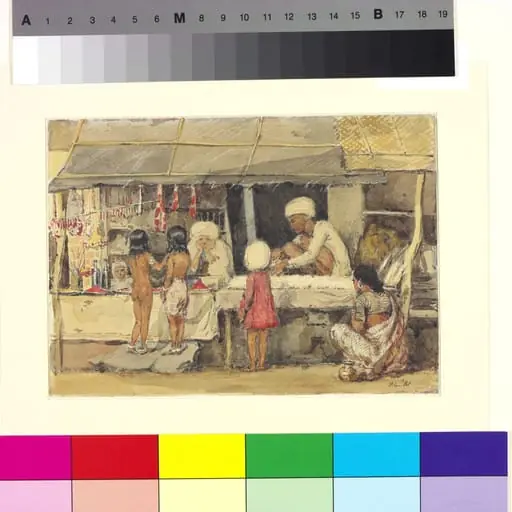 Shops for colours and flowers used at festivals, Sadr bazaar, Pune
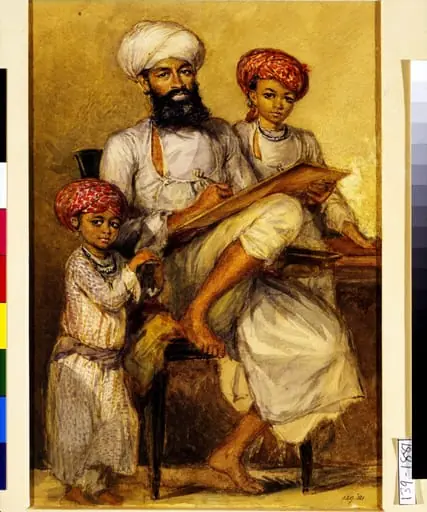 Portrait of Tara Chand, the court painter
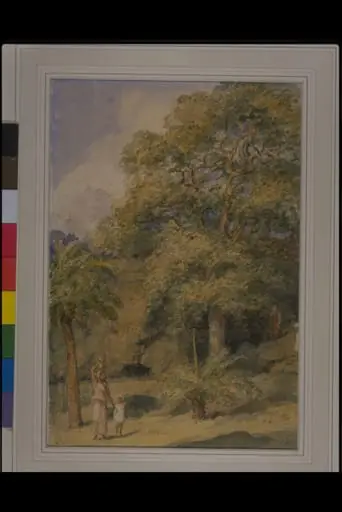 Study of a tamarind tree and date palms near Sir William Yardley's house at Breach Candy, Bombay
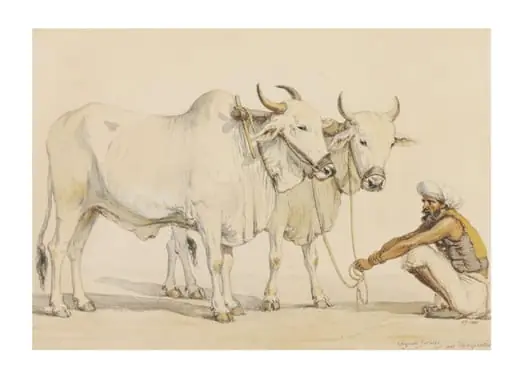 Two harnessed bullocks from Gujarat with their keeper
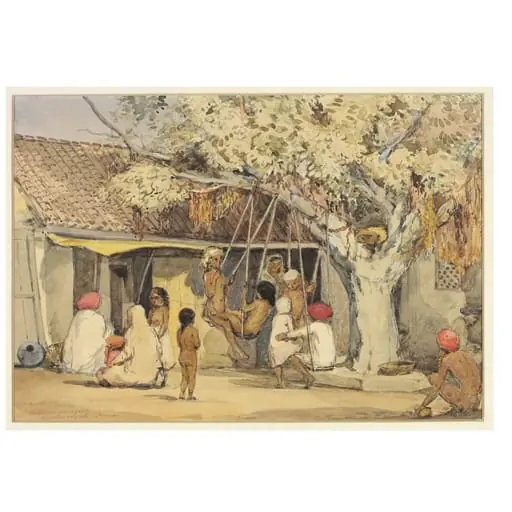 Children swinging Sudder bazaar. Poona
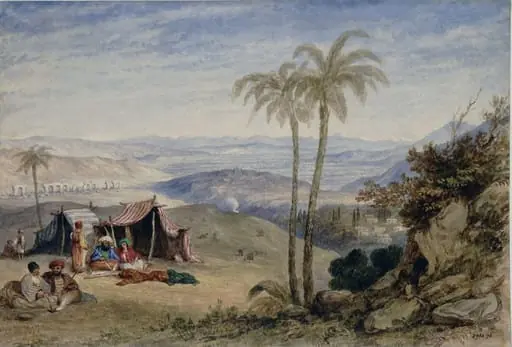 Laodicea, Asia Minor
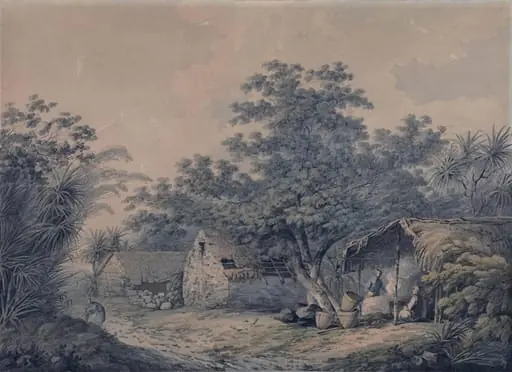 View in Krakatoa Island, near the Straits of Sunda
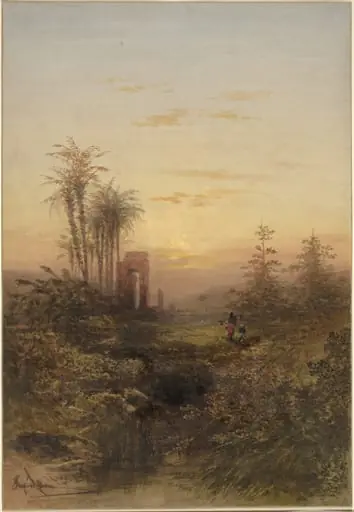 Sunset in an Oriental Landscape
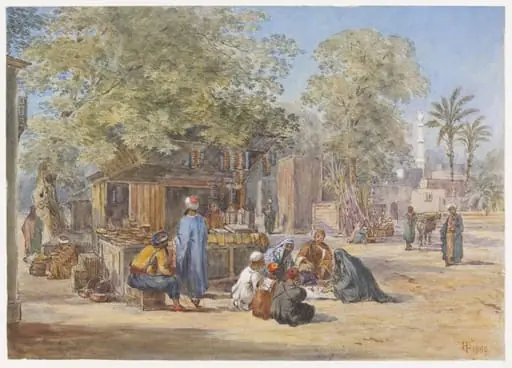 Egyptian Village Scene
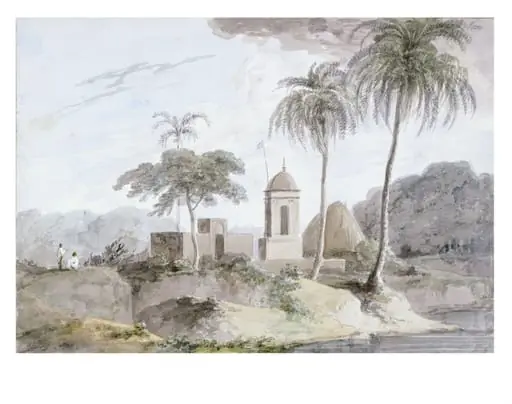 View near Bandell, India
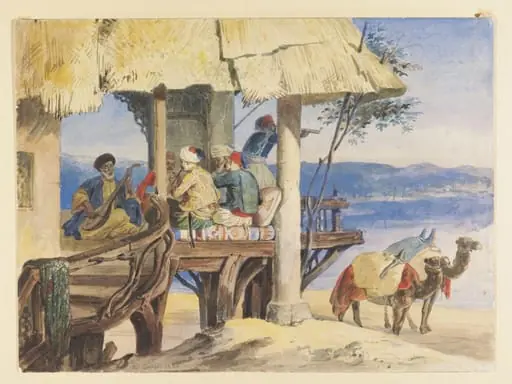 Turkish Musicians in a coffee-house overlooking the Bosphorus
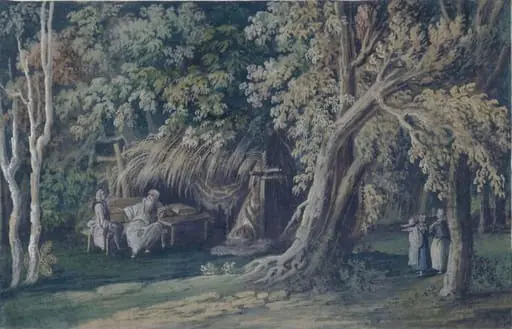 The Hermit's House
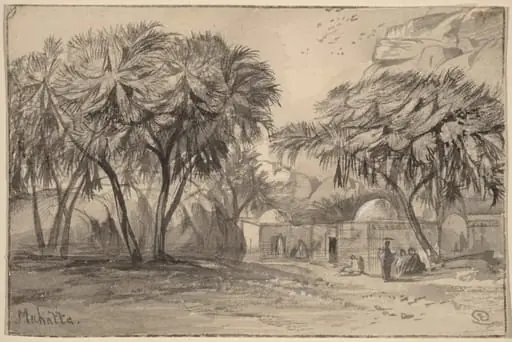 Mahatta
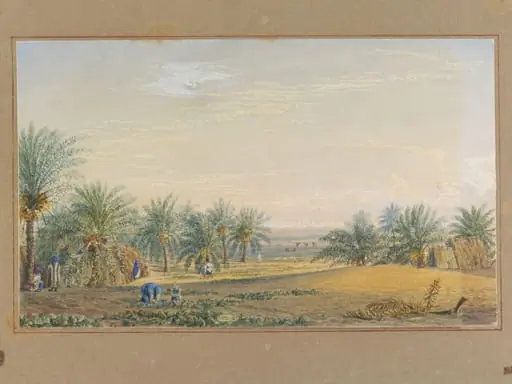 Distant View of Bushire in the Persian Gulf
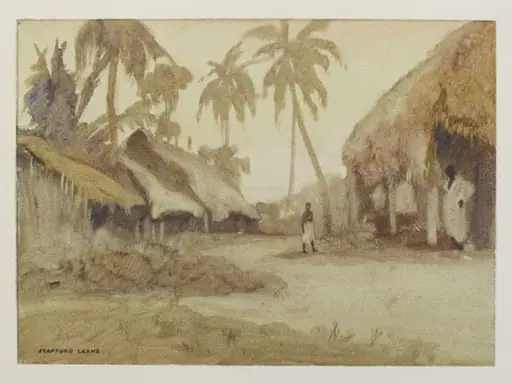 Magogoni, Dar-es-Salaam
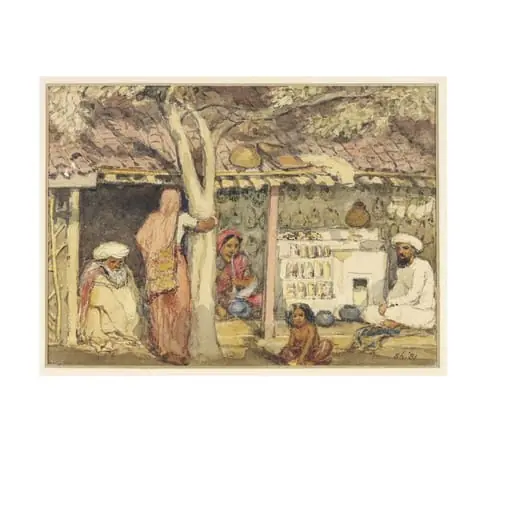 A bangle-seller in his shop, Pune