Artwork
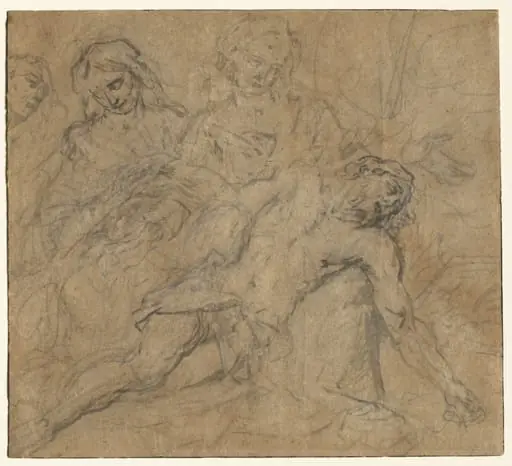
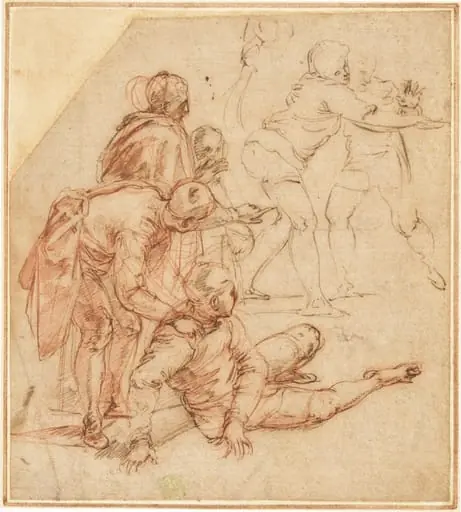
The March of Silenus [recto]
![The March of Silenus [recto], by Jean Antoine Watteau, chalk, 1716](https://artifactworldgallery.com/img/jean-antoine-watteau--the-march-of-silenus-recto--41356d5e8937ed4e-w1024.webp)
The March of Silenus [recto] is a chalk drawing by the Baroque artist Jean Antoine Watteau. It dates from 1716 and is held in the collection of the National Gallery of Art.
About this work
Overview
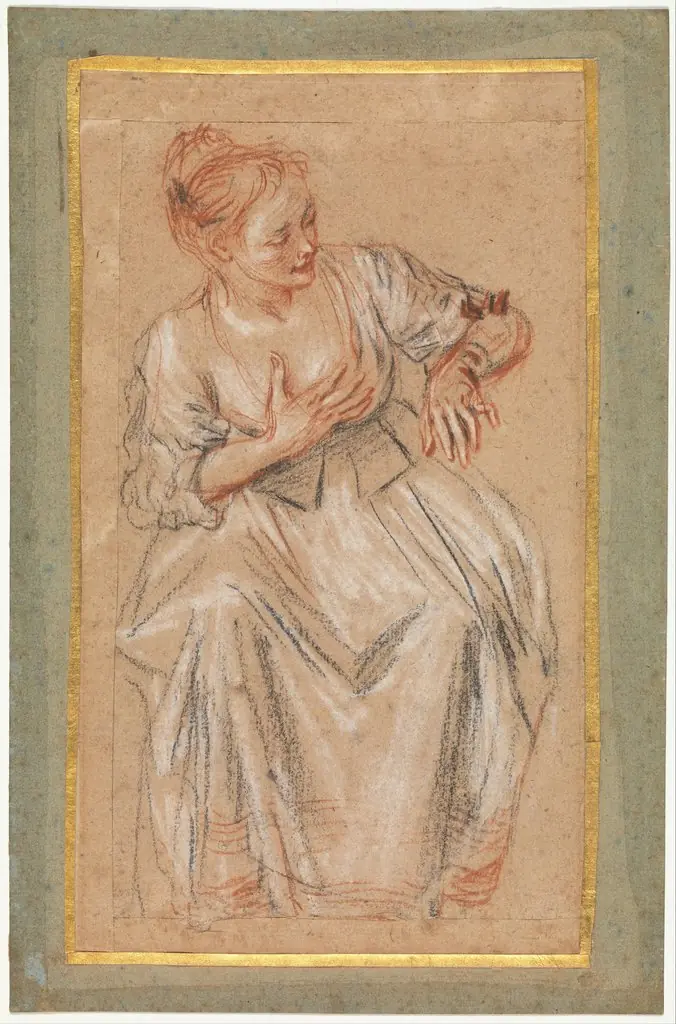
The March of Silenus [recto] is a drawing by French artist Antoine Watteau, dated to around 1716. Executed in red, black, and white chalks on brown laid paper, it showcases the artist's skill in chiaroscuro and composition.
Subject & Meaning
The subject of the drawing is derived from classical mythology, depicting the procession of Silenus, a companion to the god Dionysus. This theme reflects Watteau's interest in pastoral and mythological scenes, often infused with a sense of melancholic longing characteristic of his oeuvre.
Technique & Style
Watteau employed a palette of red, black, and white chalks on brown paper to achieve a striking contrast and depth. His use of chiaroscuro, a strong contrast between light and dark, was innovative for the period and added emotional depth to the scene.
History & Provenance
Created circa 1716, during Watteau's productive period in Paris, the drawing's early ownership history is not well-documented. It is now part of a prominent European museum's collection, accessible to the public.
Context
The March of Silenus [recto] was created during a time when French art was transitioning from Baroque to Rococo. Watteau's work, with its dreamy, pastoral themes, played a significant role in this stylistic shift.
Legacy
This drawing, like much of Watteau's work, influenced the development of Rococo art. Its emphasis on mood, composition, and the use of chiaroscuro have made it a point of study for artists and historians alike.
Artist & collection
Artist
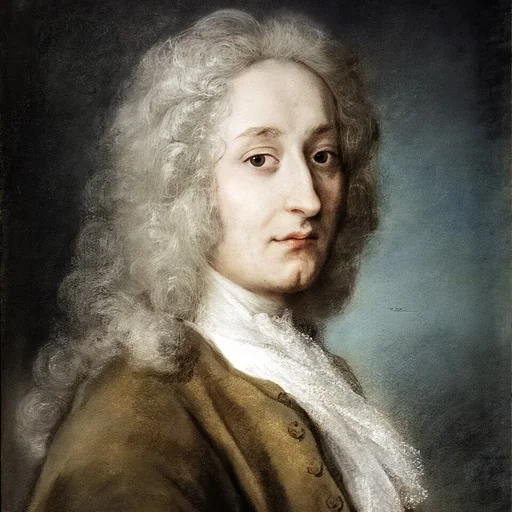
Jean-Antoine Watteau was a French painter and draughtsman whose brief career spurred the revival of interest in colour and movement, as seen in the tradition of Correggio and Rubens.