Artwork
Allegory - Religious Frivolity
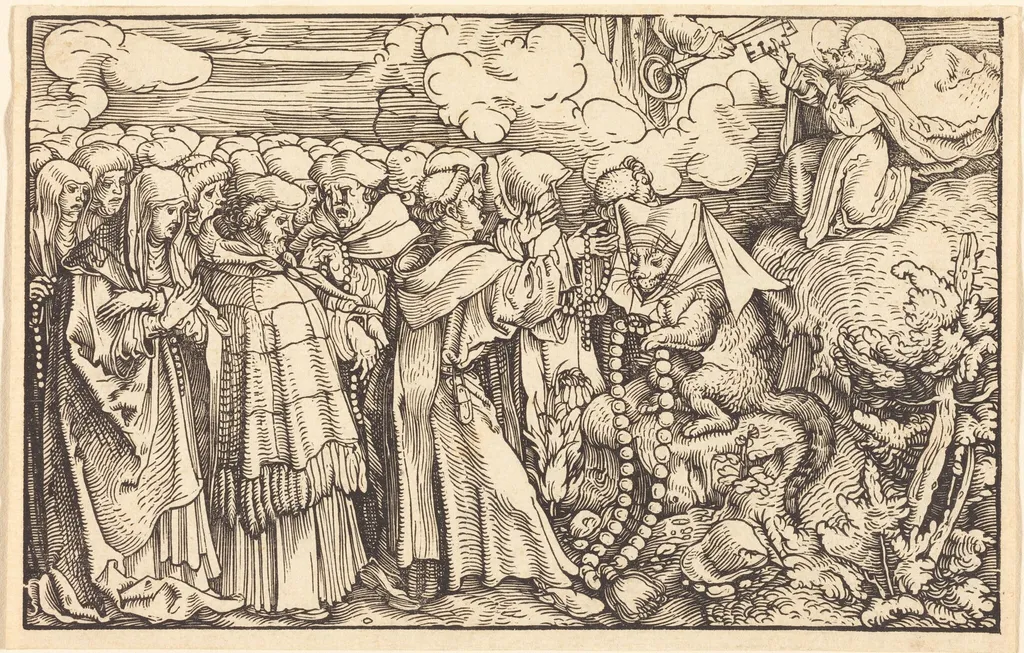
Allegory - Religious Frivolity is an ink print by the Renaissance artist Weiditz, II, Hans. It dates from 1518 and is held in the collection of the National Gallery of Art. Created in 1518 by Hans Weiditz II, this woodcut is a compact, densely composed print that presents a satirical vision of religious life.
About this work
Overview
Created in 1518 by Hans Weiditz II, this woodcut is a compact, densely composed print that presents a satirical vision of religious life.
Created in 1518 by Hans Weiditz II, this woodcut is a compact, densely composed print that presents a satirical vision of religious life. The image captures a bustling crowd in flowing garments, engaged in idle activities rather than solemn devotion. The medium—woodcut—allowed for sharp, linear detail, enabling the artist to pack numerous figures and symbolic objects into a limited space without losing clarity.
Subject & Meaning
The scene depicts a group of figures ostensibly engaged with religious symbols—books, scrolls, and ritual objects—but their actions suggest distraction and performative piety. Musical instruments, ladders, and staffs appear incongruous amid the setting, implying a critique of empty ritualism. The composition conveys a sense of chaotic futility, as if spiritual purpose has been replaced by trivial pursuits and theatrical gestures.
Technique & Style
Executed in the woodcut technique, the image relies on bold, incised lines to define forms and textures. Weiditz uses fine, rhythmic strokes to render clothing folds, foliage, and cloud patterns, creating visual density without color. The figures are stylized, their postures exaggerated to emphasize absurdity. The background blends natural elements—trees, rocks, and swirling clouds—into a dreamlike, non-naturalistic space that heightens the allegorical tone.
History & Provenance
The print emerged during the early years of the Protestant Reformation, a time of intense religious debate and visual satire. Weiditz, known for his illustrations of classical texts and moral themes, likely produced this work in response to growing critiques of clerical excess. While its early ownership is undocumented, it circulated among humanist circles, where such imagery resonated with reformist sentiments.
Context
In early 16th-century Germany, woodcuts were widely used to disseminate ideas to literate and illiterate audiences alike. This print aligns with a broader tradition of moralizing imagery that mocked hypocrisy in religious institutions. The inclusion of books and music—symbols of learning and divine worship—used frivolously, reflects contemporary anxieties about the erosion of spiritual discipline amid cultural flourish.
Legacy
Though not widely reproduced, the woodcut remains a rare example of early Reformation-era visual satire focused on religious behavior. Its blend of humor and critique influenced later satirical prints, particularly those targeting clerical corruption. The work endures as a quiet but pointed document of how visual art contributed to moral discourse during a period of profound religious transformation.
Artist & collection


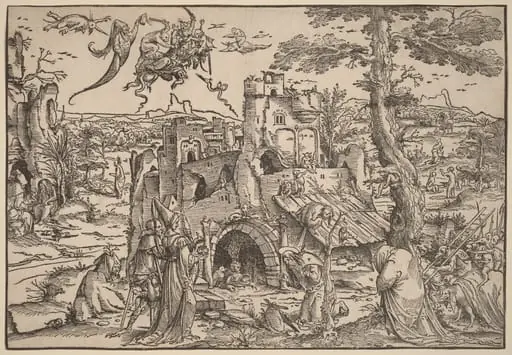 The Temptation of Saint Anthony
 The Beast with Two Horns like a Lamb
 Ein Briester wardt gefanngen ...
 The Councillor
 The Babylonian Whore
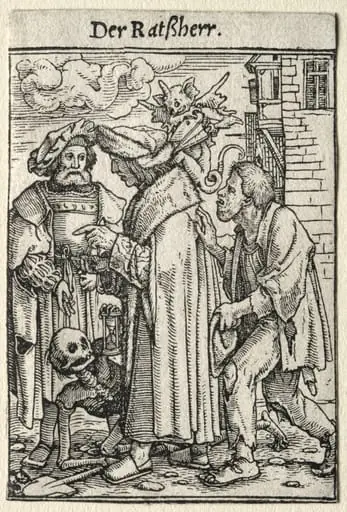 Dance of Death: The Councillor
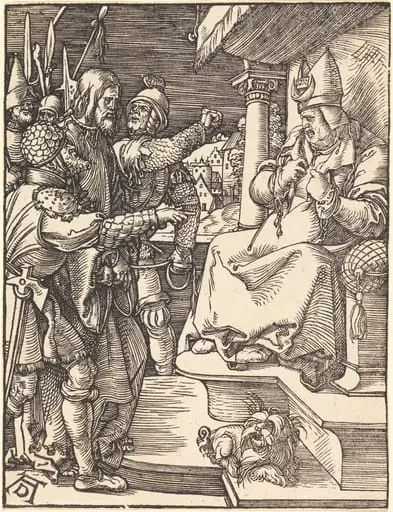 Christ before Caiaphas
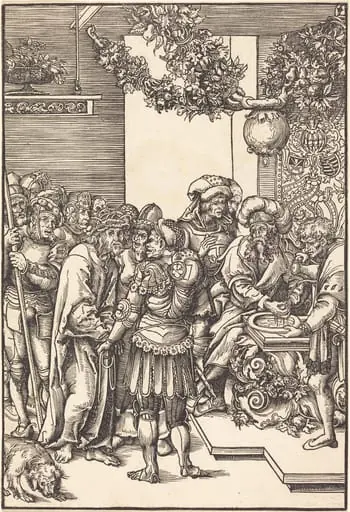 Pilate Washing His Hands
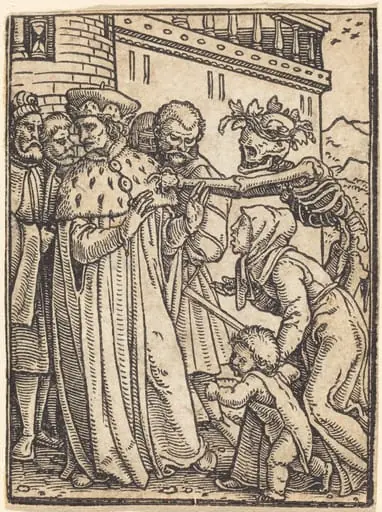 The Duke
 The Angel with the Key to the Bottomless Pit
 Martyrdom of St. Judas Thaddeus
 The Martyrdom of the Ten Thousand