Artwork
The Man of Sorrows Standing
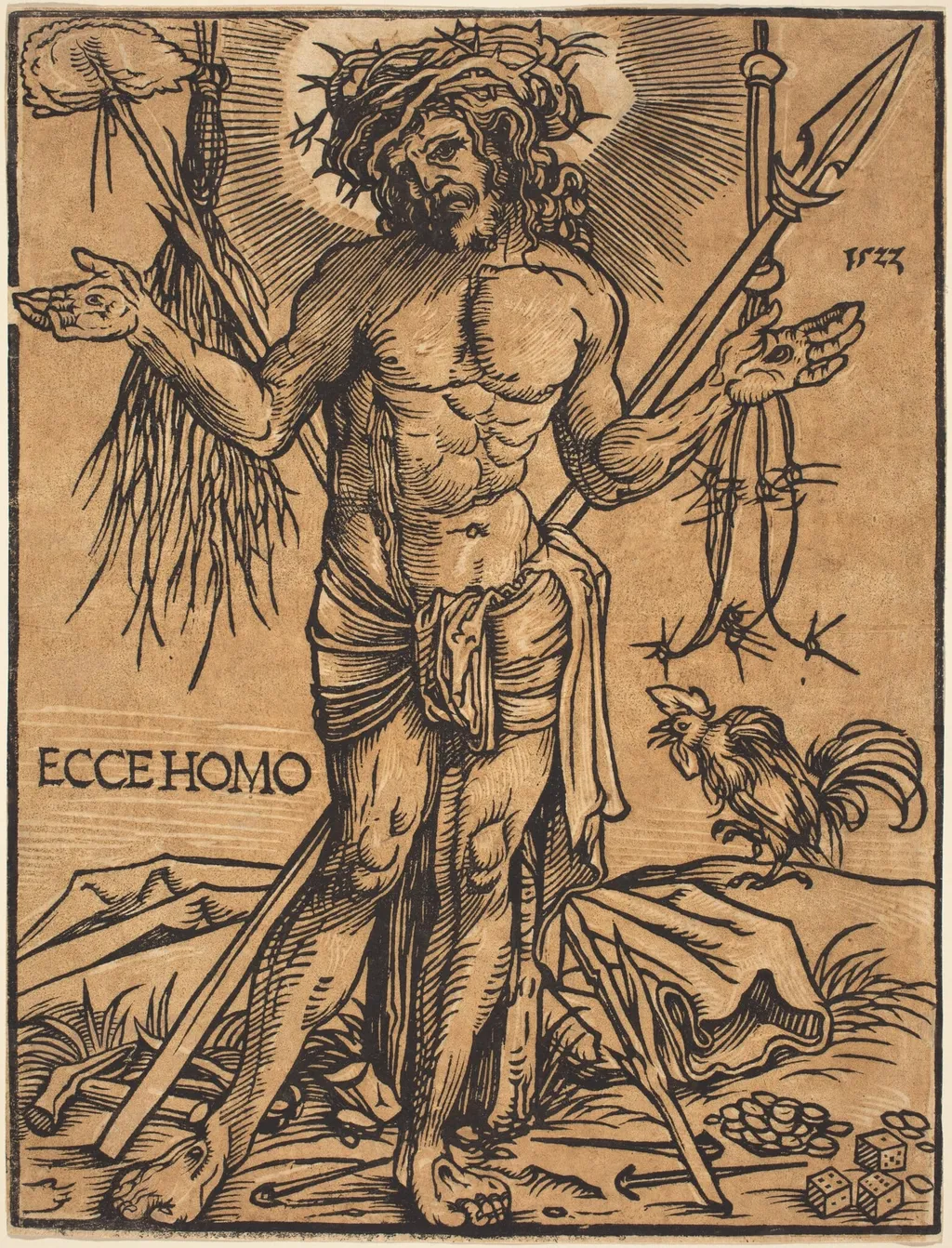
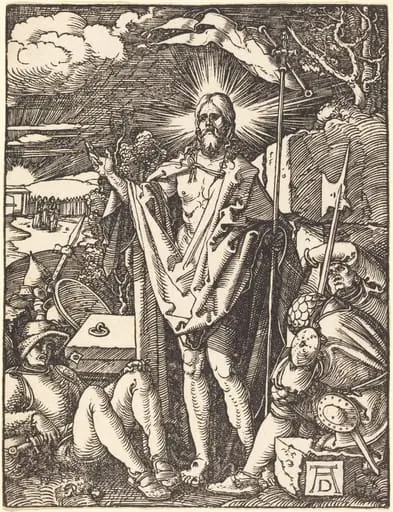
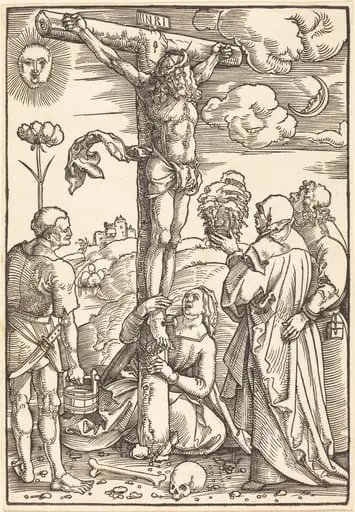
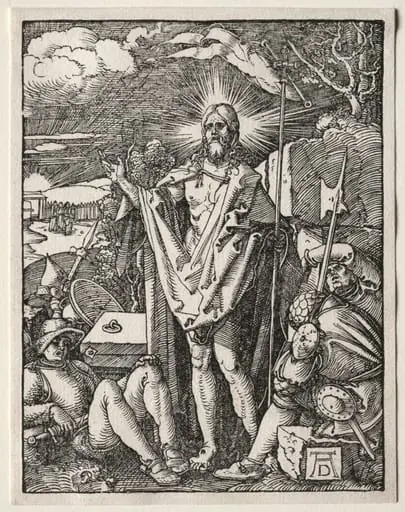
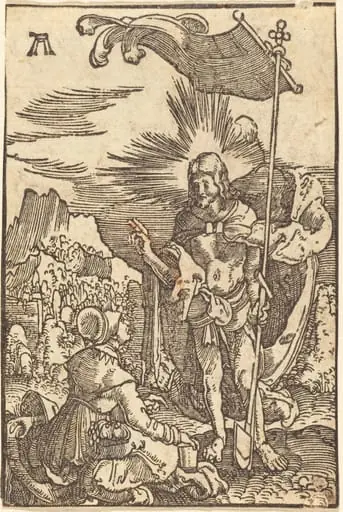
The Man of Sorrows Standing is an ink print by the Renaissance artist Weiditz, II, Hans. It dates from 1522 and is held in the collection of the National Gallery of Art.
About this work
Overview
Hans Weiditz the Younger produced this chiaroscuro woodcut in 1522, titled *The Man of Sorrows Standing*. The image presents a solitary, muscular figure with a beard, arms outstretched and torso slightly twisted, set against a backdrop of radiating light and a modest architectural element.
Subject & Meaning
The central figure represents the suffering Christ, indicated by the Latin inscription *ECCE HOMO* (“Behold the Man”) placed at the lower left. Elements such as the crown of spikes, thorns, and a rooster reinforce the Passion narrative, shifting emphasis from the traditional crucifixion scene to the physical torment of the body.
Technique & Style
Executed as a chiaroscuro woodcut, the work employs multiple blocks to achieve tonal contrast between light and shadow, a method that prefigured photographic tonal range. The carving highlights muscular definition and the interplay of illuminated and dark areas, enhancing the dramatic intensity of the composition.
History & Provenance
Created in the early sixteenth century, the print reflects the Northern Renaissance interest in devotional imagery. While specific ownership records are scarce, the piece is attributed to Weiditz’s workshop, known for producing religious prints for a broad audience during the Reformation period.
Context
The inclusion of symbolic motifs—thorns, a rooster, and a distant building—aligns the work with contemporary visual conventions for depicting Christ’s Passion. The phrase *ECCE HOMO* was commonly used in prints portraying Jesus bearing the cross, here repurposed to focus on his wounded form.
Artist & collection