Artwork
Page from Troianischen Kreig - Ausberg
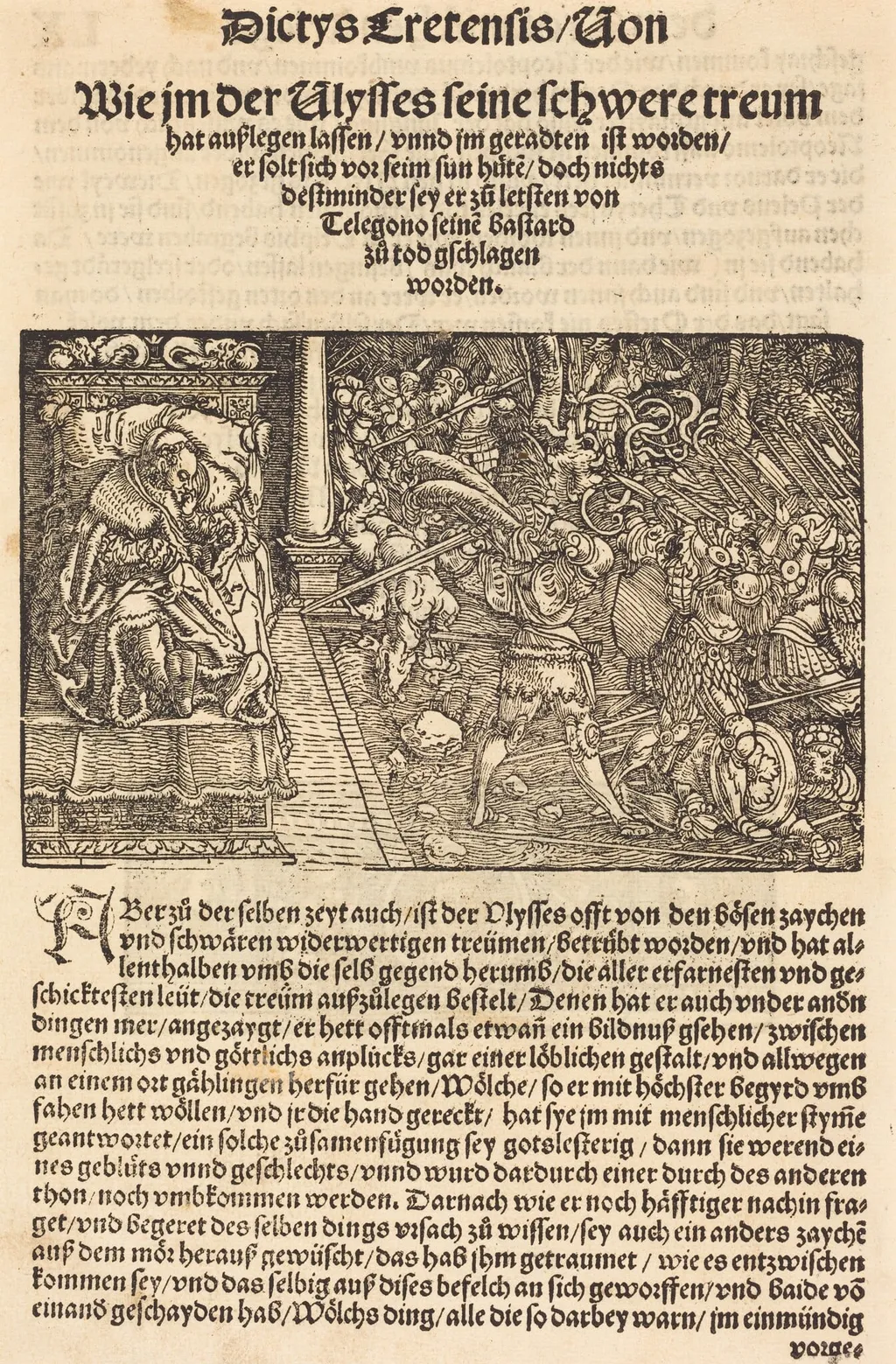
Page from Troianischen Kreig - Ausberg is an ink print by the Renaissance artist Weiditz, II, Hans. It dates from 1536 and is held in the collection of the National Gallery of Art. This woodcut page, produced by Hans Weiditz II in 1536, is part of the illustrated narrative Troianischen Kreig.
About this work
The scene depicts a battle between two groups of warriors, with one side featuring a man on horseback wielding a sword and shield.
This image is a woodcut page from the Troianischen Kreig, created by Hans Weiditz II in 1536. The scene depicts a battle between two groups of warriors, with one side featuring a man on horseback wielding a sword and shield. The other side includes a man holding a spear and a shield, while another warrior is shown falling to the ground.
In the background, there are trees and buildings visible, adding depth to the scene. The overall atmosphere of the image is one of chaos and conflict, with the warriors engaged in fierce combat.
The level of detail in the woodcut is impressive, with intricate designs and textures visible throughout the image. The use of shading and contrast adds depth and dimension to the scene, making it feel dynamic and engaging. To learn more about the artist's work, explore the Renaissance movement.
Overview
This woodcut page, produced by Hans Weiditz II in 1536, is part of the illustrated narrative Troianischen Kreig. Executed in the traditional relief printing method, it captures a moment of violent engagement between opposing warriors. The composition is dense with figures and environmental details, reflecting the printed book’s function as both historical record and visual storytelling device.
Subject & Meaning
The scene portrays a clash between two factions in a mythic Trojan conflict, rendered with attention to individual postures and weaponry. One mounted warrior swings a sword, while a foot soldier raises a spear; another figure collapses, suggesting mortal injury. The depiction does not idealize combat but conveys its brutality, aligning with the text’s focus on heroic struggle and human cost.
Technique & Style
Weiditz employed fine, controlled lines to carve intricate textures into the woodblock—armor scales, fabric folds, and foliage are rendered with precision. Contrasts between solid black and open space define form and movement, while overlapping figures and receding architecture create a sense of spatial depth. The style is detailed yet restrained, prioritizing clarity over ornamentation.
History & Provenance
The print originates from a 1536 edition of Troianischen Kreig, a German-language account of the Trojan War, likely commissioned for a literate urban audience. Weiditz, known for his work in scientific and literary illustration, brought his observational precision to this narrative project. The woodcut was one of many in a serialized format, intended for binding into a volume.
Context
Produced during the Reformation, such illustrated texts reflected growing interest in vernacular histories and classical themes. Woodcuts like this one served educational and moral purposes, making ancient tales accessible to non-Latin readers. The emphasis on physical action and individual heroism mirrored contemporary values around honor and martial virtue in German-speaking regions.
Legacy
Weiditz’s contribution to early printed narratives helped standardize visual storytelling in German books. His attention to anatomical accuracy and environmental detail influenced later illustrators in both secular and religious publications. Though not widely exhibited today, this woodcut remains a representative example of 16th-century print culture’s capacity to convey complex narratives through simple means.
Artist & collection


 Martyrdom of St. Matthew
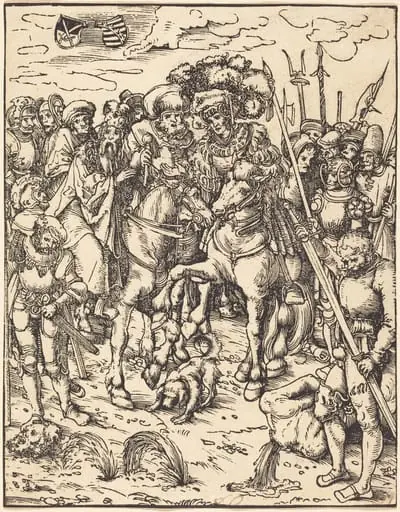 Saint Matthew
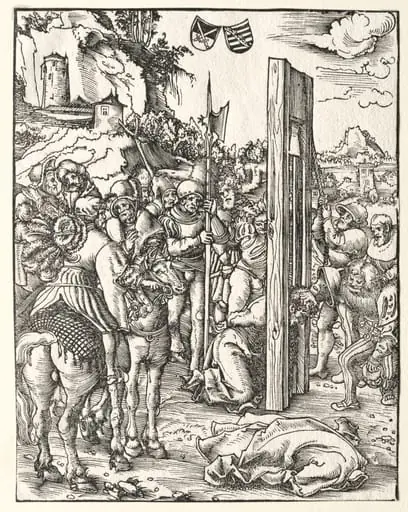 Martyrdom of St. Matthias
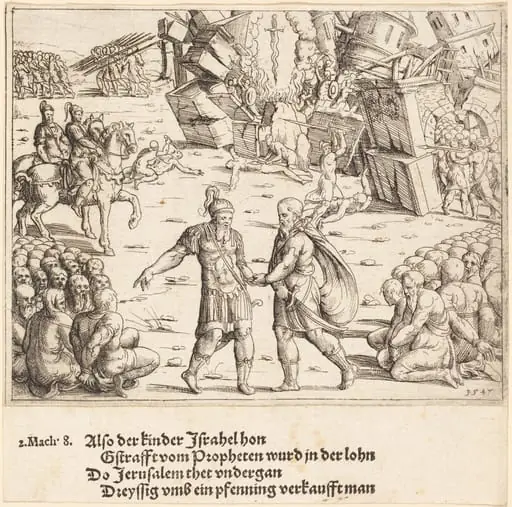 The Victory of Judas Maccabeus Over Niccanor
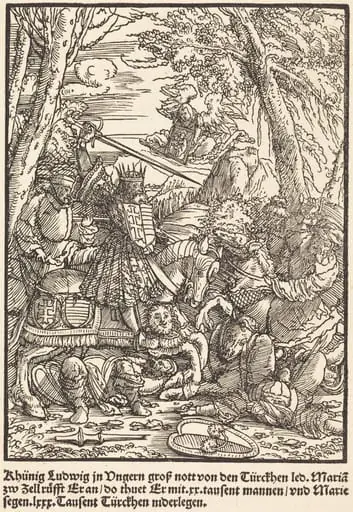 Khunig Ludwig ...
 The Small Passion: Christ Before Pilate
 Saint Matthew
 Samson Slays the Philistines
 Broadside with Two Scenes from the Life of Christ, and Grotesque Borders
 Ein Briester wardt gefanngen ...
 Song to the Madonna
 The Fall of Jericho