Artwork
Diana
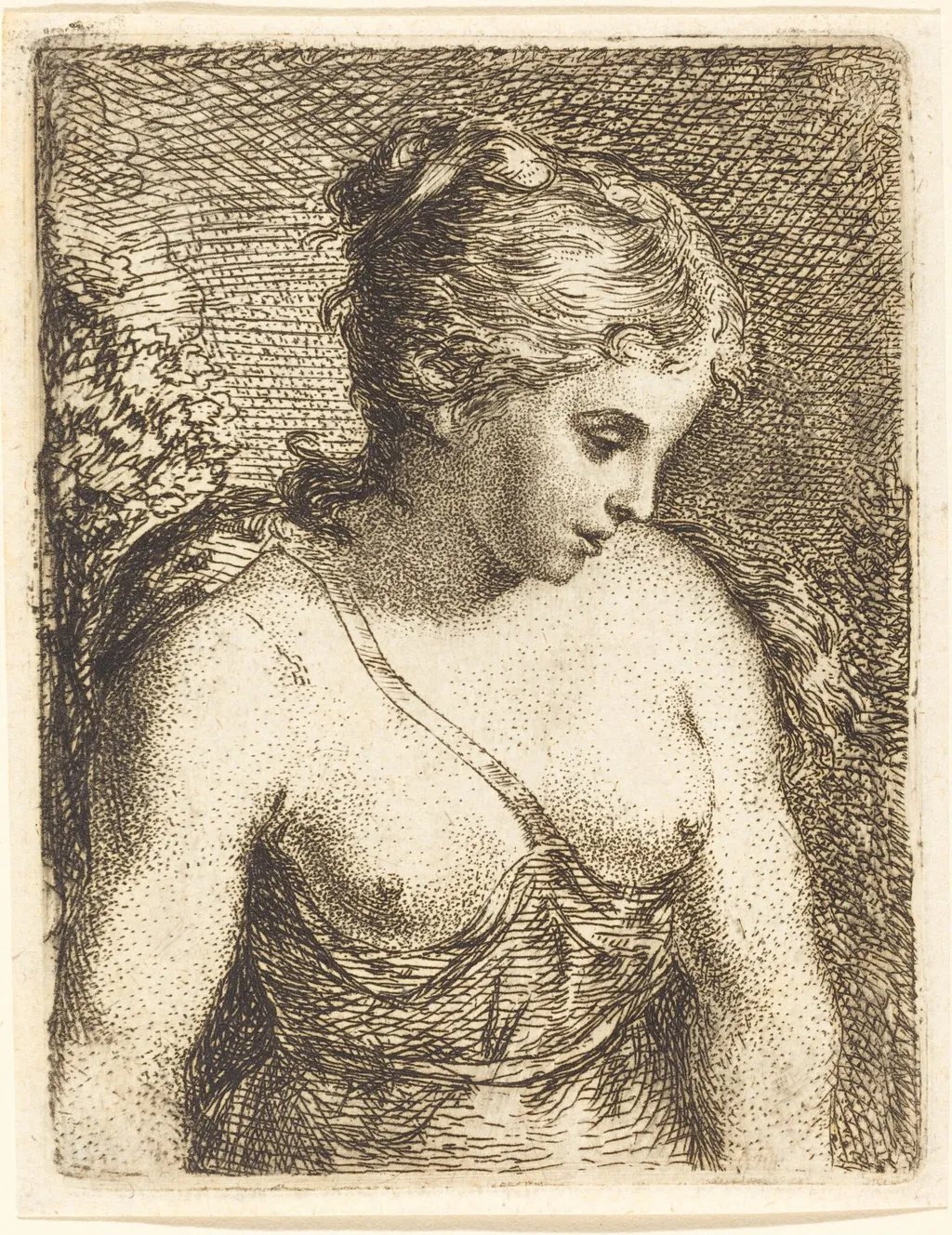
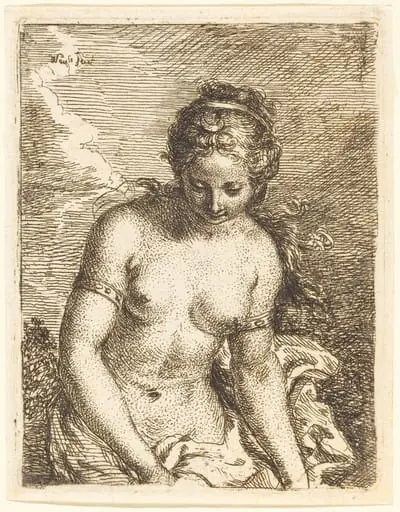
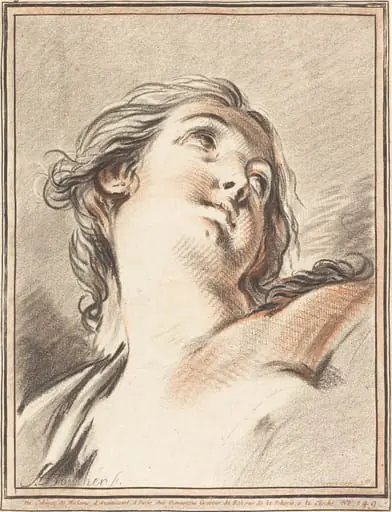
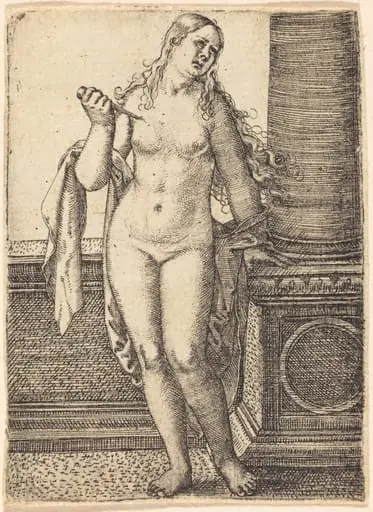
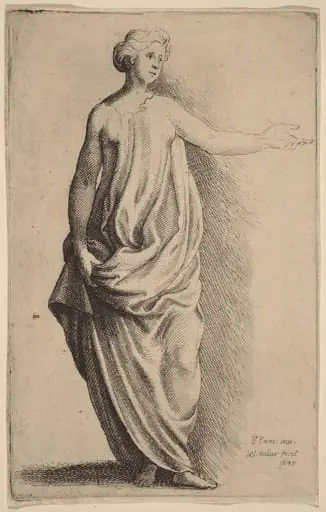
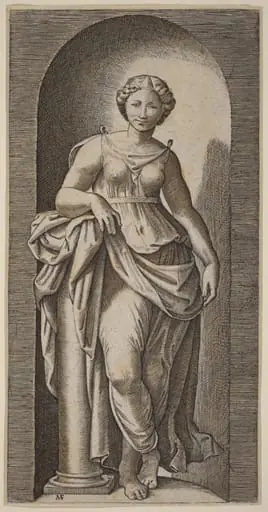
Diana is an ink print by the Romanticist artist Bartholomäus Ignaz Weiss. It dates from 1794 and is held in the collection of the National Gallery of Art.
About this work
Overview
Created around 1794 by Bartholomäus Ignaz Weiss, this print depicts the Roman goddess Diana in etching and drypoint on laid paper. The work belongs to the tradition of mythological portraiture in late 18th-century printmaking, emphasizing quiet introspection over dramatic action. The medium’s fine lines and tonal contrasts lend a subtle richness to the figure’s presence.
Subject & Meaning
The figure represents Diana, goddess of the hunt and moon, portrayed not in motion but in stillness. Her downward gaze and tilted head suggest contemplation, aligning with her association with solitude and the night. The absence of hunting attributes shifts focus to her inner state, reflecting Enlightenment-era interests in emotion and individuality over mythological spectacle.
Technique & Style
The laid paper’s subtle grain enhances the tactile quality of the background, where hatched lines and stippled dots create depth without detail.
Weiss employed etching for precise outlines and drypoint for soft, velvety textures, particularly in the hair and fabric folds. The laid paper’s subtle grain enhances the tactile quality of the background, where hatched lines and stippled dots create depth without detail. The restrained palette of ink on paper emphasizes form and mood over color, characteristic of academic printmaking of the period.
History & Provenance
The print was produced during Weiss’s active years in Vienna, where he worked within a circle of artists engaged with classical themes. Few impressions are known to survive, and its early ownership remains undocumented. It likely circulated among collectors of scholarly prints, valued for its technical finesse rather than mass appeal.
Context
In the 1790s, mythological subjects remained popular in Central European printmaking, though often treated with psychological nuance rather than grandeur. Weiss’s approach reflects a broader trend toward intimate, contemplative depictions of classical figures, influenced by Neoclassical ideals and the growing interest in private, reflective imagery among educated audiences.
Legacy
Though not widely reproduced or exhibited, the print exemplifies the quiet sophistication of late 18th-century Germanic printmaking. Its emphasis on texture and introspection influenced later artists exploring emotional depth in mythological subjects, contributing to a quieter, more personal strand in the tradition of classical representation.
Own this work as a print
Artist & collection